AHS3263: Anesthetic Monitoring - Part 2
 Call Kai
 Learn
 Practice Test
 Spaced Repetition
 Match
 Flashcards
 Knowt Play
1/26

There's no tags or description
Looks like no tags are added yet.
27 Terms
Normal ECG:
P - Atrial Depolarization (Atria contraction)
QRS - Ventricular Depolarization (Ventricular contraction)
T Ventricular - Recovery (Repolarization) (RESET)

Other Vocabulary:
Sinus - ORIGINATING from the SA NODE
Supraventricular - Coming from ABOVE the SA NODE
QRS is NORMAL
Ventricular - Coming from the VENTRICLE
QRS is ABNORMAL (Wide & Bizarre)
Premature - Comes EARLY
Basic Cardiac Conduction & ECG Waveforms:
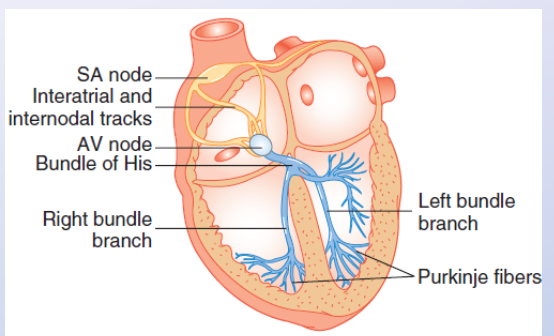
Specialized Cardiac Conduction System
Sinoatrial Node (SA)
PACEMAKER of the heart - STARTS the ELECTRICAL IMPULSE
Atrioventricular Node (AV)
STIMULATES CONTRACTIONS
Electrocardiograph (ECG):
Measures ELECTRICAL IMPULSES od HEART MUSCLE
HELPS detect ARRHYTHMIAS, HEART RATE ABNORMALITIES
Can give a FALSE sense of security
DOES NOT offer info about QUALITY of BEAT
Placement of clips are crucial for getting PROPER CONDUCTIVITY
The placement of ultrasound gel or alcohol INCREASES CONDUCTIVITY & provides a BETTER TRACE

Acquisition of the Electrocardiogram:
WHITE electrode = RIGHT FORELIMB
BLACK electrode = LEFT FORELIMB
GREEN electrode =RIGHT HINDLIMB
RED electrode = LEFT HINDLIMB
APPLY them PROXIMAL to the JOINTS
Animal has to be in RIGHT LATERAL RECUMBENCY

6 Leads:
Lead II - MAIN LEAD used to read ECG

Conduction:
Conductive Gel (ultrasound gel)
DOESN’T dry out
Alcohol
May need to reapply over time
COOLING
Indications for Electrocardiography (ECG):
ARRHYTHMIA (irregular heartbeat)
History of SYNCOPE or EPISODIC WEAKNESS (collapsing - related to heart disease)
Cardiac chamber ENLARGEMENT
Pericardial effusion
Pericardiocentesis
Monitoring DRUG THERAPY
Monitoring during ANESTHESIA
Principles of ECG:
MEASURES ELECTRICAL ACTIVITY OF HEART
POSITIVE & NEGATIVE ELECTRODE
Leads:
Leads I, II, & lll
Leads AVR, AVL, & AVF
Cardiac Arrhythmias:
NORMAL SINUS rhythm (REGULAR)
SINUS ARRHYTHMIA
SINUS BRADYCARDIA
SINUS TACHYCARDIA
VPCS (Ventricular Premature Contractions)
2ND DEGREE HEART BLOCK (causes a skipped or dropped heartbeat)
Sinus Arrhythmia:
NORMAL in DOGS
ABNORMAL in CATS (means they have heart disease)
HEART RATE SPEEDS up on INSPIRATION
On EXPIRATION HR goes DOWN

Sinus Bradycardia:
SLOW HEART RATE
Caused by:
ANESTHETIC DEPTH - TOO DEEP (MOST COMMON)
Hyperkalemia (ABNORMALLY HIGH concentration of POTASSIUM in the blood)
Hypothermia
Hypoxia (LOW oxygen)
Drugs
Opioids
Alpha 2 Agonist
Vagal tone
Metabolic disturbances
Abnormal Heart Rate - Tachycardia:
Caused by:
Drugs
ANESTHETIC DEPTH - TOO LIGHT (MOST COMMON)
Pain
Hypoxia (LOW oxygen)
Hypercapnia (ELEVATED CO2)
Hypotension (LOW BP)
Hypovolemia (DECREASE in the circulating blood volume)
Responses to Changes in HR:
Bradycardia (SLOW HR)
TOO DEEP
Drugs
ALPHA 2
OPIOIDS
AV heart block
HIGH vagal tone
Tachycardia (HIGH HR)
ANESTHETIC DEEP
Pain
Drugs
Hypovolemia
Hyperthermia
Hypercapnia
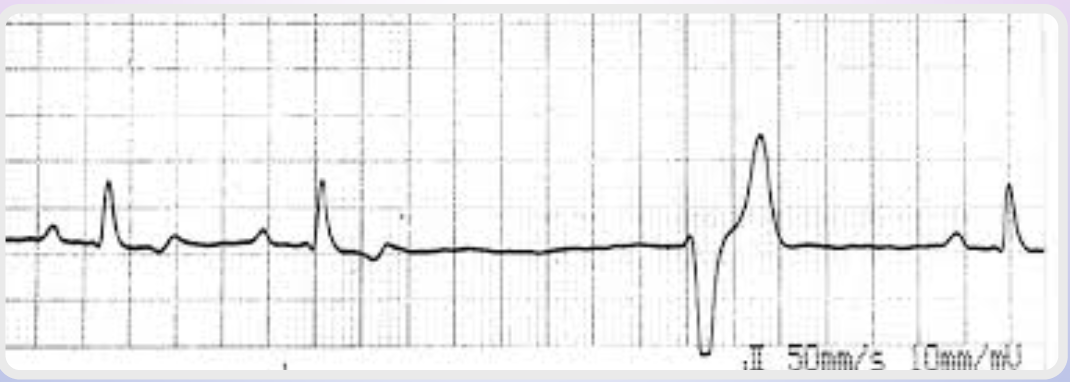
Ventricular Premature Complexes (VPCS):
ABNORMAL beats originating from VENTRICULAR MYOCARDIUM
Not typically treated
VPC - WIDE & BIZARRE

AV Block:
First-Degree AV Block
Conduction through AV NODE DELAYED
PROLONGED PR INTERVAL
2nd Degree Heart Block (Mobitz 1 vs 2)
Some HEARTBEATS are SKIPPED
NOT every P wave is followed by a QRS - when there is NO QRS - there’s NO HR

Disturbances of Impulse Conduction:
Second-Degree AV Block:
INTERMITTENT DISRUPTION of AV NODAL CONDUCTION
Third-Degree AV Block:
NO CONDUCTION of SINUS IMPULSES through AV NODE
Vagal Tone:
Refers to ACTIVITY of the VAGUS NERVE
Vagus Nerve (cranial nerve 10) - KEY component of the PARASYMPATHETIC SYSTEM (rest & digest)
Changes in Vagal Tone:
INCREASE TONE = LOWERS HR
DECREASE TONE = INCREASES HR
Nervous System - Sympathetic vs. Parasympathetic:
Sympathetic
FLIGHT or FIGHT
DILATED eyes
Dry mouth
Tachycardia
Adrenaline
Parasympathetic
REST & DIGEST
Eyes NOT dilated
Salivate (Digest food)
Acetylcholine
Vasovagal:
DROP in HEART RATE & BLOOD PRESSURE in response to EXCITEMENT
(Vasovagal syncope - blood, stress)
Brachycephalic breeds & Athletic dogs - HIGH VAGAL TONE
Reflexes:
OCULOVAGAL (brings HR DOWN)
CAROTID (regulate BP)
Hard Intubation:
Can result in VAGAL RESPONSE
The P wave is associated with:
Atrial contraction
The QRS complex is associated with:
Ventricular contraction
Which ECG lead do we typically use for surgical monitoring?
Lead II
Sinus arrhythmia is:
NORMAL in DOGS
Increased vagal tone results in:
DECREASED heart rate