carbohydrates in the diet
 Call Kai
 Learn
Learn Practice Test
 Spaced Repetition
 Match
Match Flashcards
 Knowt Play
1/41

There's no tags or description
Looks like no tags are added yet.
Name | Mastery | Learn | Test | Matching | Spaced | Call with Kai | Chat |
|---|
No analytics yet
Send a link to your students to track their progress
42 Terms
what are the major components of feed and forages?
moisture and dry matter (dm)
dry matter: organic matter and inorganic matter
what is organic matter?
roughly 90% of dry matter
carbohydrates (largest component)
protein
fat
vitamins
what is inorganic matter?
roughly 10% of dry matter
minerals (ash)
carbohydrates
primary source of energy that consists of carbon, hydrogen, and oxygen
form the major component of plant dry matter (forages are composed of aprox. 75% of carbohydrates
soluble and structural
soluble carbohydrates (non structural carbohydrates NSC)
readily broken down by enzymes produced in the gastrointestinal tract
hydrolysed and absorbed before reaching the large intestine (equine)
glucose, fructose, lactose, sucrose, starch
structural carbohydrates (complex carbohydrates)
resistant to break down by enzymes produced by the gastrointestinal tract
found in the cell wall of plants
cellulose, hemicellulose, pectin
lignin
completely indigestible and reduced the digestibility of other dietary components (protein and fibre particularly)
no nutritional value, produces bulk in diet
aids with hydration
monosaccharide
consists of one molecule of sugar
glucose
fructose
galactose
disaccharides
double sugar units made up of short chains of monosaccharide units, bound by glycosidic bonds
sucrose
maltose
lactose
glucose
used in both plant and animal tissues for energy (also known as dextrose)
fructose
sugar sweet found in sugar beet, sugar cane, and honey
what are the two most common sugars found in nature?
glucose and fructose
monosaccharide structure

alpha- carbon and hydrogen bond
beta- carbon and oxygen bond
galactose
two simple sugars bound together to make up the sugar found in milk (lactose)
same number of CHO as glucose and fructose but in a different arrangement
does not occur freely in nature or foods outside of lactose
linked parts of single sugars
lactose, maltose, and sucrose
lactose
milk sugar
glucose- galactose units
maltose
appears when in the body when starch is broken down
glucose- glucose units
sucrose
table sugar that tastes sweet
glucose- fructose units
polysaccharides
storage forms of monosaccharide units that consist of many monosaccharide units
structural elements in plant cell walls (need enzymes secreted by the microbiota and fermentation)
non sweet, insoluable, form powders
starch, glycogen, cellulose, hemicellulose
amylose
all alpha bonds broken down by amylase
whole grain cereals contain…
substantial quantities of starch in the form of amylose and amylopectin in the endosperm
starch is broken down by…
amylase to make maltose
maltose is broken down by…
maltase to get glucose and glucose units
sucrose is broken down by…
sucrase to get glucose and fructose units
lactose is broken down by…
lactase to get glucose and galactose units
cellulose and hemicellulose
fibre
polymers of beta 1,4 glucose units
bacteria
cellulolytic, hemicelluloytic and pectinolytic
protozoa
mostly ciliates
where do we aim to digest soluble carbohydrates?
in the upper portion of the digestive tract
fermentation yields…
volatile fatty acids (VFAS)
ethanoic/acetic acid (acetate)
C2 (most abundant energy source)
propanoic acid (propionate)
C3 (primarily used by the liver to produce glucose
butanoic acid (butyrate)
C4 (energy source/gut health)
fibre digestion…
produces predominantly acetate
starch (undigested in the SI)…
produces propionate
energy feed ingredients
maize
wheat
barley
oats
cereal by products (maize gluten, maize distillers, bran, beet pulp)
protein feed ingredients
soyabean meal
rapeseed meal
linseed meal
cottonseed meal
sunflower meal
legumes-peas, beans, alfalfa
fibre feed ingredients
grass, hay, haulage, alfala hay, straw, silage
grass and grass hay pyramid
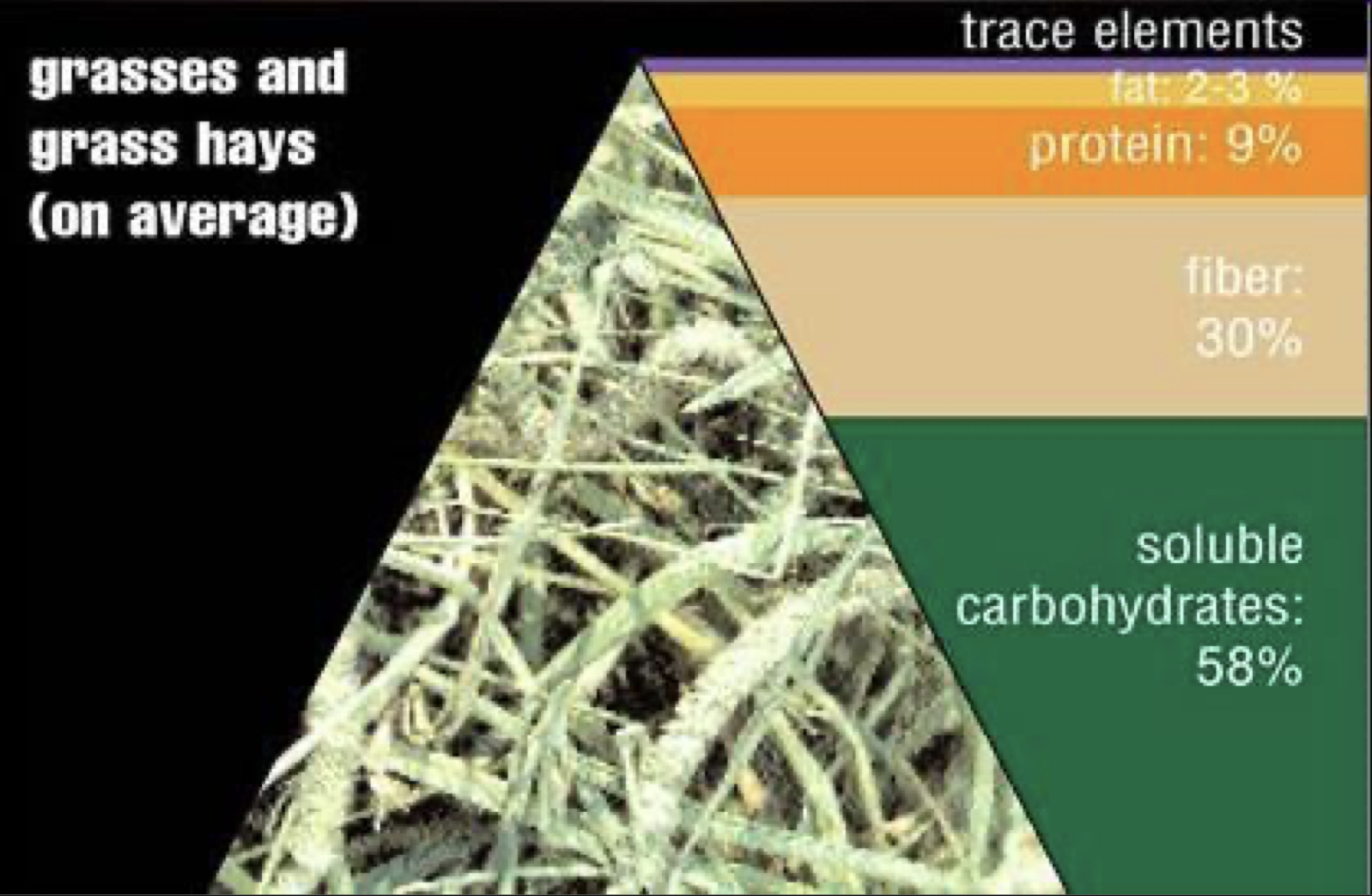
alfalfa hay pyramid

maize v whole oats pyramid

equine food triangle
