Periodontal Regeneration of Furcation Defects
 Call Kai
 Learn
 Practice Test
 Spaced Repetition
 Match
 Flashcards
 Knowt Play
1/54

There's no tags or description
Looks like no tags are added yet.
55 Terms
furcation defects
most difficult
large surface with no blood supply
a lot of roots
Journey

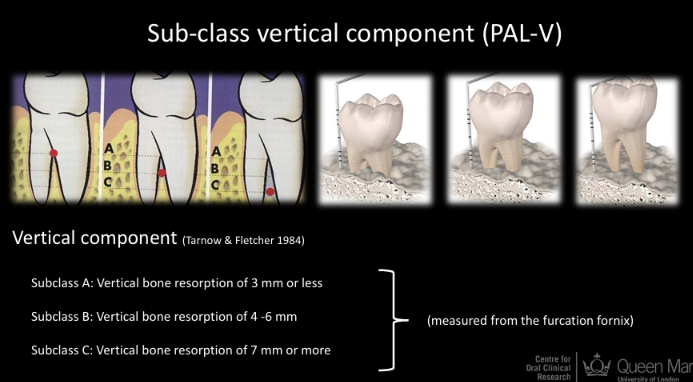
Classification of furcation defects horizontal component?

Furcation vertical component?
mid buccal and mid lingual pocket
Presence of furcation is a major risk for what?
Tooth loss

What is forceps threshold?
Forceps thresholds - medical complications
how much attachment loss before dentistry decides to extract all teeth and place implants - strategic
proactive strategic extraction - lets take teeth out and replace with implants so you do not lose more bone due to periodontal dx
however study show that there are teeth with more than 60 percent attachment loss that could have been saved with periodontal therapy that have been removed
dentists attitude cab vary based on where they work e.g if they work in place where implants are placed a lot/a lot of implant dentistry occurs - dentist extract teeth easily than other sites- because no access for cleansability they slowly start to fail

What tooth is most likely to be extracted?
First mandibular molar - most likely to be extracted first

Trends in implant use?
implants are the reason teeth are removed as we believe , but still not better than teeth
teeth like first mandibular molar with furcation defects are most likely to be extracted and replaced by implants instead

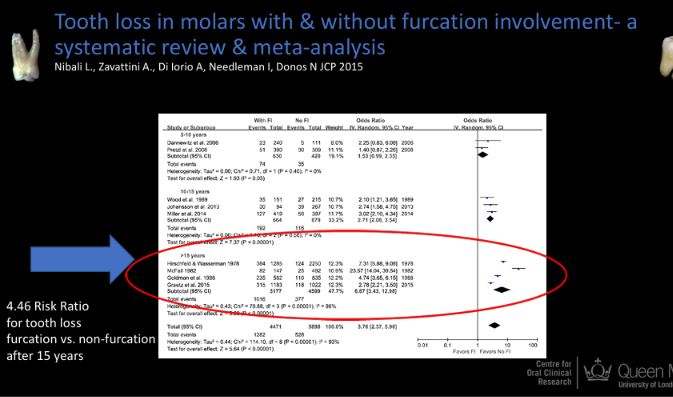
Tooth loss in molars with and without furcation involvement
Increased tooth loss risk in teeth with furcation involvement than those that don’t
Tooth loss in molars with and without furcation invovlement
Presence of furcation doubles risk for molar loss after 10-15 years of supportive periodontal therapy
however, even furcation 3 responded well to periodontal therapt

therefore, overall message?
It is worth to keep teeth even if they have furcation 3 involvement and not go straight for an extraction and implant options
effort to maintain teeth with furcation involvement
Study: what is the significance of the vertical component?
vertical components - will decide what type of tx will be carried out, or if it will be maintained or not

same study results?
shown that if you maintain spt, you will lose some molars
but you will maintain most of them
prev rct and vertical component and bone loss - reasons for tooth molar loss
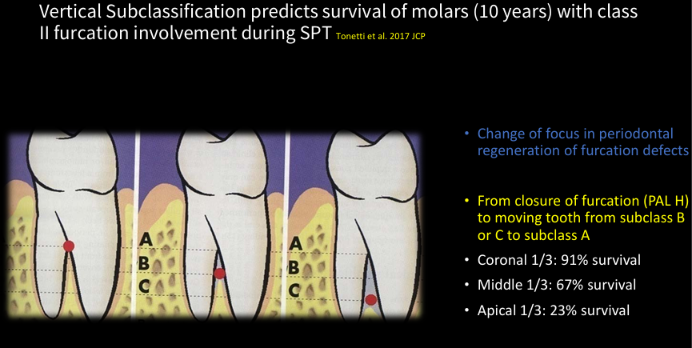
the more severe the vertical loss, the higher the odds ratio for tooth loss

What was the change in focus in periodontal regeneration of furcation defects?
Need to close horizontal and also reduce the vertical pockets - vertical components at the mid buccal and mid lingual level
Furcation anatomy
root cones, trunks, fornix, degree of separation of roots
make all make perio tx difficult to tx and for pt to maintain

What is the adequate management of molars with class 2 and 3 furcation and residual pockets? as stated by guidlines?
periodontal therapy
not an indication for extraction

Possible treatment options?
stages?

What is the importance of adequate self- performed oral hygiene in the context of surgical periodontal treatment?
good plaque control is essential for furcation involvement to be tx
not good ohi don’t proceed with tx

What is also a prerequisite before attempting surgical therapy?
Non-surgical periodontal therapy must be effective before proceeding with surgical procedure - both intrabondy defects and furcations

What is the adequate management of residual deep pockets associated with mandibular class II furcation involvement?
Step 1 then step 2 is don’t adequately,
Residual deep pockets around mandibular molars with class 2 furcation pockets - regenerative surgery


cementum, pdl and bone formation in the middle of the furcation
good quality
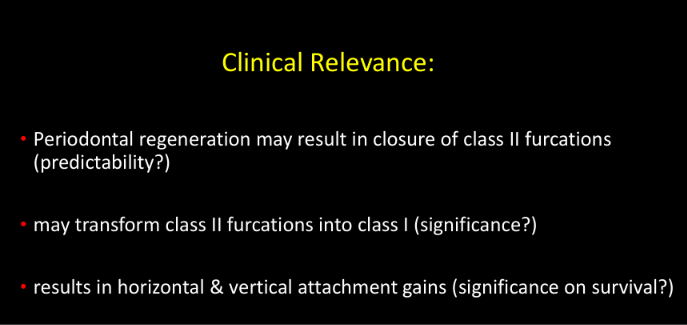
Clinical relevance? (3)
1. horizontally
Factors influencing outcome defects? (3)
morphology of the furcation specifically the keyhole
2×2 mm - ok
5mm x 4mm - more unpredictable
soft tissue management/flap recession (recession may expose furcation)
space maintenance

What 3 features were found to hinder outcomes of regenerative therapy?
Long root-trunks, wide furcation entrance and fornix coronal to alveolar crest

Key factors for tissue regeneration? (4)
blood clot stability
scaffold space making
vascularisation
cell migration, differentiation and proliferation

Tools:


What is this study showing?
this is at 5 months
pristine is the outer part of the root
but require 12 months for complete healing of the pdl


Study
Significant vertical improvement, some improvement of horizontal, but no furcation closure

gtr vs emd for furcation 2 involvmeent in mandibular molars study?
similar partial closure - (2 to 1)
no big difference and therefore not significant
challenging, and if doing tx it is mainly to be partial closure

Study
Horizontal closure - 0-60% variation
Class 1 conversion - 100%

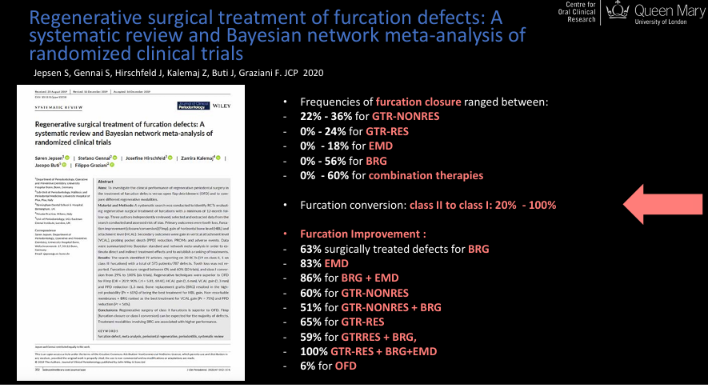
message?
predictability not always there
What are the best methods to tx?
horizontal gain - regen techniques in favour- bone grafts and GTR or bone graft and EMD
vertical gain - regen techniques in favour - with the best being bone graft with non-resorbable membranes


2 furcation defects
fill in with bone graft and collagen barrier on top sutured
complete closure of defect
Same study as above: results after 6 months

Combined furcation and intrabony defects:
Combination defects - regneration is possible and will lead

improvements were not observed in molars with baseline what?
Hypermobility

What is the adequate choice of regenerative biomaterials for the regenerative treatment of residual deep pockets associated with class II mandibular and maxillary buccal furcation involvement?
collagen barrier and bone graft
or EMD with or without bone graft

autogenous platelet concentrate use for furcation defects?
Show significant pocket depth reduction


Class 2 maxillary furcation: Q: What is the adequate management of residual deep pockets associated with maxillary buccal class II furcation involvement?
GTR - successful results for closure
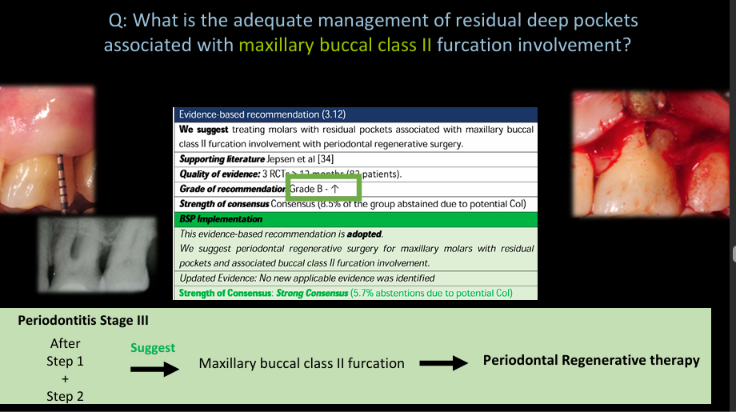

suture to protect site - blood clot maintained


What is the adequate management of maxillary interdental class II furcation involvement?
not much evidence on which is better
can fo NSPT, OFD (open flap debridement), root separation or root resection, periodontal regeneration
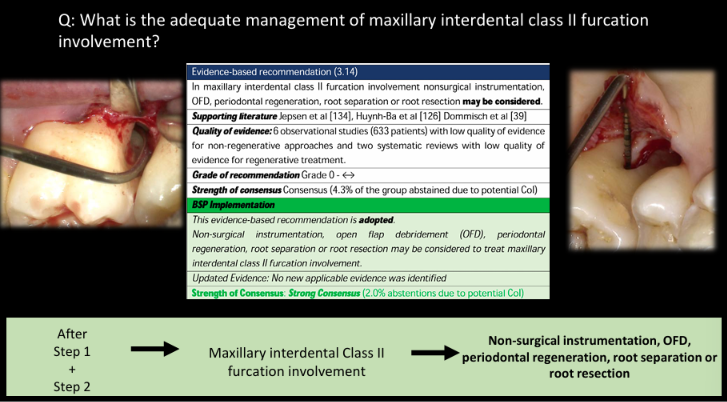

What has happened here?
Instead of xla - removed root
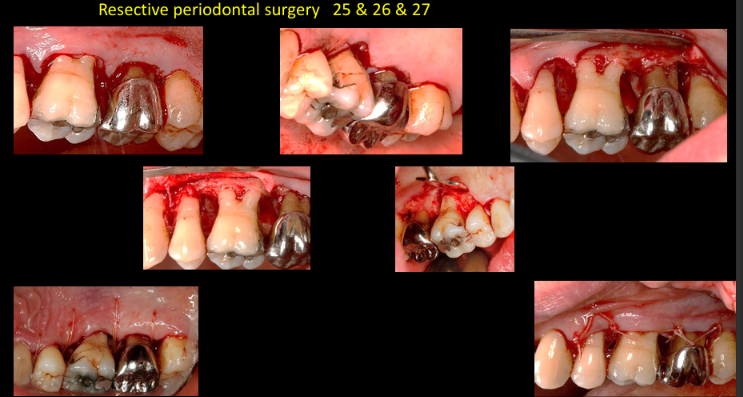
What tx has been carried out?
apically repositioned flap - larger space for the pt to clean effectively

tx outcomes with emd of proximal class 2 furcation involvement
Studies shown - improvements - does not completely heal defect - conversion from class 2 to 1

class 2 furcation predictability pattern?
Decreases with severity
mandibular molar bucally more successfully tx, followed by buccal degree 2 in maxillary molar lingually is more difficult
interdentally maxillary more complicated with limited evidence in literature

What is the adequate management of maxillary class III furcation involvement?
Step 1 then step 2, NSPT, OFD, Root separation, root resection, tunnelling - where you can put large interdental brushes between roots]
![<p>Step 1 then step 2, NSPT, OFD, Root separation, root resection, tunnelling - where you can put large interdental brushes between roots]</p>](https://assets.knowt.com/user-attachments/e234113d-68ee-4136-9d9e-a1a722b38a67.png)
GTR for furcation degree 3 in maxillary molars?
none of the furcation were closed and all retained class 3 characteristics


expose furcation involvement - respective approach = pt can clean with brush

decided mesial root will be resected leaving only distal toot intact
splint teeth as they tend to have increased mobility


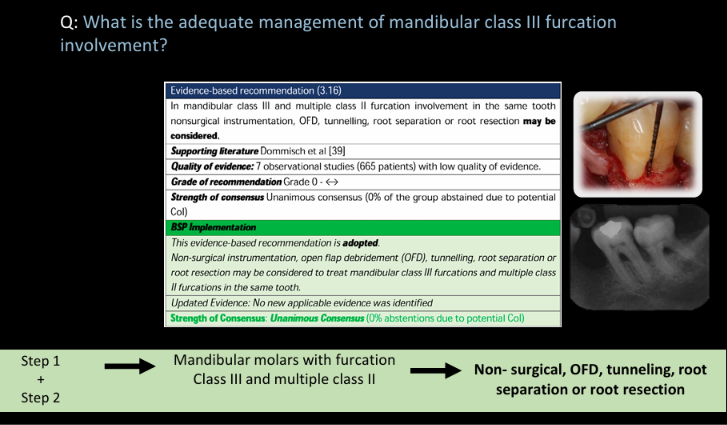
What is the adequate management of mandibular class III furcation involvement?
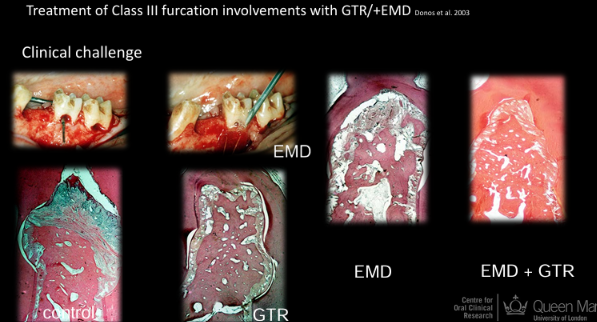
Regenerative tx outcomes?
impossible to tx in term of regeneration EMD and GTR

Q: What is the adequate management of mandibular class III furcation involvement?
for degree 3 furcation - one tehcnique than other not esablished
can maintin teeth up to 30 years
classic pmpr - srp
