RTH Chapter 3
 Call Kai
 Learn
 Practice Test
 Spaced Repetition
 Match
 Flashcards
 Knowt Play
 Podcast
1/108

There's no tags or description
Looks like no tags are added yet.
109 Terms
Patient assessment
clinical plan that identifies the unique needs of the patient and how those needs will be addressed by the healthcare team
Information obtained through a continuous, systematic assessment allows the healthcare provider to:
Determine the nature of the problem.
Select an intervention for that problem
Evaluate the effectiveness of that intervention
Interprofessional approach
Multiple healthcare workers from different professions collaborating to deliver services and coordinating care programs for high-quality care
Patient navigators
Designated individuals who provide personal guidance with medical, social, and financial services to patients while they move through the health care system.
Therapeutic relationship
The relationship between a healthcare worker and a patient to affect beneficial change in the patient.
Maslow’s hierarchy of needs
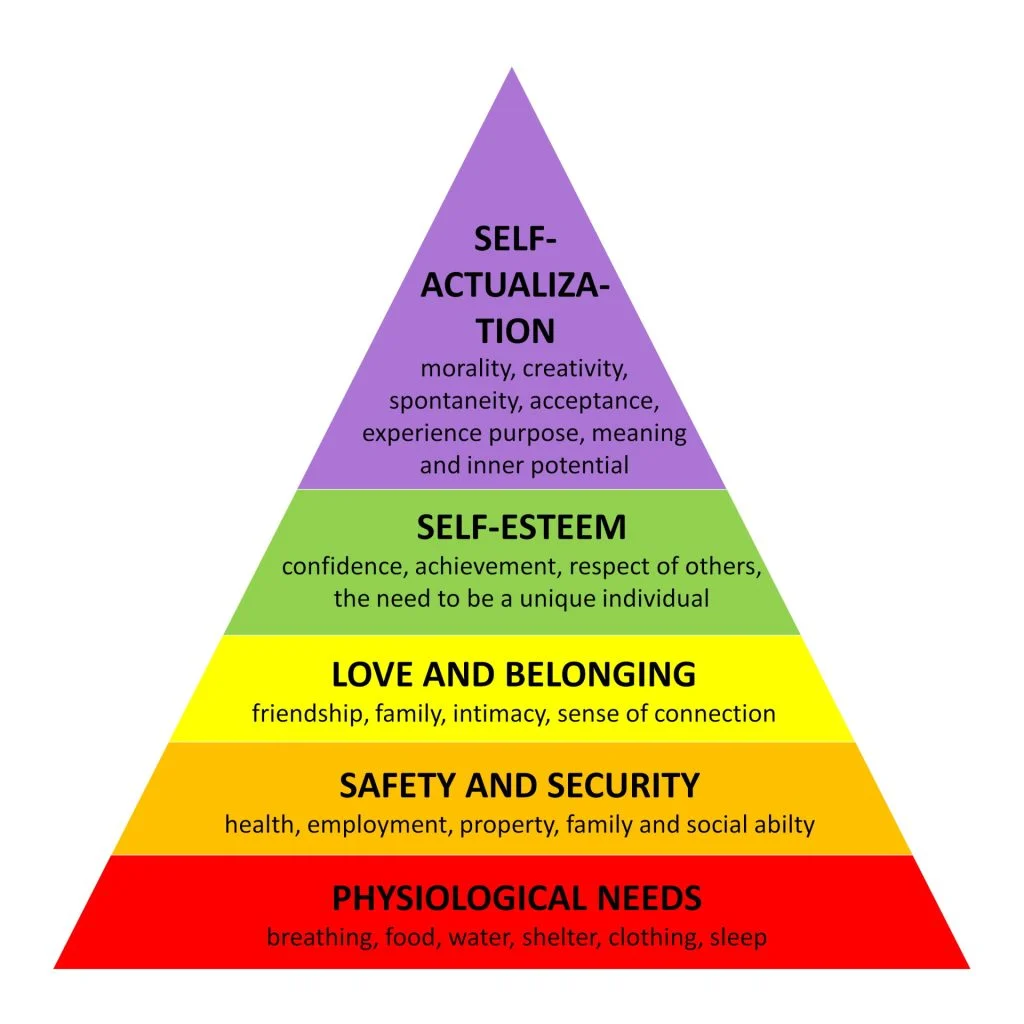
Cognitive content:
composed of the facts and words contained in the message
Affective content
may be verbal or nonverbal and consists of feelings, attitudes, and behaviors.
Helpful Behaviors (verbal)
Nonjudgmental.
Avoid use of medical jargon.
Reflect, clarify, and summarize patients’ statements.
Respond to patient messages expressed both verbally and nonverbally.
Use verbal reinforcers such as “I see” and “Yes.”
Give information appropriately.
Use humor at times to reduce tension.
Have a moderately calm rate of speech.
Have a moderate tone of voice.
Helpful behaviors (nonverbal)
Maintain appropriate eye contact.
Use touch appropriately.
Nod head occasionally.
Display open body language.
Exhibit animated facial expressions.
Smile often and at appropriate times.
Nonhelpful behaviors (verbal)
Preaching.
Blaming.
Placating.
Using words patient does not understand.
Direct and demanding.
Patronizing attitude.
Straying from topic.
Overinterprets.
Questioning extensively.
Talking about self too much.
Nonhelpful behaviors (nonverbal)
Has poor eye contact.
Inappropriate patient touch.
Fidgety and impatient.
Expressionless face.
Rolling eyes or yawning.
Shakes pointed finger at patient.
Nonverbal communication cues

Six major categories of emotion
Anger, surprise, disgust, sadness, happiness, fear.
Affective communication
involves feelings of anger, surprise, disgust, sadness, happiness, and fear. The radiation therapist needs to reflectively listen to the patient to identify what the patient is feeling.
Reflective listening:
involves responding with empathy and is a way for people to listen and communicate effectively.
Empathy
Identifying with the feelings, thoughts, or experiences of another person.
Minimal verbal response:
The verbal counterpart to head nodding.
Reflecting:
Responding by reflecting the specific content or implied feelings of their nonverbal observations or communication that may have been omitted.
Paraphrasing:
A verbal statement that is interchangeable with a patient's statement.
Probing:
An open-ended statement used to obtain more information.
Clarifying:
Used to obtain more information about vague, ambiguous, or conflicting statements.
Interpreting:
Occurs when the therapist adds something to the patient's statement or tries to help the patient understand underlying feelings.
Checking out:
Occurs when the therapists are genuinely confused about the perceptions of the patient's verbal or nonverbal behavior or have a hunch that should be examined.
Informing:
Occurs when the therapist shares objective and factual information.
Confronting:
Involves therapists making the patient aware that their observations are not consistent with the patient's words.
Summarizing:
The therapist condenses and puts the information communicated in order.
The World Health Organization’s definition of interprofessional collaborative practice:
When multiple health workers from different professional backgrounds provide comprehensive services by working with patients, their families, caregivers, and communities to deliver the highest quality of care across multiple settings
General health assessment
Conducted by the oncology practitioner at the consultation appointment to obtain patient history and physical condition.
Physical Assessment:
The radiation therapist is often the first member of the oncology team who assesses critical changes in patient status, and it is within the scope of practice to make recommendations for interventions and referrals when warranted
Nutritional Assessment
Can involve all members of the oncology team.
first physical change that alerts individuals with cancer to seek medical treatment.
weight loss
Special attention should be paid to patients with cancer in the…
head and neck area or gastrointestinal tract.
Cachexia
state of general ill health and malnutrition, resulting in dehydration and progressive loss of body weight, fat, and muscle
Components of daily physical assessment

skin reactions dosage
start at 1600
Faint erythema dosage
2000-3000
erythema dosage
3000-4000
dry and moist desquamation dosage
4000-6000
epilation/alopecia dosage
2000
stomatitis/xerostomia/mucostitis/taste alterations dosage
between 2000 and 3000
pharyngitis dosage
2000-3000
laryngitis dosage
4000
esophagitis dosage
2000-3000
nausea and vomiting dosage
1000-2000
evaluation of weight change

Significant weight loss in one week
1-2%
severe weight loss in one week
over 2%
Anorexia
Loss of a desire to eat.
Moist desquamation:
Oozing, peeling skin
Dysphasia:
Difficulty swallowing
Stomatitis:
Inflammation of the mouth
Thrombocytopenia:
Reduction in the number of platelets
Karnofsky score:
Describes the performance status of the patient
Erythema:
Skin redness
Xerostomia:
Dryness of the mouth
Leukopenia:
Decrease in the white blood cell count
Marasmus:
Calorie malnutrition
Alopecia:
Hair loss
Anxiety
An individual responding to a perceived threat affectively at an emotional level
Myelosuppression:
Reduction in bone marrow function
Depression:
Perceived loss of self-esteem resulting in a cluster of affective behavioral and cognitive responses
Dry desquamation:
Flaky, peeling skin
Kwashiorkor:
Protein malnutrition
Anemia:
Decrease in red blood cell count
Pain assessment has several purposes:
It establishes a baseline for treatment and interventions.
It helps the clinical team focus on what interventions are best for the patient.
It enables the evaluation of chosen interventions.
6 Dimensions to consider in the assessment and management of the experience of cancer pain:
Physiologic (organic cause of pain)
Sensory (pain intensity, location, and quality)
Affective (depression and anxiety)
Sociocultural (cultural background and family dynamics)
Behavioral (medication intake and activities level)
Cognitive (the meaning of pain, understanding, attitudes and beliefs, level of cognition)
Acute pain
New, may come from recent procedures
Chronic pain
has been present for three months or longer.
Affective dimension of pain
the emotional response to pain often results in depression, anxiety, and other psychological factors or personality traits that may increase patient suffering.
cognitive dimension
Cognition impacts the way in which patients view their pain and express their needs to caregivers. If they feel that cancer pain is inevitable and that nothing can be done, they will be less likely to report increases in pain or to ask for help in managing pain.
Behavioral Dimension
Cancer pain can cause changes in behavior that may contribute to increased pain or physical decline
Karnofsky Performance Status

Eastern Cooperative Oncology Group performance status

Sociocultural Dimension of pain
The socio-cultural dimension of pain consists of a variety of ethnic, cultural, demographic, spiritual, experience, and other related factors that influence a person's perception and response to pain
hematocrit levels male
38-46
Hematocrit levels female
35-44
Red blood cells men
4.3-5.6 × 10^6
Red blood cells women
4-5.2 × 10^6
Normal male hemoglobin
13-16 g/dl
Normal female hemoglobin
12-16 g/dl
Severly low hemoglobin
7.5
Normal white blood cell count
3500 – 9050
Severly low white blood cell count
Under 2000
Normal platelet count
165,000 – 415,000 per microliter
Severly low platelet count
Under 20,000
Pancytopenia:
The reduction in all circulating blood cells, including peripheral red blood cells, white blood cells and platelets.
Normal BUN (blood urea nitrogen) range adult
10-20 mg/dl
Normal BUN range child
5-18 mg/dl
Normal Creatinine range females
0.6-1.1 mg/dl
Normal Creatinine range males
0.7-1.3 mg/dl
quality of life
a person's subjective sense of well-being derived from personal experience of life as a whole.
In the psychological domain, five major emotional themes have been identified
Fear and anxiety generated by the diagnosis and compounded by inadequate communication with caregivers.
Loss of personal control associated with the need to be dependent on those administering treatment.
Uncertainty about the outcome of treatments.
The physician’s persistent enthusiasm for a cure.
The debilitating effect of standard cancer treatments
The psychosocial and affective responses that occur most commonly among patients with cancer are
anxiety and depression
The criteria for a depressed condition:
Depressed Mood.
Diminished interest.
Significant weight loss.
Insomnia or hypersomnia
Psychomotor agitation or retardation
Loss of energy or fatigue
Feelings of worthlessness.
Complaints or evidence of diminished ability to think or concentrate.
Recurrent thoughts of death.
Cancer Rehabilitation:
The maximum restoration of physical, psychological, social, vocational, recreational, and economic functions within the limits imposed by the malignancy and its treatment.
Cancer rehabilitation objectives:
Psychological support after the diagnosis of cancer.
Optimal physical functioning after the treatment of cancer.
Early vocational counseling when indicated.
Optimal social functioning as the ultimate goal of all cancer control treatment.
Cultural assessment
A person’s culture can determine their behavior and attitude towards healthcare
Cultural humility
an active, lifelong process of self-reflection, self-critique, and continuous learning regarding one's own cultural background and biases
Effective Strategies for coping
Information seeking.
Participation in spiritual/religious activities.
Practicing mindfulness, meditation, or prayer.
Distraction.
Expression of emotions and feelings.
Positive thinking.
Conservation of energy.
Maintenance of independence.
Maintenance of control.
Goal setting.