Anatomy Total Reproductive System
 Call Kai
 Learn
 Practice Test
 Spaced Repetition
 Match
 Flashcards
 Knowt Play
1/643

There's no tags or description
Looks like no tags are added yet.
644 Terms
reproduction
process by which genetic material (DNA) is passed from parents to offspring
functions of reproduction
- produce new offspring and continue the species
- produce hormones responsible for growth and development
what does the human reproductive system consists of:
- primary sex organs: structures that produce gametes and secrete various sex hormones that regulate reproduction and development
- accessory structures: include the various ducts, glands, and external genitalia which support the primary sex organs
what are the male vs female primary sex organs?
male- testes produce sperm
female- ovaries produce ova or egg cells
Male sex characteristics:
1. testes produce sperm
2. testosterone dominant
3. gametes produced continuously after puberty
4. ducts transport sperm
5. urethra carries semen out
female sex characteristics:
1. ovaries produce oocytes
2. estrogen and progesterone dominant
3. oocytes mature cyclically
4. uterine tubes transport oocyte
5. uterus supports development
both female and male sex characteristics
1. gonads produce gametes
2. FSH and LH regulate function
3. meiosis produces haploid gametes
4. accessory structures support reproduction
5. hormonal feedback regulates system
what are the ducts of the testes
- Epididymis
- Ductus (Vas) Deferens
- Ejaculatory Ducts
- Urethra
what are the accessory sex glands
- seminal vesicles
- prostate gland
- bulbourethral (Cowper's) glands
testes description
oval, plum sized structures located within the scrotum outside of the abdominopelvic cavity
- testes are held away from the body since sperm are produced in large numbers at about a three degree lower temperature than the body's normal 37 degrees Celsius
what are the functions of testes
produce sperm (gametes) and secrete hormones, primarily testosterone
why is testicular temperature important
- normal sperm production requires a temperature blow core body temperature
- scrotum helps maintain this cooler environment
- dartos and cremaster muscles help regulate testicular temperature
- prolonged excessive heart may impair sperm production
what is the main job of seminiferous tubules
site of spermatogenesis
what is the main job of sertoli (sustentacular) cells
support and nourish developing sperm; secrete inhibin
what is the main job of Leydig (interstitial) cells
produce testosterone
what is the main job of Epididymis
sperm maturation and storage
Epididymis description
comma shaped organ than lies on the posterior border of the testes
- made of tightly coiled tubules
- measures about 20 feet long
function of epididymis
site of sperm final maturation (final 10 to 14 days)
- sperm may remain in the epididymis for up to 4 weeks after which they are either expelled or reabsorbed by the body
Ductus (vas) deferens description
a long duct (18 inches) that is the passageway for sperm from the epididymis to the urethra
- enters body through an opening in the pelvis floor called inguinal canal
- structure that is typically cut in a vasectomy
what is the function of the ductus (vas) deferens
transports mature sperm to urethra in preparation for ejaculation
what is the pathway of sperm
1. seminiferous tubules
2. epididymis
3. ductus deferens
4. ejaculator duct
5. urethra
6. external urethral orifice
seminal vesicles description
pouch like structures lying posterior to and at the base of the urinary bladder in front of the rectum
seminal vesicles function
secrete an alkaline fluid that is used as an energy source for the sperm
- makes up about 60% of the volume of semen
- alkaline nature of this fluid allows sperm to survive in acidic environment of female reproductive tract
prostate gland description
a single donut shaped gland about the size of a chestnut that surrounds the urethra
- often the site of cancerous growth in males
what is the function of prostate gland
secretes a fluid that makes up about 13-33% of the semen
bulbourethral glands (Cowper's glands)
- two small glands located below the prostate gland
- secrete a clear, slippery mucus (pre-ejaculate) during sexual
what does bulbourethral glands mucus help
- lubricate the urethra
- neutralize residual acidity from urine in the urethra
- prepare the pathway for sperm to travel
Semel (seminal fluid) description
mixture of sperm and seminal fluids
- has a pH of 7.2-7.6
- contains enzymes that activate the sperm
- 2.5-5.0 mL of semen is released per ejaculation containing about 200 million sperm
function of semen
contains sperm for fertilization
seminal vesicles secretion, main function, and memory hint
- alkaline fluid containing fructose
- provides energy for sperm; helps protect sperm from acidity
- feeds sperm
prostate gland secretion, main function, memory hint
- milky fluid containing enzymes
- helps sperm function and semen liquefy
- activates sperm
Bulbourethral secretion, main function, memory hint
- clear mucus
- lubricates urethra and help neutralize residual acidity
- prepares the pathway
penis
- external male anatomical structure
- used to deliver sperm to the female reproductive tract
urethra
- terminal duct for both the reproductive and the urinary systems
- passageway for sperm and urine to the external environment, not at the same time
- measures about 8 inches in length
how are sperm produced?
- spermatogenesis occurs in the seminiferous tubules
- begins at puberty and continues throughout adult life
- spermatogonia divide to produce cells that enter meiosis
- meiosis 1 and 2 produce haploid spermatids
- spermiogenesis changes spermatides into spermatozoa
Meiosis _____ chromosomes number. Spermiogenesis changes cell ________
REDUCES; SHAPE
spermatozoa
mature sperm cells, mature at a rate about 300 million per day, once ejaculated have a life expectancy of about 48 hours
what are the two parts of spermatozoa
1. head- contains genetic material (Acrosome- covering on the head that contains enzymes that help the sperm penetrate the egg's protective coating)
2. tail- produces wave-like motion to help propel sperm to egg and to help penetrate the egg's surface when it makes contact
Spermatogenesis
sperm formation, occurs in the seminiferous tubules and regulated by the hormone, Follicle stimulating hormone
Male puberty
begins at about age 10-11 and is usually completed at about age 15-17
- male secondary sexual characteristic begin to appear
- potential for sexual reproduction
what are male secondary sex characteristics
- muscular and skeletal development
- development of pubic, axillary, and chest hair
- facial hair growth
- temporal hairline recession
- deepening of the voice
testosterone
- principle male hormones that is produced by the interstitial cells
- responsible for the male androgenic traits and characteristics such as facial hair growth, hairline recession, and deepening of the voice
Hypothalamus
releases gonadotropin-releasing hormone (GnRH) which acts on anterior pituitary
Anterior pituitary
releases follicle stimulating hormone (FSH) and luteinizing hormone (LH)
FSH and LH go to _____ but act upon different cells
testes
Inhibin
lower FSH
sertoli (sustentacular) cells
- inside seminiferous tubules
- support developing sperm
- form blood testis barrier
- respond to FSH; secrete inhibin
Leydig (interstitial) cells
- between seminiferous tubules
- produce testosterone
- stimulated by LH
Sertoli cells help _______; Leydig cells provide _____ needed for normal sperm production
sperm; testosterone
what is the hormonal chain of command
1. hypothalamus
2. GnRH
3. anterior pituitary
4. splits off to FSH and LH
5. FSH goes to sertoli cells
6. LH goes to Leydig cells
7. sertoli cells support sperm
8. Leydig cells produce testosterone
hereditary information (DNA)
carried on 23 pairs of chromosomes in human body cells
- 22 pairs of autosomes, 1 pair of sex chromosomes
autosomes
- contains genes that code cellular functions
- determine most human characteristics
- eye color/hair/height
- a pair of matching autosomes, homologous chromosomes
sex chromosomes
- two X chromosomes or one X and one Y
- female (XX) and male (XY)
- also, some genes code for other functions
- one member of chromosomes pair inherited from each parent
diploid cells
- 23 pairs of chromosomes
- 2n denotes number of chromosomes
haploid cells (gametes)
- 23 chromosomes total
- ensures offspring do not receive 4n total chromosomes
gametogenesis
process of forming human sex (gametes)
- begins with cell division (meiosis)
females gametes
secondary oocytes (eggs)
male gametes
sperm
meiosis 1
1. prophase 1
2. metaphase 1
3. anaphase 1
4. telophase 1 and cytokinesis
prophase

metaphase

anaphase

telophase

cytokinesis

what is the difference between meiosis 1 and 2
meiosis 1- crossing over and genetic diversity
independent assortment
separate the homologous chromosomes (2 sets/tetrads) to make haploid gametes
meiosis 2- separate the chromatids (identical copies) so there is one chromosome of each type in the gamete
gonads
sex specific primary reproductive organs (ovaries in females and testes in males)
what is the job of gonads
produce gametes and unite at fertilization to initiate formation of new individual
puberty
when external sex characteristics develop during adolescence/time at which one becomes reproductively mature
- gametes begin to mature
- gonads start to secrete sex hormones
hypothalamus begins to secrete
gonadotropin- releasing hormones (GnRH)
GnRH stimulates anterior pituitary to release
- follicle stimulating hormone (FSH)
- luteinizing hormone (LH)
- gonads begin to produce significant levels of sex hormones
- start process of gamete and sexual maturation
female produces and releases single gamete monthly
oocyte
male produces large numbers of gametes
- 100 million/day
- stored for short time only
- if not expelled from body, reabsorbed
gynecology
treatment and study of the female reproductive system
urology
treatment and study of the male and female urinary tracts and the male reproductive system
andrology
study and treatment of the male reproductive system
urogenital triangle
- females urethral and vaginal orifices
- males base of penis and scrotum
anal triangle
location of anus, surrounded by external and sphincter
vesicouterine pouch
space between urinary bladder and uterus
rectouterine pouch
space between rectum and uterus
ovaries
primary reproductive organs
- paired, oval organs
- ovarian follicles are the site of oocyte production and sex hormone release
broad ligament
peritoneum hanging over uterus

ovarian ligament
anchors ovary to posterior aspect of broad ligament

suspensory ligament
attaches to to lateral edge of each ovary
ovarian follicles
Areas within the ovary in which individual eggs develop
primary follicle
secretes estrogen as it matures
secondary follicle
forms from the primary follicle, secretes estrogen
mature follicle
forms from secondary follicle and contains a secondary oocyte
corpus luteum
forms from remnants of follicle
- secretes progesterone and estrogen
- prepares uterus for possible implantation of fertilized oocyte
perimenopause
time near menopause, irregular or skipped periods
menopause
women cease cycling for at least 1 year
- no more ovarian follicles remain or follicle maturation stops
- uterine lining no longer growing
- estrogen no longer secreted
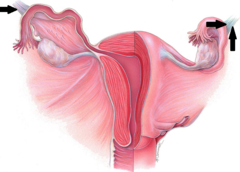
uterine tubes
aka fallopian tubes

infundibulum
numerous finger like folds called fimbriae
- enclose ovary only at time of ovulation
ampulla
expanded region of tube medial to infundibulum
- fertilization typically happens here
isthmus
region of tube extending medially from ampulla
uterine part of tube
extends medially from isthmus
- penetrates wall of uterus
uterus
pear shaped muscular organ
- implantation site for pre embryo
- supports, protects, nourishes developing embryo
- ejects fetus at birth
- contracts and sheds lining if oocyte not fertilized
what are the regions of the uterus
fundus, body, isthmus (narrow constricted region inferior region) , and cervix (narrow inferiormost part of the uterus, projects into the vagina)
uterine prolapse
uterus starts to protrude through vagina, weakness in pelvic floor or these ligaments
what are the three tunics of the uterine wall
(outermost to innermost)
perimetrium, myometrium, and endometrium
vagina
thick walled tube, functions as birth canal, receives penis during intercourse, passageway for menstruation