T4 - Capacitors and Inductors
 Call Kai
 Learn
Learn Practice Test
 Spaced Repetition
 Match
Match Flashcards
 Knowt Play
1/26

There's no tags or description
Looks like no tags are added yet.
Name | Mastery | Learn | Test | Matching | Spaced | Call with Kai | Chat |
|---|
No analytics yet
Send a link to your students to track their progress
27 Terms
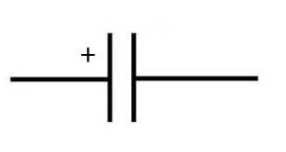
Capacitor
Device that stores charge and energy, comprised of 2 closely spaces parallel plates
Equal and opposite charges flow onto places
Effect of applying a potential difference over capacitor
Farads, F
Units for Capacitance, C
Capacitor at DC
Behaves like an open circuit
Ideal Capacitor
Charge remains indefinitely
Instantanenous change in voltage impossible
Condition for capacitor
RC Circuit
Contains a resistor and capacitor only
RC Circuit Properties
Capacitor will discharge, vc decreases, and resistor absorbs energy
Tau = RC
Time constant in an RC circuit
63%
Capacitor voltage decay after tau seconds in RC circuit
Capacitors in Parallel
Ceq = C1 + C2 + C3
Capacitors in Series
Ceq = 1/(C1-1 + C2-1 + C3-1)
Inductor
Device that produces a magnetic field around the wire when current passes through
Magnetic Flux Density
Proportional to current and number of turns (N)
Flux Density Changes
Potential difference is induced at terminals
Henries, H
Unit for Inductance, L
Inductor at DC
Behaves like a short circuit
Constant Current through Inductor
No induced potential difference, v(t)=0
Instantaneous change in current impossible
Condition for inductor
Energy Stored in Magnetic Field
Dependent on current and inductance, E(t) = ½Li2(t)
Current Increases
Energy in inductor is being stored
Current Decreases
Energy in inductor is being released
RL Circuit
Contains an inductor and resistor only
RL Circuit Properties
Current decreases as inductor’s magnetic field collapses, energy stored in inductor is transferred to resistor
Switch opened in circuit with inductor
Current drops quickly, voltage across switch is large and negative which causes arcing
Tau = L/R
Time constant for RL circuit
63%
Inductor current decay after tau seconds in RL circuit