Lab 9 - Respiratory System
 Call Kai
 Learn
 Practice Test
 Spaced Repetition
 Match
 Flashcards
 Knowt Play
1/102

There's no tags or description
Looks like no tags are added yet.
103 Terms
What makes up the conducting zone?
bronchi —> bronchioles —> terminal bronchioles
What makes up the transitional and respiratory zones?
respiratory bronchioles, alveolar ducts, alveolar sacs

Nasopharynx

superior nasal concha and superior nasal meatus

middle nasal concha and middle nasal meatus

inferior nasal concha and inferior nasal meatus

hard palate

soft palate
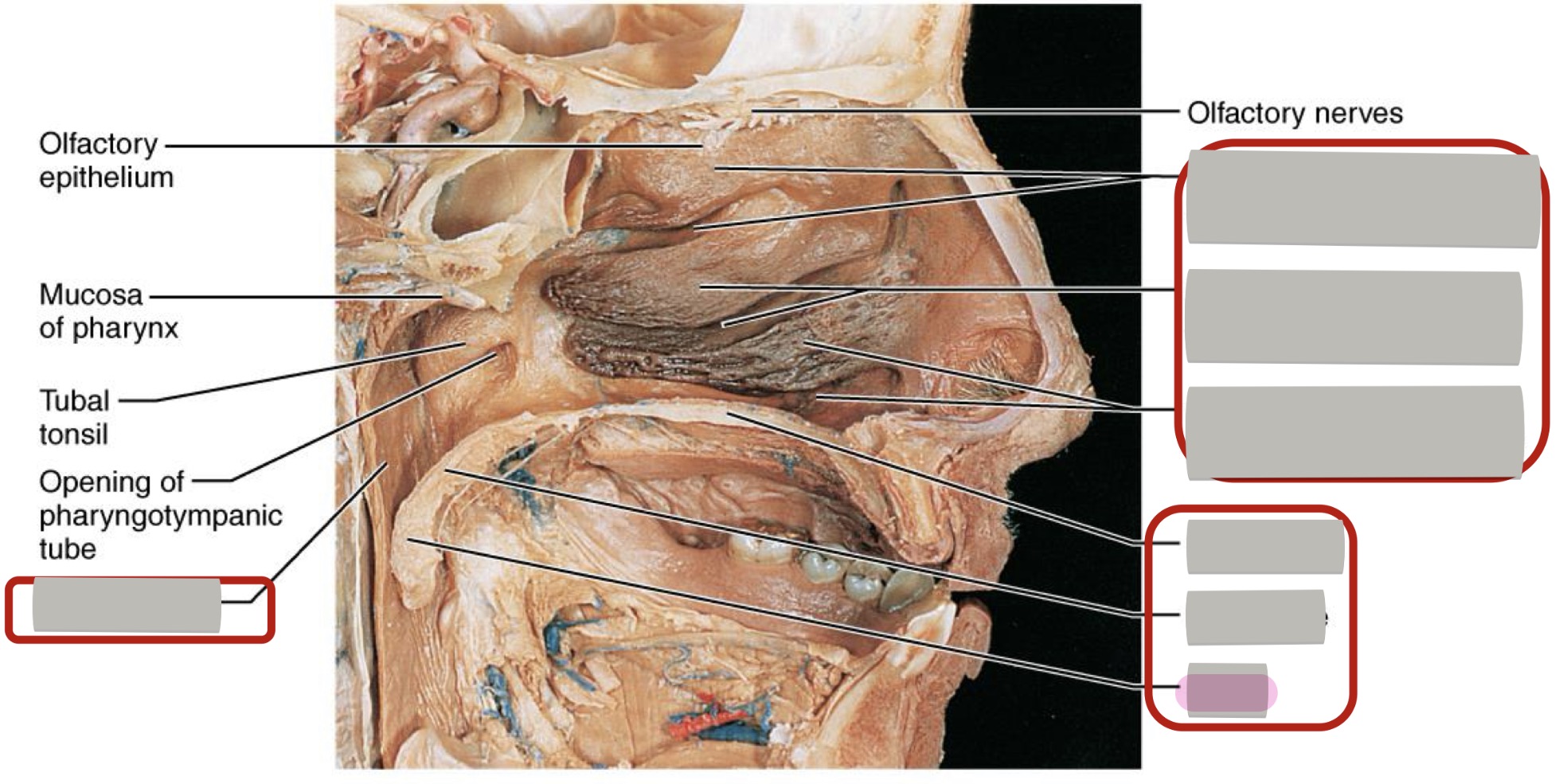
uvula

nasopharynx

oropharynx

laryngopharynx
What is the function of the nasopharynx?
provides for the passage of air from the nasal cavity; tonsils in the region provide protection against pathogens
What is the function of the oropharynx?
provides for the passage of air and swallowed food; tonsils provide protecting against pathogens
What is the function of the laryngopharynx?
provides for the passage of air and swallowed food
What is the structure of the nasopharynx?
superior portion of the pharynx located posterior to the nasal cavity
lined with pseudostratified ciliated columnar epithelium
the pharyngeal tonsil and openings of the pharyngotympanic tubes (surrounded by tubal tonsils) located here
What is the structure of the oropharynx?
located posterior to the oral cavity and extends from the soft palate to the epiglottis
lined with stratified squamous epithelium
lateral walls contain palatine tonsils
lingual tonsils are in the anterior oropharynx at the base of the tongue
What is the structure of the laryngopharynx?
extends from the epiglottis to the larynx
lined with stratified squamous epithelium
diverges into respiratory and digestive branches

Nasopharynx

Oropharynx

Laryngopharynx

esophagus

trachea

soft palate

tongue

lingual tonsil

hyoid bone

epiglottis

vestibular fold

thyroid cartilage

vocal fold

cricoid cartilage

thyroid gland

body of hyoid bone

thyroid cartilage

epiglottis

cricoid cartilage
tracheal cartilages

vestibular fold
Vestibular fold is the ______ vocal cord.
false

Thyroid cartilage

vocal fold
Vocal fold is the _____ vocal cord.
true
What is the structure of the larynx?
tube connecting the laryngopharynx and trachea
9 cartilages present
epithelium above the vocal folds in stratified squamous
epithelium below the vocal folds in pseudostratified ciliated columnar
What is the function of the larynx?
air passageway
prevents food from entering the lower respiratory tract
responsible for voice production
What is the structure of the thyroid cartilage?
large cartilage made up of hyaline cartilage
it’s laryngeal prominence is called Adam’s apple
What is the function of the thyroid cartilage?
forms the framework of the larynx
What is the structure of the cricoid cartilage?
a single ring of hyaline cartilage located below the thyroid cartilage and above the trachea
What is the function of the cricoid cartilage?
attaches the larynx to the trachea via the cricotracheal ligament
What is the structure of the arytenoid cartilage?
paired pyramid-shaped hyaline cartilage
What is the function of the arytenoid cartilage?
anchor the vocal folds (aka true vocal cords)
What is the structure of the epiglottis?
a single flap of elastic cartilage anchored to the inner rim of the thyroid cartilage
What is the function of the epiglottis?
“guardian of the airways” —> forms a lid over the larynx during swallowing
What is the structure of the vocal folds?
mucosal folds composed of mostly elastic fibers covered with mucous membrane, attached to the arytenoid cartilage
What is the function of the vocal folds?
vibrate with expired air for sound production

trachea
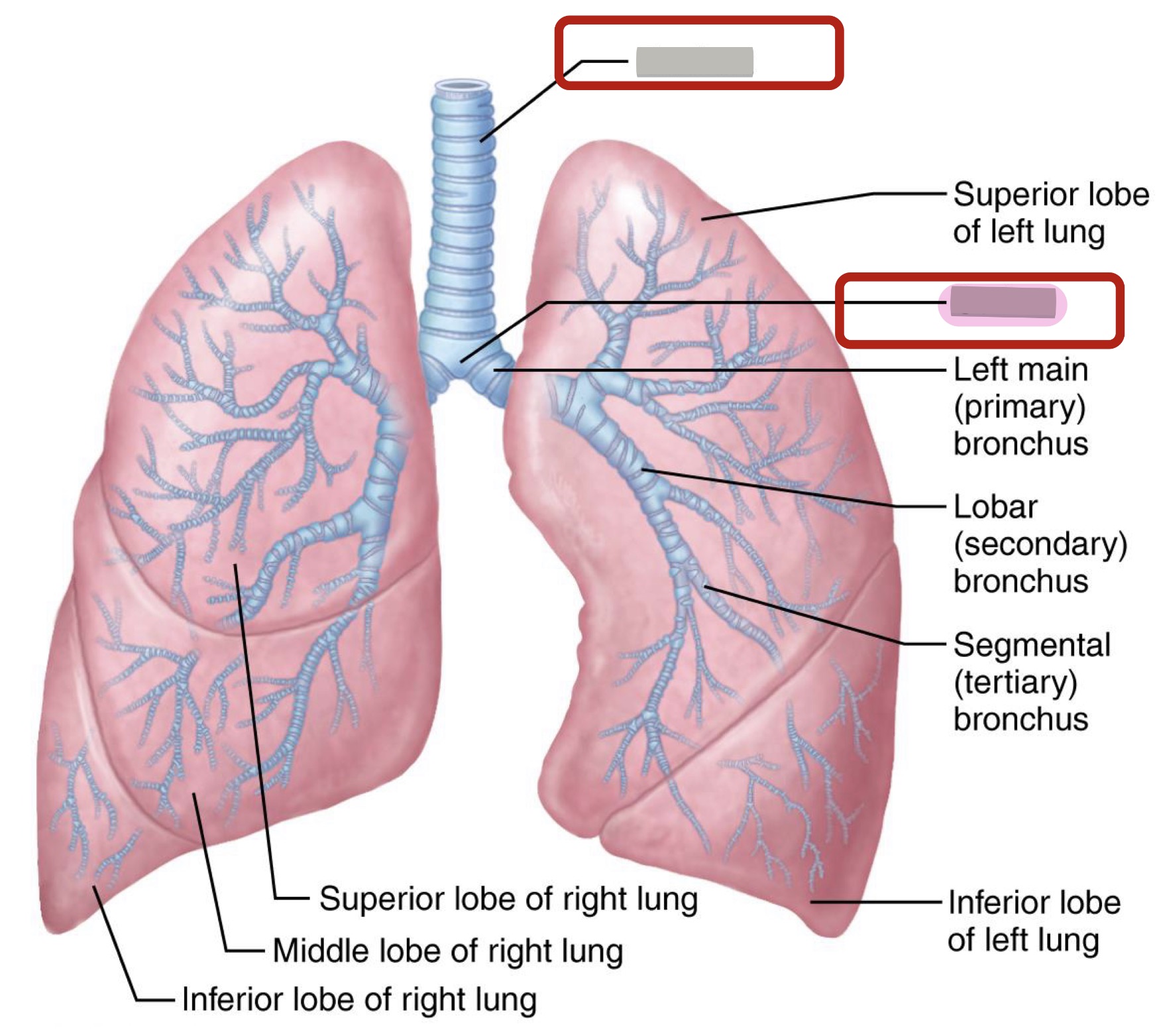
carina

hyaline cartilage
Why is it important that the human trachea is reinforced with cartilaginous rings?
Why is it important that the rings are incomplete posteriorly?

alveolar duct

respiratory bronchioles
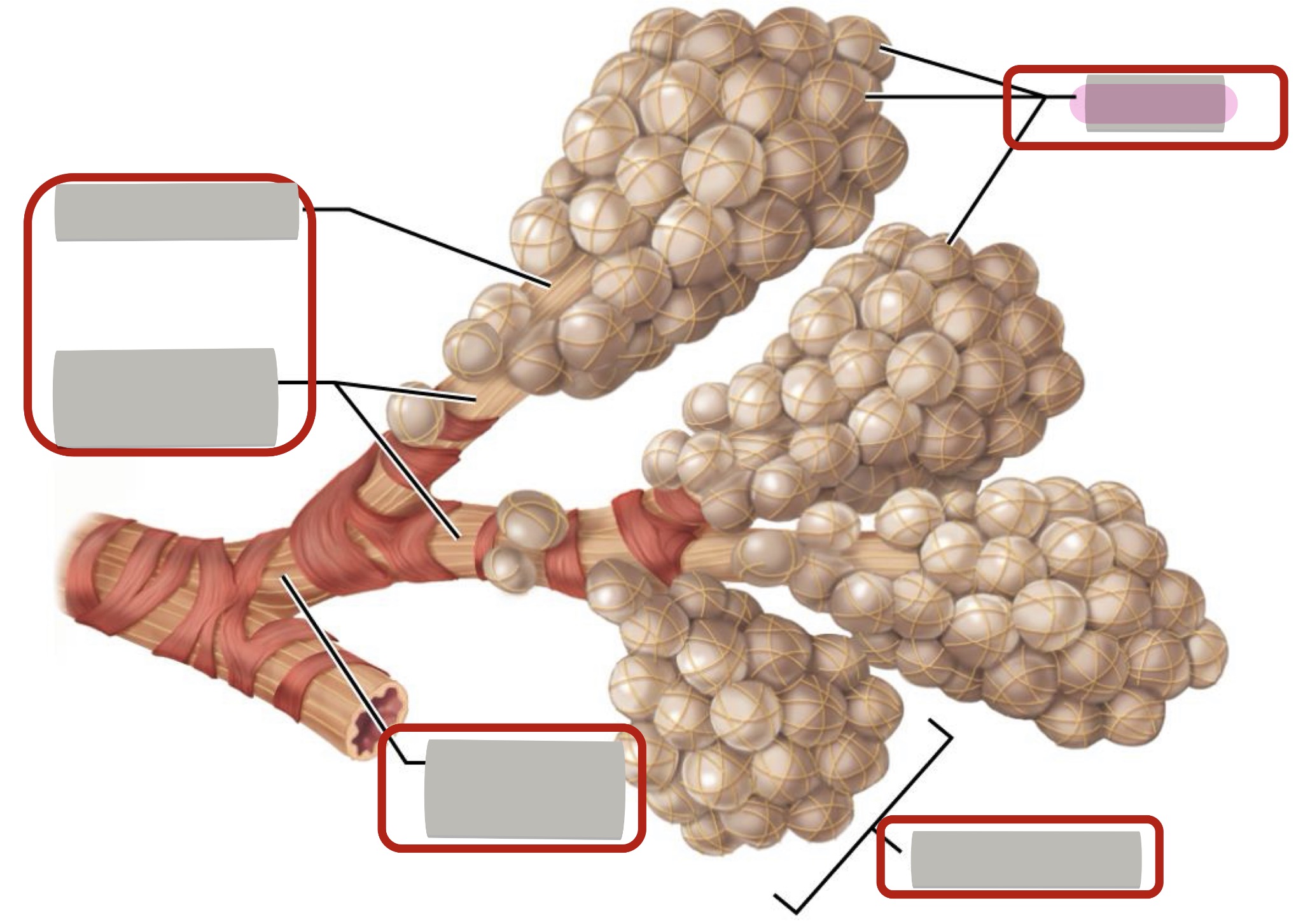
alveoli

terminal bronchiole

alveolar sac

respiratory bronchiole

alveolar duct

alveoli
alveolar sac

respiratory membrane

alveoli

red blood cell in capillary
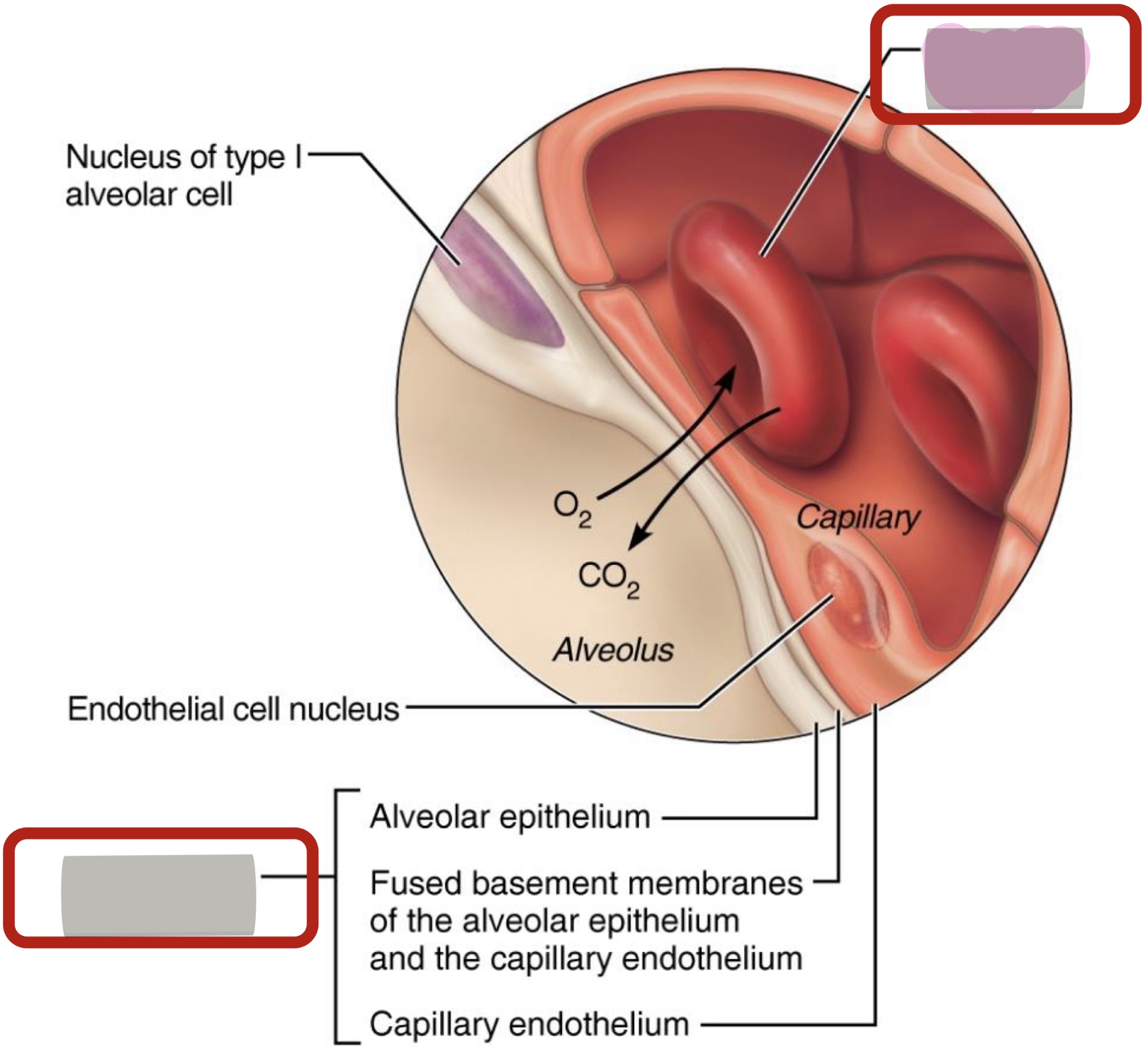
red blood cell

respiratory membrane
How can pneumonia affect the amount of oxygen in the blood?

trachea

thymus

apex of lung

heart (in mediastinum cavity)

diaphragm

base of lung

cardiac notch

intercostal muscle

rib

parietal pleura

pleural cavity

visceral pleura

right lung

parietal pleura

visceral pleura

pleural cavity

pericardial membranes

sternum

vertebra

esophagus (in medisastinum)

left main bronchus

left pulmonary artery

left pulmonary vein

left lung

thoracic wall