physics chapter 4 dynamics
 Call Kai
 Learn
Learn Practice Test
 Spaced Repetition
 Match
Match Flashcards
 Knowt Play
1/19

Earn XP
Description and Tags
Name | Mastery | Learn | Test | Matching | Spaced | Call with Kai | Chat |
|---|
No analytics yet
Send a link to your students to track their progress
20 Terms
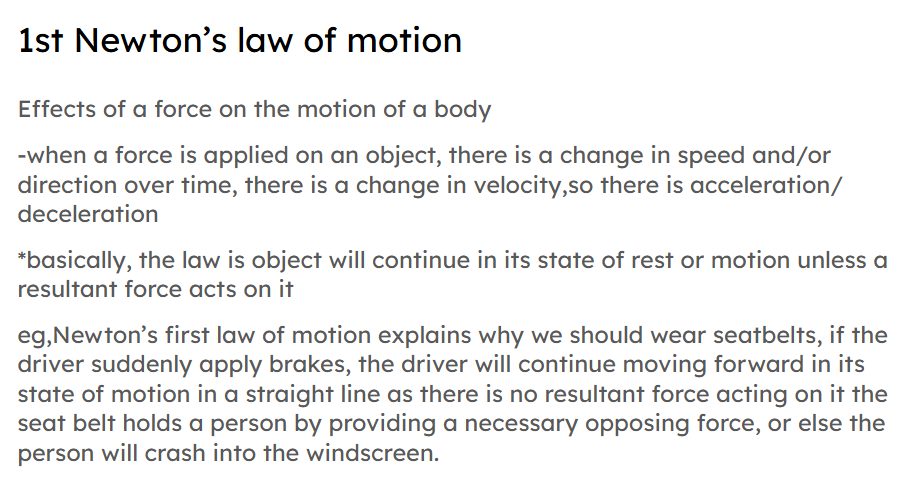
1st newton’s law of motion
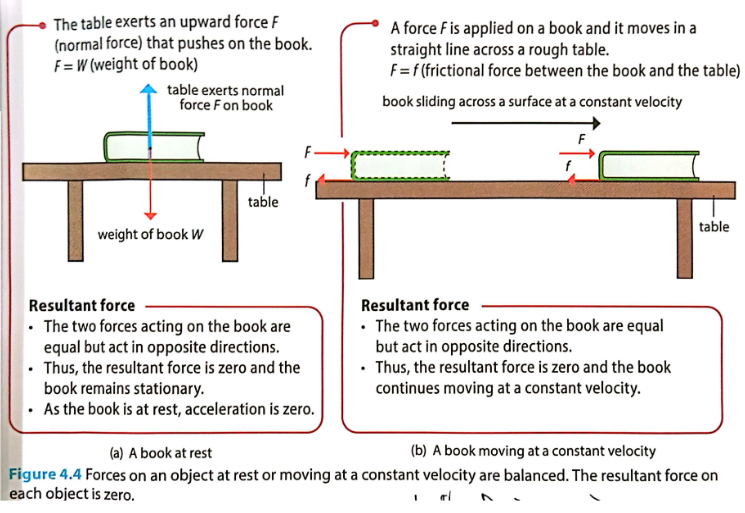
newton’s first law of motion is that the object will continue in its state of rest or motion unless a resultant force acts on it
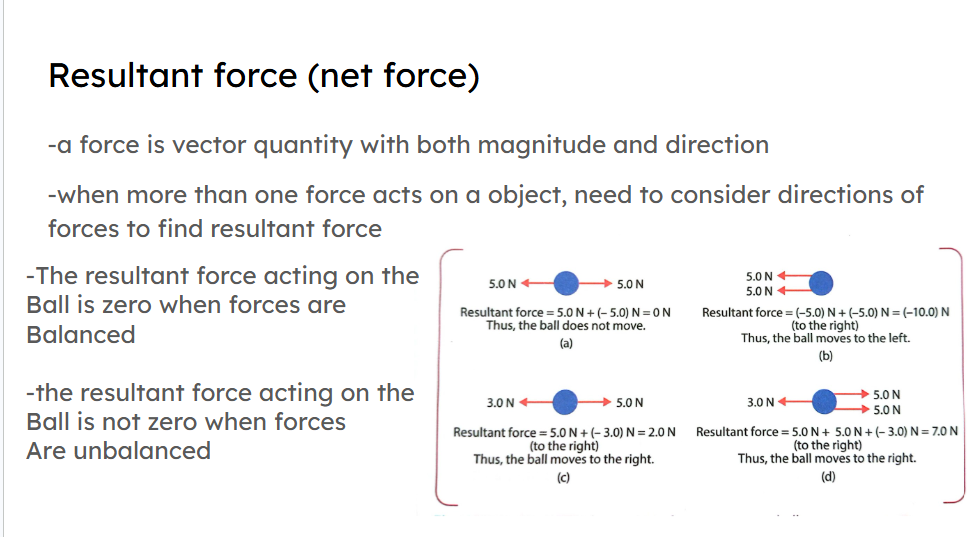
Resultant force (net force)
forces are balanced —> resultant force is zero
** resultant force can be negative if going in opp direction
** can be reprensented by:
+/-
left/right
arrows
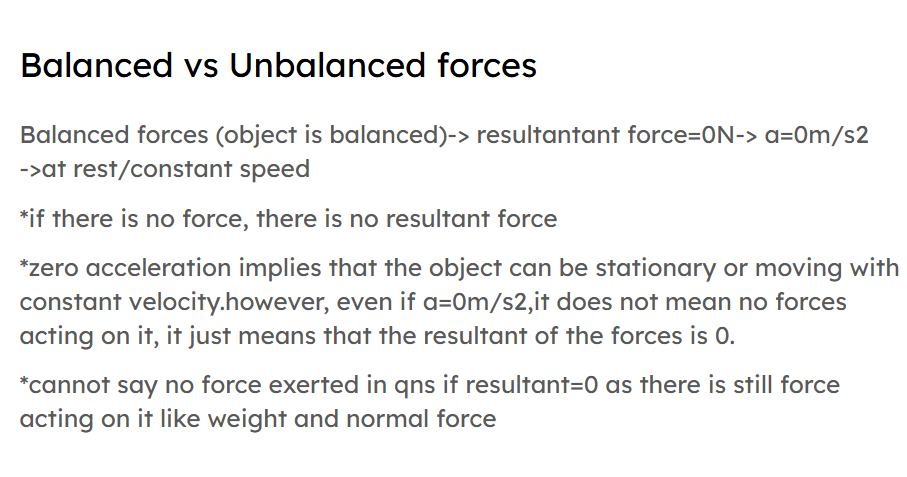
Balanced vs unbalanced forces
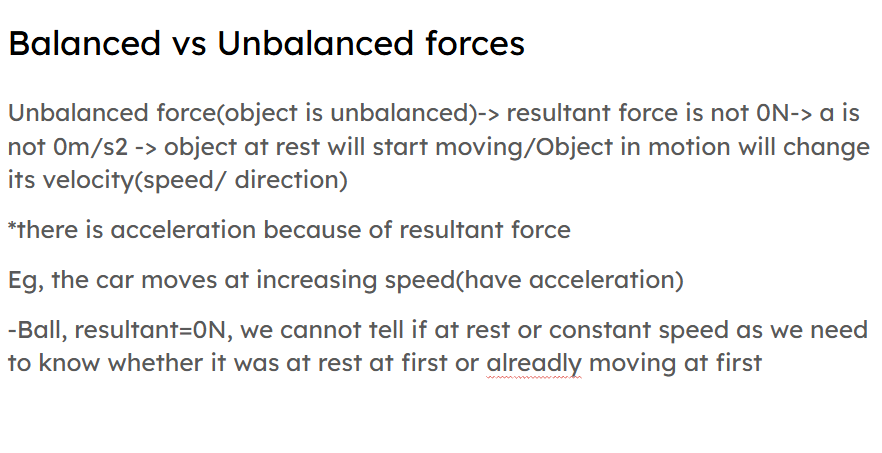
need to know if at rest or alreadly moving at first
Balanced vs unbalanced forces
Example
** action-reaction pair N3L
object at rest continue starting at rest
object in motionn continue moving at constant velocity
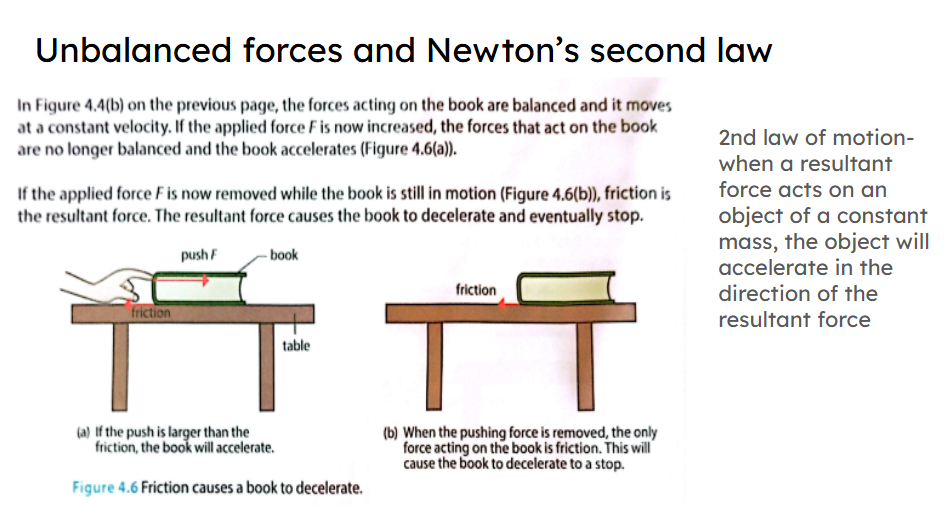
unbalanced forces and newton’s second law
** if no friction, than the object will continue travelling at constant velocity
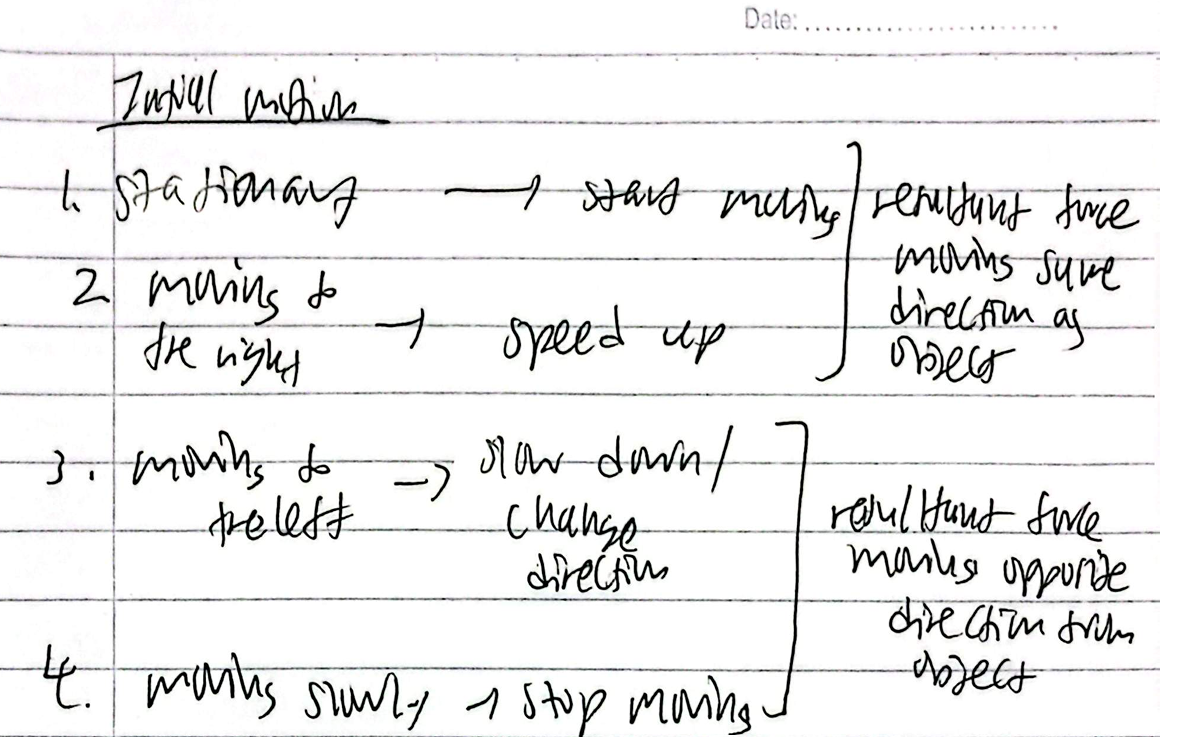
describe the ways in which a force may change the motion of a body
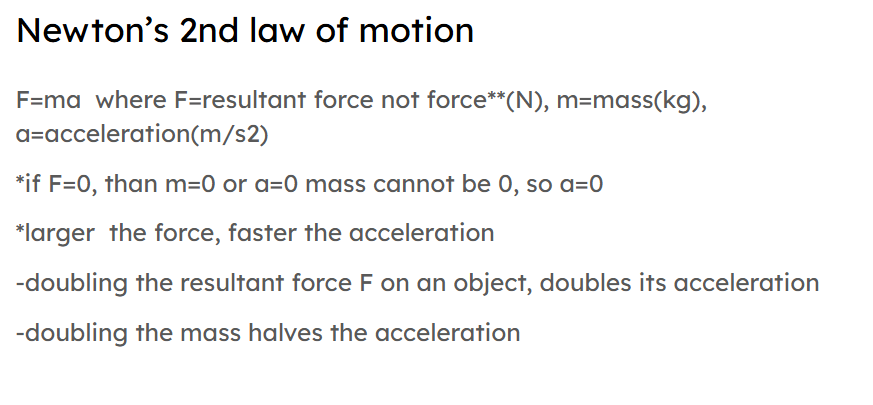
Newton’s second law of motion
F=ma
if F is alreadly representing smt in the qn, use Fr to represent resultant force
Newton’s third law
newton’s third law of motion states that for every action, there is an equal and opposite reaction
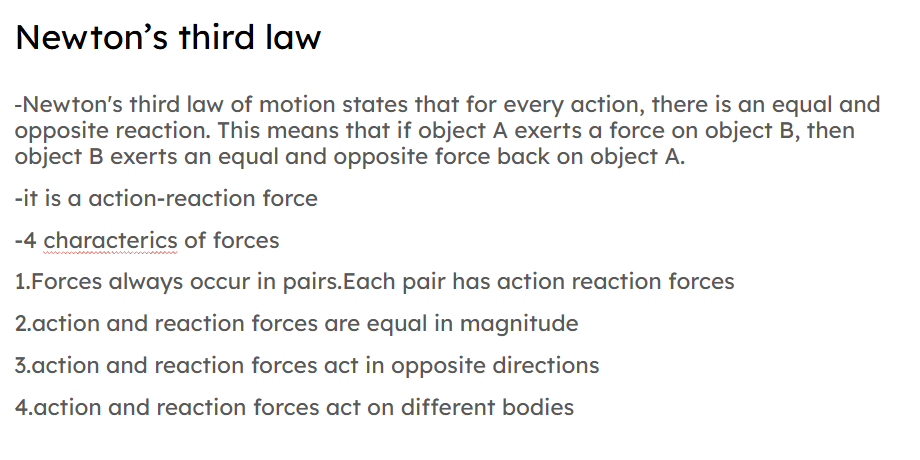
examples of action reaction pairs
** use the same format as action to describe reaction force

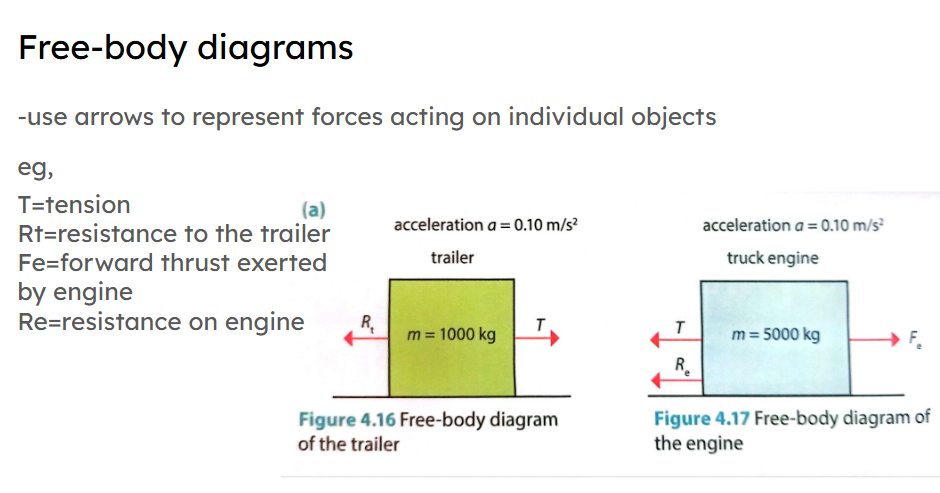
Free body diagrams
f → frictional force
F→ force
Fr→ resultant force
** add subscripts and put a legend
**must draw vertical forces such as weight and normal unless otherwise stated
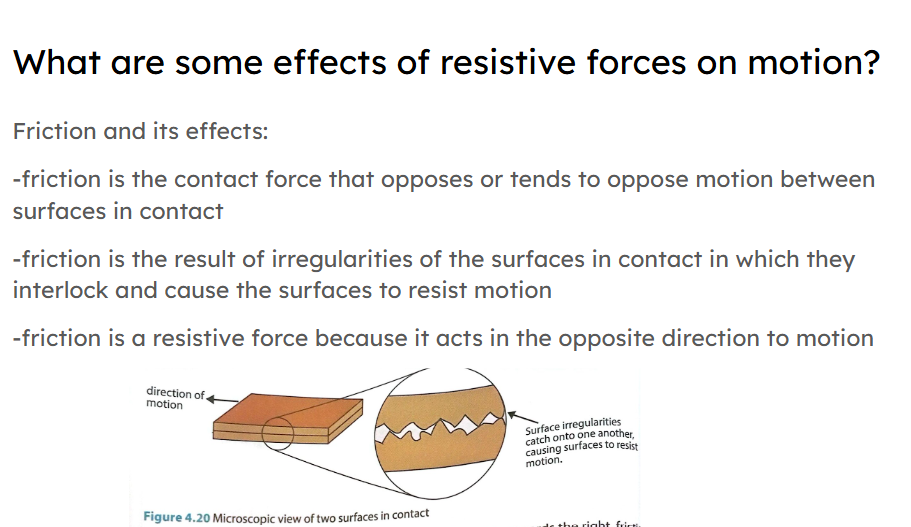
Effects of resistive forces on motion , friction
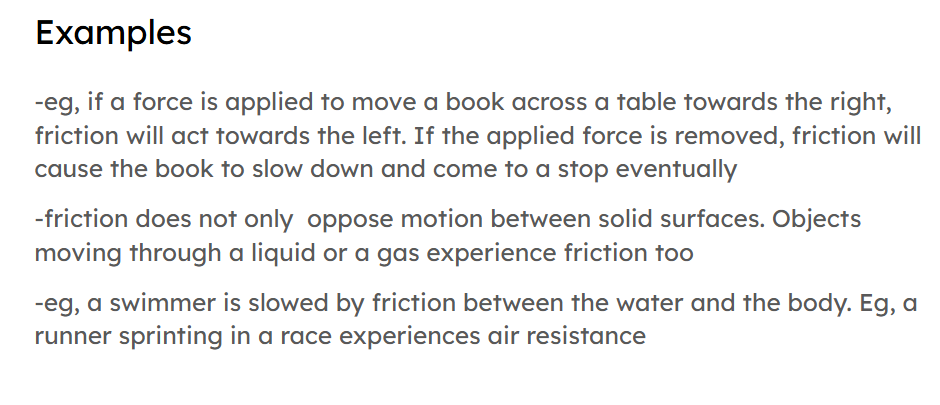
Example
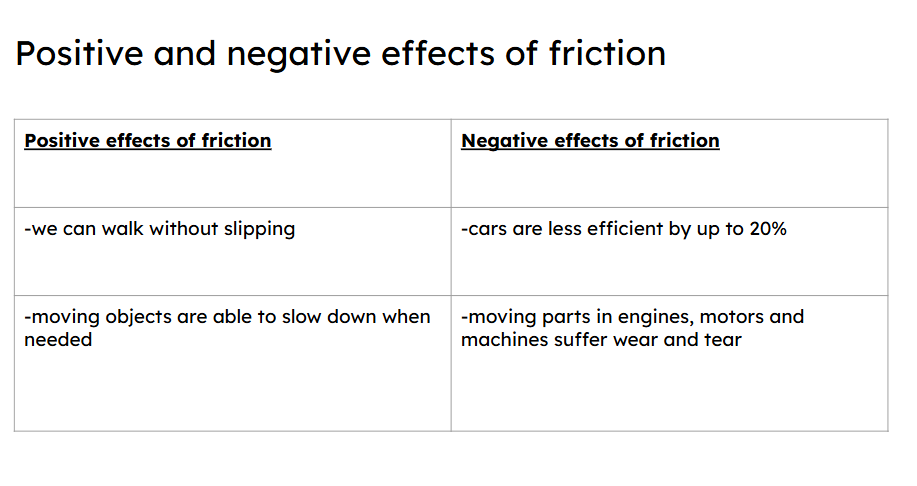
positive and negative effects of friction
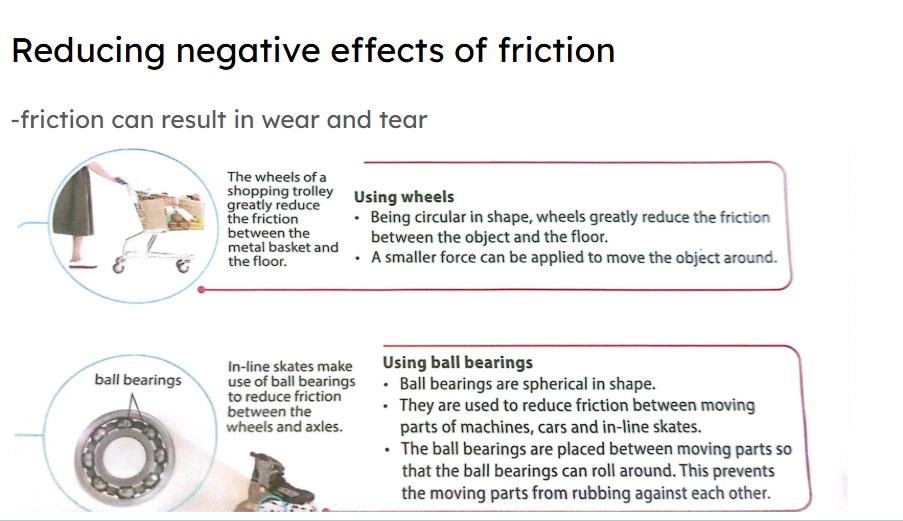
Reducing negative effects of friction
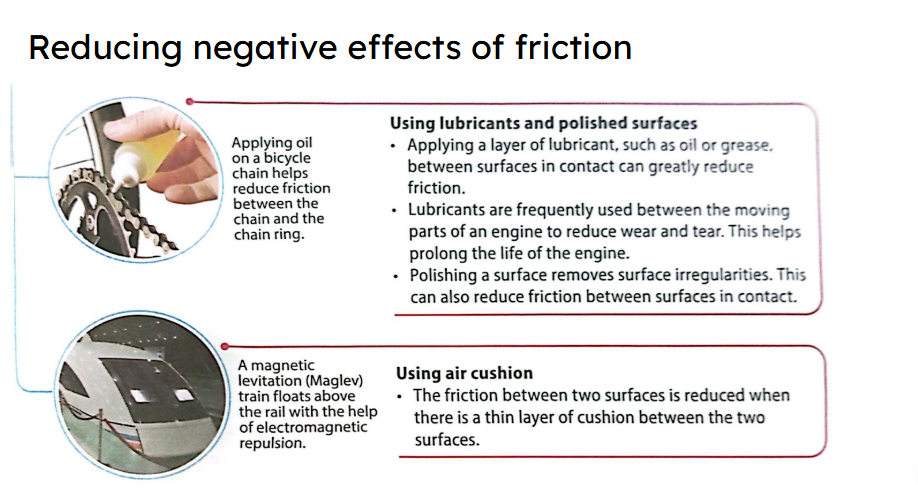
Reducing negative effects of friction
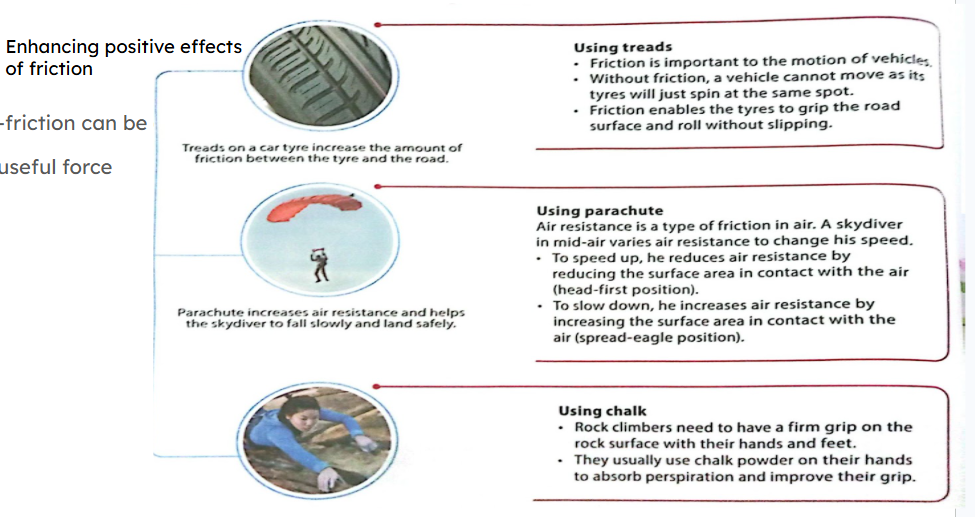
Enhancing positive effects of friction
using F=ma to explain constant speed
The applied force and the opposing force have the same magnitude
Thus, there is no resultant force
since F=ma, the object’s acclearation is equal to zero as mass cannot equal to zero
travel at constant speed
object travelling at constant speed
accleration is equal to zero
since F=ma, there is no resultant force
the applied force and the opposing force have the same magnitude
using F=ma to explain motion/acceleration
The force on the object increases/decreases
thus, the resultant force on the object increases/decreases
since F=ma, the object’s acceleration increases/decreases
reminders
