The Scientific Revolution & the Enlightenment
 Call Kai
 Learn
 Practice Test
 Spaced Repetition
 Match
 Flashcards
 Knowt Play
1/31

There's no tags or description
Looks like no tags are added yet.
32 Terms
What were the two theories about the universe?
geocentrism: earth is at the center of the universe
Had a feeling the diagram was wrong tho, and were stumped by the one star that moves forward, stops, then goes back, then carries on → MARS orbit
Sagittarius symbol → drawing back his bow
Figured out that earth isnt center bcs of the math they could do with the orbit cycles
Greek model
heliocentrism
Who was the biggest influence arguing FOR geocentrism?
Aristotle
If earth was moving and not being stationary, then the winds would be so far we’d all blow away → arguing for the model of geocentrism
If we drop a ball from a tower, it will land directly below at the base. If Earth rotates, we would expect the motion to move the tower away from the ball as it fell. So if the Earth is moving, a falling object will deviate and land elsewhere
What were solutions to the geocentrism problem?
Assuming Earth isnt at the center and the earth itself rotates and moves
Then the retrograde movement is apparent and not actually happening
Then a falling object moves with the Earth and lands below (and the same for wind; it moves alongside)
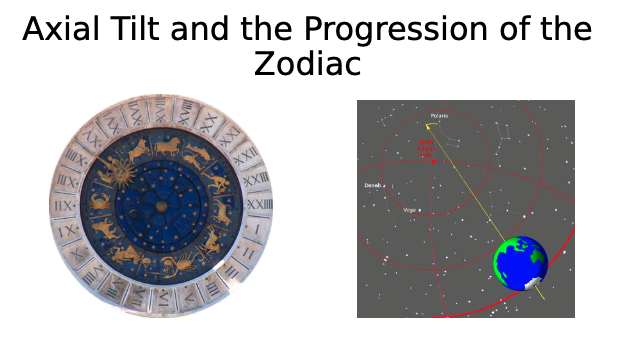
Also solved the axial tilt problem (that’s why we have seasons) and the progression of the zodiac
Progression of the zodiac is the movement of the axial tilt, every movement takes 2000 years
Lots of symbols of fish bcs they moved from aries into pisces era → represented god, Christian symbolism, fisherman on pope’s ring
Explains days and cycles better
Built up over the centuries → aristotle, middle ages and on…
Who was the og heliocentric theorist?
Nicole Oresme (1325-1382)
Born in Normandy
PIONEERED HELIOCENTRISM, a century before Copernicus
Priest, bishop (Lisieux), theologian, scholar → busy with how to explain reality, felt he could figure out god’s plan
Wrote book on the study of the heavens of the earth 1375 → advocation of heliocentric model
Point out flaws of aristotle and geocentrism

Who inspired Oresme to reach the heliocentric conclusion? And what is his philosophy?
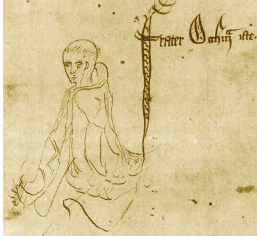
William of Ockham (1287-1347)
Ockham’s razor: the simplest explanation is the most likely one
But Ockham’s philosophy was actually coming from Greeks from ARISTOTLE -”we should not assume more principles than necessary”
Irony!
Was Oresme completely refuting Aristotle?
Not completely! Just that the geocentric model isn't right and the heliocentric model is the simplest, best explanation. Scientific idea vs DOGMA → related to luther bcs of outspoken criticism
Who was a century post-Oresme for pro heliocentric theory?
Nicolaus Copernicus (1473-1543)
Heliocentric > geocentric model
Polish
Proved more revolutionary because of how he argued → this idea wasn’t new tho and he was similar to luther in that sense
Strength of his claim was not to fix the Greek problem but also that they could measure and see the heliocentric model reality
Claimed heliocentric models were the ONLY way, we MUST change to this model and start over, use it as the basis for the natural world
Studied mathematics → reality and math vs. philosophical ideas

What three reasons made people accept Copernicus in 1543 instead of Oresme in 1375? (like Hus and Luther)
Timing → 1500’s
Printing → mass media, propaganda, distributing his ideas
Culture
How did the context of the 1500s help Copernicus succeed in his revolution?
Rise of Protestantism
Has given ppl unease and doubt about the times they live in → changing to a think-for-yourself period
Which religion is true?
COPERNICUS benefits more from networks → good salesman like luther!
His uncle (prince bishop) helped his education bcs he’s pretty well off and has access to high level education → prominent education in Italy to study canon law (church legalism)
Dedicated his works to the pope and was a canon (catholic church leader) but he becomes more interested in science than religion
starting writing his heliocentric theory in 1514 and shared with close friends
Church is leading institution at the time which benefits copernicus
First ideas from him reached Erasmus (bible translation Greek to Latin) and Pope Clement VII
Who made Copernicus prematurely publish his findings on heliocentric theory?
Rheticus
Obsessed Austrian mathematician fan read his first work, “Commentariolus“ and published an abridged (main points) version in 1540
Copernicus was forced to publish his ideas because he didnt want them to be stolen and not receive any credit

What is the persecution myth?
Copernicus was NOT condemned and persecuted by the church → church was also going through an identity crisis
He was very well connected WITHIN the church and even the pope wanted to read his writings
The Church was actually a vehicle for his ideas and spreading the new notion of basing reality within mathematical principles.
myths of copernicus fleeing Rome or publishing his work on his deathbed come from 1896 polemicist Andrew Dickson White and his History of the Warfare of science with theology in christendom → White wanted to blame religion for holding back the progress of modern science
galileo was pursecuted

Which jesuits were also believed to have been persecuted by the church?
Giovanni Zupi: phases of mercury
Ruder Boskovic: orbital mechanics
Maximilian Hell: astronomical unit

Which two men helped copernicus’s heliocentric theory triumph?
Tycho Brahe (1546-1601)
Johannes Kepler (1571-1630)
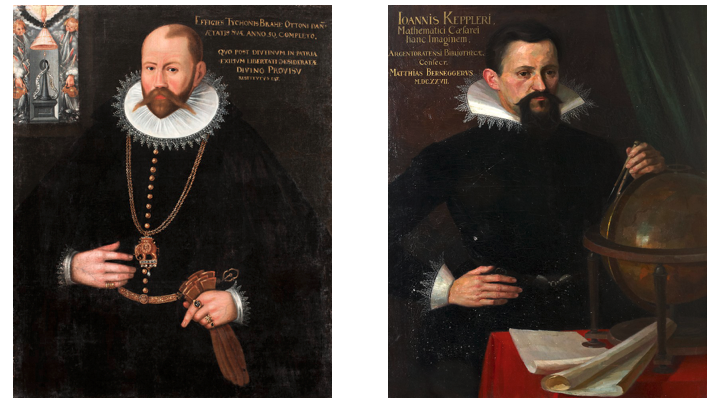

Who was Tycho Brahe (1546-1601)?
Danish astronomer
Og nose job
pioneered data collection – noting and measuring astronomical events → recognizing patterns through data collection
Refinement of mechanical instruments to record more accurately
Excited about copernicus’s ideas → helped by combining the philosophy of Ptolemy with geometry of copernicus
Cosmography tables (astronomical tables)

What did the danish king give Tycho Brahe for his research of the stars?
Danish king gave him his OWN ISLAND so he could build a bombastic laboratory to study the stars, away from light pollution


Who was Johannes Kepler (1571-1630)?
Became Brahe’s successor in Prague
Obsessed with data collection
mathematician
Derived laws of planetary motion from the data compiled by Brahe → defended the heliocentric model as it was the only one to match his observations
Proved Copernicus to be correct through data, new studies, observations

Who was Holy Roman Emperor Rudolf ll (1552-1612)?
kleptomaniac
Legacy = studying things urself, exploring natural world, data collection
SCIENTIFIC REVOLUTION → Obsession with observation, accumulation, data collection, studying the natural world
Similar to learn it urself protestant world
obsessively collected fine mechanisms
Obsessive recording culture at court – personally interested in recording the motions of the heavens: The Rudolphine Tables named after him
Rembrandt was also a massive collector
What is the Enlightenment?
Period of time → 1680-1790
Endeavors of thinkers, writers, practical administrators (bureaucrats who run the country)
A process of change
to clear away the false beliefs (religious dogma) → beliefs without a basis, fighting against what authority says what is true
Political and economic → Oppose the power of institutions (greater power of people vs monarchy, Protestant and Catholic churches)
Arrive at a true (ACCURATE) description of reality → finding the truth vs unverified ideas, empirical facts and the use of reason, no superstition, religious ideas, no more Greeks, Renaissance, looking FORWARD using technology, tools and instruments, studies, REASON
Increase people’s wellbeing and happiness
What is the traditional view of the enlightenment?
pre 1970s
Group of philosophers, rationalists, and progressives in France who opposed the church
Montesquieu, Voltaire, Rousseau, Quesnay, and Turgot
Attacked church abuses, superstition, despotism, intolerance
The Enlightenment was a continuation from earlier scientific processes that became political and social, therein freeing people from tyranny and setting society on a more individualist path.
What is the revisionist view of the Enlightenment?
1970s onwards
Not just FRANCE, but more local individuals and events and context that shaped enlightenment in that place → many different enlightenments
Scottish Enlightenment: David Hume and Adam Smith
Italian Enlightenment: Beccaria and Giannone
American Enlightenment: Benjamin Franklin and John Bartram
Using reason to fight against tyranny of thought
What is the postmodernism?
1970s onwards
Critique of the enlightenment being elitist, deceptive, oppressive
You cant be religious anymore bcs it’s backwards, you cant follow anything without evidence
Voltaire was bigoted
New insistence on prison, form of the estate, controlling population, spread of the state into ppls lives → we must improve ppl lives, but this is more intrusion and oppressive
For Foucault, Enlightenment rationality was tied to new forms of discipline, surveillance, and normalization that underpinned modern states.
It claimed to offer emancipation through reason, science, democracy, but in reality it created a new form of domination: imposing one set of “European” values, institutions, and truth-claims on everyone.
Historians refute these ideas by denying one transformative ‘European project’ and showing the doubt and divisions within the Enlightenment.
The Enlightenment is a period in which certain people pursued a cultural movement rooted in the improvement in the human condition → shift in ppls mindset from religion to thinking
What are the four points of the enlightenment programme?
Organize - according to natural systems
Disrupt - oppose those that oppose us; their truth is their truth, European rivalry
Discuss - among others in associations, more time for discussions, more ppl live in cities, salons, coffeehouses..
Reform - according to logical reasoning (revolutions), leads to political turmoil and violent outbreaks
What is the organize point of the enlightenment programme?
Continuation of scientific thinking
Across all realms of knowledge: linguistics, botany, statistics
Massive data collection
Collecting, systematizing, categorizing, cataloguing, and arranging became fashionable pursuits and part of the ‘scientific’ ordering of things
Art collections
ABUNDANCE → hallmark of culture
Which two figures were part of the organize point of the enlightenment programme?
Carl Linneaus (1707-1778)
Ignaz von Born’s Monachologia (1783)
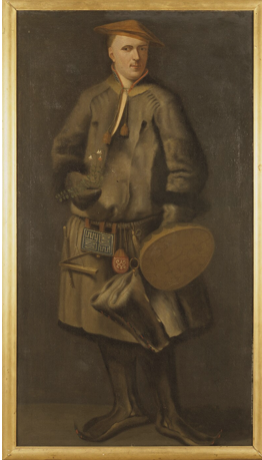
Who was Carl Linneaus (1707-1778)?
Swedish botanist
Pioneered system of classification for the natural world
Published his Systema Naturae in 1735 in the Netherlands which organized plants, animals, and minerals into a hierarchical system (e.g. kingdom, class, order, genus, species).
Basis for biology but also highly influential system
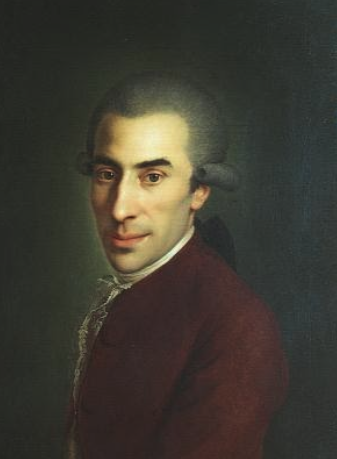
Who was Ignaz von Born’s Monachologia (1783)?
Romania
ex-Jesuit who organized scientific expeditions, worked in mineralogy (using Linnaeus), and was a prominent Freemason
Parodies Linnaeus’s ideas of categorizing biology to mock the church → Monachologia is satire about the species of Monks, describes demeanor in a scientific way
In between species of humans and apes
Mock-scientific satire published anonymously in Latin in 1783 in Vienna.
It parodies Carl Linnaeus’s natural history system by classifying monks as if they were a species of animal.
Monks as a parasitic species: feeding off society without producing anything useful.

What is the disrupt point of the enlightenment programme?
Voltaire
pinnacle of anti-religious person, superstitious, outdated institution that has no place in the modern world
“Certainly whoever has the right to render you absurd, has the right to render you unjust” → if you believe contradictory beliefs, it is scrambling ur intelligence and ppl can be led to do inhumane things UNLESS we rid ourself of tyranny minds → ANTI CHURCH
A common thread emerged amongst enlightened thinkers: anti-clerical or anti-religious positions.
More subdued in Protestant Europe than in Catholic Europe where the Catholic Church seemed too powerful and institutionalized.

What is the discuss point of the enlightenment programme?
Materials
Magazines, books, newspapers containing information for debate at a low cost
Salons
Gatherings for like-minded individuals in private spaces; social societies
Public spaces
Theatres, public speeches, coffeehouses and taverns all open as areas of diffusion
Cheap printing, urbanization, HIGH POINT in 18th century, magazines, opinion pieces
Ppl had access to money, leisure time allowed ppl to meet up and exchange ideas
Now there’s an opinion being formed outside the court, what king did mattered, but now there’s a COUNTER, strips away power of discussion from court to the general people

How did women come into the picture for the discuss point of the enlightenment programme?
Paris!
Salons (mainly led by women) became famous as social gatherings
Women finally have lot of power culturally! More freedom to discuss ideas, mediate, shape discourse, introduce new ideas
American revolution
Shaped political and wider culture
Rulers often wanted to host their own salons or become members of distinguished ones
Examples:
Joseph II in Vienna and the ‘charmed circle’ of five princesses
Frederick II in Berlin and his dinner parties (Voltaire guest)
Madame du Deffand in Paris (not at court!)
One avenue for women to shape the discourse and direction of new ideas
Women’s assemblies also become the vehicle for greater demands for public participation and equality


What was the separation of art and science during the discuss point of the enlightenment programme?
Art had utility up until the Enlightenment
Two forms of art to show your skills, not creativity
Latin = Ars
Greek = techne
Changes over time, by the time of the Scientific Revolution, go from being tools to being more based on pleasure and telling good stories and making good paintings → utility, technical (Odyssey) SHIFT to pleasure (sagas, poetry)
All things must fit together and be harmonious → pro for heliocentric
In Roman times, Lucretius used poetry to explain the nature of the universe.
In the medieval period, sagas told of heroic deeds and reminded people of a shared morality.
In the early fifteenth century, poetry could be used to remember brewing recipes or planting cycles.
Kepler believed Copernicus’ heliocentrism to be “pleasing”— they were describing the music of the spheres; the natural harmony of all things audible to the soul.
How did art change during the discuss point of the enlightenment programme?
The invention of pleasure
You still need to be skilled in art
Two forms:
Mechanical art
Designed to be useful or efficient, instructing people
Aesthetic art → BECOMES MORE DOMINANT
Designed to please, distract, express
Ornate, beautiful, a master’s skill
Pleasure is the goal of other arts, presents an imitation of reality, not a pure rendition but smth more u can make and imitate urself. Using colors, dancing, sculpture, music, poetry → principal arts
Art became valued in itself:
Instead of having a moral purpose; the experience itself of viewing art was moral.
Where did 18th century artists look for an ideal aesthetic culture?
neoclassical
Imitation of the ancients → greek figures
In period of change, we can still find comfort and foundations in ancient greeks and romans, foundations
Rise of aesthetic art forms → modernizing stoicism, passion, fortitude
Contrast mechanical arts, engineering, clock making TO more progressive, modern, utilitarian style
Go back to comfort during a time of turmoil and change
