Week #11 (FINAL WEEK FOR EXAM YAY) Baroque Expansiveness and Global Contacts
 Call Kai
 Learn
 Practice Test
 Spaced Repetition
 Match
 Flashcards
 Knowt Play
1/16

There's no tags or description
Looks like no tags are added yet.
17 Terms

Naturalism
Representing people and objects realistically, as they appear in nature
Example: Calling of St. Matthew or Judith slaying Holofernes

Tenebrism
Dramatic contrast between very dark shadows and brightly illuminated areas
Example:Calling of St. Matthew

Trompe L’oeil
An illusionistic technique that tricks the eye into believing a painted image is real or 3-D
-Example-Glorification of St. Ignatius

Genre painting
Artwork depicting ordinary people and everyday activities
Example: Woman Holding a Balance
Still Life
Artwork showing arranged objects such as flowers, food, and household items
Example: Dutch Baroque still-life paintings

Etching
Printmaking technique using acid to create lines in a metal plate
Example: Christ Preaching

Drypoint
Printmaking technique where an artist scratches directly into a metal plate with a sharp needle
Example: Christ Preaching
Camera Obscura
A darkened box or room that projects an outside image through a small opening.
Example: Woman Holding a Balance

David, Baroque
Bernini captures David in the middle of throwing the stone. Bernini emphasizes movement, emotion, and viewer involvement, which are characteristics of Baroque art.
-Active and moving, DURING battle, Realsitc action, Twisted, dynamic pose→Baroque!!!
-Shows psycholigcal itensity in details→furrowed brow, bitten lip, intense gaze conveys tension and docus→viewers can feel moment
-Breaks space between viewer→spatial engagement=audience is immersed-ideal of baroque of empathy and participation
-Movement and drama-imminent action
-While Michelangelo=idealized body, balanced composition, calm/controlled, BEFORE battle→Renaissance!!

Calling of St. Matthew, Baroque
-Use of dramatic lighting, realistic figures, emotional engagement. Both depict important Christian stories
-Depicts story of Jesus seeing Matthew and tells him to come with him-captures instant between heading and responding-Christ and Peter enter-beam of light strikes Matthew’s face.
-Use of Tenebrism (strong dianol beam of light) to make divine grace visible
-Christ’s outstretches hand calls-light bypasses the shuttered window-purity and holiness of Christ. Coins on table show wordly life he is called to-light ignored money and striked face and hand
-Fusion of biblical narrative, dramatic light, and everyday realism.

St. Peter’s Basillica, Renaissance
Renaissance: Wanted grander, symbolic church, -Michelangelo created double-shell dome-renaissance engineering, focused more on classical proportions, and harmony in architectural design-to enhance spiritual aesthetic experience of visitors
-Monumental architecture contribute to power, wealth, authority of Catholic church-create sense of physical grandeur
St Peters Piazza, Baroque
-Curved colonnades create movement and embrace visitors, almost like arms of church
-Human-scale columns and sorrounding architecture create welcoming physical experience→uses space and movmenet=baroque
-While Bernini-added dramatic architectural elements, had large, curved colonnades and using Bernini’s bronze baldacchino→showed church’s authority and used dramatic light, mass, movement.

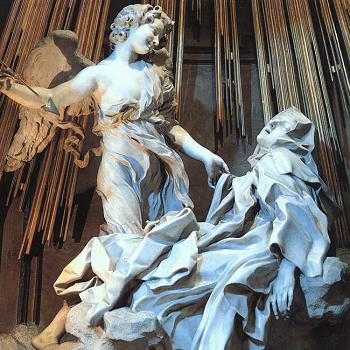
Ecstasy of St. Teresa, Baroque
Use of Naturalism: the folds of the clothing, facial expressions and physical bodies look realistic
-Baroque: sculpture captures an intense religious experience through dramatic movement and emotion
Use of Trompe l’oeil: surrounding chapel combines sculpture, architecture and painted effects to create illusionistic theatrical scene→decieve the eye-look 3D
-Art work communicates spiritual experience of St. Teresa-encourages viewers to expeirence religous devotion emotionally

Judith slaying Holofernes, Baroque
Uses Naturalism: bodies, expression, b, physical struggle=realistically depicted
-Tenebrism=dark backgrounds contrast w/ brightly illuminated bodies, emphasizes violent action
-Uses dramatic movement, emotion, and intense action
-Judith saves people by killing Holofernes. Painting shows courage, strength, determination→highlght female strength

Christ Preaching, Baroque
Use of Etching (acid-based process to create lines on metal plate)
-Use of drypoint (Scratched directly into plate to create rich, dark, expressive lines)
-Tenebrism (contrast light and dark to emphasize Christ and people sorrounding him)
-The print depicts Christ preaching to people from diff social classes and backgrounds-set in puiblic space focus attention on Christ’s face and hands-sense of depth and immedicacy→emotional engagement and dramatic lighting-addressing crowd

Woman Holding a Balance, Baroque
-shows moral introspection in everyday scenes.stands at table with jewelry box spilling pearls and gold-holds empty balance in right hand, poised for measurment.
-Behind her-painting of the Last Judgment. Mirror on opposite wall symbolizes vanity-with mirror of light glowing her face-
showing spiritual clarity-moral balance-wordly possessions and spiritual devotion or self-examination-moral choice and balance
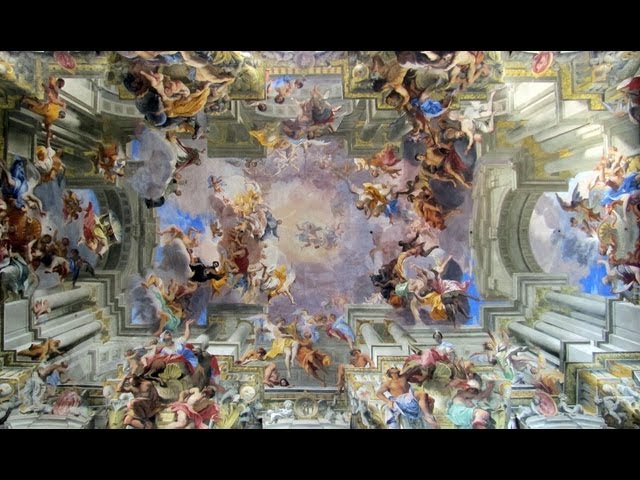
Glorification of St. Ignatius, Baroque
Use of Trompe l’oeil (illusion church ceiling opens into heavens)
-Naturalism
-Baroque=dramatic perspective, light and illusion make viewers feel surrounded by a heavenly scene
painting: glorifies St. Ignatius and the Jesuit religious mission
-Christ with cross stands-sending light to St. Ignatious-who is focal point-symbolizing closeness to Christ-reaffirms authority of the Catholic Church and the Jesuits global mission during Counter-Reformation (Ignatious light rays beams to personifications of continents)=spread of Christiniaty across continents using Baroque drama to show devotion

Elevation of the cross, Baroque
-Uses Naturalism, Tenebrism and triptych.
-Dramatizes the moment Roman soldiers and workmen riase cross on where Christ is already nails
-has Roman soldiers, laborers staining to lift cross, strained muscle contorded poses show weight of Christ’s sacrifice and burden of sin.
-Christ’s body has arm raised, gaze upward=willing acceptance=the cost of redemption in both physical and spritual terms.
-Emphasis on twisted movement, stretching, acttively moving, with intense emotions, strong contasts between light and shadow-sense od depth wanting to create emotional religious experience