anthropology final
 Call Kai
 Learn
 Practice Test
 Spaced Repetition
 Match
 Flashcards
 Knowt Play
1/41

There's no tags or description
Looks like no tags are added yet.
42 Terms
pottos
lorisoidea (superfamily)
o Lorisidae (family)
· Quadrupedalism. Slow.
· Because they are slow they have a UNIQUE bloodflow system. Retia mirabilia- allows blood to flow freely- oxygen exchange continues without movement. So they can stay still for hours at a time
· Predator avoidance- vertebral spines. Spine is kinda spikey

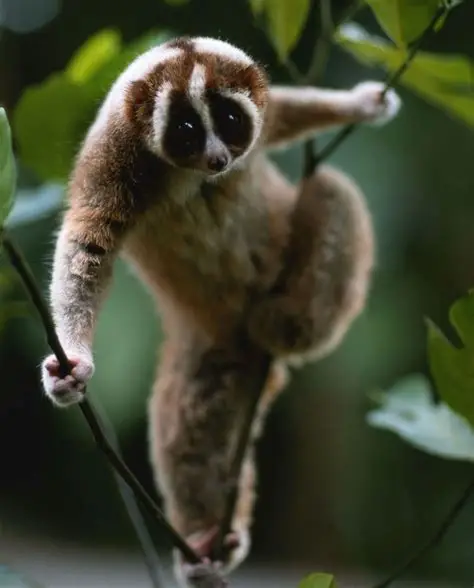
slender loris
o Lorisidae (family)
· Acute sense of smells. Have scent glands and make urine markings to mark territory. Each individual has their own scent and the loris can detect individual scents – can tell them age/sex
· Most calls are ultrasonic because they are nocturnal and don’t want to alert predators.
robust loris
o Lorisidae (family)
· UNIQUE: the only venomous primate. have glands on inside of elbow region on arms that produce oily toxin. Robust loris will lick this region and then bite a predator. Can put people into anaphylactic shock

lorisoidea (superfamily)
o Galagidae (family)
galagos: also known as bushbaby'
· UNIQUE: locate their pray with large mobile ears. Their sense of hearing is more important than a lot of other primate groups
· Grab with hands (fingers do not move independently).
· UNIQUE: have serrated cartilaginous sublingual: basically a second tongue under the primary tongue. Helps with lapping up the gums and saps they consume.
· Elongated tarsals – they leap around.
· They can also walk around quadrupedally
· They hide inside the trees to avoid predators. In hollow areas on the trees.
o Conservation status of lorises and galagos
§ Depends on species and location
§ Threats: pet industry, bushmeat, destruction of habitat
lemurs
madagascar

(king julian)
true lemur
more kinds in this family
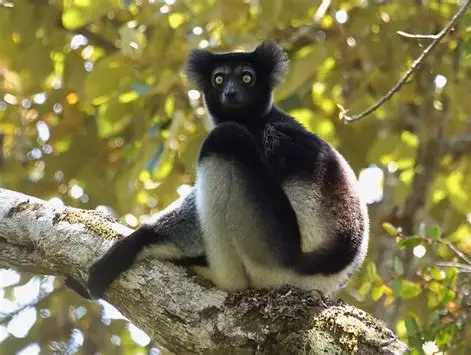
indri
is a lemur
traditionally held sacred
leap 30 feet
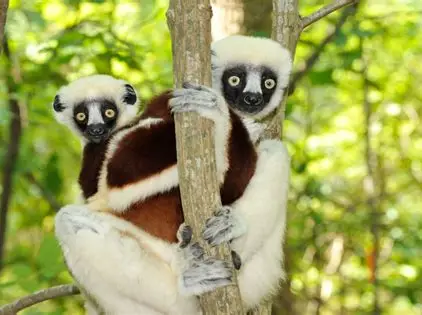
sifakas
is a lemur
traditionally held sacred
leap 30 feet

dwarf/mouse lemur
§ Estivate = dormant in the summer (period of hibernation). To do this they gorge themselves – increase body mass by 40%
§ Communication:
· Vocalizations: grunts and squeaks
· Olfactory: urine rubbing, smear feces to mark territory
§ Quadrupedal locomotion in addition to vertical clinging and leaping

the sportive lemur
§ Cecotrophy- they will eat their own feces. It is believed this behavior came to be because of survival during drought

the aye aye
is a lemur
§ UNIQUE: Have a highly specialized diet: mostly insect larvae, and some nuts and fruits
§ UNIQUE: One offspring every 2-3 years
§ UNIQUE: third digit looks like a stick and it’s really long and really thin. Used digit to tap on a tree to locate tap with their big ears. Use teeth to tear a large chunk of bark then use the third digit to hook the larvae
§ UNIQUE conservation issues: on top of habitat destruction its traditionally concerned to be evil so people kill its bad luck, people kill it for crop raiding, kill it to avoid bad luck, exacerbated by low birth rates
unqiue traits of lemurs
o Some are monogamous; others polygynous; some are nearly solitary.
o Seasonal breeding for many. High infant mortality. Number of offspring as one time is 1-6. Infant parking: park infant while they go foraging
o Some are nocturnal; others are cathemeral – sporadic all over the place don’t get to bed at same
general lemur traits
o Scent markings. Rub their butts on stuff to mark their territory
o Engage in stink fights. Males fling their scents back and forth to each other
o Engage in stink flirting – female release unique scent then male release his own scent and wafts it in female’s direction using its tail.
o Grooming claw on 2nd digit
o Lemurs have dental formulae diversity. Different kinds of lemurs can have different dentition.
o See female dominance in a lot of the lemurs; female-female aggression; lack of sexual dimorphism.

tarsier
- Haplorrhine
o Dry rhinarium, No tapetum lucidum, No toothcomb, fovea centralis (high concentration of photo receptors for clear vision), Reduced olfactory bulbs
- However, they possess strepsirrhines characteristics
o Nocturnal, Small bodied (3-5in), Infant parking and oral transport, Unfused mandible, grooming claw
- HUGE eyes. Biggest eye to body ratio among primates. Huge eyes to get as much light as possible
o Engage is cache and carry.
§ Cash- another name for infant parking
§ Carry- carry in mouth or clinging to different safe locations while mom forages
§ So they park infant go forage then go get infant and park at new location and mom forages in new location.
- Elongated tarsier bone
- No tapetum lucidum but nocturnal
o Most primatologists believe that tarsiers were diurnal and then returned to being nocturnal

marmosets
Ceboidea (monkeys of Americas):
§ Marmosets: rely heavily on gums and saps
· Long tongue to lap up gums and saps,
· wide jaw,
· lower incisors are long and chisel shapes. Stimulates gum and sap production in the tree
§ inhabit resource poor areas -why they have specialized diet. They don’t have access to fruit
§ pygmy marmosets:
· may be coevolving from humans
· getting a lot of their diet from human manipulated land – from agricultural crops, gardens
o Dramatic coloration, mustaches, hairy eyebrows, ear tuffs
o Have nails but the nails are claw like
small body size
· when a female is ovulating she is going to release multiple eggs at a time: twins are common, more than 2 is possible
· females can conceive again; 2-4 weeks after birth
· many give birth twice a year
o although true and lion tamarins give birth only once a year
· rapid maturation
o females 12-17 months can reproduce
o males 13-18 months can reproduce
allonursing, alloparenting
· Suppression of reproduction in socially subordinate females
o In multi male and multi female groups there are hierarchies between males and females
o Dominant female can suppress others ovulation
o Anovulation results from a specialized neuroendocrine mechanism activated by social cues
o in Saguinus Oedipus female must cohabit with a male before she can ovulate
o unique issue for pygmy marmosets:
§ world’s smallest monkey
§ too small to be hunted by humans for food
§ pet trade is a big problem for these small primates
§ promoted by pet industry as “finger monkeys”

tamarins
Ceboidea (monkeys of Americas):
o Small body size
o Dramatic coloration, mustaches, hairy eyebrows, ear tuffs
o Have nails but the nails are claw like
· when a female is ovulating she is going to release multiple eggs at a time: twins are common, more than 2 is possible
· females can conceive again; 2-4 weeks after birth
· many give birth twice a year
o although true and lion tamarins give birth only once a year
· rapid maturation
o females 12-17 months can reproduce
o males 13-18 months can reproduce
allonursing, alloparenting
· Suppression of reproduction in socially subordinate females
o In multi male and multi female groups there are hierarchies between males and females
o Dominant female can suppress others ovulation
o Anovulation results from a specialized neuroendocrine mechanism activated by social cues
o in Saguinus Oedipus female must cohabit with a male before she can ovulate

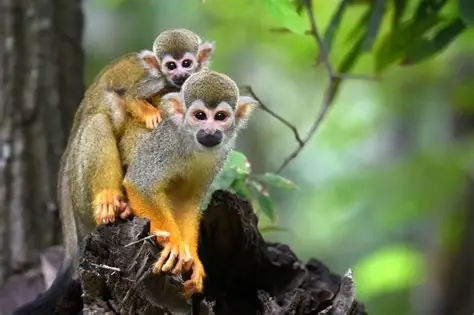
squirrel monkey
Ceboidea (superfamily)
o Cebidae (family)
south africa
o Capuchin monkeys and squirrel monkeys have traits in common
§ Closely related based on genes
§ Both have short faces, narrow noses, sexually dimorphic canines, rounded braincases -both have a large brain to body ratio
§ Urine wash
Prehensile tail in infants but not adults. Most primates either have a prehensile tail or they don't. Losing most of that function as adults is unusual.
Female dominance over males. Not unique to squirrel monkeys, but relatively uncommon among primates.
"Fat male" phenomenon before mating season. Males deliberately gain weight (largely through water retention) before the breeding season. This is very distinctive and often emphasized in primate courses.
Almost no male parental investment. Not unique, but notable when comparing them to callitrichids (marmosets and tamarins), where males provide extensive infant care.
reproduction is seasonal
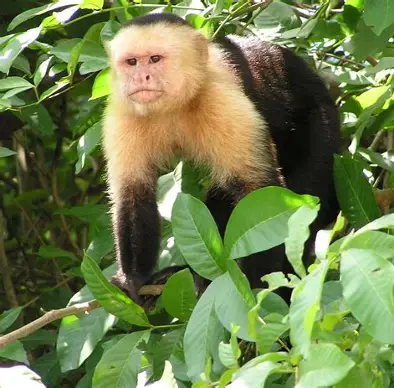
capuchin monkey
o Primates (order
§ Haplorrhine (suborder)
· Ceboidea (superfamily)
o Cebidae (family)
§ Capuchin and squirrel monkeys
Semi-prehensile tail
Can wrap around branches
Used as an anchor during foraging
Cannot support full body weight
Very high intelligence
Extensive tool use
Using leaves as containers
One of the best tool users among New World monkeys
Female initiates mating
Females signal interest (eyebrow raising, chest rubbing)
Males are relatively aloof
Resource defense rather than territorial defense
Defend food and mates more than a fixed territory
Indirect food sharing
Others benefit from dropped or abandoned food rather than deliberate sharing
⚠ Somewhat unusual but not unique
High-ranking females dominate all but the alpha male
Grooming and allomothering are important
Multi-male, multi-female groups
Sexual dimorphism (males larger with larger canines)
More terrestrial than squirrel monkeys
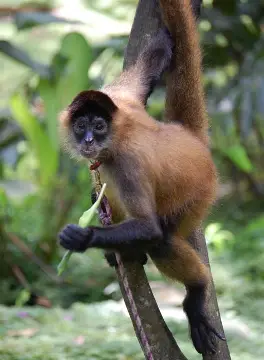
spider monkey
have very strong Prehensile taile – support entire body weight by 5th limb
o Unique: spider monkeys have a reduced or absent thumb to support brachiation

woolly monkey
nothing really unique
have thumbs
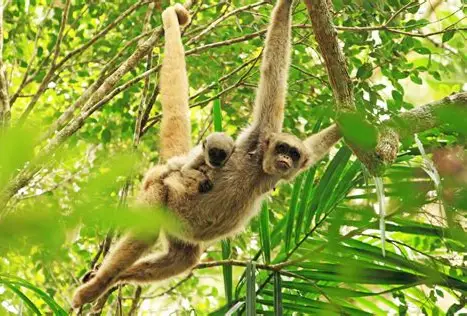
muriquis/ wooly spider monkey
Largest nonhuman primate in the Americas.
poop once every hour; feces smell like cinnamon and may attract males.
Reduced or missing thumbs.
No dominance hierarchies.
No mating competition; males take turns mating.
Females leave their birth group upon maturity.
Males remain in their birth group with their mothers.
Highly endangered due to habitat destruction and hunting for consumption.
bushmeat is a problem
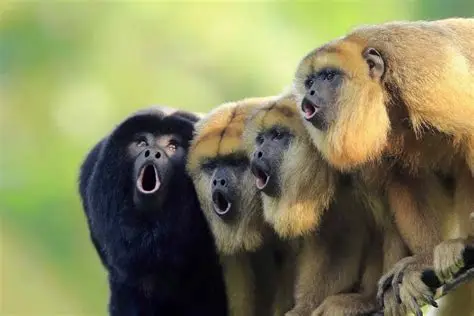
howler monkeys
very loud and far vocalization
Hyoid bone amplifies vocalizations by bouncing sound waves inside it.
Laryngeal sac is enclosed by the hyoid bone.
Sexual dichromatism: females are typically lighter than males.
Reverse dominance: youngest adult has the highest rank.
Females sometimes kidnap other females' infants.
Males have been observed kidnapping infants of other species.
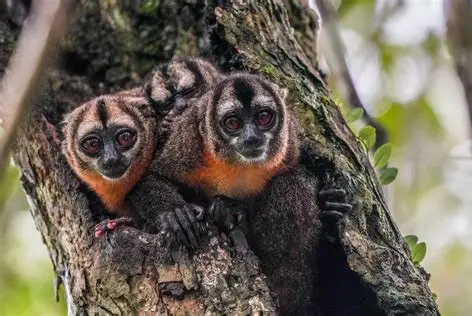
owl monkeys
Only nocturnal monkey in the Americas.
Lack a tapetum lucidum despite being nocturnal.
Small olfactory bulb for a nocturnal primate.
Possibly evolved from diurnal ancestors, switching between diurnal and nocturnal activity.
Monogamous pairs sit with tails entwined.
Males carry, feed, and play with offspring.
Aggression increases during full moons.
Both sexes fight within their own sex (female vs. female, male vs. male).
Use urine washing for scent marking during aggression.
- PITHECIIDAE
o Uakaris, sakis, bearded sakis, titi monkeys
o Chararcteristics:
§ Destructive seed predation
§ Unique dentition that allows the primates to crack through fruits with tough exteriors to get to nutrient dense seeds
§ Lack prehensile tails
§ Flat and fleshy noses
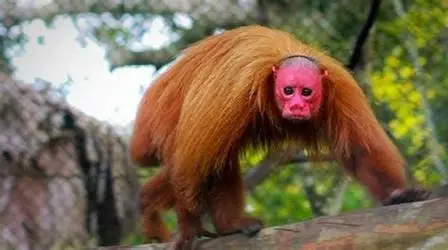
ukaris
Bright red, nearly bald head.
Pseudo dental comb: forward-leaning incisors that scoop food.
Large, stout, wedge-shaped canine teeth.
Deep mandible and powerful jaw muscles for eating unripe fruit.
Mating pairs leave the group.
Urine washing for individual identification.
Rub fruit juice into their hair.
Reproduction rates depend heavily on fruit availability.
Mothers tuck infants under their arms for protection.
Short tail used for communication: wagging and pointing signal excitement, anxiety, or dominance.
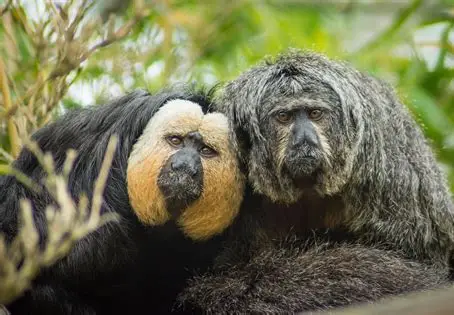
saki
Extreme sexual dichromatism: males have black bodies with whitish/yellow faces.
Monogamous pairs defend territory using duets and aggressive posturing.
Males are active parents.
Can leap over 30 feet.
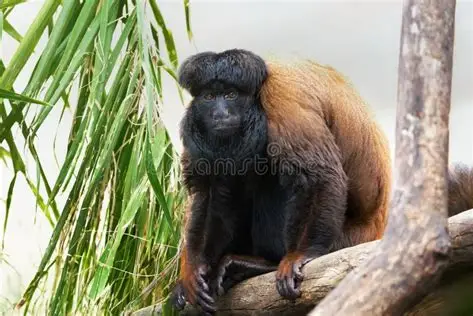
bearded sakis
Live in large fission-fusion groups of 20–50.
Split into small foraging parties during the day and reunite at dusk.
High levels of male tolerance and friendship.
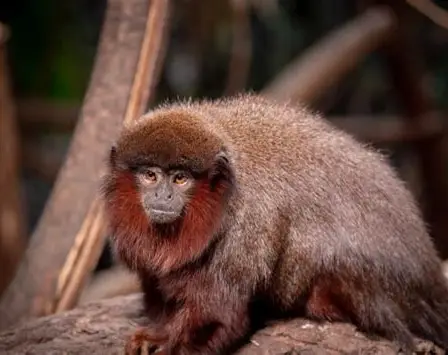
titi monkey
nothing really
colobinae
o Colobus
o Langurs
o Snub-nosed monkeys
o Proboscis
§ Leaf eating
§ Adaptations:
· Segmented stomach
§ Locomotion: quadrupedal (more aboreal than the cercopithecinae)
§ Have long tail for balance
§ Leaping: hind limb is longer than the forelimb, long feet
ON TEST*
Weak male dominance: Colobus monkeys are generally more tolerant of other groups, while cercopithecines tend to be more aggressive because they compete for resources.
why?
Why: When food is abundant (such as leaves), there is less competition and aggression. When food is limited or harder to obtain, competition increases, leading to more aggression.
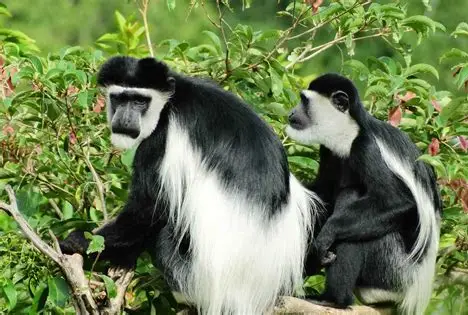
black and white colobus monkey
Largest colobus monkey.
U-shaped mantle.
Very small home ranges.
Sunbathe to maintain body temperature.
Uni-male, polygynous groups tend to be more aggressive.
Maintain spacing through resonating roars from adult males.
Newborns have pink skin and white coats, attracting attention from other females.
Allomothering is especially important.
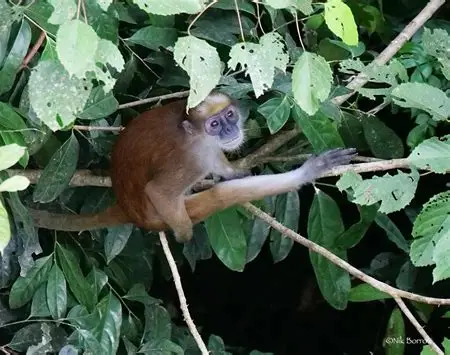
o Olive colobus:
Prefer immature leaves so strongly that they travel farther to find them (larger home ranges).
Forage at all canopy levels.
Spend more time feeding and less time resting than black-and-white colobus.
Allomothering is rare.
Grooming is uncommon because they spend more time finding food.
Freeze and remain still when frightened by predators.
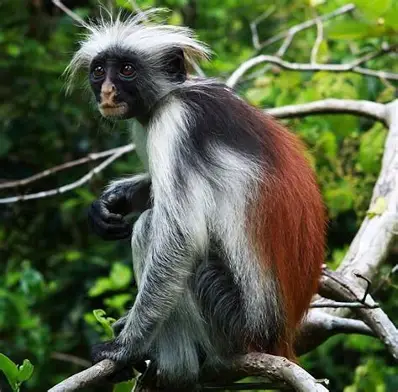
Zanzibar red colobus
Consume charcoal from human fires to reduce bloating after eating leaves.
This behavior has spread through the population.
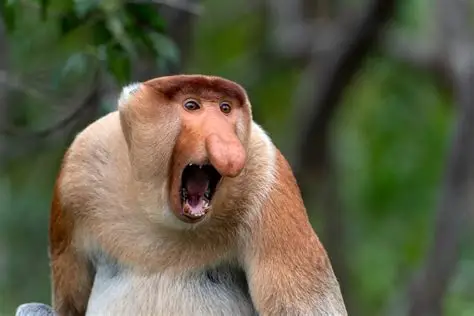
proboscis monkey
Males have fused ischial callosities; females have separate ones.
Have webbed feet, allowing excellent swimming and walking in water.
Two-tiered social system: all-male or uni-male groups join together at night to form larger bands.
Males make loud, aggressive honking sounds.

o Douc Langur
§ Sweet ripe fruits will make them very very sick
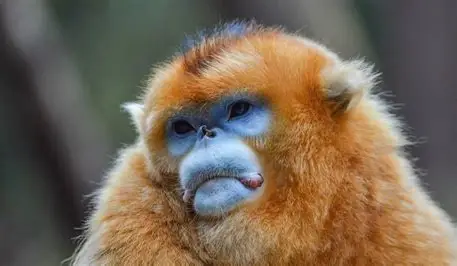
snub nosed monkey
Lack nasal bones, giving them a flat, upturned nose.
Adaptation to high-altitude environments; reduced external nose may help prevent frostbite.
Rainwater can enter their nostrils, causing them to sneeze.
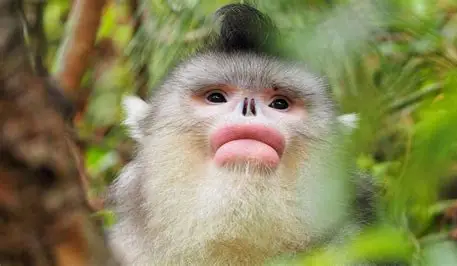
cercopithecinae
o Cheek pouch monkeys. Efficient food collection. Transport of food. Temporary food storage
o MUST KNOW: of all other priamtes, macaques have the largest geographic distribution/range other than homo[AD1] . -very diverse, many different species
o Diet:
not picky like colobinae where some species will really go out of their way to eat something. macaques have their preferences but will eat whatever.
Mothers are highly protective and restrict infant access to close relatives.
Males rarely provide infant care.
[AD1]On test
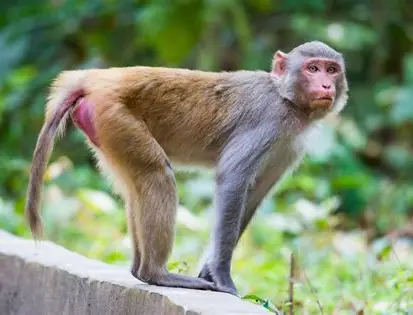
Rhesus macaques
Humans have had the greatest direct impact on rhesus macaques.
Frequently used in medical research because they breed in captivity and eat diverse foods.
Cloth vs. wire mother experiment: Infant macaques preferred the cloth mother for comfort, even when the wire mother was associated with food.
Cloth mother provided emotional security, especially in frightening situations.
gave macaque courage to vocalize when saw something scary

japanese macaque
Snowball-making is socially learned through observation, especially by infants.
Snowball play helps develop hand dexterity, cognition, and social relationships.
Soak in hot springs to stay warm.
Cold adaptations include hormonal/metabolic adjustments and a stocky build with shorter limbs and tails.
barbaryy macaque