Lab 2 Anatomical Membranes and Connective Tissues
 Call Kai
 Learn
 Practice Test
 Spaced Repetition
 Match
 Flashcards
 Knowt Play
1/21

There's no tags or description
Looks like no tags are added yet.
22 Terms
Three types of dense connective tissues
regular, irregular, elastic connective
Three types of loose connective tissues
areolar, adipose, reticular
Cells and matrix composition of connective tissue proper
fibroblasts, fibrocytes, defense cells, adipocytes. the matrix is composed of a gel-like ground substance with three fiber types collagen, reticular, elastic.
General features of connective tissue proper
6 different types varying in density and type
binding tissue
resists mechanical stress (tension)
reservoir for water and salts
energy (fat storage)
Three types of cartilage
Hyaline, elastic, fibrocartilage
Cells and matrix composition of cartilage
chondroblasts, chondrocytes. matrix is made of gel-like ground substance. fibers are collagen, elastic in some
General Features of Cartilage
resists compression because of the large amounts of water held in the matrix
functions to cushion and support body structures
Main categories of connective tissue
Proper, cartilage, bone, blood

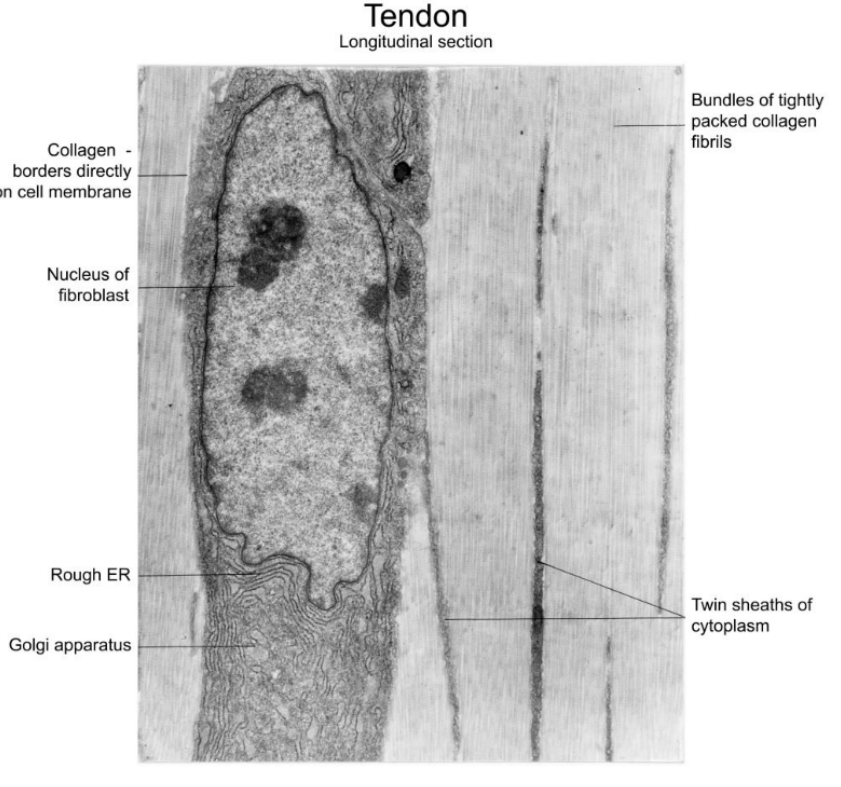
Dense regular tissue common features
clear gel-like material called ground substance and an extracellular fiber matrix
fibrocyte (called fibroblast when growing) cells that make and maintain it
strength to connective tissue matrix from the extracellular matrix protein collagen

Dense regular connective tissue
tendons
Dense irregular connective tissue common features
mostly type I collagen
tensile strength in many directions/disordered structure
Dense irregular connective tissue
fibrous capsules of organs and joints, dermis of skin, submucosa of digestive tract

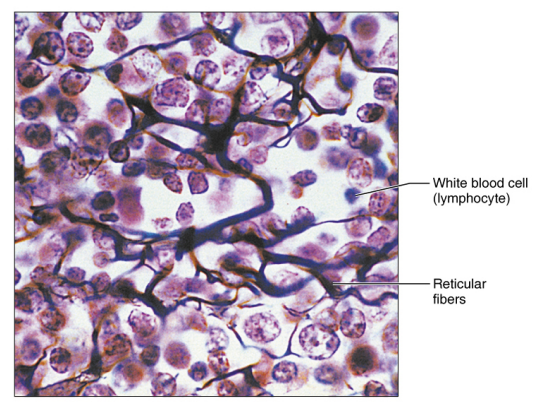
loose reticular connective tissue common features
“net like”
provides supportive webbing for epithelial tissues and some organ components
supports white blood cells, mast cells, and macrophages
type III collagen makes it more stretchable than dense connective tissue except dense elastic tissue
loose adipose connective tissue general features
sparse, closely packed adipocytes (fat cells) that have nucleus pushed to the side by large fat droplet
provides reserve food fuel, insulation, organ support
loose adipose connective tissue
found in lymphoid organs

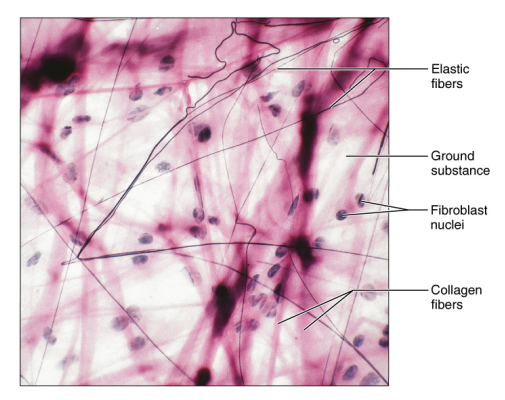
loose areolar connective tissue general features
collagen and elastic fibers as well as ground substance
widespread
wraps and cushions organs, where macrophages phagocytize bacteria
loose areolar connective tissue
distributed under epithelia of body/ forms lamina propria of mucous membranes
Serous membranes
body’s cavities are defined and enclosed by dual anatomical membranes
pericardial, peritoneal, and pleural cavities discussed in lab 1
Mucous membranes
internal superficial surfaces (lining)
has an epithelial layer and a connective layer (lamina propria) but also may contain smooth muscle (muscularis)
lubricated by cuboidal tissues embedded in the submucosa
Three layers of the mucosa and architectural layers

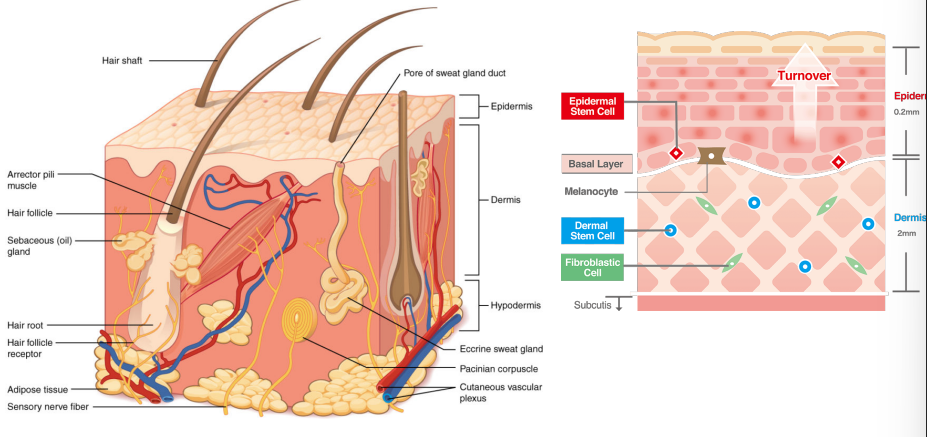
General features of the skin
composed of two layers, the epidermis of epithelial tissue and the dermis of connective tissue
A third layer of connective tissue lies just deep to the dermis/ hypodermal (subcutaneous) region contains adipose tissue and the superficial fascia – a tough connective tissue that anchors the skin and provides for frictionless movement against the fascia of the underlying muscles (the deep fascia).
Structure of the skin