BI207-- chemical control limitations
 Call Kai
 Learn
 Practice Test
 Spaced Repetition
 Match
 Flashcards
 Knowt Play
1/16

There's no tags or description
Looks like no tags are added yet.
Name | Mastery | Learn | Test | Matching | Spaced | Call with Kai | Chat |
|---|
No analytics yet
Send a link to your students to track their progress
17 Terms
chemical insecticides
most widely used method of pest control
mode of action: most chemicals act on the insect nervous system and cause rapid death
types:
botanicals
synthetic insecticides
insect growth regulators
limitattions to use of pesticides
environmental contanimation
effects on non target organisms
chronic occupational exposure
human health
residues (in food crops)
pest resistance (in insects)
pest resurgence (pest returning after beneficial natural enemies killed)
induction of secondary pest problems (former non pest species that were controlled by natural enemies)
entry routes for insecticides in water (image)
high levels of contanimation found in water sources, higher than legal limit
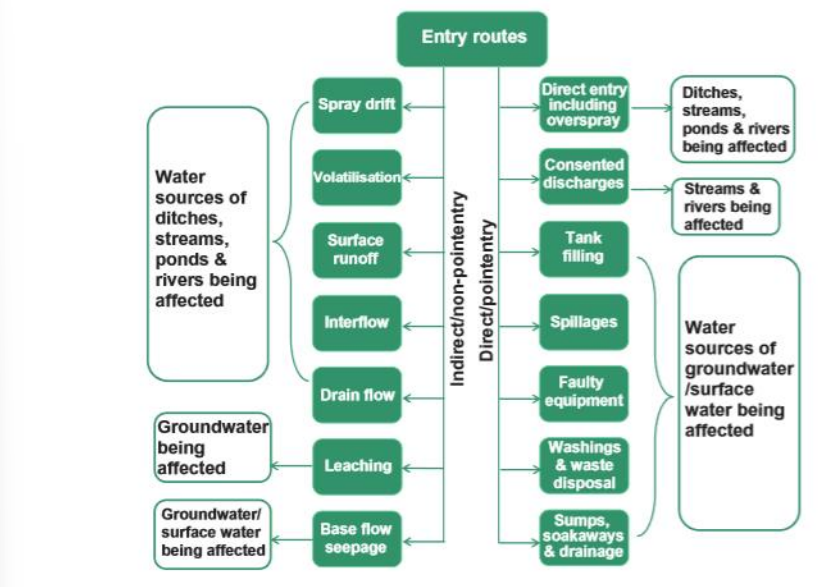
environmental contanimation— water
pesticide removal during wastewater treatment often poor
sometimes resulted in concentrations in effluent higher than influent
environmental contamination— soils
seeds coated with pesticides to prevent being eaten— leeches into soil
found mixtures of pesticides within soils that were sampled
some havent been used in years yet still persist in soil
impacts soil biodiversity and health
environmental contamiantion— nectar and pollen
pesticide residues found in flowers that are toxic to bees
exposed to mixture of compunds
only 1 honeybee species— total 98 species of wild bees
originally pesticides only tested their effects on worker honeybees— didnt test effect of repeat exposure or potential risk to larvae

non target organisms
terrestrial above ground
terrestrial below ground
aquatic— freshwater [marine]
invertebrates— insects
non target organisms— how are organisms exposed
acute vs chronic exposure
secondary exposure
indirect effects on food source or habitat
e.g. dung beetles affected by pesticides, resulting in more parasites found due to less dung beetles breaking it down
antiworming drugs found in feaces of cows and sheeps— prevents effective decomposing, reduces soil fertility, kills insects trying to decompose it
insecticide and pollination
effects
learning and memory
foraging and homing ability
flower visitation
pollination
below ground invertebrates
earthworms, acari and nematodes heavily affected
exposure routes
who
sprayers, farm workers, manufacturers, transporters, soldiers, public, scientists
why
direct contact, aerial drift, water, food chain, bad practice
how
skin, eyes, ingestion, respiration
DDT and malaria
before DDT: contro lfocused on mosquito larvae and disease itself
anti malarial drugs e.g. quinine
larvae targeted by draining/ filling in habitats or treating with oils and copper acetoarsenite every two weeks
1955: WHO delcares that global eradication possible— adults taregted, housed sprayed, effective for 6 months, in india cases dropped from 47 million (1947) to 0.1 million (1965), but back to 7-10 million in 1977
killed birds
residue found in fruit and produce
growing rates if cancer found in people
DDT and human health
extremely presistent in environment and human body
bioaccumulates
still used for control of disease vectors (e.g. mosquitoes)
linked to range of conditions
diabetes
endocrine disruption
reproductive phsyiology (reduced sperm count)
miscarrage
cognitive development of infants
carcinogenicity (liver, pancreas)
persistence
some pesticides are persistant pollutants, they do not degrade in soil or when exposed to UV radiation
bioaccumulation: toxins build up in an individual organism over time
bio magnification: toxins build up as they pass from organism to organism through food chain
sheep dip
uk 19080s/90s organophosphates used as sheep dip
sheep scab was a notifiable disease and dipping was compulsory
farmers satrted suffering from multiple health issues
headaches, giddiness, blurred vision— had to be investigated
food residues
many foods found with pesticides
one neonicotinoid: >90% fruit and veg, 90% of honey samples
two neonicotinoids: 72% fruits, 45% of veg, 50% of honey
but all below max residues
more research into human health effects needs to be done
ireland — Pesticide Control Labratory (PCL) monitors
pesticide residues in food
pesticide residues in animal feed
analysis of formulated products
why move towards less insecticide use?
problems with insectide resistance
cost of insecticide
consumer backlash against environemntal and human health concerns— non target organisms
development of alternative controls