Digital Divide Week 10
 Call Kai
 Learn
 Practice Test
 Spaced Repetition
 Match
 Flashcards
 Knowt Play
1/33

Earn XP
Description and Tags
Behavioral Biases and Designs in Digital Consumer Decision Making
34 Terms
What is “bounded rationality”?
our ability to make rational decisions is bounded by conditions (limited information, time + cognitive capacity), attention becomes an economic resource
> people use heuristics and satisficing (choosing a good enough option), digital environments use a lot of stimuli and options to make use of that
What is satisficing?
behavioral economics (choices depend on the context + bounded by attention) rather than rational-choice models (stable preferences/consistent optimization with complete info -> Homo Oeconomicus)
What are heuristics?
mental shortcut/rule of thumb to make faster decisions with limited information + less effort (e.g. choosing the product with the highest star rating)
> can lead to biased/wrong decisions
What is “information overload”?
amount of information exceeds an individual’s ability to process, understand or make decisions (cognitive cost > leads to decision delay, reduced efficiency, confusion)
What is decision fatigue?
repeated/complex digital choices increase cognitive burden (too many notifications) > therefore people rely even more on defaults/heuristics
What is meant by “attention as capital”?
attention is a scarce cognitive resource with economic value (can be unequally held by people > being able to resist distraction or not is visible in consumer inequality)
What is the paradox of choice?
more variety results in more difficulty when making decisions and also a reduction in satisfaction

What is time poverty?
if you have less time, you can’t compare the options critically (reliance on defaults)
What does “behavioral economics” look at?
how cognitive limits, framing, heuristics/defaults and contextual factors systematically influences decision-making
DESIGN = INVISIBLE BEHAVIOR ARCHITECTURE
What is the prospect theory?
perception of the future, gains and losses are evaluated relative to a reference point, loss aversion (losses are weighed more heavily than equal gains)

What is the dual-process model of decision making?
system 1: 95%, fast thinking (unconscious, automatic everyday decisions) > is encouraged online through autoplay and infinite scroll
system 2: 5%, slow thinking (conscious, effortful + complex decisions)
What is the “default effect” and the status quo bias?
Default effects: consumers usually select/keep a preselected option
Status Quo Bias: consumers prefer to maintain their current situation rather than changing it (e.g. organ donating Germany vs. Austria)
What are some mechanisms of default effects and the Status Quo Bias?
avoiding cognitive effort: changing defaults needs attention + effort
perceived endorsements: defaults are seen as recommended by authorities
loss aversion: changing feels risky, staying feels safe
What is anchoring?
reference values influence future judgements (reference prices shape perceived discounts or subscription platforms showing expensive premium tiers > the other plans look much more appealing + affordable)
What is the “decoy effect”?
introduction of an asymmetrically dominated option increases the preference for an alternative (subscription platforms!), is less attractive than target option but not necessarily less attractive than other options
What is framing?
the way a choice is presented
What are scarcity and urgency cues?
encourage faster decisions, can lead to loss aversion/FOMO

What is “confirmation bias”?
tendency to seek/prefer information that supports your already existing beliefs (limits exposure to alternative viewpoints/perspectives and only recommends content that is already similar to what the consumer has already seen
What is present bias and immediate gratification about?
people prefer immediate rewards to future rewards (10.000won now better than 20,000won in 2 months) > Buy-Now-Pay-Later, Social media likes
What is the digital choice architecture?
the way choices are structured + presented to decision-makers

What is a nudge?
change in choice architecture to influence behavior (still preserving freedom of choice)
What are dark patterns? Name some different types"!
interface designs that deceive, manipulate users
hidden costs
roach motel > easy to subscribe but hard to cancel
forced continuity
confirm-shaming (no thanks, I don’t want to save any money))
What is the difference between interface + information design?
Interface Design: structuring elements through which users interact with and receive feedback from (system)
Information design: organizing + presenting information so that people can understand it + act on it quickly (layout, visuals, hierarchy)

What is informational asymmetry?
consumers/companies have unequal information that is relevant for market decisions
What is epistemic inequality?
unequal opportunities to access, produce, interpret and have knowledge recognized
What is algorithmic persuasion? Think also about the mechanisms behind it!
data-driven systems show you persuasive content based on your previous behavior + preferences (individualized + self-reinforcing)

What are filter bubbles?
content/products are so narrowly personalized that consumers are continuously being exposed to similar items -> filters out other perspectives/products/cultural choices
What are echo chambers?
happens when people mainly interact with people who also share their beliefs -> strengthens existing views and reduces engagement with alternative views
What is cognitive load redistribution?
digital interfaces can reduce/shift decision-making burdens onto consumers (simple financial interfaces)
What is the difference between traditional and current consumer protection laws?
traditional consumer protection: focus on information disclosure not equity
behaviorally informed regulation: focus on whether consumers can understand information + make effective choices
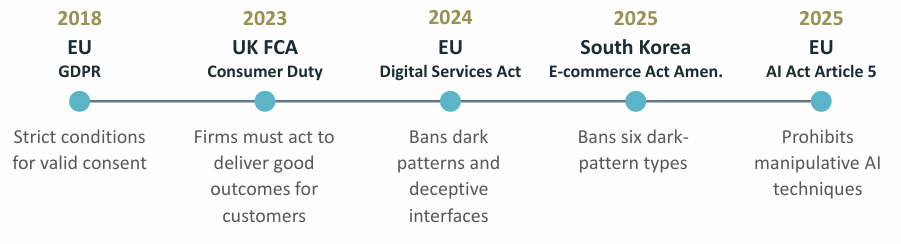
What is ethical design about?
focus on consumer understanding, autonomy, well-being

What is corporate design?
today more focus on design accountability (e.g. apple privacy labels)
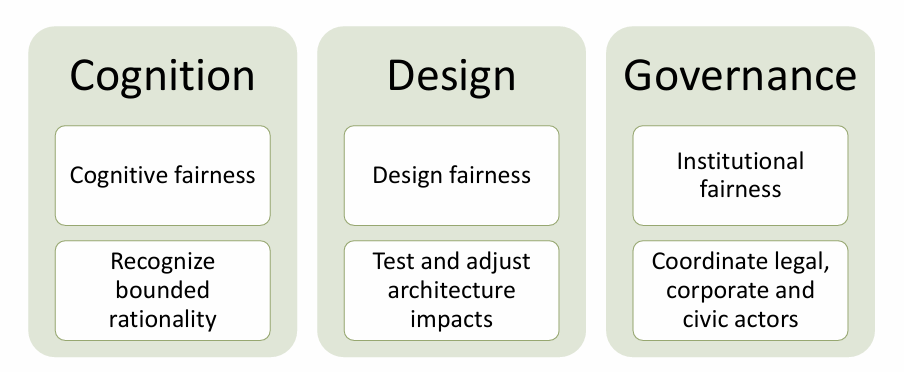
How can consumer empowerment be achieved?
Bias literacy (=ability to recognize, interpret + resist manipulation) against exploitation