History of Atomic theory - HONORS CHEM (CLEAR)
 Call Kai
 Learn
 Practice Test
 Spaced Repetition
 Match
 Flashcards
 Knowt Play
1/9

There's no tags or description
Looks like no tags are added yet.
10 Terms

Democritus
Greek philosopher
one of the first to suggest the existence of atoms
came up with the word “atomos” (a=no; tomy=cut; atomos=non-cuttable)
believed atoms were indivisible and indestructible
silenced by Aristotle because he had no proof
*squashed like a bug*

John Dalton
English scientist
believed elements were made of tiny, hard, round, indivisible, and indestructible particles called atoms
atoms of the same element=same atoms
atoms of different elements combine in whole number rations to form compounds
in chemical reactions, atoms are combined, separated, or rearranged, but never changed into different atoms
accepted because he did have evidence (Lavoisier and Proust)
*gobstopper*

Dmitri Mendeleev
Russian chemist
created the first widely accepted periodic table
first arranged them by mass (periods) then grouped them based on characteristics (groups)
became most famous because he made predictions about undiscovered elements that were proved true
*periodic table*

JJ Thomson
English physicist
electrocuted a vacuum, which produced a ray that repelled from the negative end of the magnet (therefore it must be made of something negative)
tested many different metals and found they all had the same particles
proved that atoms have divisible parts
credited with discovering the electron
thought that an atom was a big glop of positive stuff with electrons “baked” in
*chocolate chip cookie (plum pudding)*

Albert Einstein
German theoretical physicist
used light (which he discovered was actually made of photons) to define his photoelectric effect
proved that:
-some metals do a better job at holding onto their electrons than others
-some electrons can be removed easier than others (valence vs core)
*light*

Ernest Rutherford
New Zealand physicist/chemist
shot alpha particles (positively charged) through a thin sheet of gold foil
most particles passed right through (expected) but some were deflected almost straight back (unexpected)
concluded that atoms:
-are mostly EMPTY space
-have a small, dense, positively charged nucleus at the center
-have small, negative electrons orbiting the nucleus
*tootsie pop*

Niels Bohr
Danish physicist
“discovered” different electron levels
electrons cannot exist between energy levels, but they can jump between them
when energy is added, electrons absorb some of it and become excited (higher levels)
when the excited electron returns to the ground state (lowest level), light is emitted (different colors for different sized jumps)
*brussels sprouts*

Henry Moseley
English physicist
improved Mendeleev’s periodic table
instead of arranging elements by atomic mass, he arranged them by atomic number (# of protons)
*new periodic table*

Erwin Schrodinger
Austrian theoretical physicist
used math to suggest possible regions where electrons might be located
developed “quantized” electrons
*math*
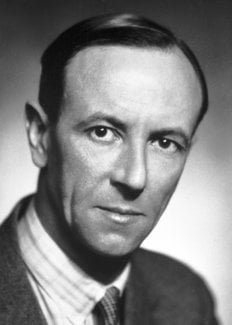
James Chadwick
British physicist
discovered the neutron
*neutron*