Immunology: (Concepts of) Vaccination
 Call Kai
 Learn
 Practice Test
 Spaced Repetition
 Match
 Flashcards
 Knowt Play
1/26

There's no tags or description
Looks like no tags are added yet.
27 Terms
Impact on human and animal health
Why it matters: reduced infectious disease, animal suffering and mortality; improved food security; potential reductions in antimicrobial use.

vaccines have transformed public health
since national programmes for immunization first became properly established and coordinated in the 1960s.
Saved ~4 million human lives per year
• More than halved childhood mortality
• Multi £billion increases in farming productivity
• Key strategy against antimicrobial resistance
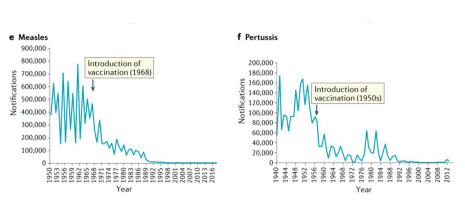

welfare and economic benefits
Vaccine schedules
Core vaccines
Recommended in a population because of disease severity, prevalence, zoonotic importance or risk
Non-core vaccines
Selected according to lifestyle, geography, exposure and individual circumstances

what do vaccines prevent from
Even when vaccines fail to prevent infection they can have benefit

vaccines can protect the unvaccinated
vaccination threshold must be met to actually be affecting


origins of vaccination
variolation
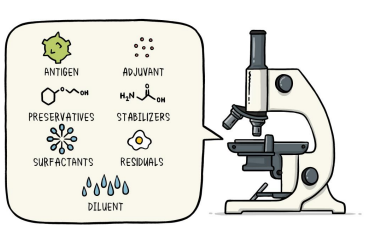
what’s in a vaccine today?
Antigen: the molecular target recognised by
antigen-specific B- and T-cell responses
Adjuvant: a component added to some vaccines
to enhance or shape the immune response
(aluminium salts, oil emulsions, saponin-based)
Formulation: the vaccine’s overall composition,
including components that support antigen stability
or delivery
how do vaccines work?
Vaccines expose the immune system to antigens in a controlled way, inducing protective immune responses and immunological memory.
Important outcomes
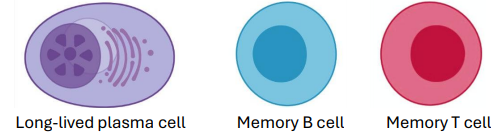
• Long-lived plasma cells maintain antibody production
• Memory B cells enable accelerated antibody responses
• Memory T cells enable accelerated helper or effector responses
how does immune memory protect us?
Pre-existing immunity
Long-lived plasma cells maintain antibodies that can prevent infection or disease immediately
Immunological recall
Memory B and T cells generate faster responses after re-exposure, potentially limiting pathogen replication and disease
Protection can depend on antibodies already present, on immune recall, or on both.


how vaccination generates immunity
4 stages
in the next slides
key immune cells in vaccination
Dendritic cells: acquire antigen and activate naive T cells
CD4 T cells: recognise peptide–MHC II and coordinate immune responses
CD8 T cells: recognise peptide–MHC I and can kill infected cells
B cells: recognise antigen and can differentiate into antibody-secreting or memory cells
Plasma and memory cells: maintain antibodies or provide accelerated responses after re-exposure


administer vaccine
vaccine antigen taken up by DCs
anitgen promotes danger singlas recognised by PRR to help activate it
processed into peptides and taken up MHC class II
2) DC present these peptides to activate antien specific T cells - e.g. CD4 T T cells and CD8 on MHC I depends
3) if CD8 cell then becomes effector and memory cells they are basically cytotoci T cells
if CD4 T ce;; gives B cell production cytokines to activate other cells - at the same time B cells can recognise BCR on antigen from vaccine l ike an antibody then basically proliferates and matures
some vaccines not vet good generating T cell responses

vaccination routes and immunity
Injectable: intramuscular (IM) or subcutaneous (SC) Often strong systemic antibody and immune-memory responses
Mucosal: intranasal, oral, spray Can favour immunity at mucosal surfaces, including local (IgA) antibodies and tissue-resident cell responses
Route selection depends on the required immune response and practical delivery considerations.
• Intranasal: selected canine respiratory vaccines; live influenza vaccine in children
• Oral: wildlife rabies bait; oral polio vaccine in people
• Spray or drinking water: selected poultry vaccines
what is important for protection? correlates
• Correlate of protection (CoP) = a measurable immune marker that statistically predicts protection
• Majority of known CoPs are antibody (ELISA etc)
mainly human vaccines loads same for animals antibodies in the pic

what is important for protection
Systemic antibodies, including IgG
Can protect against pathogens or toxins in blood and tissues
Mucosal antibodies, particularly secretory IgA Can help prevent pathogen establishment at mucosal surfaces
Tissue-resident memory T cells
Can mount rapid local cellular responses


waht is important for protection? over time
y axis contribution to proection - higher better
x axis period of time
TRM = Tissue resident - they are very effective initially but weaken over time
T cell needs activation
antibody usually already there
immune response - durability is very big factor cos decreases over time
designing a protective vaccine

why are some vaccines less effective?
1. Incomplete protection
Vaccination may reduce disease but not
prevent infection or transmission
Example: porcine reproductive and respiratory
syndrome virus (PRRSV)
2. Antigenic variation
Strains may differ in recognition by vaccineinduced immunity
Example: influenza (human, equine, avian);
infectious bronchitis virus
3. Insufficient durability
Protective immunity may decline and need
repeat vaccination
Example: some leptospirosis vaccines
4. Host or implementation factors
Maternal antibody in young animals, poor
health, incorrect storage or administration,
incomplete courses
Vaccine effectiveness depends on the pathogen, host, vaccine and how it is used.

vaccination innovation: solving issues - the brackets are just examples
• Poor immunity (Leptospira bacterins, parvovirus vaccines)
• Non-sterilizing immunity (Acellular pertussis, PRRSV)
• Pathogen-escape: (seasonal Influenza, infectious bronchitis virus)
• Insufficient durability (SARS-CoV-2, Leptospira bacterins)
• Antibodies enhanced disease (feline infectious peritonitis, RSV)
• Distribution challenged e.g., cold chain (early mRNA COVID-19)
• Vaccine interferes with serodiagnosis (DIVA) (FMDV)

live vaccines
Mechanism: a live vaccine organism can replicate or persist
sufficiently to stimulate immune responses
Advantages: often induces strong and durable humoral and
cellular responses
Limitations: replication-related safety considerations, possible
interference by pre-existing immunity, and storage requirements
Examples
• Human: measles–mumps–rubella (MMR), yellow fever
• Veterinary: modified-live canine distemper and parvovirus;
attenuated CVI988/Rispens and naturally avirulent HVT (Marek’s
disease)
inactivated vaccines
Mechanism: whole pathogens are rendered non-infectious while
retaining relevant antigenic structures
Advantages: cannot replicate or revert to virulence
Limitations: often require adjuvants and repeated doses;
cellular responses may be less prominent, depending on
formulation
Examples
• Human: inactivated polio (IPV), hepatitis A, rabies
• Veterinary: foot-and-mouth disease, leptospirosis bacterins, rabies
toxoid and subunit vaccines
Toxoid vaccines: contain inactivated bacterial toxins and induce
toxin-neutralising antibodies (e.g. tetanus vaccines for horses
and people)
Subunit vaccines: contain selected pathogen antigens rather
than whole organisms (e.g. porcine circovirus type 2 capsid in
pigs; hepatitis B and HPV in people)
Shared considerations: antigen selection is critical; adjuvants
and repeat doses may be needed
vectored and nucleic acid vaccines
Viral-vectored: a viral vector delivers a gene encoding the target antigen (e.g. canarypox-vectored equine influenza; adenovirus-vectored COVID-19 vaccines)
DNA and RNA: genetic instructions enable host cells to produce the antigen (e.g. DNA vaccine against infectious haematopoietic necrosis in salmon; mRNA COVID-19 vaccines)
Advantages: antigen made inside host cells can support both humoral and
cellular responses
Limitations: performance depends on the vector or delivery system, existing
immunity to the vector, the host and manufacturing requirements


comparing vaccine platforms - basically what he said
Vaccine safety: benefits and risks
• Most veterinary vaccines have favourable benefit–risk profiles when used
appropriately
• Local reactions and transient systemic effects may occur; serious reactions
are uncommon
• Some live vaccines have specific contraindications, including in particular
pregnant or immunocompromised animals
• Vaccine use must follow product-specific authorisation and safety
instructions
• Suspected adverse events, including lack of efficacy, should be reported (in
the UK, to the Veterinary Medicines Directorate, VMD)
enhanced disease after vaccination
Antibody-dependent enhancement (ADE)
• Antibodies enhance infection, e.g. Fc
receptor-mediated uptake of virus into
macrophages
• Veterinary: experimental feline coronavirus
(FIP) studies
• Human: dengue, on infection with a
different serotype
Vaccine-associated enhanced disease (VAED)
• More severe disease on infection after
vaccination; broader than ADE
• Can involve non-neutralising antibody,
immune complexes and skewed T-cell
responses
• Human: formalin-inactivated RSV vaccine
(1960s); veterinary: inactivated bovine RSV
vaccines in experimental calf studies
DIVA: infected or vaccinated?
DIVA = Differentiating Infected from Vaccinated Animals
Vaccination may complicate serological surveillance because both infection and vaccination can induce antibodies
Example: infectious bovine rhinotracheitis (IBR), caused by bovine herpesvirus 1 (BoHV-1)
DIVA strategies can support surveillance and eradication programmes while vaccination continues.

Deploying vaccines: issues
• Poultry industry – 74% meat and 68% eggs are produced under intensive production conditions
• Control of infectious diseases critical in houses containing >20,000 birds
• Conventional approaches to vaccinating chickens via needle inoculation not practical
• Delivery through feed/drinking water or spraying requires boosters & not cost-effective

vaccination innovation: delivery
• In ovo vaccination against Marek’s disease (herpes virus) shown to be effective
• Capable of introducing several antigens simultaneously into >50,000 eggs/hour
• Earlier onset of immunity, uniform & fast delivery, reduced stress and labour costs

effective vaccines need effective vaccination programmes
Even good vaccines work best within comprehensive control:
• High population coverage
• Surveillance and diagnosis
• Biosecurity and movement control
• Understanding of the epidemiology
• Community awareness and vaccine uptake

take - home messages
