Offensive Formations
 Call Kai
 Learn
 Practice Test
 Spaced Repetition
 Match
 Flashcards
 Knowt Play
1/22

There's no tags or description
Looks like no tags are added yet.
23 Terms
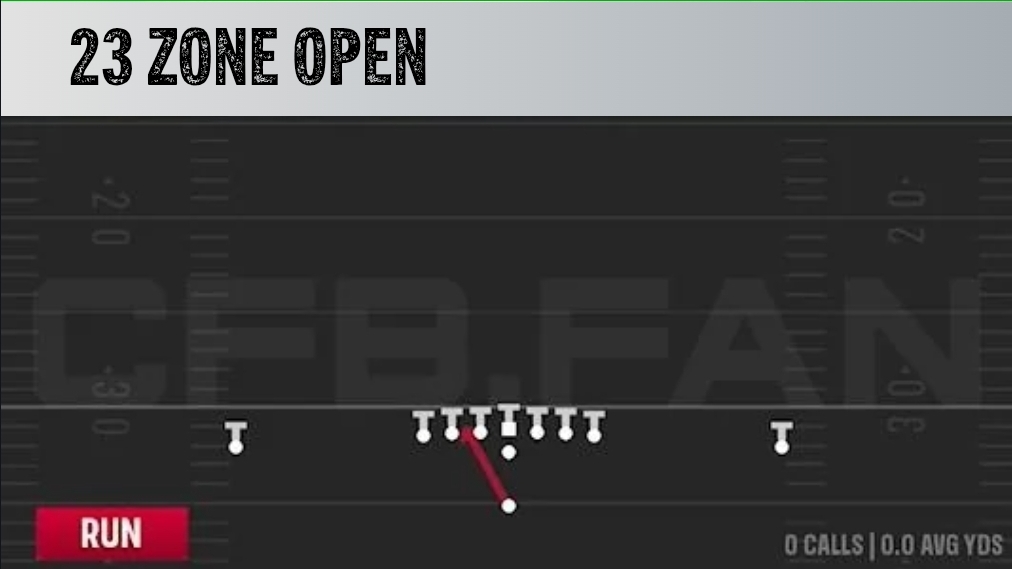
Name this Offensive Formation
Singleback Ace (also known as Singleback Double Tight or 12 Personnel Ace)
This is a Singleback Ace formation because the quarterback is lined up directly under center with a single running back aligned deep behind him (forming the "Singleback" backfield), flanked symmetrically by two tight ends attached on both ends of the five-man offensive line (creating a seven-man front) and two wide receivers split out wide on the left and right edges, giving the offense a balanced 12-personnel (1 RB, 2 TEs, 2 WRs) alignment that threatens both inside/outside runs and play-action passes to either side.

Name this Offensive Formation
Singleback Wing Tight (or Singleback Ace Close)
This is a Singleback Wing Tight formation because the quarterback is lined up under center with a single running back aligned directly behind him, flanked by two tight ends attached tight to the offensive line on both sides and two wide receivers tucked into tight, condensed splits right outside the tight ends, creating a compact seven-man core that disguises run-versus-pass intentions and sets up clean crossing or double-out ("Bench") route combinations.

Name this Offensive Formation
Singleback Ace Double Wing (also known as Heavy Singleback or 23 Personnel Singleback)
This is a Singleback Ace Double Wing formation because the quarterback is lined up under center with a single running back aligned deep behind him, flanked on both sides by two tight ends attached to the offensive line and two wingbacks (or extra tight ends/fullbacks) tucked tightly off the outside shoulders of the tight ends, creating a condensed, zero-wide-receiver 23-personnel heavy front designed to overpower defenses with downhill power runs, double-team blocks, and surprise play-action passes.

Name this Offensive Formation
Singleback Ace Slot (or Singleback Double Tight)
This is a Singleback Ace Slot formation because the quarterback is lined up under center with a single running back aligned deep behind him, flanked on the line of scrimmage by a five-man offensive line plus two tight ends (one attached to the left tackle and two tight ends stacked on the right side, forming an unbalanced seven-man front) and two wide receivers split out wide on the left and right edges, giving the offense extra blocking leverage to the right side for power/smash runs while keeping wide receivers outside to stretch the defense horizontally.

Name this Offensive Formation
Singleback Wing Pair Heavy (or Singleback Heavy / Unbalanced Jumbo)
This is a Singleback Wing Pair Heavy formation because the quarterback is lined up under center with a single running back aligned deep behind him, flanked on the line of scrimmage by a compact, unbalanced nine-man front featuring an extra tight end/tackle attached to the left side and three tight ends/wingbacks stacked tightly together to the right side with zero wide receivers split out, overloading the strong side with maximum blocking leverage to dominate short-yardage, goal-line, and downhill Duo power runs.

Name this Offensive Formation
Singleback Wing Stack (or Singleback Wing Tight Z / Singleback Trips Close)
This is a Singleback Wing Stack formation because the quarterback is lined up under center with a single running back aligned deep behind him, flanked by a single split-end wide receiver isolated wide on the left side and an overloaded strong-side right featuring a tight end attached to the right tackle plus two additional receivers/wingbacks tucked tightly off the line of scrimmage to the right, creating a heavy blocking surface to the strong side for downhill Duo runs while keeping a lone backside receiver wide to hold the boundary cornerback.

Name this Offensive Formation
Singleback Doubles (or Singleback Spread / Singleback Twins)
This is a Singleback Doubles formation because the quarterback is lined up under center with a single running back aligned directly behind him, flanked by a tight end attached on the right side of the five-man offensive line, two wide receivers split out on the left (an outside split end and an inside slot receiver), and one wide receiver split wide on the right, giving the offense a balanced 2x2 passing distribution (two receivers on each side of the center) that stretches the defense horizontally while preserving an under-center running threat.

Name this Offensive Formation
Singleback Spread (or Singleback 4WR / 10 Personnel Singleback)
This is a Singleback Spread formation because the quarterback is lined up under center with a single running back aligned directly behind him, surrounded by a five-man offensive line with zero tight ends and four wide receivers split symmetrically across the field (an outside receiver and an inside slot receiver on both the left and right sides), creating a wide 2x2 horizontal spacing that forces the defense out of the box into Nickel or Dime sub-packages while attacking all four vertical seams downfield.

Name this Offensive Formation
I Form Close (or I Form Pro)
This is an I Form Pro (or I Form Normal) formation because the quarterback is lined up directly under center with a fullback and a halfback stacked straight behind him in a vertical line ("I" alignment), flanked by a tight end attached to the right side of the five-man offensive line and two wide receivers split out wide on the left and right edges, giving the offense a balanced 21-personnel alignment built for downhill lead-blocking runs like HB Iso as well as physical play-action passes.

Name this Offensive Formation
I Form Tight (or I Form Pro / Normal)
This is an I Form Pro (or I Form Normal) formation because the quarterback is lined up directly under center with a fullback and a halfback stacked straight behind him in a vertical line ("I" alignment), flanked by a tight end attached to the right side of the five-man offensive line and two wide receivers split out wide on the left and right edges, giving the offense a classic 21-personnel alignment designed for downhill lead-blocking runs (like 95 Mike) and physical play-action passes.

Name this Offensive Formation
Strong I (specifically Strong Close or Strong Pro)
This is a Strong I formation because the quarterback is lined up under center with the halfback aligned deep behind him and the fullback offset to the strong (tight end) side of the backfield, flanked by a tight end attached on the right side of the five-man offensive line and two wide receivers split out on the left and right edges, giving the offense an extra lead blocker on the strong side to attack the C-gap on off-tackle runs while maintaining balanced outside passing threats.

Name this Offensive Formation
Strong I Wing (or Strong Wing / 22 Personnel Strong I)
This is a Strong I Wing formation because the quarterback is lined up under center with the halfback aligned deep behind him and the fullback offset to the strong (right) side of the backfield, flanked on the line of scrimmage by a single wide receiver split out wide on the left and two tight ends stacked side-by-side on the right edge of the five-man offensive line, creating a heavy 22-personnel strong-side surface designed to overwhelm defenses with downhill Duo power runs and lead-blocking schemes.

Name this Offensive Formation
Split Backs (specifically Split Close or Split Pro)
This is a Split Backs formation because the quarterback is lined up directly under center with two running backs (typically a halfback and a fullback) aligned side-by-side at equal depth behind him in the backfield, flanked by a tight end attached to the right side of the five-man offensive line and two wide receivers split out on the left and right edges, giving the offense balanced dual-back rushing threats to either side of the line as well as clean pass-protection and flat-route options out of the backfield.
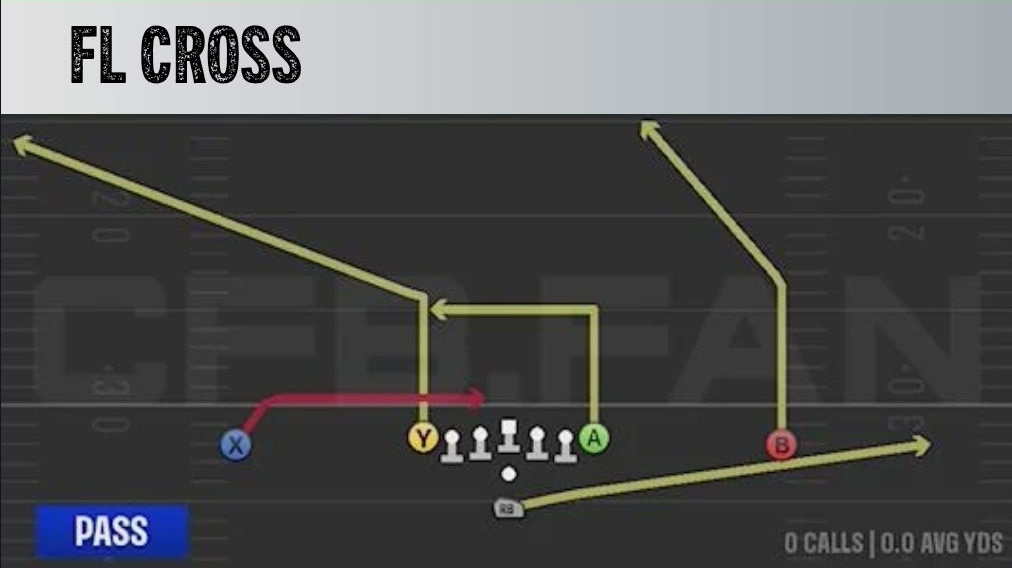
Name this Offensive Formation
Pistol Ace (or Pistol Double Tight)
This is a Pistol Ace formation because the quarterback is aligned roughly three yards behind the center in a short shotgun snap ("Pistol") with a single running back stacked directly behind him, flanked symmetrically on the line of scrimmage by two tight ends attached to both tackles (Y and A) and two wide receivers (X and B) split out wide to the left and right edges, combining the downhill rushing angles of an under-center Ace set with the pre-snap vision, play-action timing, and quick-passing versatility of the shotgun.

Name this Offensive Formation
Gun Empty Y Off Trips (also known as Shotgun Empty Trips or Empty 3x2)
This is a Gun Empty Y Off Trips formation because the quarterback is aligned five yards deep in the shotgun with zero running backs beside him in the backfield ("Empty"), flanked by a single wide receiver (X) split wide on the left, a tight end (Y) aligned off the line of scrimmage just behind the left tackle ("Y Off"), and three receivers (A, RB, and B) fanned out to the right side ("Trips"), spreading five eligible receivers horizontally across the entire width of the field to isolate matchups, stress zone coverage defenders, and open up quick vertical seams or quarterback draw lanes.

Name this Offensive Formation
Gun Empty Trey (also known as Shotgun Empty 3x2 or Empty Spread)
This is a Gun Empty Trey formation because the quarterback is aligned five yards deep in the shotgun with zero running backs beside him in the backfield ("Empty"), flanked by two wide receivers split out wide on the left (an outside split end and an inside slot receiver) and three receivers fanned out across the right side (an inside tight end/slot X, a middle slot receiver R1, and an outside flanker O), spreading all five eligible receivers horizontally across the width of the field in a 3x2 alignment to stress zone coverage seams, force Nickel or Dime personnel, and create isolated one-on-one passing matchups.

Name this Offensive Formation
Gun Trips TE (or Gun Trey)
This is a Gun Trips TE formation because the quarterback is in the shotgun with a single running back offset beside him, flanked by three wide receivers bunched or fanned out to one side ("Trips") and a single tight end attached to the opposite side of the offensive line, overloading one side of the field with passing threats to stress zone coverage while keeping a backside tight end for run blocking or play-action passes.

Name this Offensive Formation
Gun Bunch (or Gun Tight Offset TE)
This is a Gun Bunch formation because the quarterback is in the shotgun with a single running back offset beside him, flanked by three receivers aligned tightly together in a triangle cluster ("Bunch") just outside the tackle on one side and a single receiver split wide on the opposite side, using tight spacing to create natural rubs/picks against man coverage and quick horizontal flood concepts against zones.
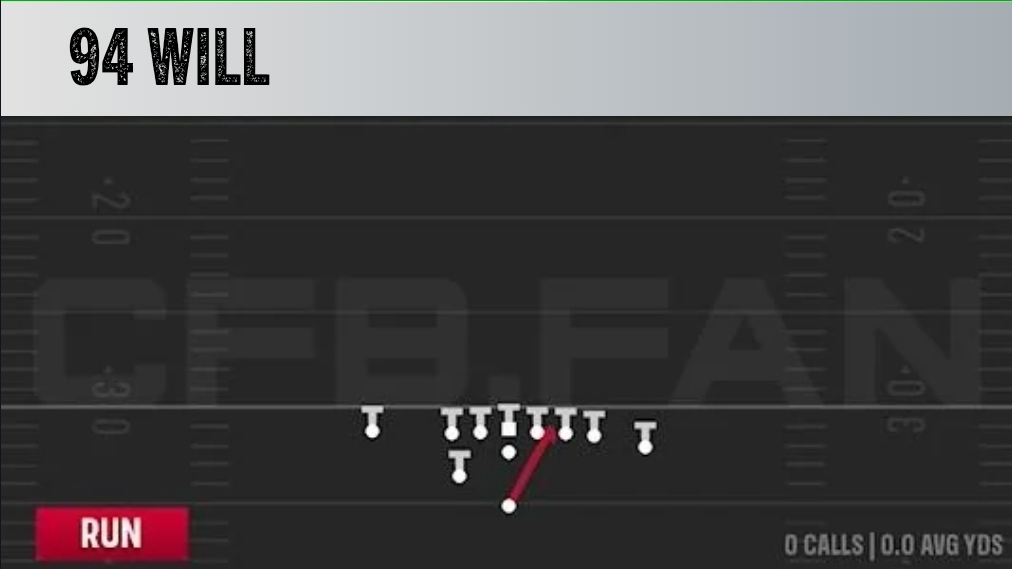
Name this Offensive Formation
Weak I
This is a Weak I formation because the quarterback is under center with the halfback aligned deep behind him and the fullback offset to the weak side (away from the tight end), balancing out the offense's run strength so the fullback can lead-block weak-side sweeps, counters, and iso runs while the tight end anchors the strong side.

Name this Offensive Formation
Gun Wing / Gun Split Close
This is a Gun Split Close formation because the quarterback is in the shotgun flanked by two running backs (or a running back and an H-back/tight end) aligned on either side of him in the backfield, with two wide receivers tucked into tight splits near the offensive line, creating a deceptive dual-threat backfield for draw plays, screen passes, and wheel routes.

Name this Offensive Formation
Goal Line / Heavy Jumbo
This is a Goal Line formation because the quarterback is under center with a fullback and halfback stacked behind him, surrounded by a condensed seven-to-eight-man front featuring two or three tight ends (or extra offensive linemen) and zero wide receivers, maximizing sheer physical blocking power to gain one or two tough yards in short-yardage or touchdown situations.

Name this Offensive Formation
Wildcat
This is a Wildcat formation because the quarterback either leaves the field or splits out wide as a decoy receiver while a running back, wide receiver, or athletic gadget player takes the direct shotgun snap, giving the offense an extra blocker in the run game (11-on-11 power football) and threatening jet sweeps or trick passes.
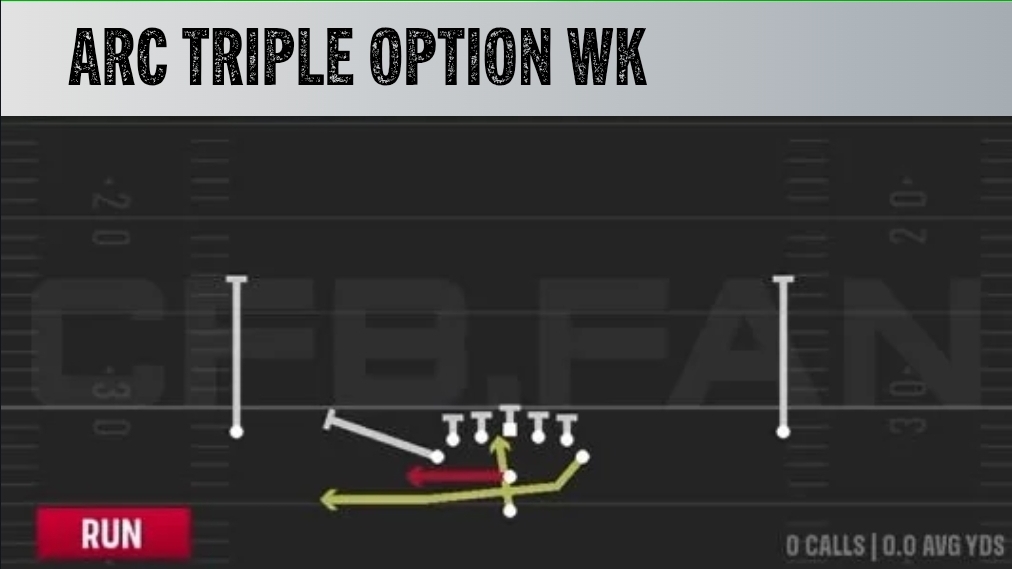
Name this Offensive Formation
Flexbone (Triple Option)
This is a Flexbone formation because the quarterback is under center with a fullback (B-back) stacked directly behind him and two agile slotbacks (A-backs) aligned just behind and outside the offensive tackles, flanked by two wide receivers split wide, creating a symmetrical three-back alignment built specifically for triple-option, midline, and rocket-toss rushing attacks.