Zuku VTNE Nursing
 Call Kai
 Learn
 Practice Test
 Spaced Repetition
 Match
 Flashcards
 Knowt Play
1/538

There's no tags or description
Looks like no tags are added yet.
539 Terms
Right jugular vein
What is the recommended blood collection site for most, but not all the avians?
Cranial vena cava
Toenail clipping
Medial metatarsal vein
Right jugular vein
Basilic vein
Severely decreased oxygen content in the blood
What is anoxia?
Severely decreased oxygen content in the blood
Equal volumes of oxygen and carbon dioxide in RBCs
Decreased appetite
Increased intake of water
Abnormal levels of carbon monoxide in plasma
Toxoplasma gondii
Pregnant female veterinarians and vet techs need to be particularly cautious about exposure to which organism due to the demonstrated risk of birth defects?
Microsporum canis spp.
Tritrichomonas (Trichomonas) foetus
Borrelia burgdorferi
Toxoplasma gondii
Brucella abortus
Condition caused by diagnostic or therapy
A four-year-old bichon frise is presented for a recheck exam after treatment for Staphylococcal skin infection. In the medical record the doctor noted that the current problem is iatrogenic. What is an iatrogenic problem?
Condition caused by diagnostic or therapy
Disease secondary to inbreeding
Problem that resolves without any treatment
Environmental allergy
Genetic or inherited problem
Normal age-related change
A three-year-old white rat is presented with yellowing fur and a brownish, granular sebaceous secretion at the base of affected hair shafts.
What is the most likely problem?
Normal age-related change
Likely a ringworm infection
Air too dry in house/enclosure
Mange
Probable Staph dermatitis
Premature
What would be the term to describe a foal with low birth weight, silky hair coat, floppy ears, domed forehead, weakness, flexor tendon laxity, and angular limb deformities?
Perinatal asphyxia syndrome
Premature
Septic
Dysproportional
Failure of passive transfer patient
Automaticity, excitability, refractoriness, conductivity, contractility
Which of the following correctly identifies the five unique properties of cardiac muscle?
Sensitivity, reflexive, involuntary, mechanical, spontaneous
Resistant, unresponsive, irritability, controlling, arousability
Automaticity, excitability, refractoriness, conductivity, contractility
Stimulation, dilation, responsiveness, pathognomonic, myelin
Capability, affability, sensibility, propriety, correctible
Schedule veterinary visit right now
A client calls the clinic and reports her horse is pawing with his front feet, attempting to roll and looking at his belly.
What are the recommendations?
Schedule veterinary visit right now
Advise owner to call back if condition gets worse
Tell owner to feed only dry hay
Schedule appointment for the next day
Suggest owner give plenty of water and a laxative
Less than 30 minutes
How long should stage 2 labor take in horses?
Less than 30 minutes
Less than 6 hours
Less than 1 hour
2-4 hours
1-3 hours
Towards the nose
Which direction is rostral?
Towards the tail
Towards the belly
Towards the nose
Towards the right side
Towards the left side
Lack of response by the immune system to an antigen
Which one of the following choices is the correct explanation of tolerance in reference to activity of the immune system?
Number of antigen binding sites per antibody
Lack of response by the immune system to an antigen
A measure of antibodies produced at initial contact with allergen
An overwhelming response by the body to an allergen
The reaction of the immune system to foreign antigens
Eating feces
What is coprophagia?
Oral infection with coughing
The feeding of a highly processed diet to aid in digestion
Eating feces
Copper toxicity
When viral phages attack bacteria
Toxoplasma gondii
Which of these organism choices has a reproductive cycle in cats?
Brachyspira hyodysenteriae
Neorickettsia helminthoeca
Toxoplasma gondii
Haemophilus influenzae
Mycobacterium avium sbsp. paratuberculosis
A swelling under the tongue
Which one of the following choices is the correct definition of a ranula?
A swelling under the tongue
Tube used to provide oxygen via the trachea
Deformed cere on the beak of a parrot
Embryonic cell stage prior to morula
Non-occlusive tumor in the bladder
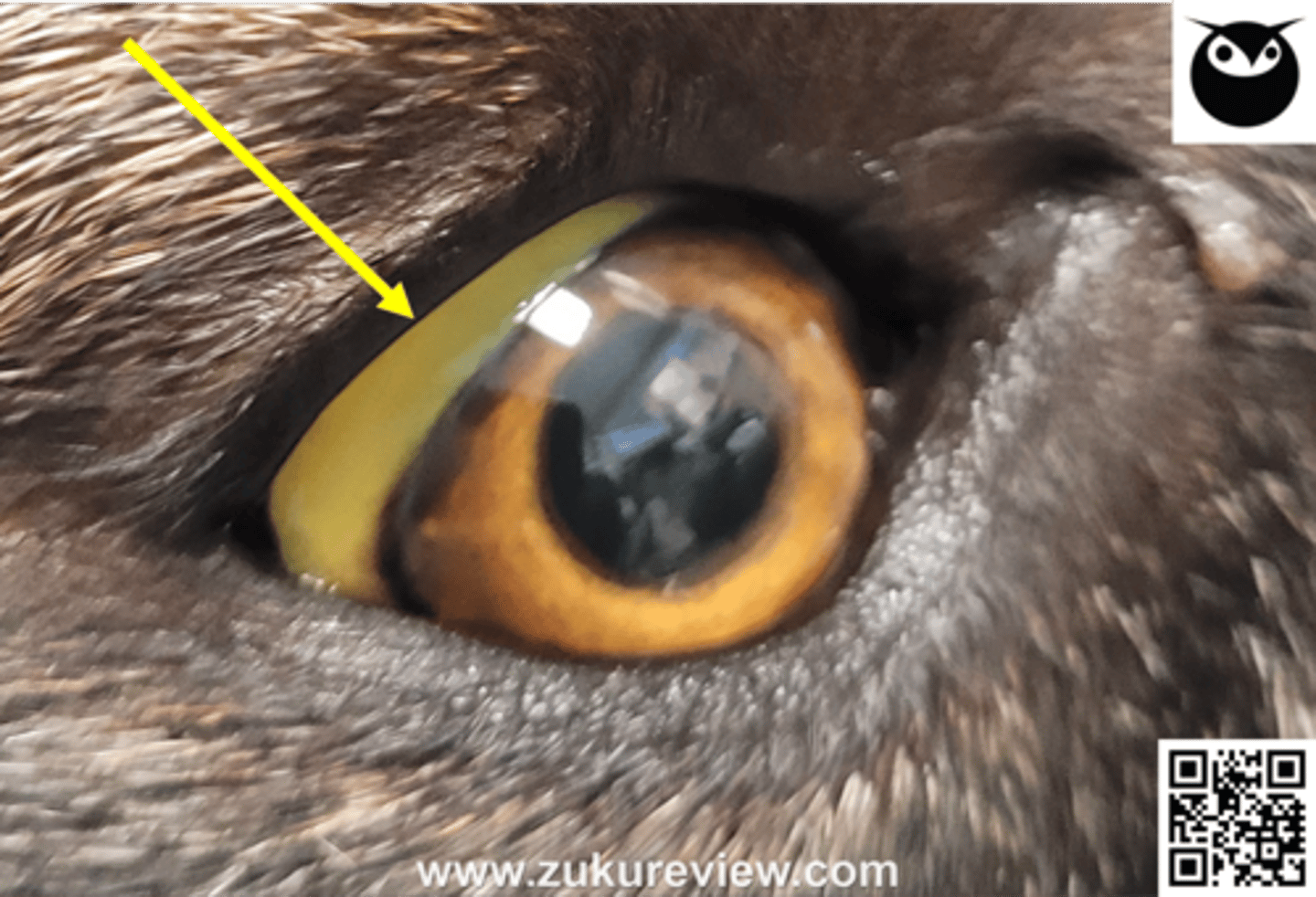
Icterus
What is the name of the problem seen in this dog's sclera?
Pallor
Petechiations
Chemosis
Hyperemia
Icterus

Towards the tail
Which direction is caudal?
Towards the tail
Towards the nose
Towards the belly
Towards the left side
Towards the top line
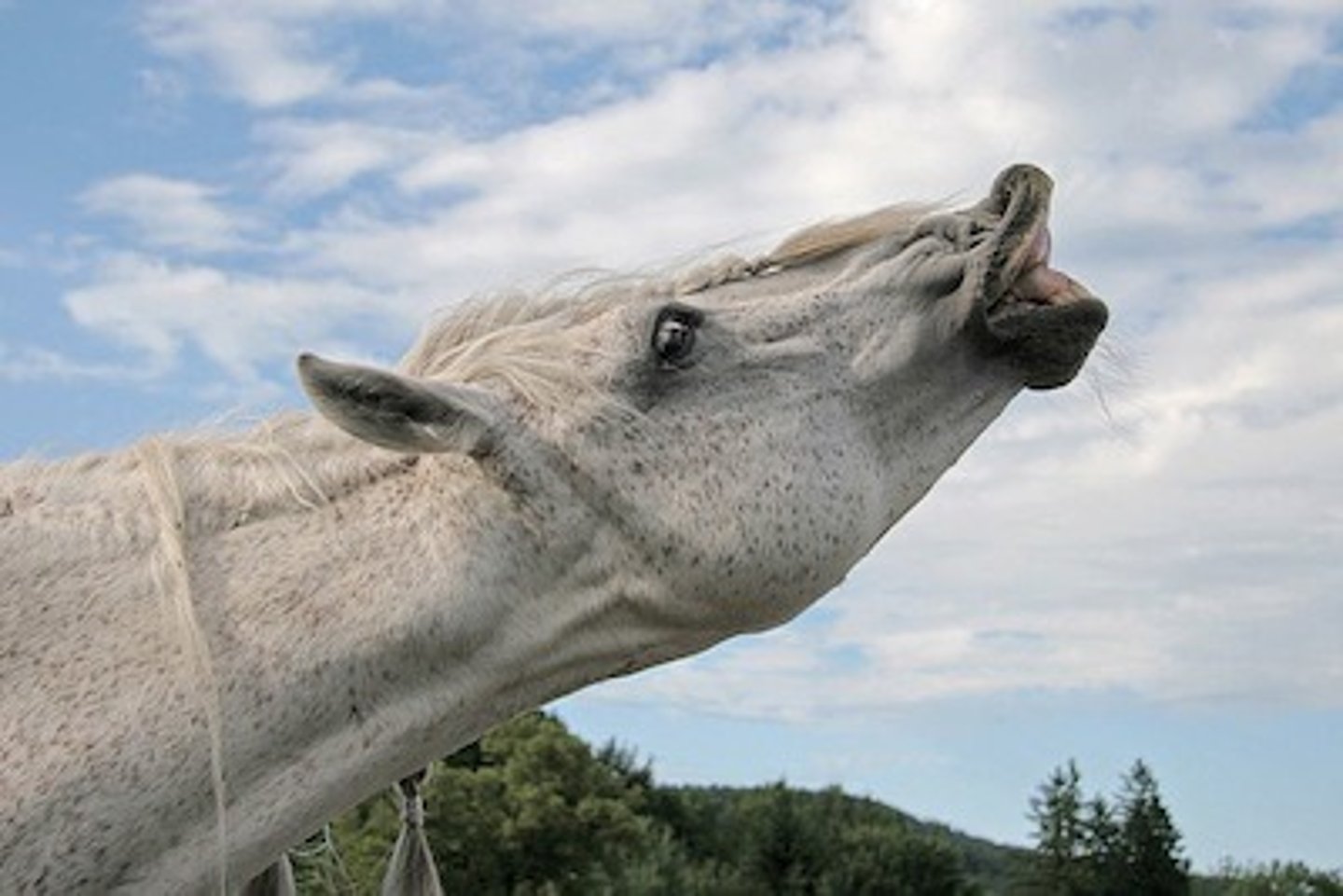
Flehmen
What behavior is the mare displaying in the image below?
Aggression
Flehmen
Windsucking
Cribbing
Lignophagia
BCS is an assessment of body fat mass
Which statement regarding body condition score (BCS) in cats and dogs is correct?
Cats and dogs have different BCS scales
BCS is an assessment of body fat mass
Different breeds have different normal BCS
Muscle mass is evaluated by BCS
BCS can be calculated from body weight
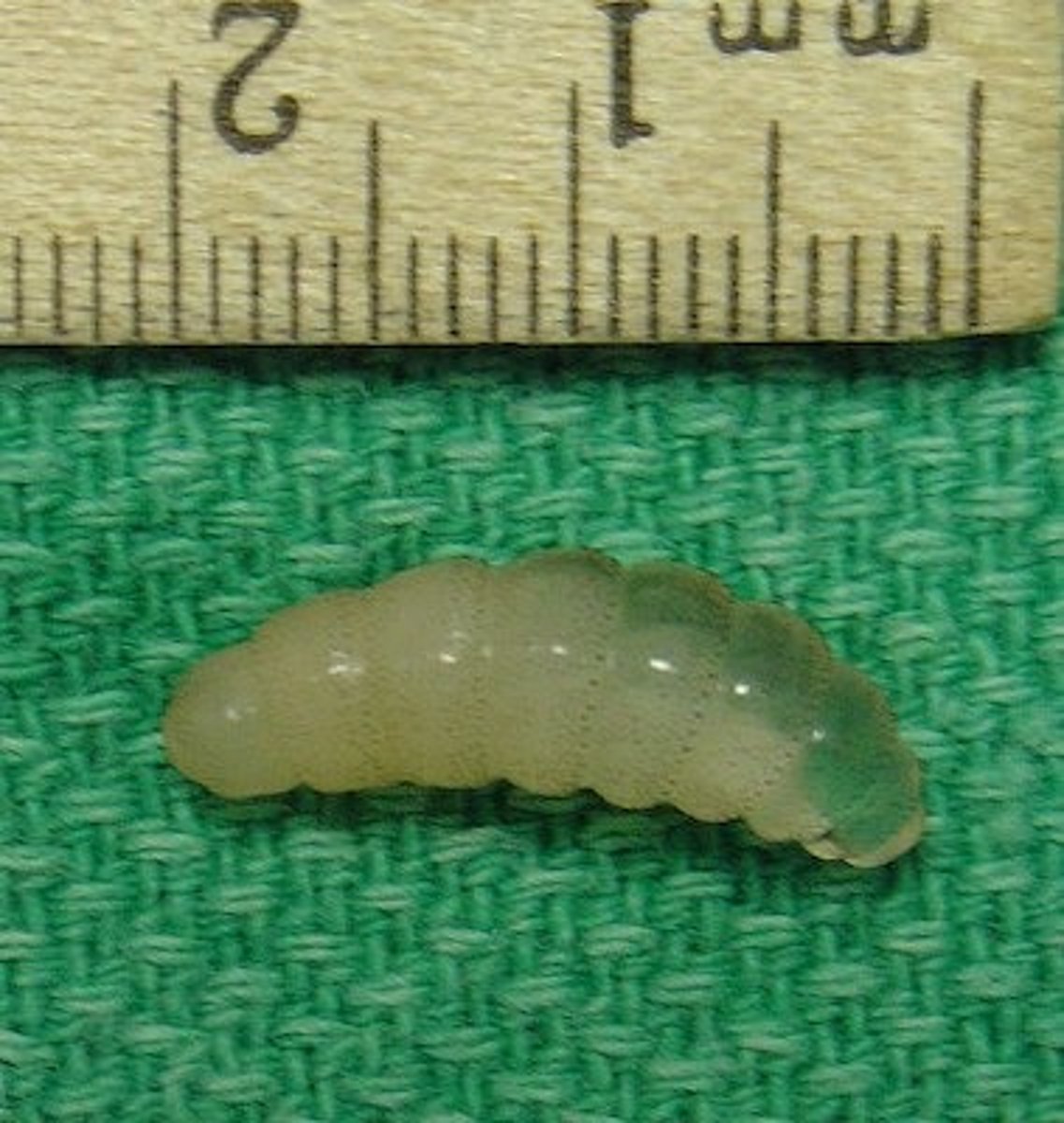
Rabbit
Which one of the following animals is the definitive host for the organism found in this cat?
Rabbit
Deer
Horse
Cow
Sheep
Animals that act as monitors for disease
What are sentinel animals?
Animals used to help the physically challenged
Animals with good eyesight
Animals that act as monitors for disease
Animals that range ahead of a herd or flock
Animals that alert staff to intruders
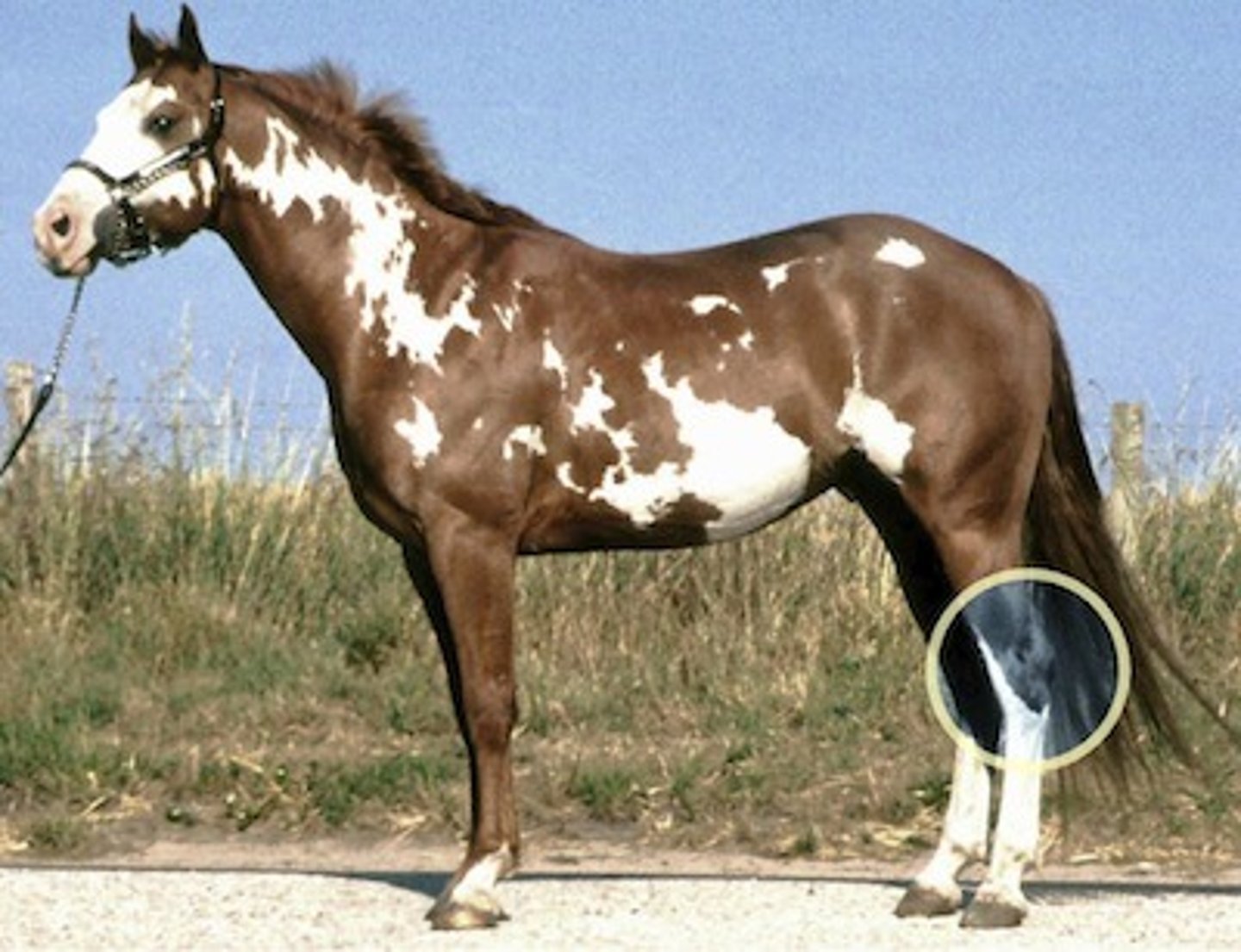
Hock
What joint is this (marked by the oval)?
Hock
Carpus
Pastern
Stifle
Fetlock
Camelids
In which large animal is jugular venipuncture routinely performed in the lower third of the neck?
Goats
Camelids
Horses
Sheep
Cows
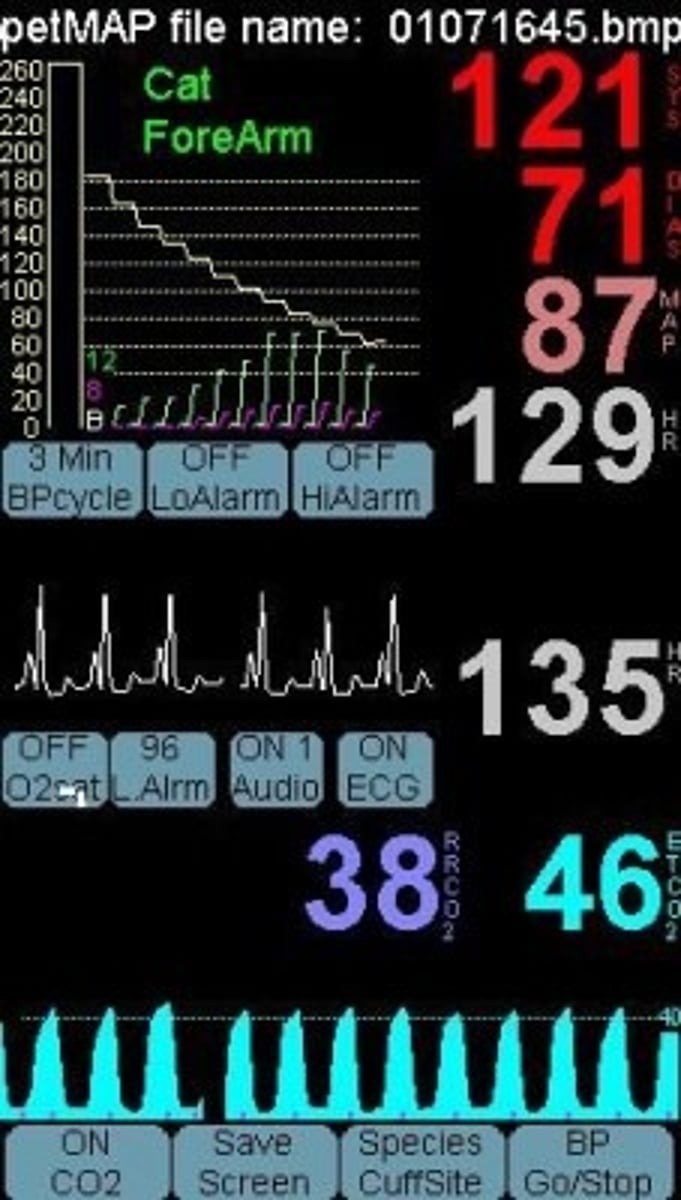
Normal
This image is from a multiparameter monitor from a cat under anesthesia. At the bottom is a capnography reading of 46 mm Hg.
What is the best interpretation of this capnography?
Unable to determine with provided information
Normal
Too high
Consistent with anesthesia being too deep
Too low
Teat plugged by waxy deposits
What is an easily fixable reason that a lamb might not be able to nurse successfully immediately after birth?
Teat plugged by waxy deposits
Hypoglycemia
Clogged nostrils impede lamb's ability to suckle
Hypothermia
Lamb cannot reach udder
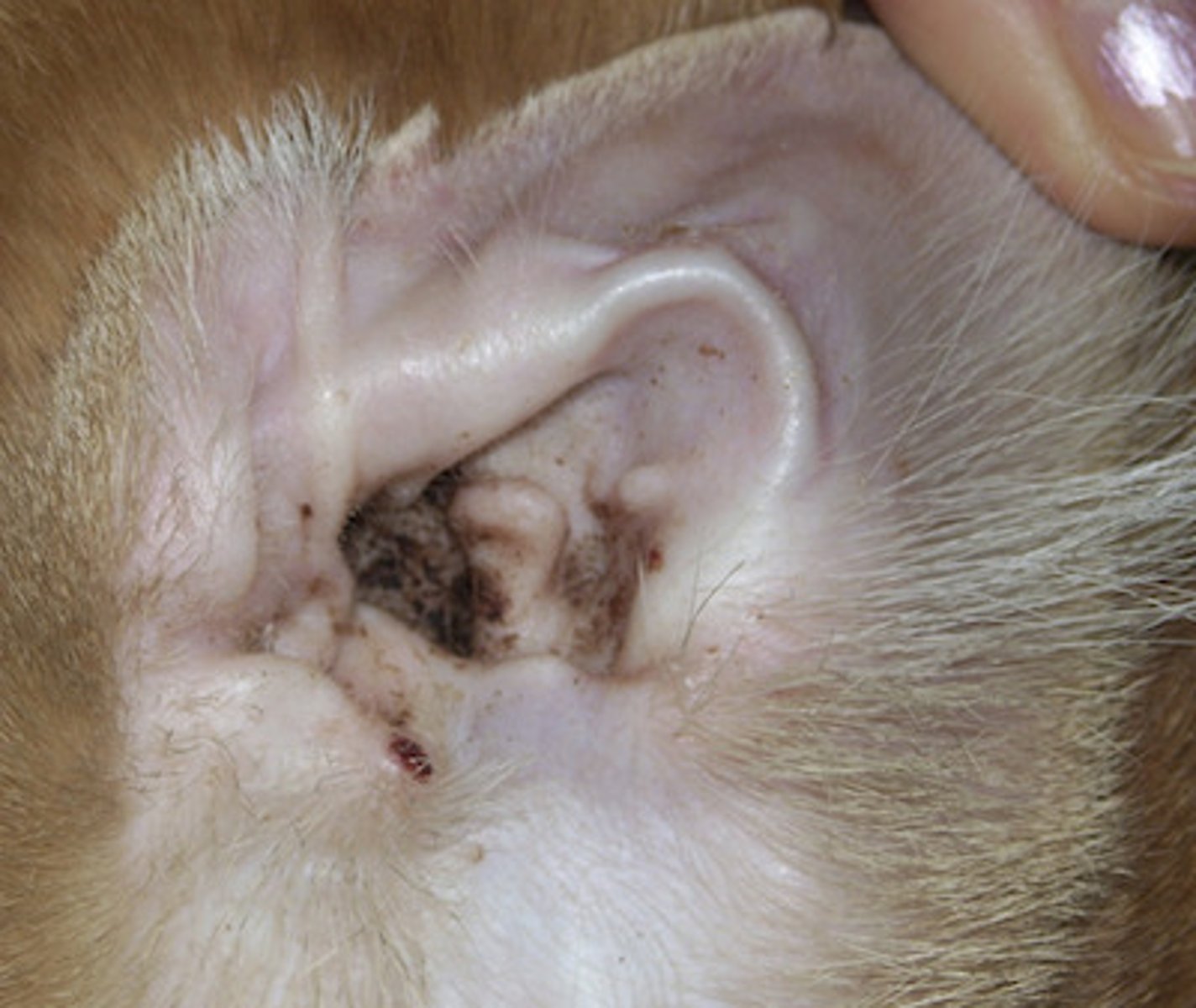
Ear mites
A 1-year-old male neutered indoor-outdoor domestic shorthair cat is presented with a several-week history of scratching at both his ears and shaking his head.
The cat is sedated and brown-black exudate with a "coffee ground" appearance is seen in bilateral ear canals.
What is the most likely cause?
Otobius megnini
Poor hygiene
Sarcoptes scabiei
Psoroptes cuniculi
Ear mites
Significant upper airway pathology or abnormality present
Many animals are obligate (horses, rabbits, pigs) or semi-obligate (cats, camelids) nasal breathers.
Why might an obligate nasal breather instead breathe through the oral cavity?
Due to fear
When trying to sense a predator approaching their young
Significant upper airway pathology or abnormality present
To assist in thermoregulation
Because they cannot vomit and mouth-breathing reduces nausea
Icterus
What clinical abnormality is evident in this photo of a dog?
Anisocytosis
Anemia
Icterus
Severe dehydration
Purpura hemorrhagica
Equine herpesvirus
Which of the following diseases can cause abortions, neurologic disease, and upper respiratory tract disease in horses?
Equine herpesvirus
Equine influenza virus
Equine infectious anemia
Equine viral arteritis
Streptococcus equi subspecies equi
Transmissible gastroenteritis in swine
Which one of the following diseases can be epizootic?
Gastric dilatation volvulus in dogs
Transmissible gastroenteritis in swine
Clostridium tetani infection, Tetanus
Demodex canis, demodectic mange
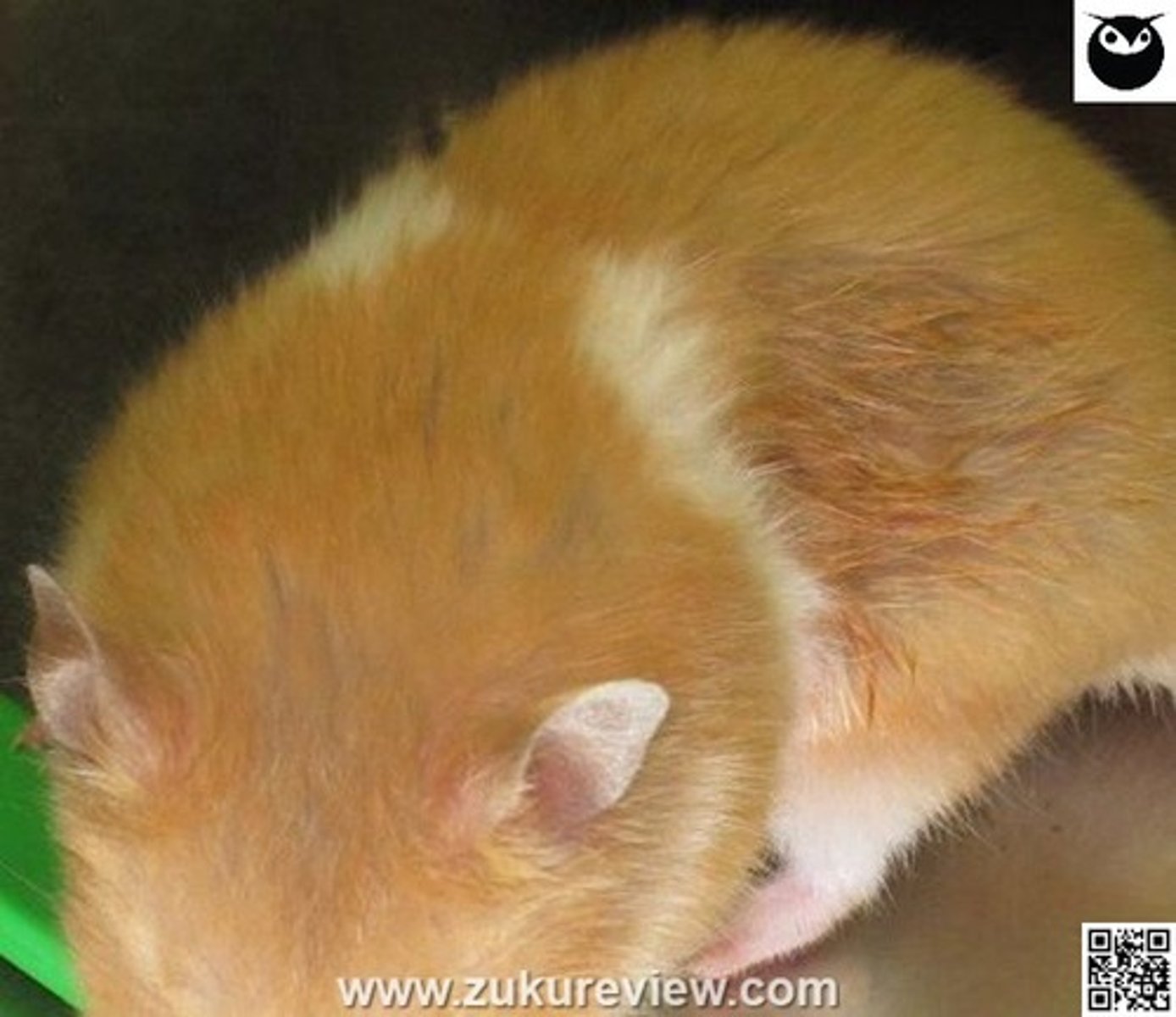
A flank gland, which becomes wet and matted with sexual excitement
What is demonstrated in this image of an adult male Syrian hamster?
A flank gland, which becomes wet and matted with sexual excitement
An area of moist dermatitis, which is commonly caused by a Staphylococcus infection
A dominance-related bite wound, which is commonly inflicted on the sides and rear
A sweaty area, which occurs with high humidity or overheating
A patch of fur wet with saliva, which is seen with allogrooming
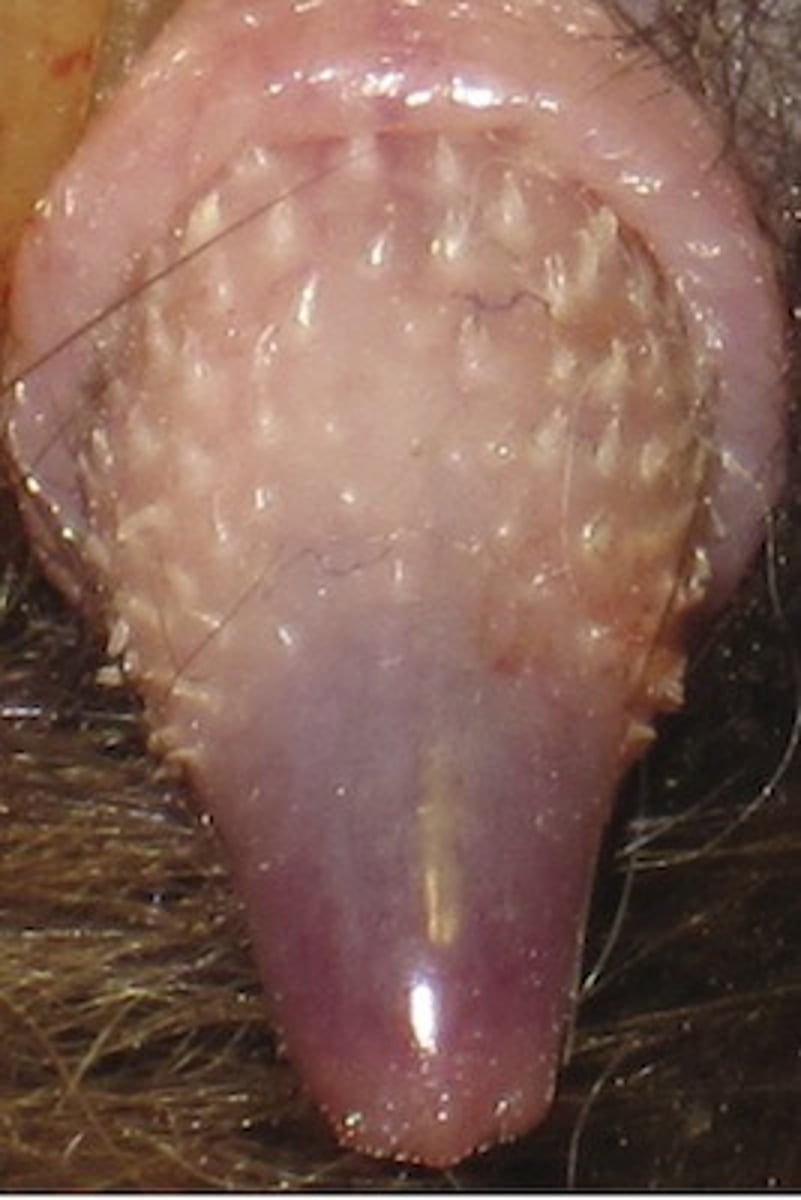
Feline
This is the penis of what domestic animal?
Canine
Chinchilla
Lagomorph
Feline
Ferret
Waxing
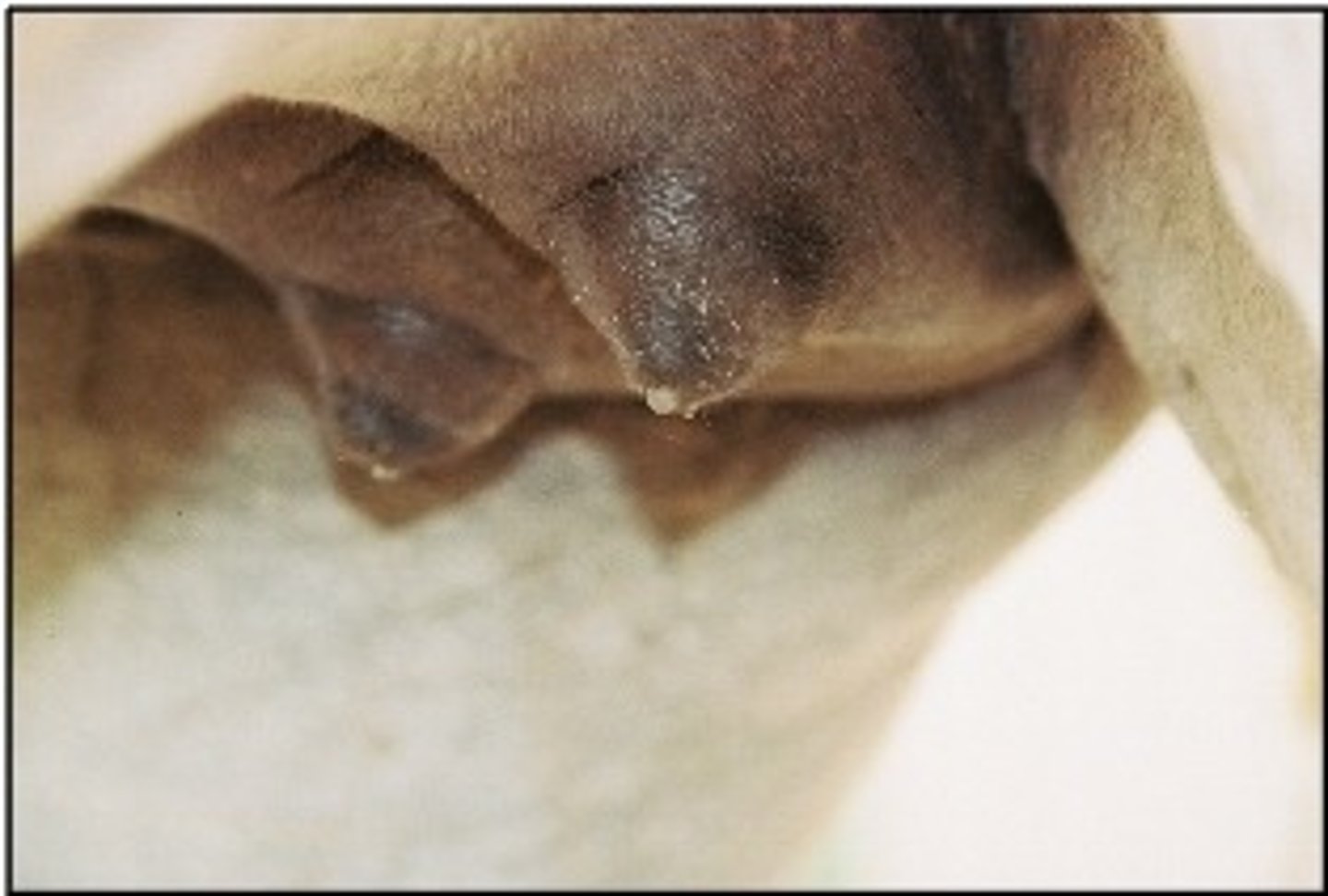
What does the following image of a horse illustrate?
Waxing
Mastitis
Normal teats
Normal sebaceous plugs
Contagious agalactia
Doxycycline
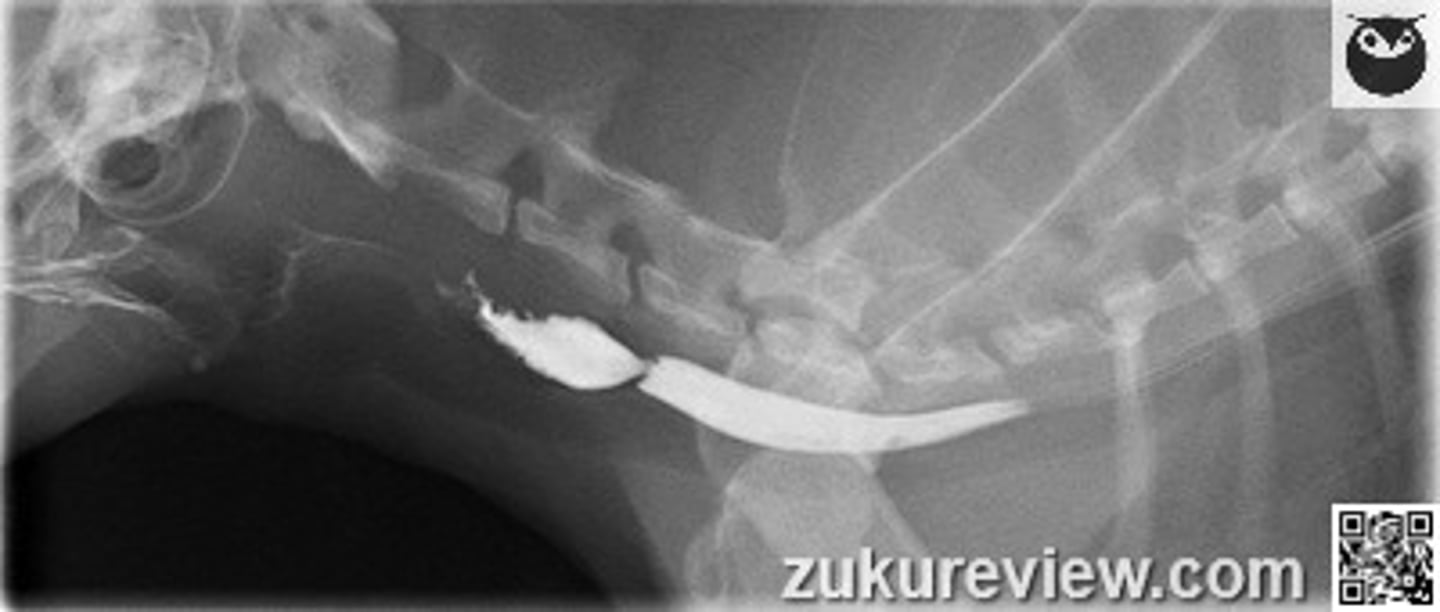
A cat is diagnosed with esophageal stricture (see contrast barium radiograph, below).
Which of the following choices is a likely cause of this condition in a cat?
Gastrointestinal reflux
Spirocerca lupi larvae
Doxycycline
Poinsettia ingestion
Hair balls
Chlamydophila psittaci
What is a common zoonotic avian disease?
Pseudomonas aeruginosa
Salmonellosis
Staphylococcus aureus
West Nile virus
Chlamydophila psittaci
Canids
Which animal is the definitive host associated with zoonotic transmission of Echinococcus granulosus to intermediate hosts such as humans and sheep?
Canids
Opossums
Swine
Feline
Goats
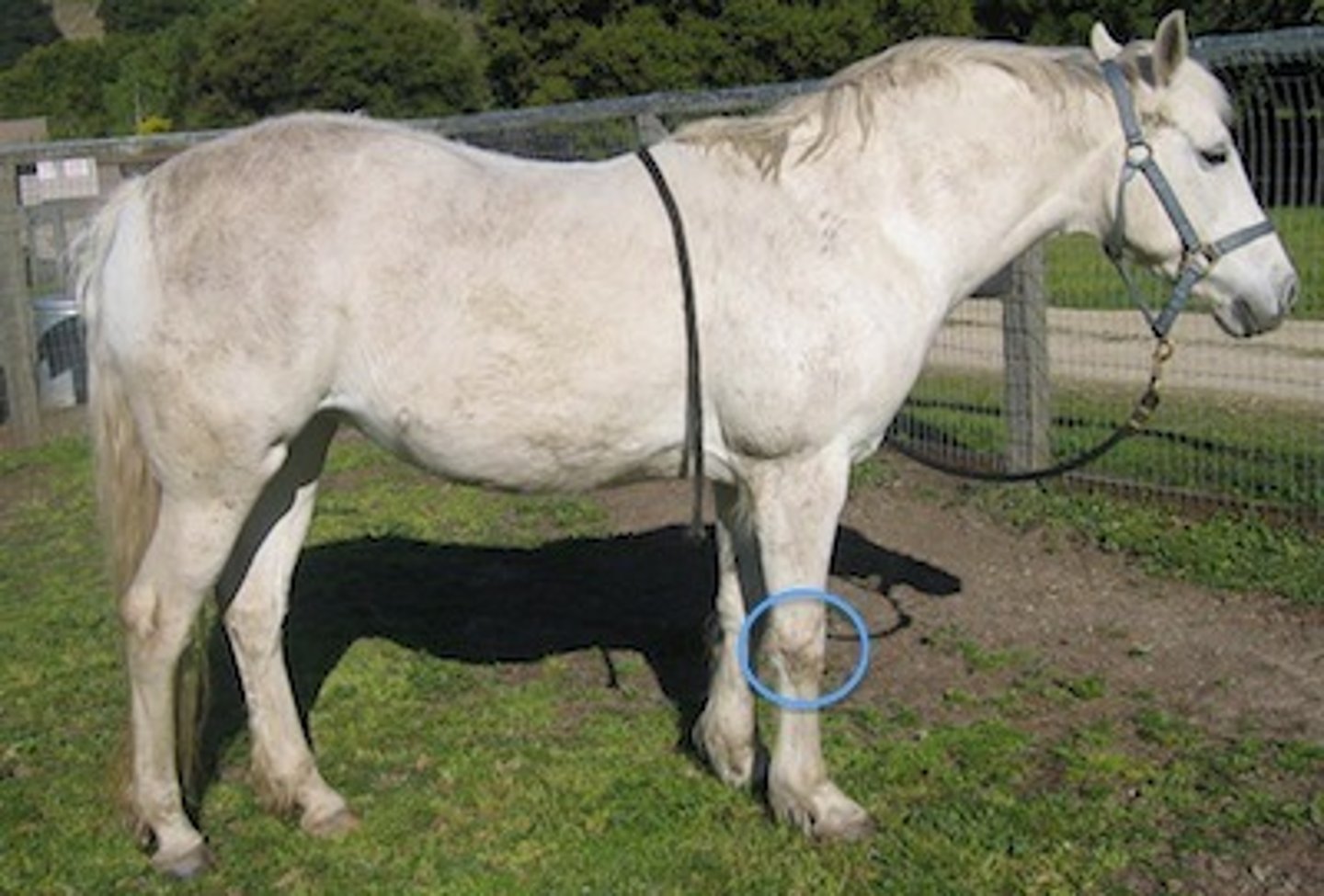
Knee
What is the common, but anatomically INcorrect, name for this area (marked by blue oval)?
Knee
Ankle
Fetlock
Ergot
Elbow
Atrial fibrillation
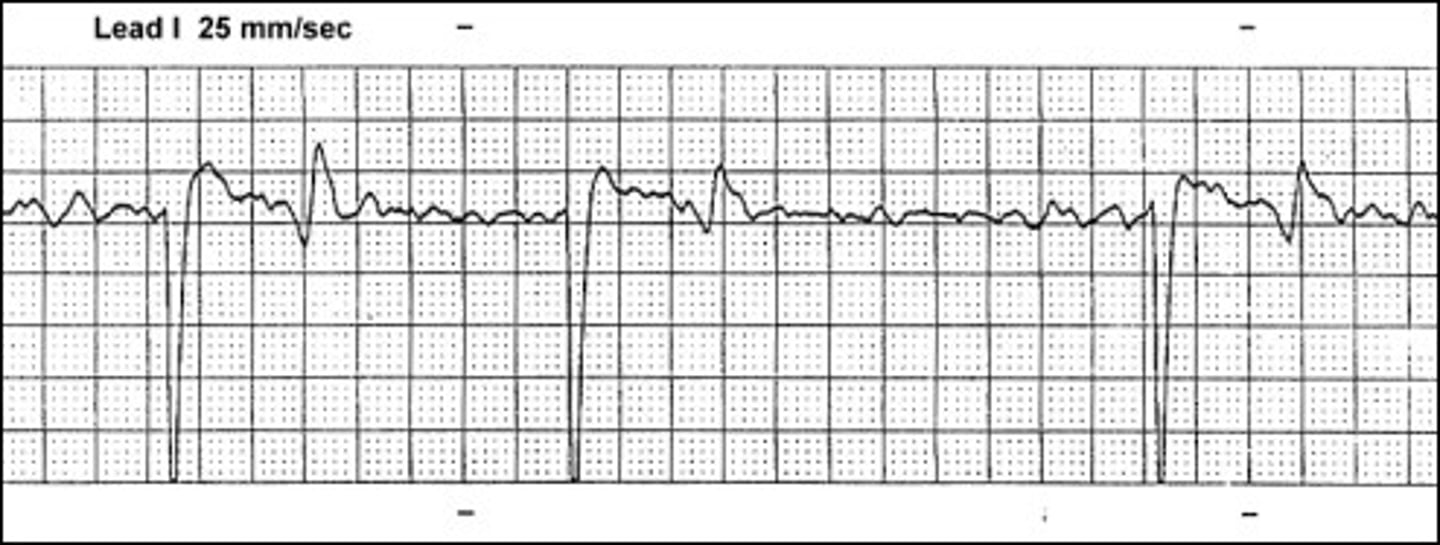
A cardiac arrhythmia is ausculted during the preoperative examination of a ten-year-old Quarter horse gelding used for barrel racing.
The horse performed poorly this season and a laryngoplasty is planned to correct 'roaring' that has been heard occasionally while racing.
The resting heart rate is 36 beats/minute [N=28-48] and the rhythm is irregularly irregular.
All other vital signs are normal and the horse is in good condition.
Which of the following correctly identifies this rhythm?
Respiratory sinus arrhythmia
Second-degree AV block
Atrial fibrillation
Sinus tachycardia
Ventricular premature contractions
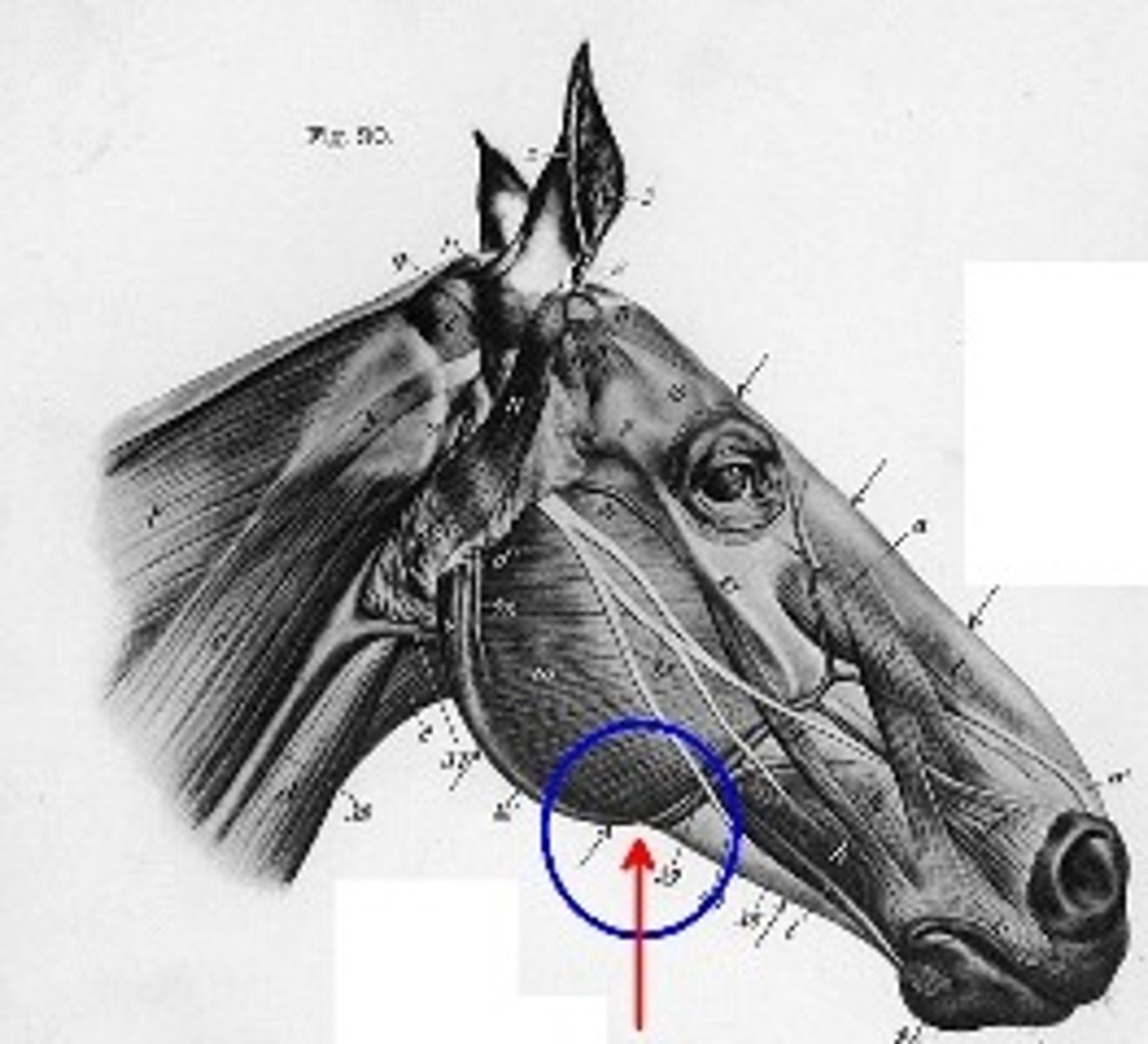
Good place to take a pulse
What is the clinical importance of the anatomic area indicated by the red arrow in this image?
Site of glossopharyngeal nerve block
Good place to take a pulse
Best surgical approach to mandibular sinus
Most common site of tooth root abscess
Upper limit of Viborg's triangle
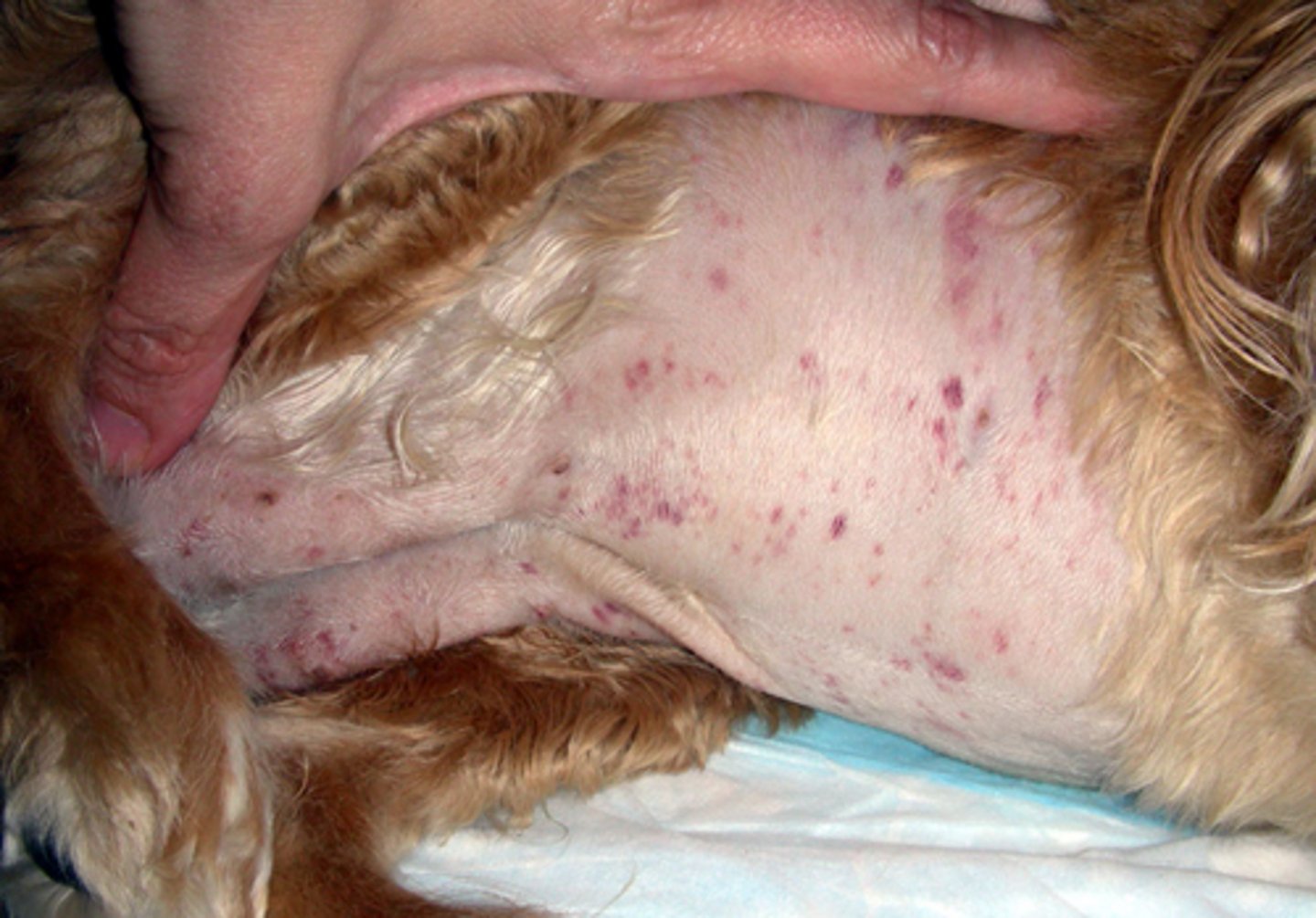
Ecchymoses
A dog is presented with numerous, small, 1-2 cm diameter hemorrhages on the abdomen.
What are these hemorrhagic areas called?
Wheals
Alopecia
Ecchymoses
Epiphora
Petechiae
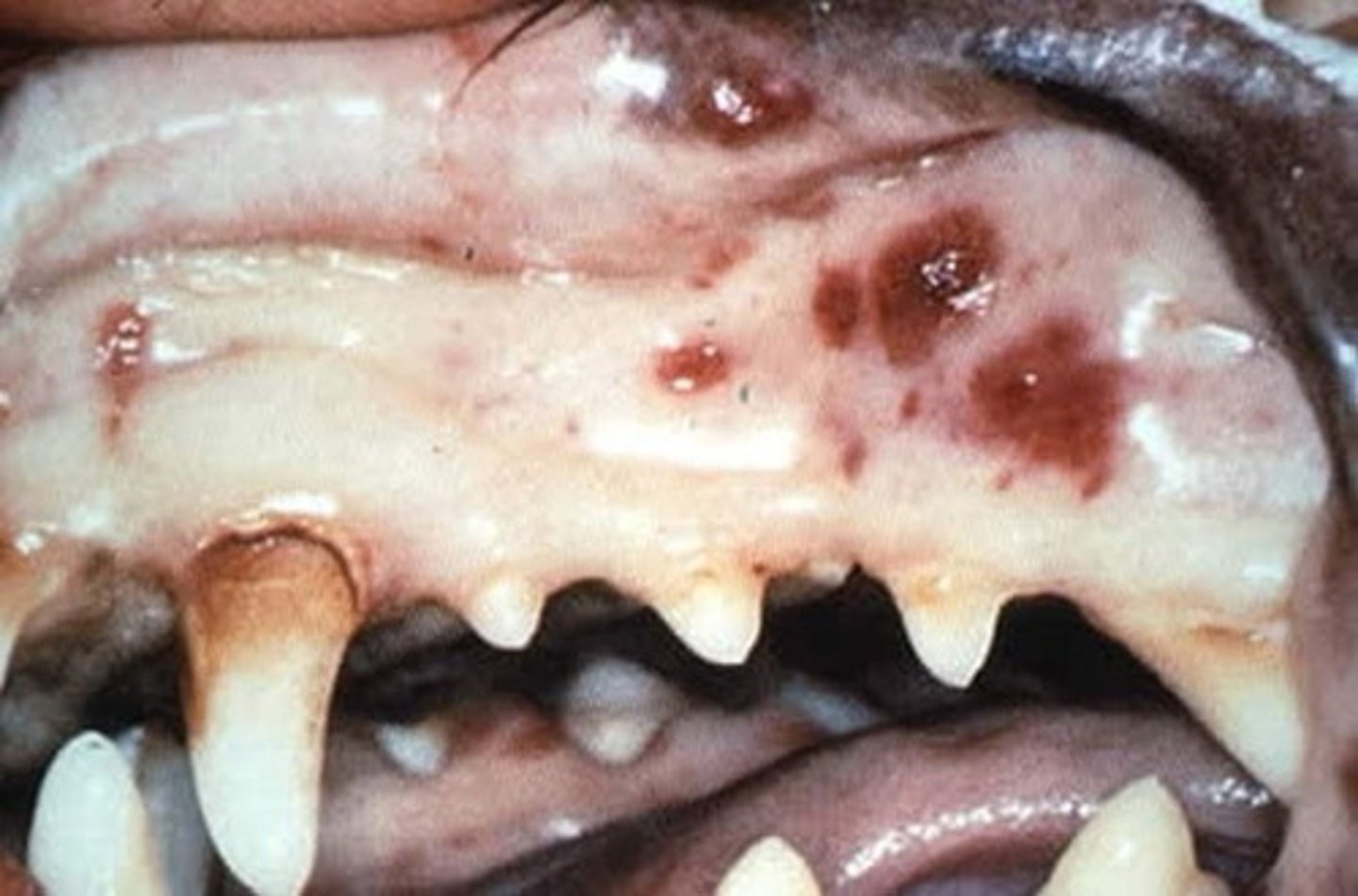
Petechiae
A dog is presented with numerous small pinpoint hemorrhages on the mucous membranes of the mouth.
What are these hemorrhages called?
Suppuration
Epiphora
Petechiae
Ecchymoses
Hematomas
Sulfadimethoxine
A recently weaned kitten is presented with foul-smelling, pasty diarrhea. Microscopic fecal exam identifies oocysts of Cystoisospora spp..
What is the best treatment?
Amikacin
Amoxicillin/clavulanic acid
Enrofloxacin
Sulfadimethoxine
Fenbendazole
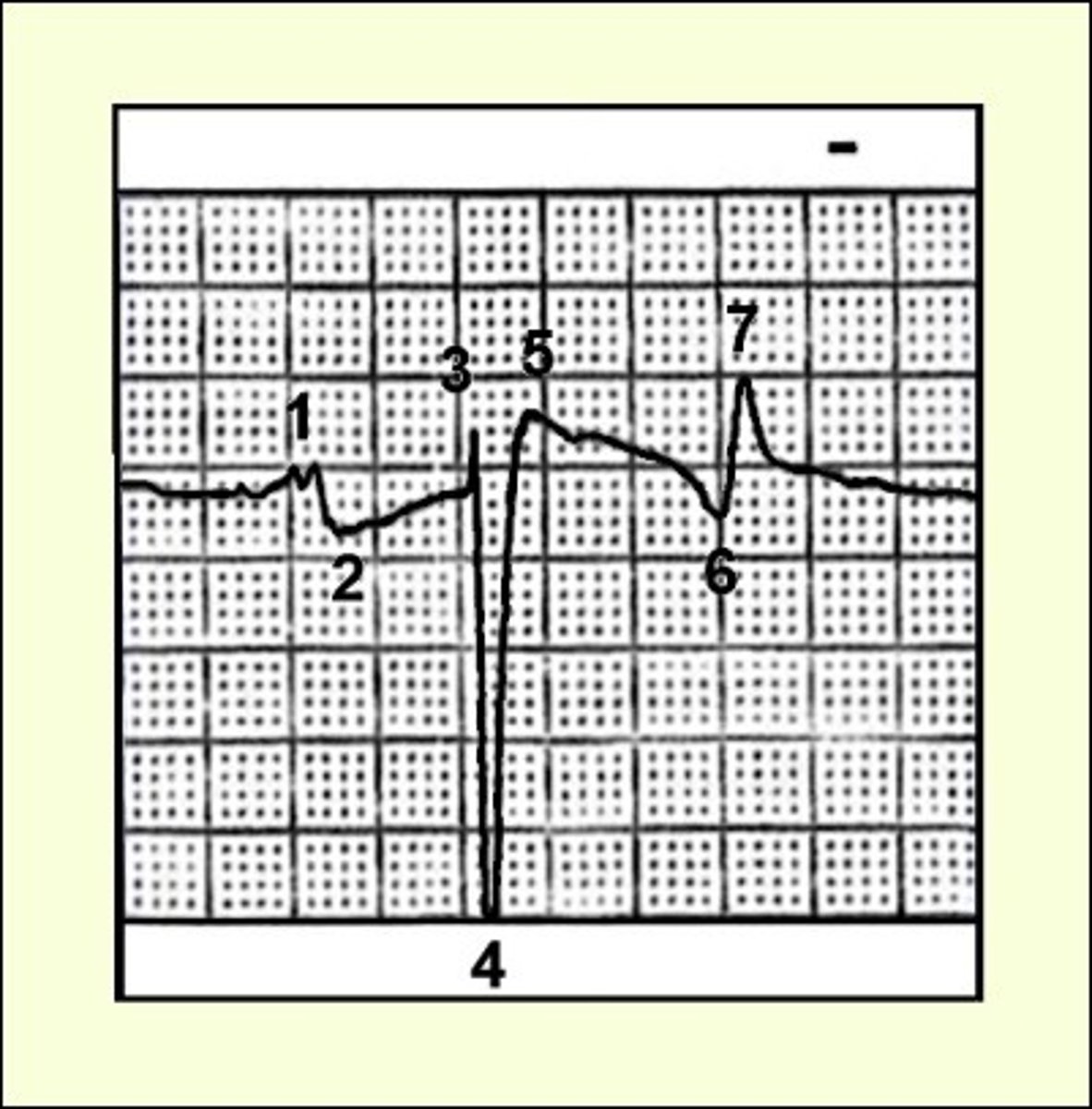
7
On an equine ECG, which one of these waveforms is the T wave?
2
3
5
7
1
Horses
Acer rubrum (red maple) toxicity is most commonly observed in which one of the following animals?
Pigs
Rabbits
Horses
Chickens
Goats
Winter
What time of year is dermatophytosis in cattle most likely to occur?
Spring
Autumn
Non-seasonal
Summer
Winter
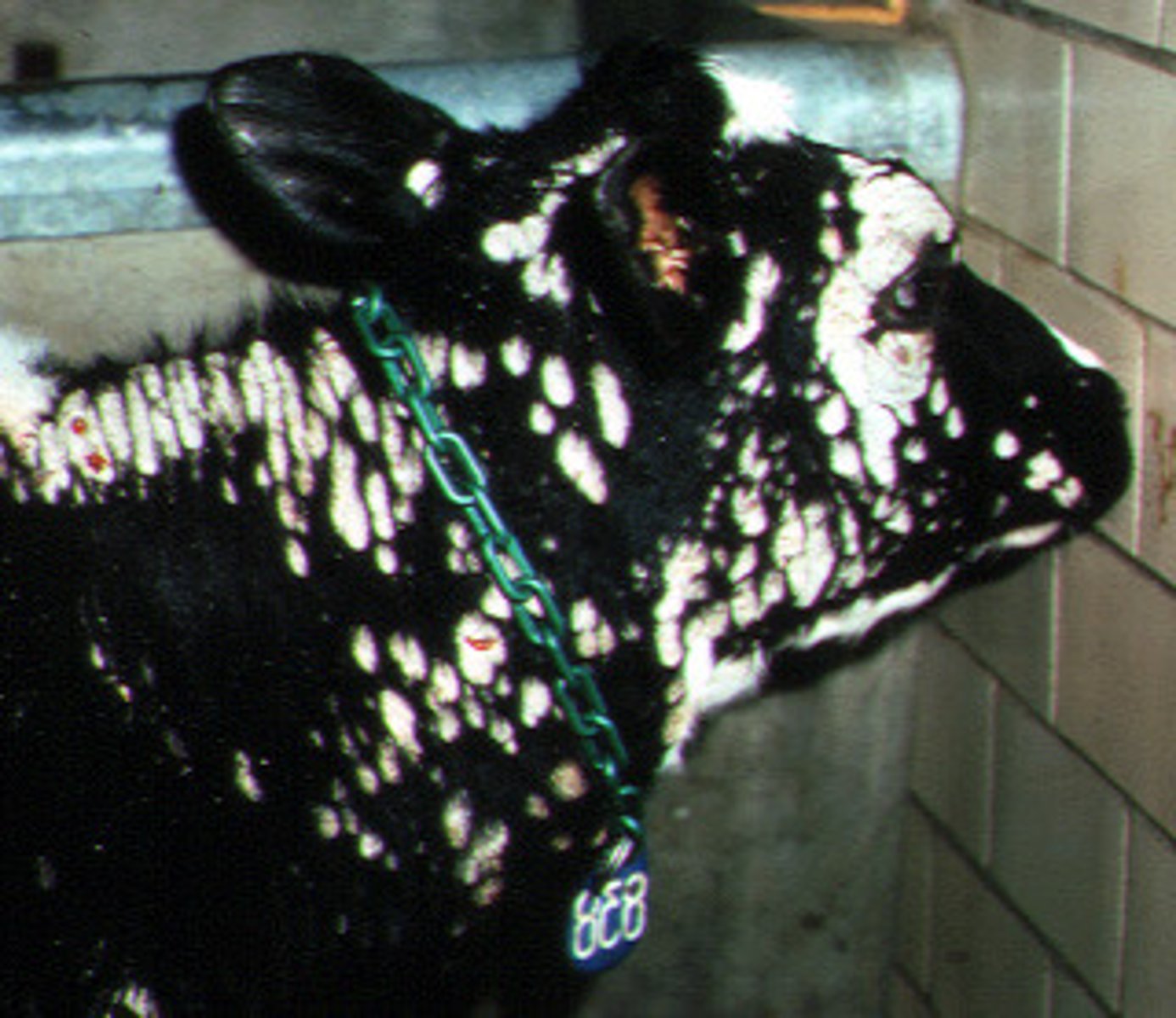
Late April/early May
A Friesian breeder in the southeastern United States is planning his calving season for next year.
When should the farmer turn out the bull with the cows THIS year in order to start calving season in February but no earlier than February 1 NEXT year?
Second half of May
Early to mid-March
Late April/early May
At the summer solstice (mid-June)
Mid- to late July
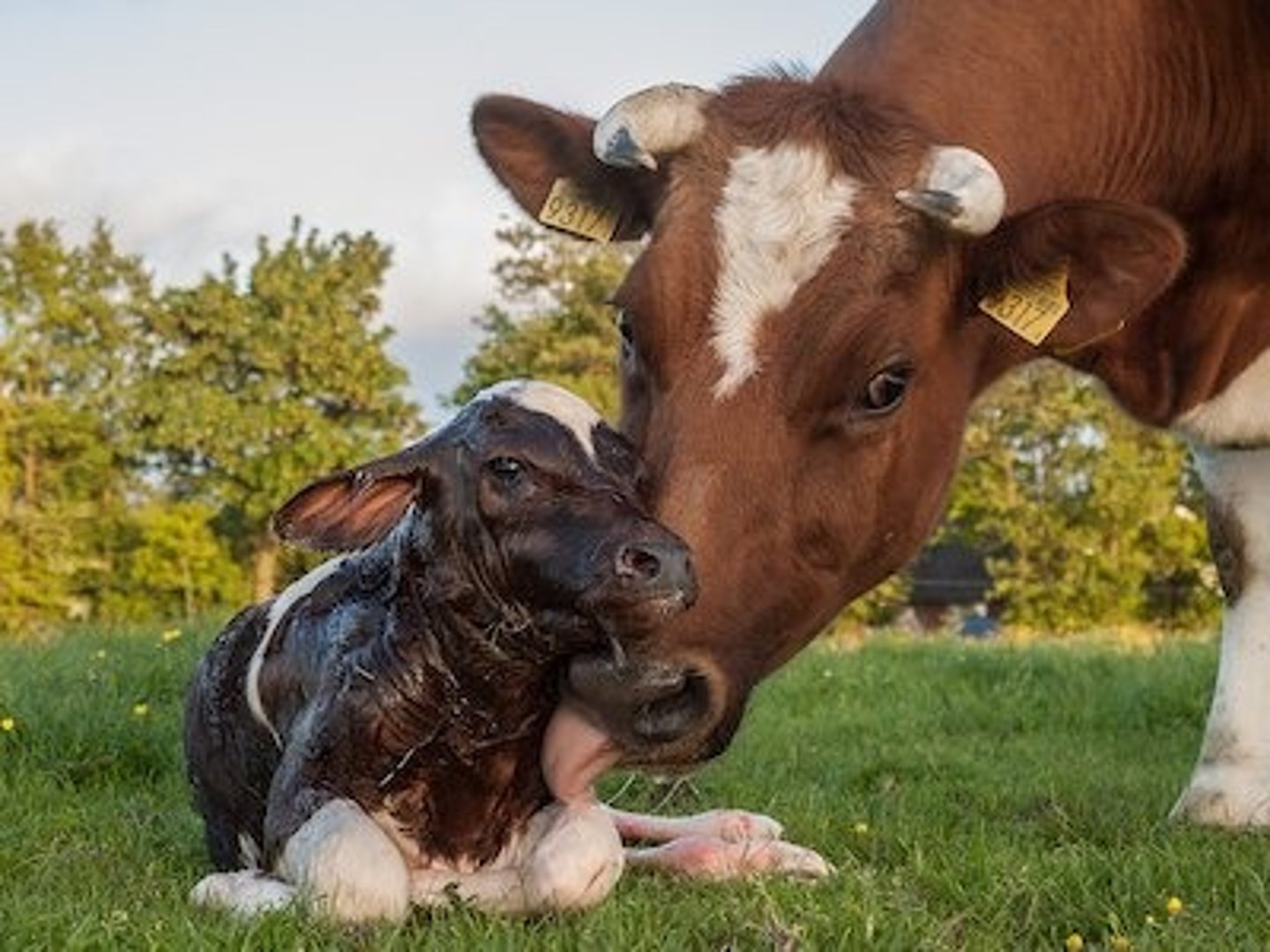
Hepatic
Which of the following organ systems is most likely involved in the problem shown in this cat?
Hepatic
Respiratory
Gastrointestinal
Endocrine
Renal
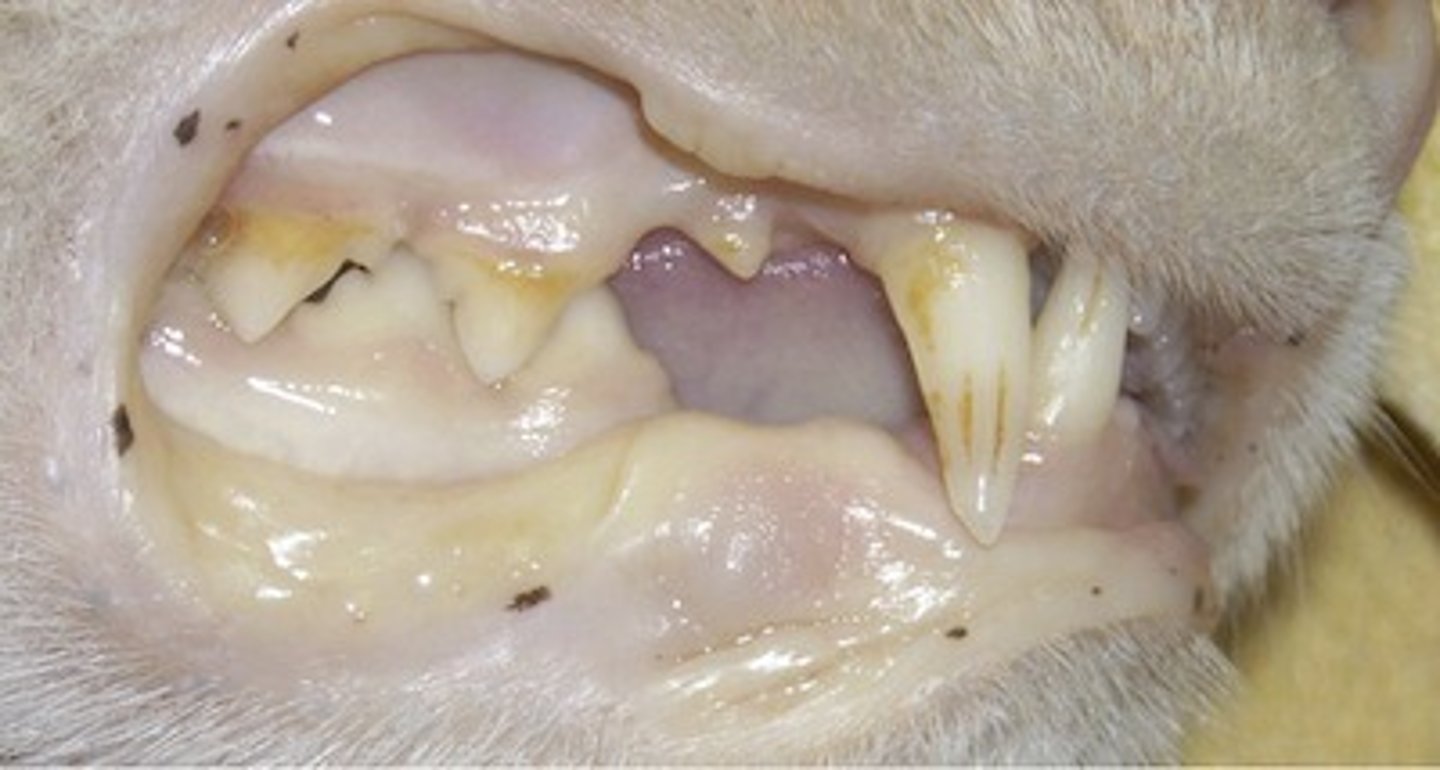
Rectum
A gentle gloved finger cannot pass between the anus and the rectal wall in the six-month old goat presented in the image below.
What anatomical structure is affected?
Vagina
Uterus
Cervix
Rectum
Cecum
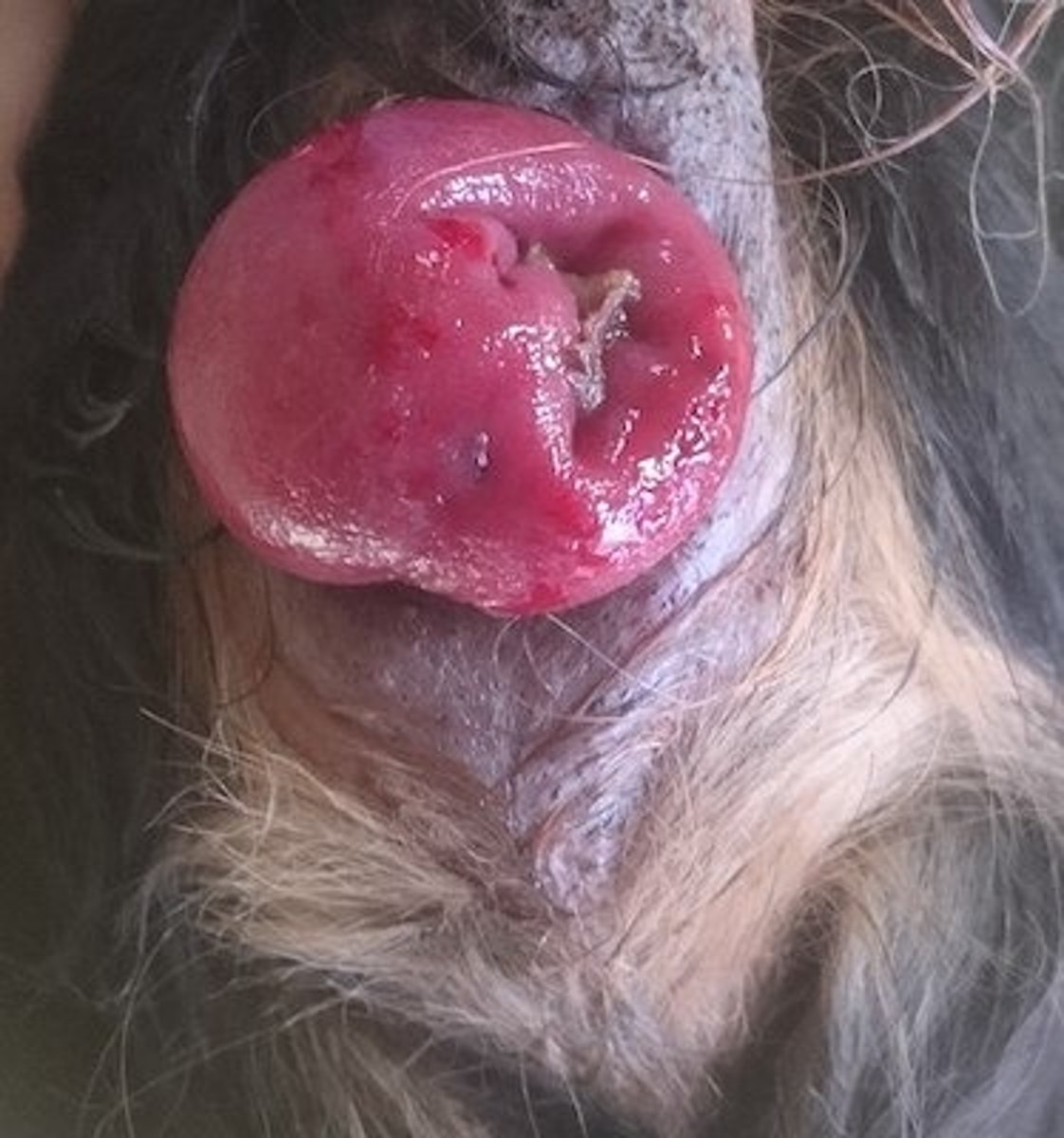
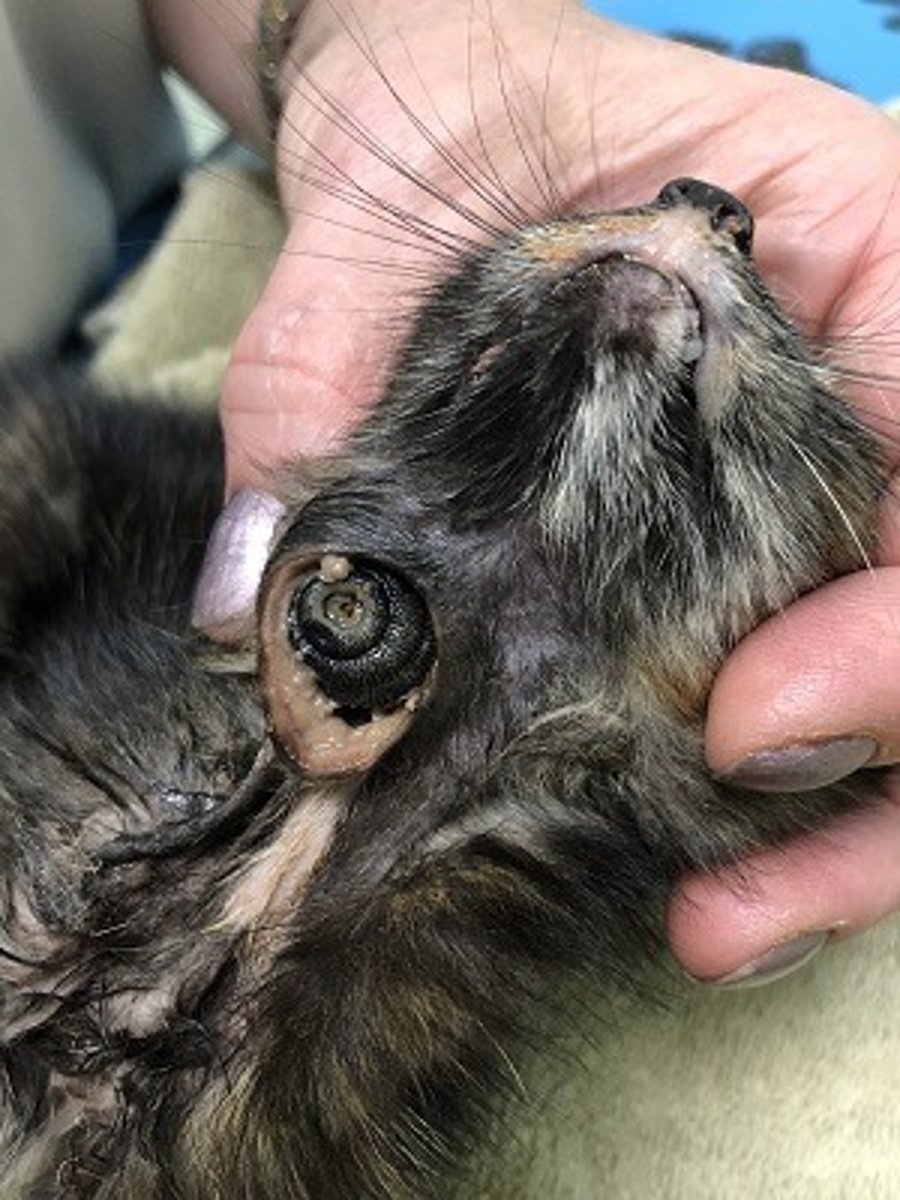
Cuterebra
A small kitten is presented with an open wound in the right ventral neck containing a 1.2-inch (3-cm) long parasite covered in tiny black spines.
What is the organism?
Oestrus ovis
Gasterophilus
Cuterebra
Hypoderma
Cutaneous habronemiasis
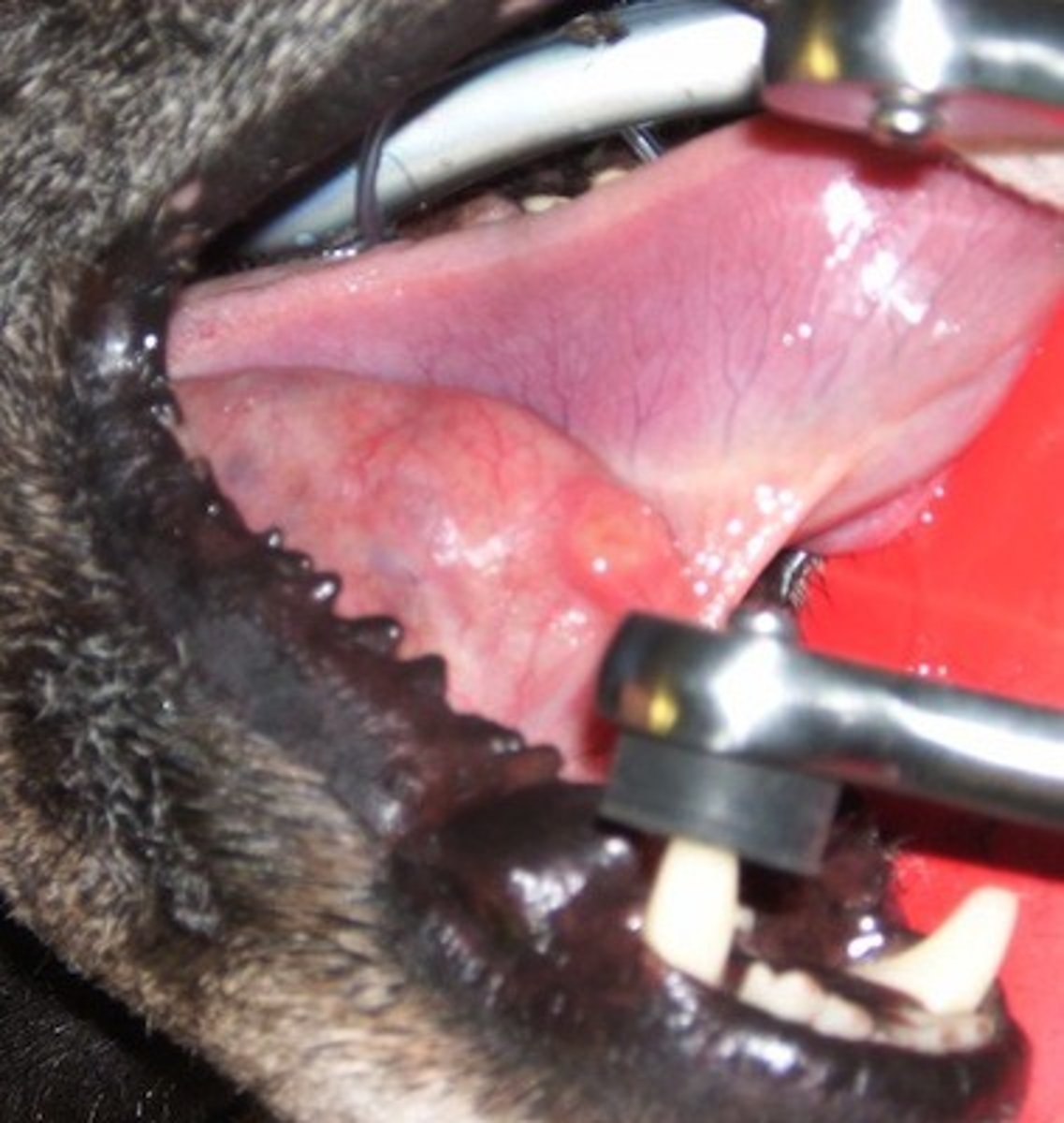
Salivary mucocele
A three-year-old male neutered German shepherd-mix dog is presented with a week-long history of dropping food out of his mouth and reluctance to eat. Physical exam reveals a ranula below the tongue on the right side.
What is a ranula?
Sublingual tonsil
Any foreign body under the tongue
Salivary mucocele
Oral papilloma
Sublingual lymphadenopathy
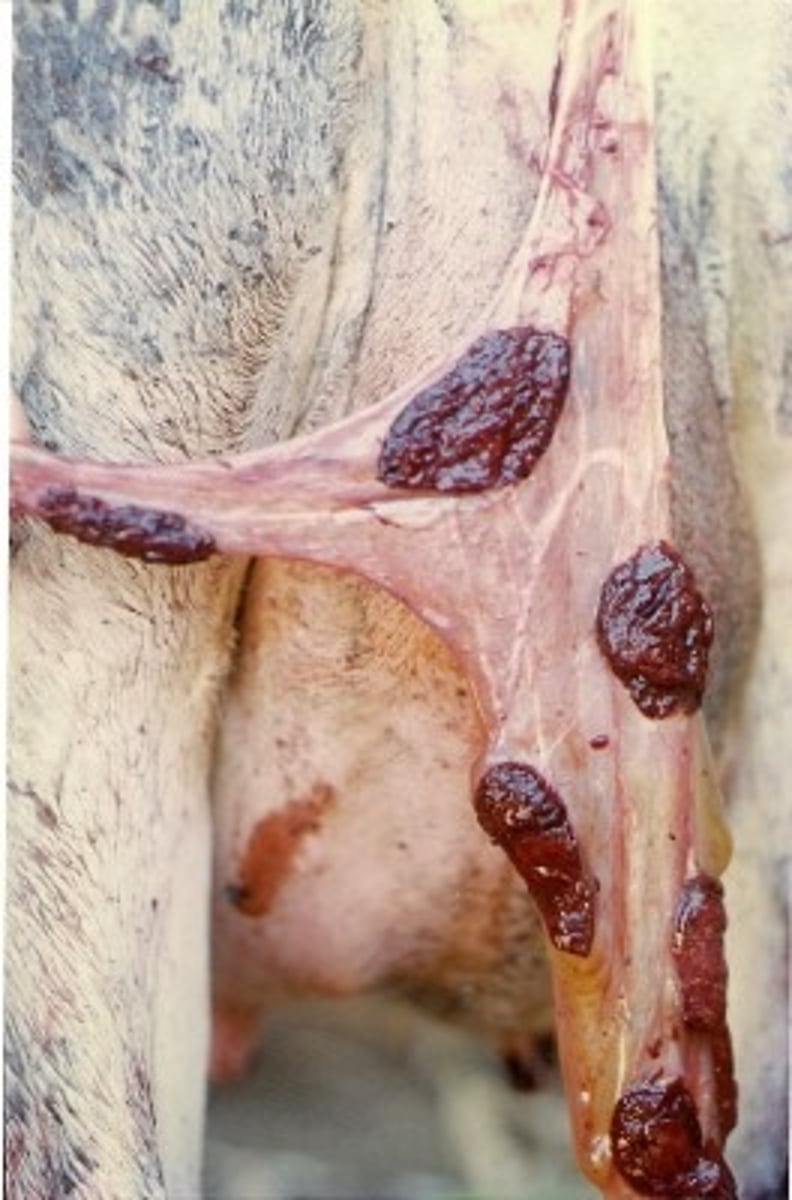
Cotyledons
The image shown below is of the hind end of a cow following calving.
What are the raised red structures seen on this placenta?
Caruncles
Cotyledons
Avillous regions
Amniotic hemorrhages
Fungal plaques
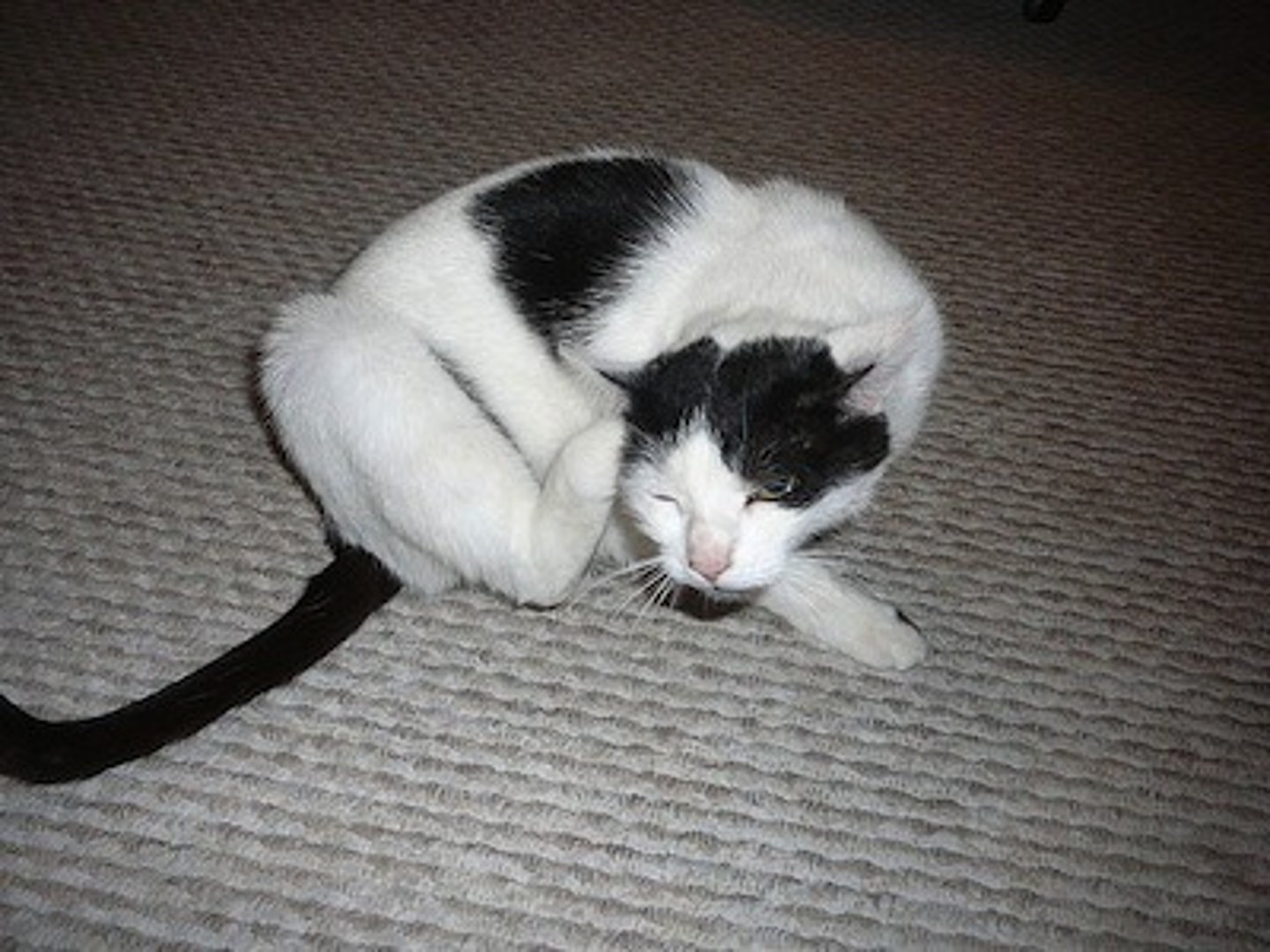
Ctenocephalides felis
A two-year-old female spayed cat is presented to the vet in New York, U.S. with constant pruritus. Closer examination shows several fleas. What is the most likely species of the fleas?
Echidnophaga canis
Pulex simulans
Echidnophaga gallinacea
Ctenocephalides felis
Pulex irritans
Genus
What does the Escherichia in Escherichia coli represent?
Species
Class
Order
Sub-species
Genus
Fungal skin infection, usually Microsporum or Trichophyton spp.
What is equine dermatophytosis?
Skin and subcutaneous infection with Pythium insidiosum.
Bacterial skin infection with Dermatophilus congolensis
Fungal skin infection, usually Microsporum or Trichophyton spp.
Photosensitization of the skin
Infestation with lice, in horses usually Damalinia equi or Haematopinus asini
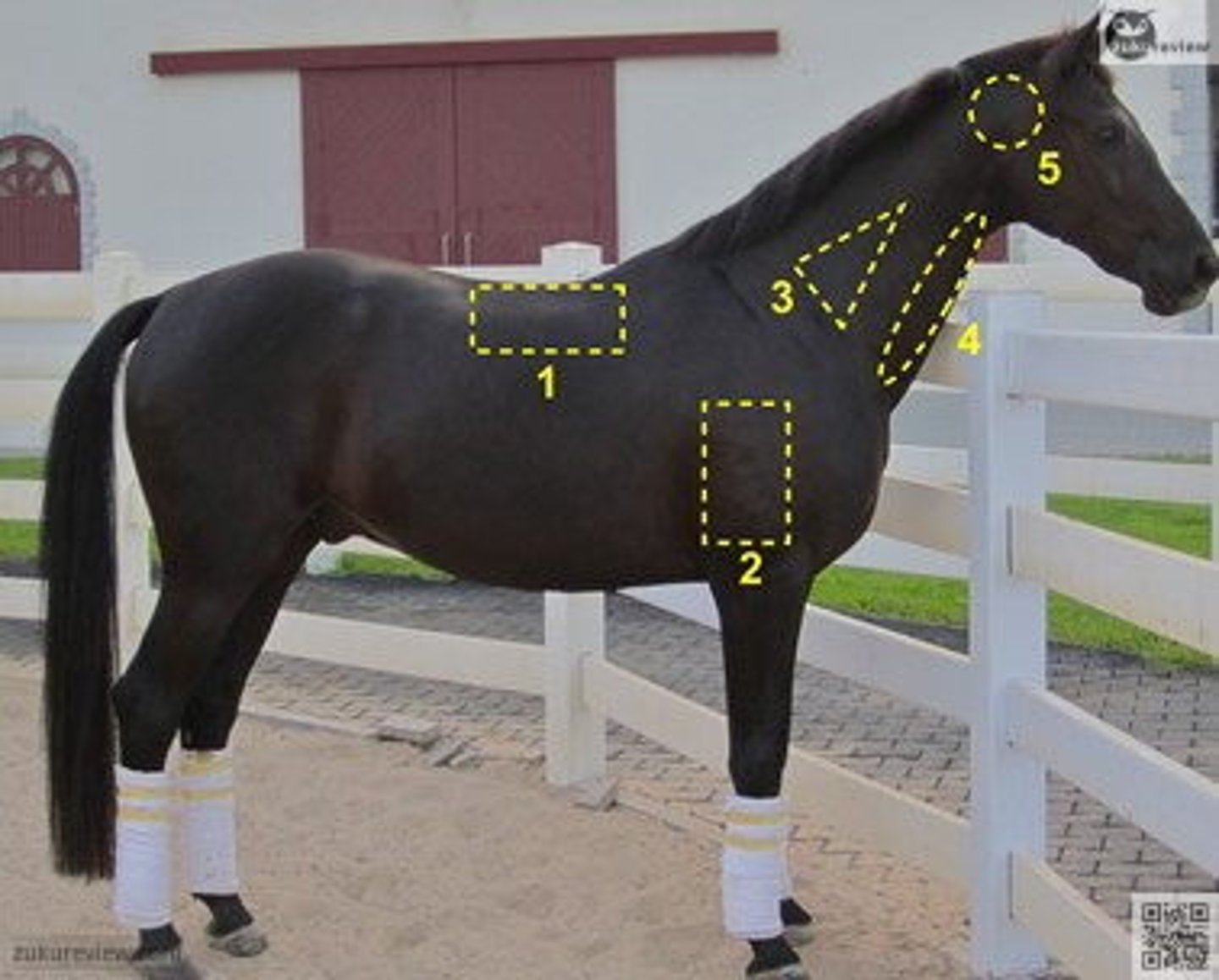
3
Which one of the following is the most appropriate place to administer an intramuscular injection in a horse?
5
4
2
3
1
Caseous lymphadenitis
A herd of dairy sheep have been found to be infected with Corynebacterium pseudotuberculosis, and are presenting with abscessed lymph nodes. When the veterinarian incises them it is found that they have thick capsules and dry, green-white material at the core.
What disease has this bacteria caused in this herd?
Caprine arthritis encephalitis virus
Caseous lymphadenitis
Bacillus anthracis
Bovine leucosis virus
Scrapie
Poor husbandry
A mature pet guinea pig is presented with ulcerated skin lesions on the underside of both hind distal limbs.
What is the most likely cause that will be discussed with this owner?
Vitamin A deficiency
Psoroptes cuniculi infection
Excess calcium in the feed
Poor husbandry
Pasteurella multocida dermatitis
Estrus
A 12-year-old Thoroughbred mare just moved to a barn that has a stallion. The owner has noted new behavior (see image) and is concerned.
What do these signs demonstrate?
Estrus
Mare is not cycling
Likely tail injury
Urinary tract infection
Pyometra
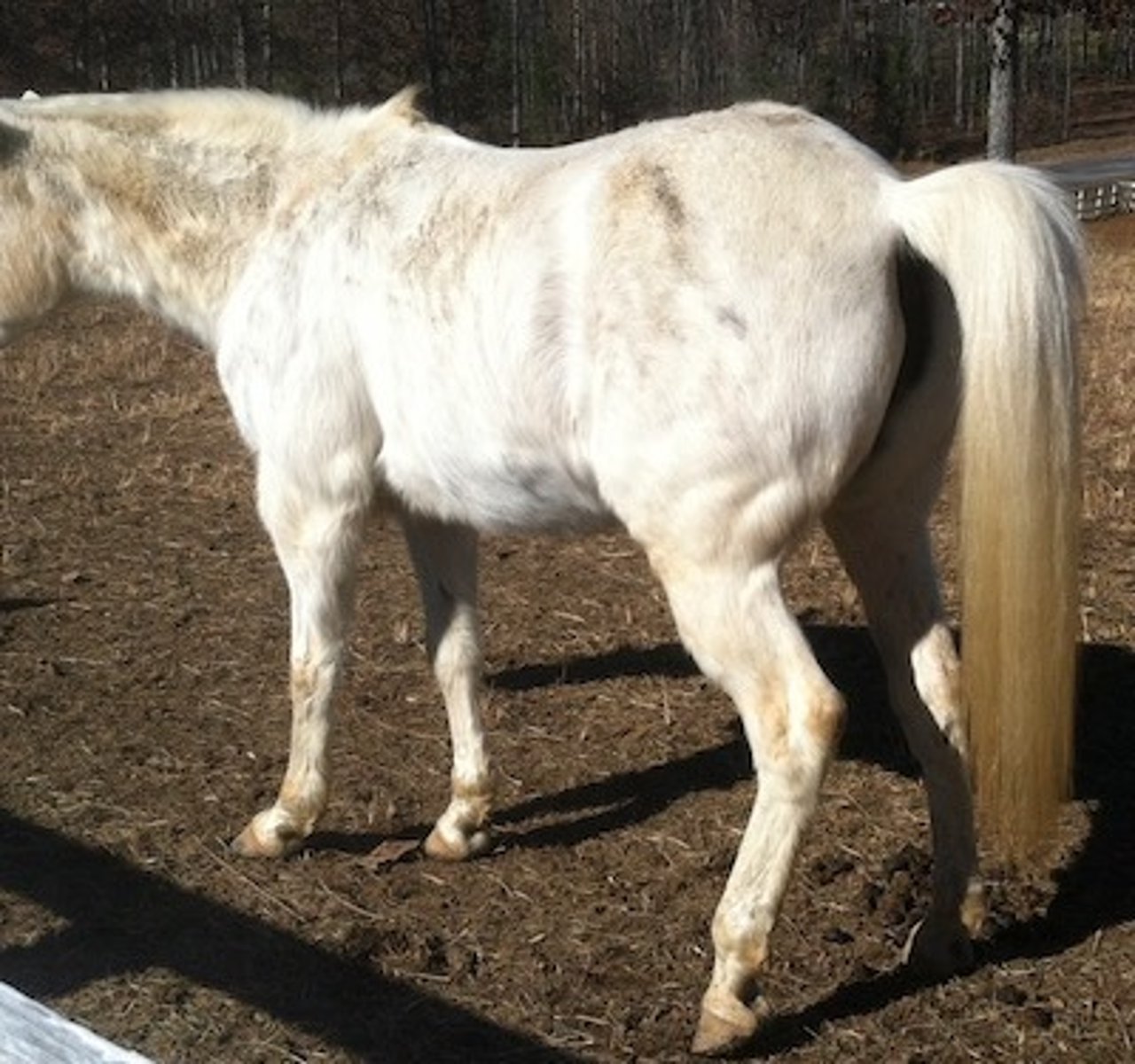
Laminitis
Which of the following causes of lameness in ruminants is NOT contagious?
Fusobacterium necrophorum
Laminitis
Papillomatous digital dermatitis
Dichelobacter nodosus
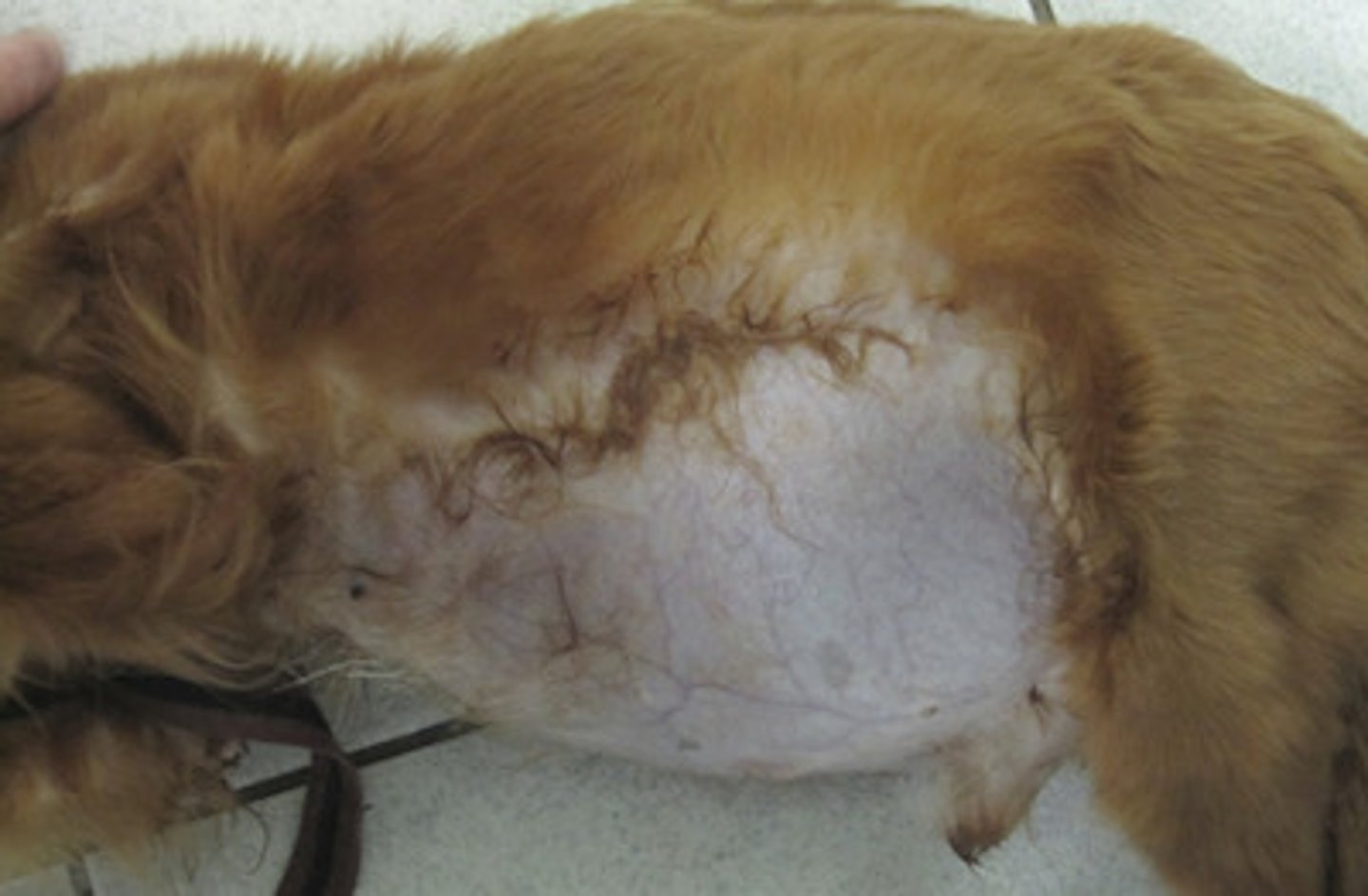
Ascites
What condition is visible in this image?
Ecchymoses
Peripheral edema
Mammary cyst
Anemia
Ascites
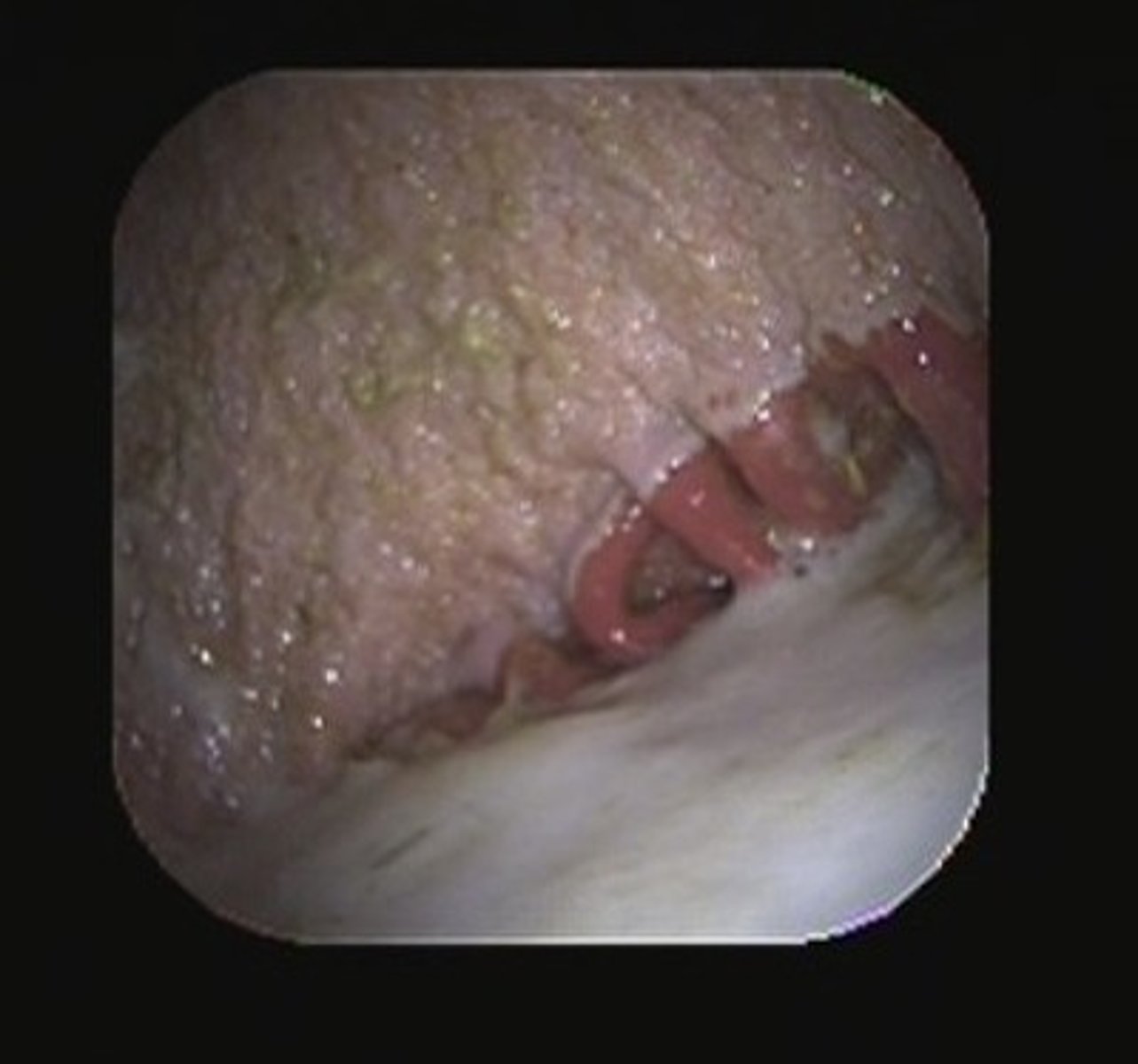
Equine
Which one of the following animals has a simple composite stomach (as seen in this endoscopic image)?
Bovine
Canine
Avian
Primate
Equine
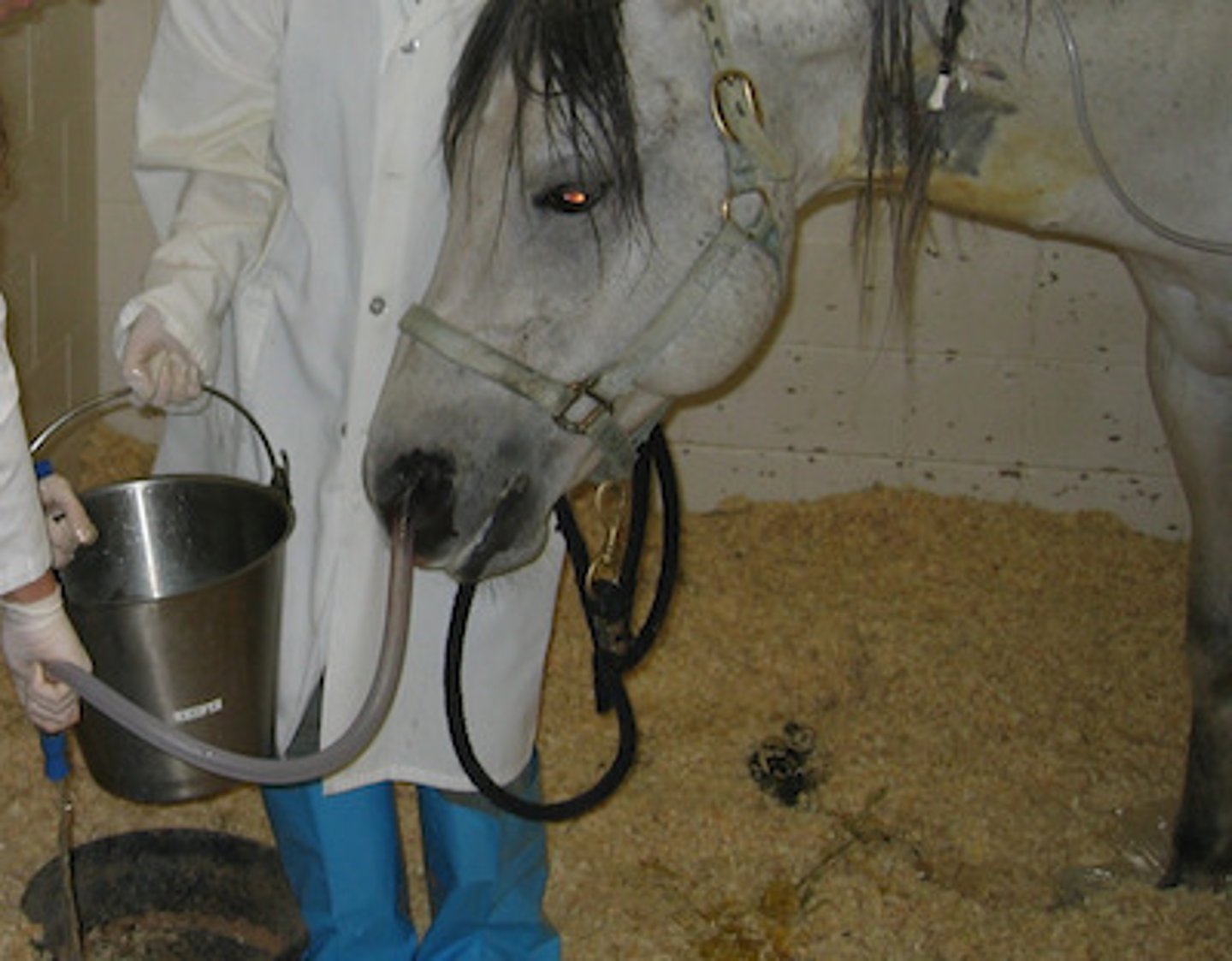
Left side of the neck
At what location can palpation and visualization confirm proper nasogastric tube placement in the horse?
Larynx
It is not possible to confirm this way
Oropharynx
Left side of the neck
Right jugular groove
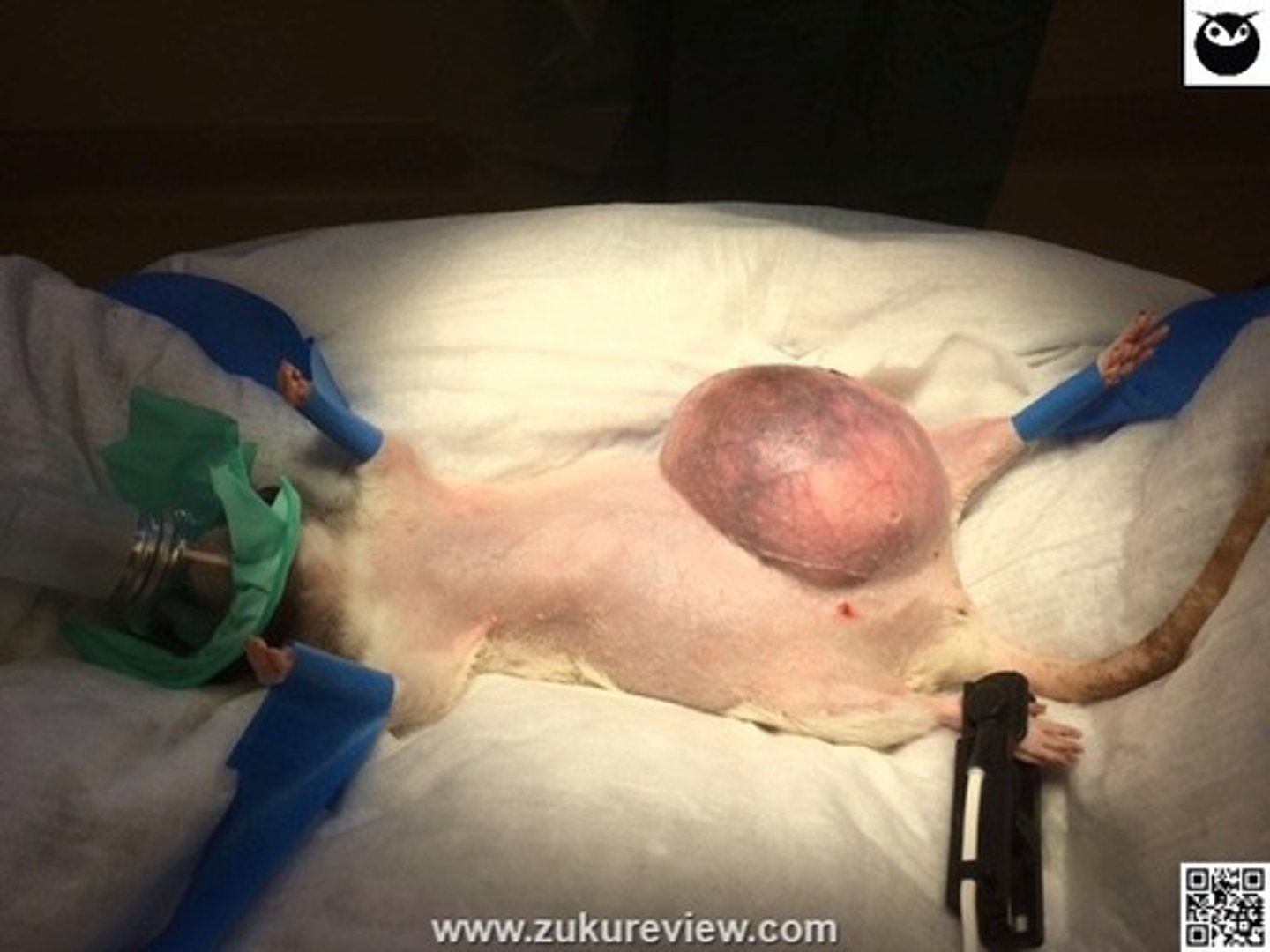
Mammary fibroadenoma
This 18-month-old female rat presents for evaluation of a mass that the owner noticed recently. The owner reports that the mass is growing rapidly.
What is the most likely cause of this mass?
Sebaceous cyst
Mammary fibroadenoma
Enlarged peripheral lymph node
Squamous cell carcinoma
Subcutaneous abscess
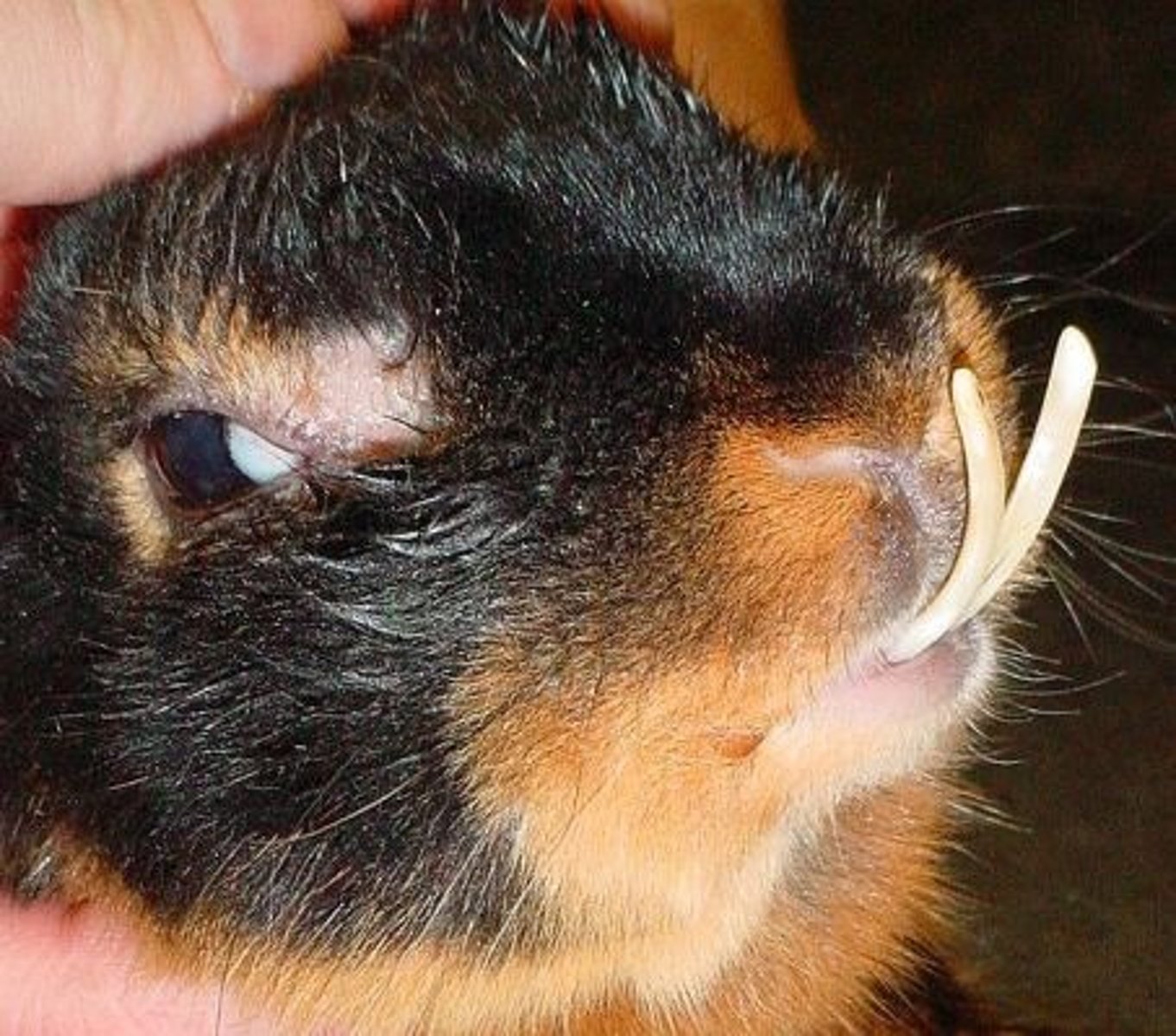
Malocclusion
What is demonstrated in this image? Image courtesy of Kalumet.
A high hay diet
Malocclusion
Pica
Severe ascarid infestation
Foreign body
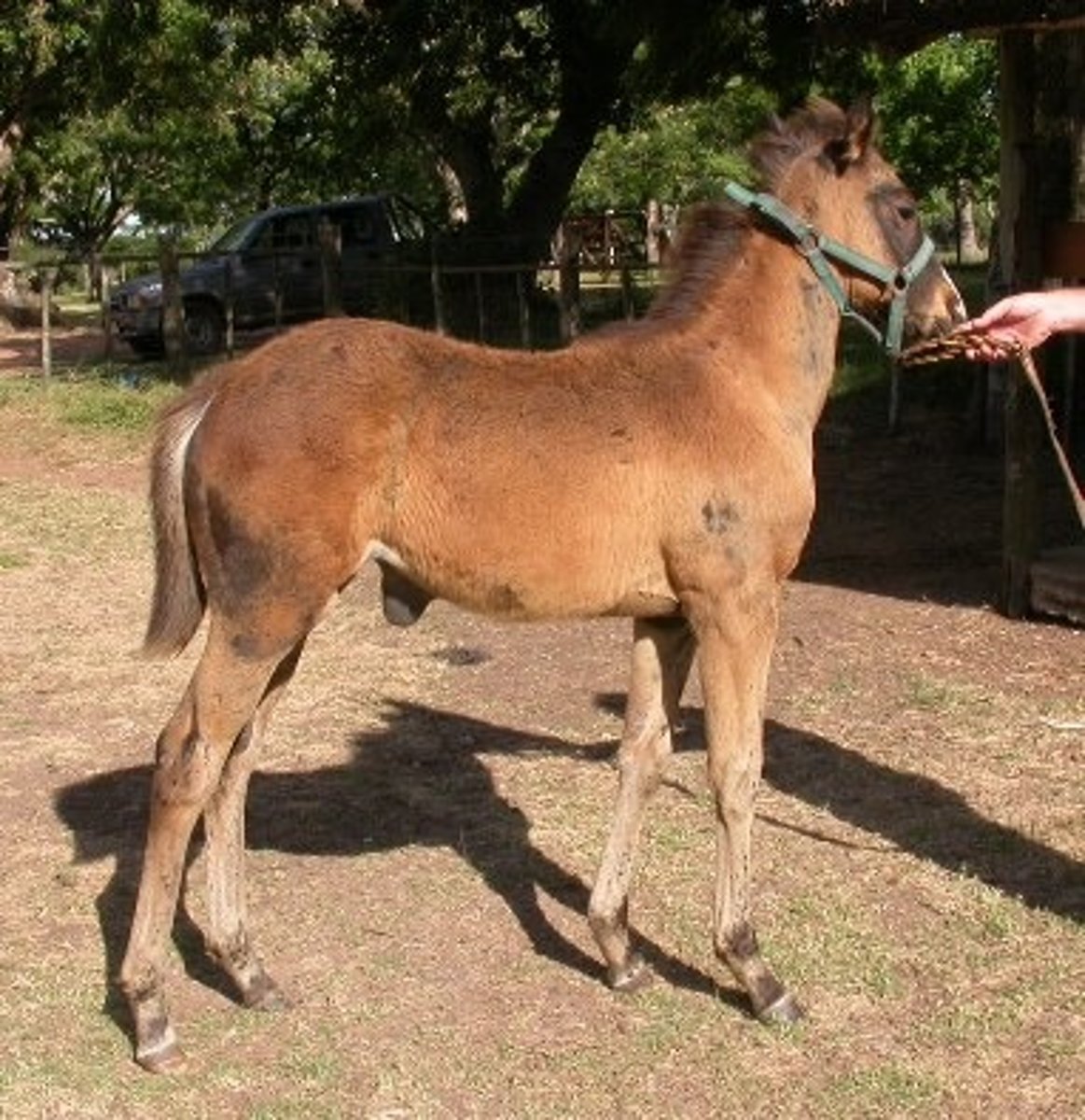
Umbilical hernia
This four-month-old foal is presented for evaluation.
Which of the following choices best describes this colt's abnormality?
Umbilical hernia
Diaphragmatic hernia
Inguinal hernia
Sheath swelling
Paraphimosis
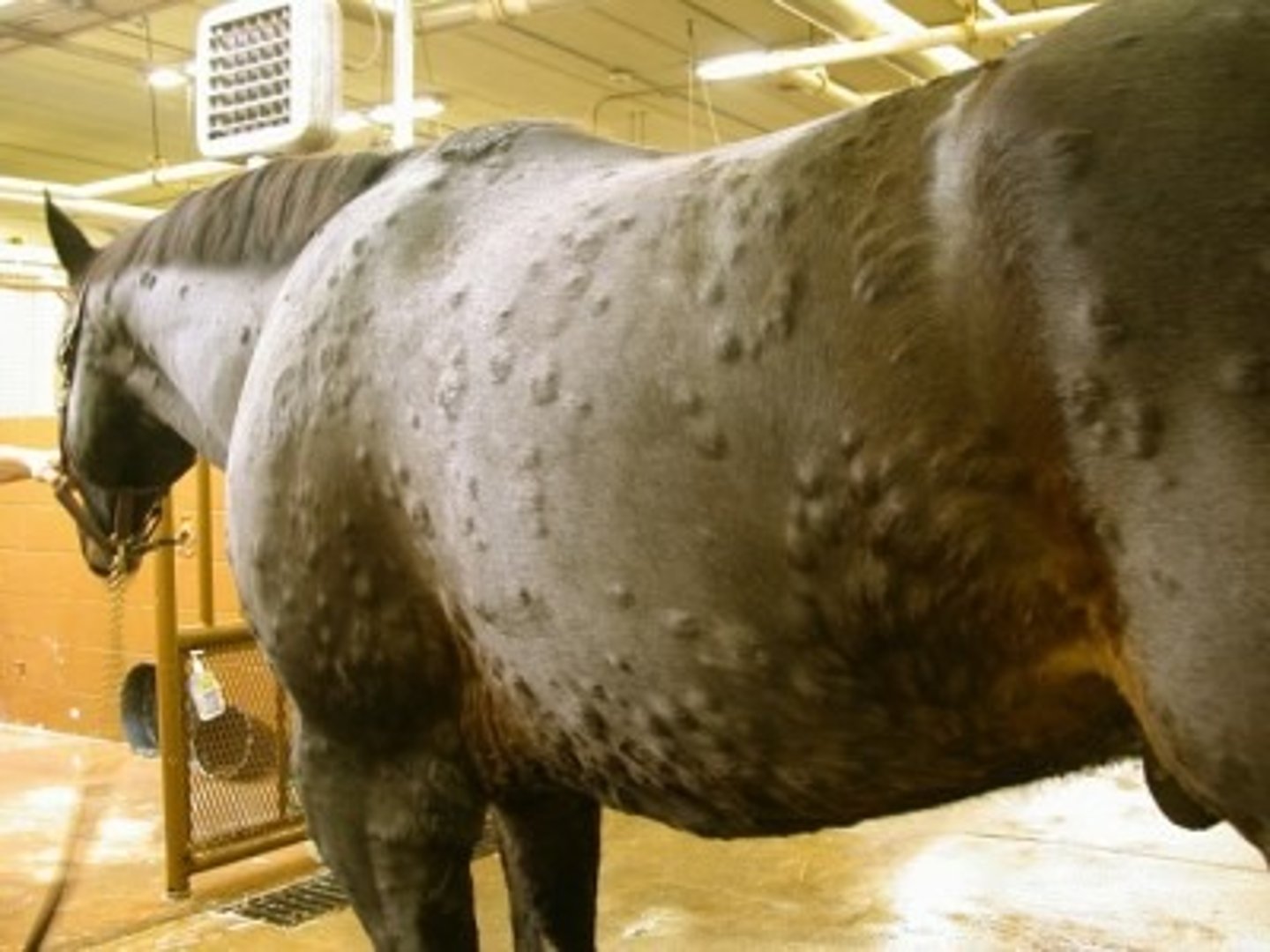
Urticaria
The 12-year-old Quarter horse gelding shown below develops these cutaneous skin lesions every summer for the last three years.
These lesions seem to wax and wane and currently have a multifocal distribution.
What is the medical term used to describe this type of lesion?
Angioedema
Granulomas
Macules
Urticaria
Hyperemia
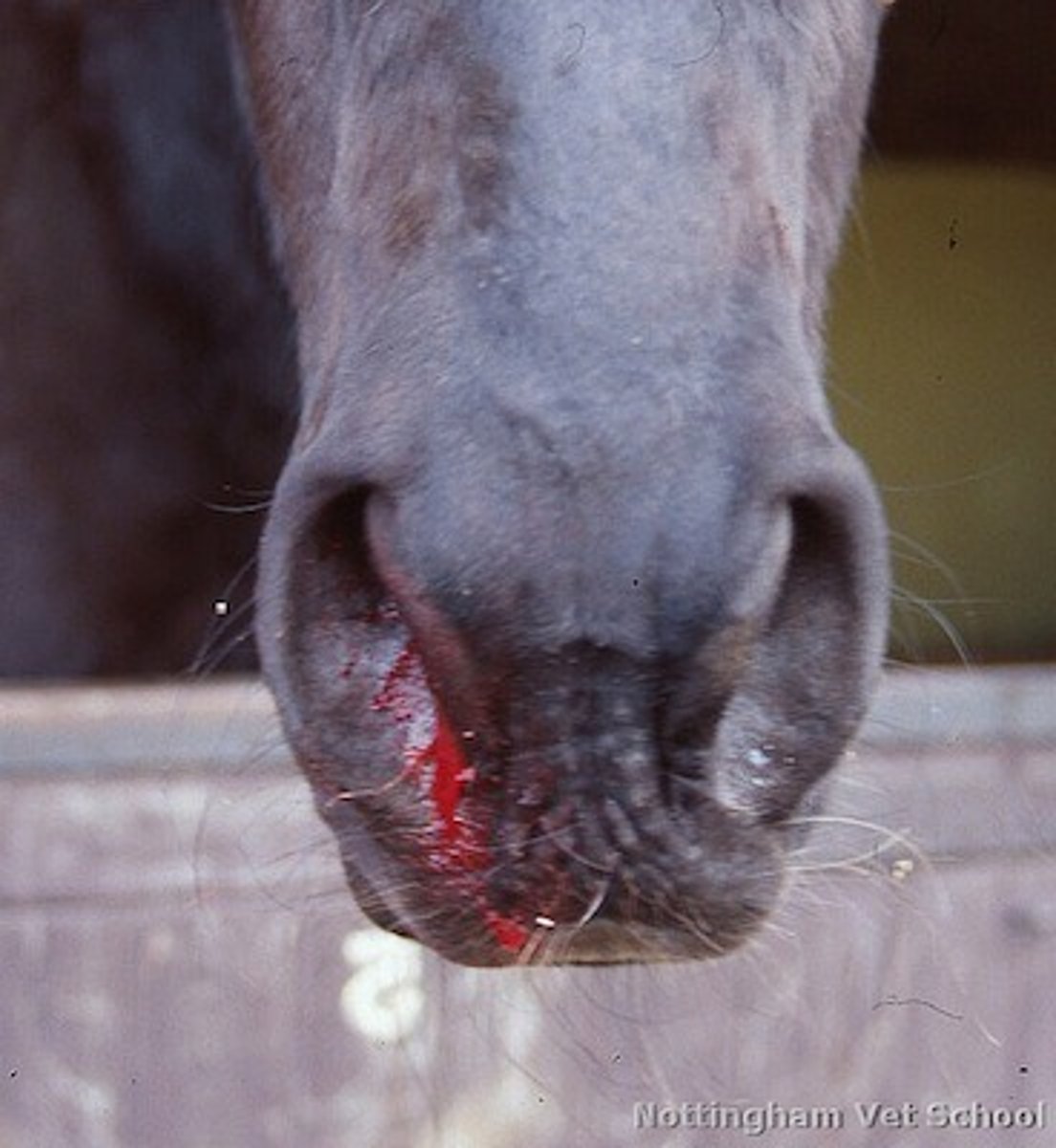
Epistaxis
After this Thoroughbred horse ran a race today, he was presented in the condition shown below.
What is the problem?
Epistaxis
Mydriasis
Atopy
Brachycephaly
Apnea
Coxiella burnetti
A small dairy goat farm has had an abortion storm. The veterinarian sends out some of the fetuses for necropsy.
The pathologist finds the organism causing the abortions, which is also the organism responsible for Q fever.
What organism was identified?
Escherichia coli
Coxiella burnetti
Pasteurella hemolytica
Trueperella (Arcanobacterium) pyogenes
Miosis
On physical exam, the patient's pupils are constricted like this.
What is this called?
Meiosis
Myiasis
Mydriasis
Miosis
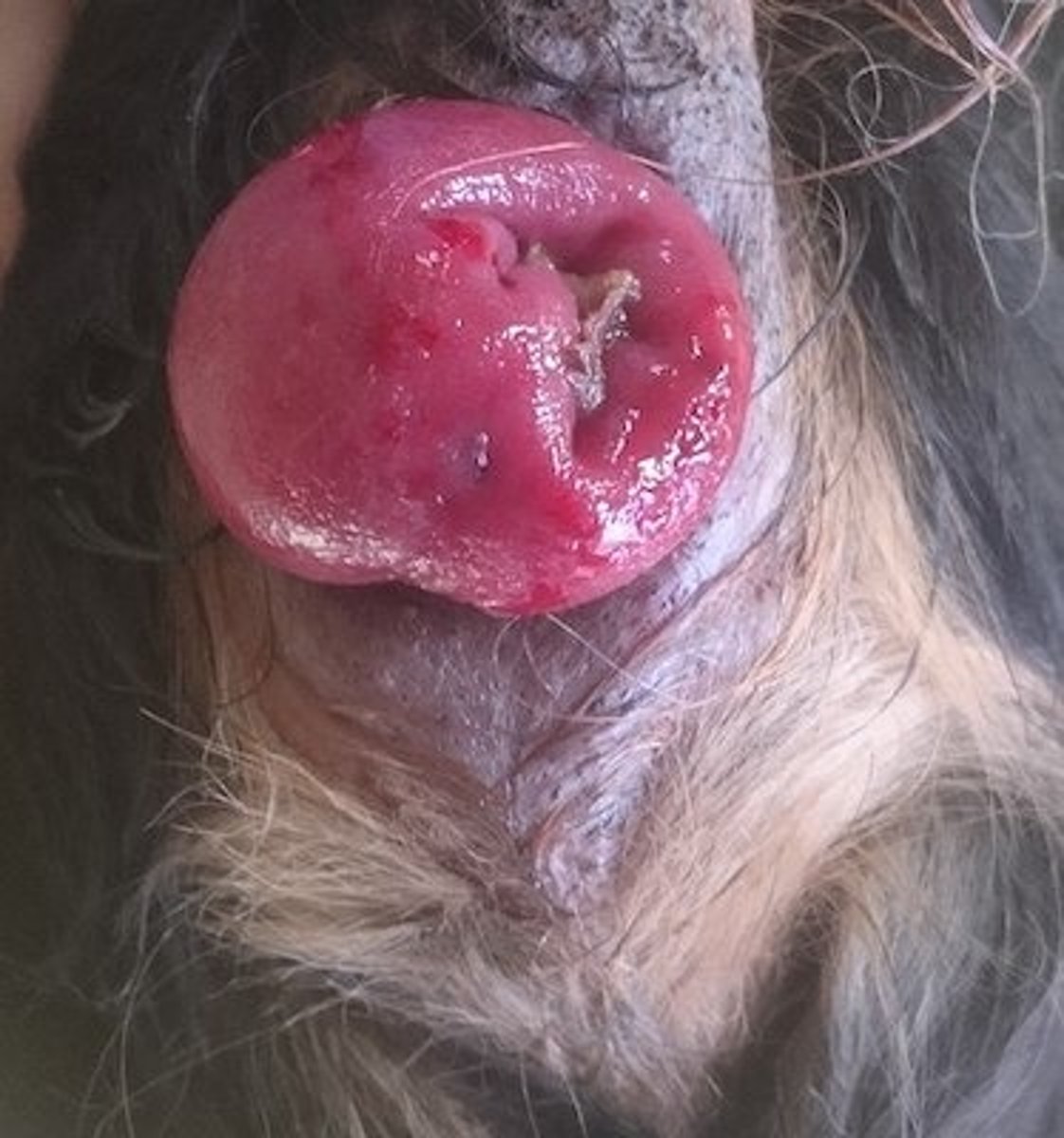
Rectal prolapse
What is wrong with this nine-month old buck?
Cryptorchid
Testicular torsion
Uterine prolapse
Rectal prolapse
Anal gland abscess
Years
How long is a practice required to maintain client medical records?
Months
Weeks
A practice is not legally required to preserve medical records
Decades
Years
Hairball
Which is a trichobezoar?
Solid accumulation of tartar into the gingival sulcus
Trochanteric fracture
Scar tissue nodule in the brachialis muscle
Hairball
Sheath bean
Cryptorchid
A four-month-old male Labrador puppy is presented for routine vaccinations. On initial physical exam, the puppy appears to have only one testicle in his scrotum.
Which term should be entered on the dog's record?
Ablation
Phimosis
Cryptorchid
Orchitis
Phlebitis
Orchitis
Which term describes inflammation of the testicles?
Cryptorchid
Chemosis
Phimosis
Orchitis
Phlebitis
Pulling blood from a lethargic, diabetic cat
In which of the following scenarios would the use of a winged (butterfly) catheter be appropriate?
Administering diazepam to a seizuring dog
Administering phenylbutazone to a 14-day-old foal
Pulling blood from a lethargic, diabetic cat
Pulling blood from an alpaca
Administering isotonic crystalloids as a constant rate infusion
SA node - AV node - bundle of His - Purkinje fibers - ventricles
Which of the following most correctly describes the conduction pathway of depolarization in the heart?
R ventricular myocardium - Purkinje fibers - AV node - atria
R atrial appendage - RA node - Purkinje fibers - ventricles
L atrial myocardial tissue - SA node - AV node - ventricular myocardium
Pulmonary node - AV node - SA node - Purkinje fibers
SA node - AV node - bundle of His - Purkinje fibers - ventricles
Just cranial to the trigone of the bladder
Where is the ideal location within the urinary bladder for placement of a cystocentesis needle in dogs and cats?
Just caudal to the the ureteral orifices
Mid-body of the bladder
The ventral-most aspect of the bladder
Just cranial to the trigone of the bladder
Location in bladder does not matter
Warts
Which one of the following conditions is caused by the papilloma virus?
Warts
Pyoderma
Mange
Ringworm
First antibody produced in response to a new antigen
Which one of the following phrases correctly describes immunoglobulin M (IgM)?
First antibody produced in response to a new antigen
The most common antibody in the body
Major antibody found in the interstitial space
The most important antibody found in the blood
Principal antibody of respiratory and intestinal secretions
Weak and limp in his rear legs
A 14-yr-old Dachshund that was seen last week has presented today for evaluation of flaccid paresis of his caudal limbs.
What problem is the dog having today?
Weak and stiff in his front legs
Inability to mate
Stiff and paralyzed on his right side only
Weak and limp in his rear legs
Limp and paralyzed in all four legs
18-36 months
How long do hamsters typically live?
up to 1 year
18-36 months
4-5 years
3-4 years
12-18 months
Extremities to prevent loss of range of motion
What is the primary goal when doing passive range of motion exercises (PROM) on a dog or cat, and where on the body are these exercises typically done?
Extremities to prevent loss of range of motion
Cervical injuries to increase the flow of CSF
Lumbar and thoracic spine to increase nociception signal transmission
PROM are not routinely done on animals due to legal issues
Carpals to encourage adequate traction when running
Loss of appetite for food
What is anorexia?
Pathological fracture related to calcium deficiency
Excessive energy intake
Absence of peristaltic contractions
Loss of appetite for food
Failure to consume adequate volumes of water
IgA
Which choice is the primary antibody in secretions from the mucous membranes (mouth, nose, eyes)?
IgG
IgE
IgB
IgA
IgM
Inflammation of the umbilicus
What is omphalitis?
Inflammation of the umbilicus
Intestinal irritation secondary to hardware ingestion in ruminants
Tooth root abscess
Protozoal overgrowth in the hind gut
A middle ear infection
Absence of milk production
What is agalactia?
Refusal of young to suckle
Absence of milk production
Excessive milk production
A form of milk fever
Newborns do not take in enough passive antibodies from milk
Trouble giving birth
A dog is coming in with dystocia.
What is happening?
Dog is suddenly blind
Unable to defecate
Trouble breathing
Unable to urinate
Trouble giving birth
Decreases risk of malignant mammary gland tumors
The owner of a newly adopted four-month-old female kitten wants to know the main benefits of spaying her cat, besides preventing new litters of unwanted kittens.
What is the principle benefit of spaying a cat before six months of age?
Prevents diabetes mellitus in female cats
Decreases risk of malignant mammary gland tumors
Moderates aggression in multi-cat households
Improves outcome if cat develops heart disease
Minimizes incidence of obesity in middle and older aged animals
Crystalloids are electrolytes in water, colloids are crystalloids with high molecular weight polymers added
What is the main difference between crystalloid and colloid types of intravenous fluids?
Crystalloids can only be given IV, colloids can be given IV or subcutaneously
Crystalloids prevent fluid loss out of the circulation, colloids are used for maintenance fluid therapy
Colloids are albumin and globulins, crystalloids are 5% dextrose and normal saline
The addition of proteins to a crystalloid makes it a colloid
Crystalloids are electrolytes in water, colloids are crystalloids with high molecular weight polymers added
Immediately
How long after a booster rabies vaccination is a cat (or dog or ferret) considered to be currently vaccinated and protected against rabies?
After 48 hours
After 14 days
After 7 days
Immediately
After 24 hours
Notify the area federal veterinarian
Several cows were found dead on a farm with no warning. Anthrax is highly suspected.
What is the first thing that should be done?
Perform necropsies to submit necessary tissue samples
Notify the area federal veterinarian
Administer anthrax antiserum to remaining cows
Administer anthrax vaccine to remaining cows
Treat remaining cows with penicillin
Laminitis
Which of the following choices can be defined as inflammation of the corium of the hoof in large animals?
Bog spavin
Desmitis
Tendonitis
Laminitis
Coccidia
A schizont is part of the life cycle of which one of the following organisms?
Trematodes
Dipterans
Cestodes
Coccidia
Trypanosomes
Heart rate increases with inhalation, decreases with exhalation
The cardiologist asks to have an ECG run on one of the local police dogs.
A sinus arrhythmia is noted on the ECG. What changes are typically seen with this condition?
Nystagmus rates decrease with inspiration
Heart rate increases with inhalation, decreases with exhalation
Heart rates are the same as pulse rates, except during sinus congestion
Arrhythmic heartbeat with depressed respiratory rate and pulse rate
Physical punishment
In the treatment of cats with inter-cat aggression in a multiple cat household, which one of the following choices can AGGRAVATE aggressive behavior?
Put a bell on the most aggressive of the cats
Desensitization
Startling the aggressive cat
Providing more 3-dimensional space
Physical punishment
Regurgitation is passive, vomiting is active
Which of the following is a difference between regurgitation and vomiting?
Regurgitation is passive, vomiting is active
Regurgitated contents often contain hair, mucus, or intestinal parasites
Vomiting always contains blood
Nausea and abdominal contractions are common with regurgitation
Regurgitation is louder, vomiting is quieter
RER x life stage factor
How do you calculate the metabolizable/daily energy requirement (MER) for a dog or cat?
(Note: RER = resting energy requirement)
RER x body weight in kg
RER x life stage factor
2 x RER
Body weight in kg x 40
Same as RER
Standing to be mounted by other cows
Which one of the following is the most reliable clinical sign of estrus in a cow?
Standing to be mounted by other cows
Bloody vaginal mucus discharge
Ruffled hair on tail head
Bellowing, restlessness
Riding other cows
Removal of damaged and necrotic tissues
What is the purpose of wound debridement?
Initial wound cleansing with fluids
Removal of damaged and necrotic tissues
Removal of fluids from lungs
Wrapping a wound loosely until dead tissue sloughs off
Loss of skin in an injury
Valvular disease
What is the most common cause of heart disease in dogs?
Atrial disease
Ventricular disease
Myocardial disease
Disease of the great vessels
Valvular disease
Southern Atlantic and south central states
Where is Rocky Mountain spotted fever endemic?
The Great Lakes region of the USA and Canada
Southern Atlantic and south central states
Washington, Oregon, and California
British Columbia, Canada
Rocky Mountains