Chemical Analysis
 Call Kai
 Learn
 Practice Test
 Spaced Repetition
 Match
 Flashcards
 Knowt Play
1/13

There's no tags or description
Looks like no tags are added yet.
14 Terms
define a pure substance
single element or compound, not mixed with any other substance

does this image depict a graph of pure or mixture melting and boiling point and how can you tell?
pure: the melting and boiling points are straight lines (at specific fixed temperatures)
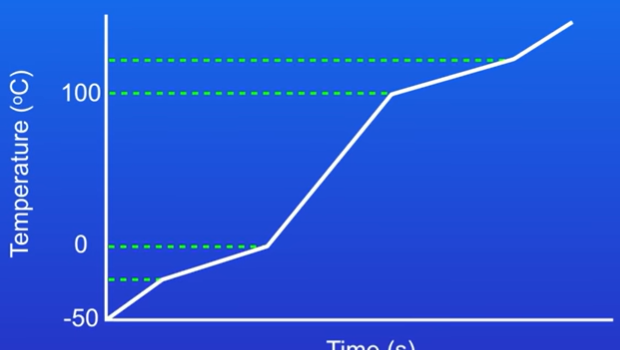
does this image depict a graph of pure or mixture melting and boiling point and how can you tell?
mixture: the substance melts and boils at a range of temperatures
define a formulation
mixture of compounds in measured quantities that has been designed as a useful product.
formulations examples
fuels, cleaning agents, paints, medicines, alloys, fertilisers and foods
what is chromatography used for
separate mixtures and can give information to help identify substances
why is the paper the stationary phase
doesn’t move
why is the solvent the mobile phase
moves up the paper
how is rf calculated
Distance moved by the spot / distance moved by solvent

how do i know which substance is pure
a is pure as it only contains one element and thus one color and vice-versa for b
why is starting line NOT drawn in ink
because pen ink would move up the paper with solvent
method for chromatography
Using a ruler and pencil, draw a line on the chromatography paper which is a few cm above the bottom of the paper
Put small spots of the mixtures being tested with at least 2 cm gaps between each so they don't spread
Fill a beaker with a small quantity of solvent, low enough so it doesn't touch the penciled line
Using a glass rod and a paperclip to secure the paper, lower the paper so the solvent touches below the penciled line
Solvent shall move up and the colors will be carried upwards
Remove the paper before the solvent fully travels up it
Draw a line to signify where the solvent has travelled up to and let the paper dry
Use the equation rf = distance moved by chemical/ distance moved by solvent if needed
Repeat thrice, remove anomalies and calculate mean for accuracy
rf value steps
look up rf value in a database to tell us the identity of the chemical
many chemicals may have same rf value so experiment might need to be repeated with a different solvent to find answers
if chemical has never been analyzed before, no rf value on the database and we would need to carry out further analysis
tests for hydrogen, oxygen, carbon dioxide and chlorine
Hydrogen – pop with burning splint over gas
Oxygen – glowing splint relights
Carbon dioxide – turns limewater (Ca(OH)2) milky
Chlorine – bleaches damp litmus paper and makes it white