AP Psych - (all) UNIT 1.3: Neurons (communication, endocrine system, substance use, drugs)
 Call Kai
 Learn
 Practice Test
 Spaced Repetition
 Match
 Flashcards
 Knowt Play
1/41

There's no tags or description
Looks like no tags are added yet.
42 Terms
Psychoactive Drug
a chemical substance that alters the brain
causing perception + mood changes
Substance Use Disorder
a disorder characterized by continued substance use, despite resulting life disruption
Tolerance
the diminishing effect with regular use of the same dose of a drug
→ requiring the user to take larger and larger doses before experiencing the effect of the drug
Addiction
Obsessive, uncontrollable substance use that continue despite harmful consequences
Withdrawal
The discomfort + distress following the discontinuation of an addictive drug or behaviour
Depressants
drugs that reduce neural activity, and slow body functions
Examples:
alcohol
barbiturates (tranquilizers)
opiates
Example of a depressant (slows the brain activity)
Alcohol
Example of a depressant (depress the sympathetic nervous system activity)
Barbiturate (tranquilizers)
Example of a depressant (depress neural functioning)
Opiate
Barbiturates
Drugs that depress central nervous system activity
reducing anxiety but impairing memory + judgement
Opioids
Opium and its derivatives
depress neural activity — temporarily lessening pain and anxiety
Examples:
morphine
heroin
Stimulants
drugs that excite neural activity + speed bodily functions
Hallucinogens
psychedelic drugs that distort perceptions and evoke sensory images in the absence of sensory input
Near-death experience
an altered state of consciousness after a close brush with death
Neuron
a nerve cell; the basic building block of the nervous system
→ transmits via electrical and chemical signals
Cell Body (soma)
the part of a neuron that contains nucleus
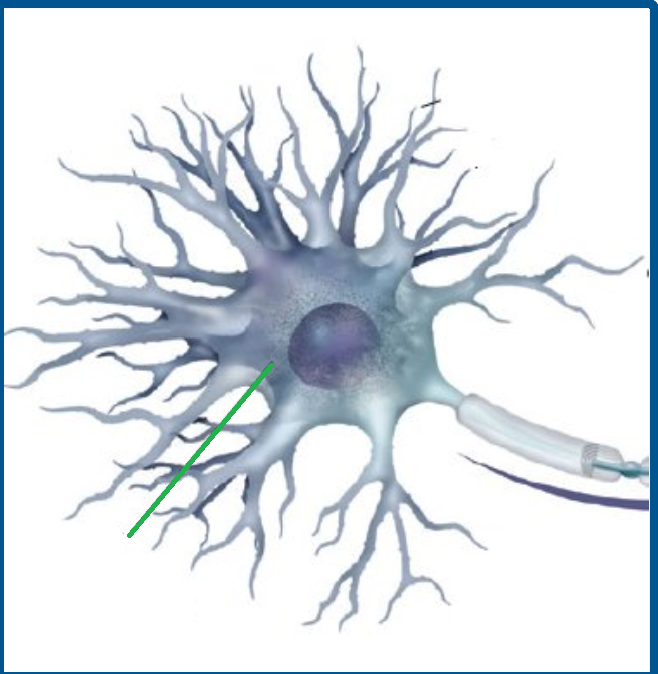
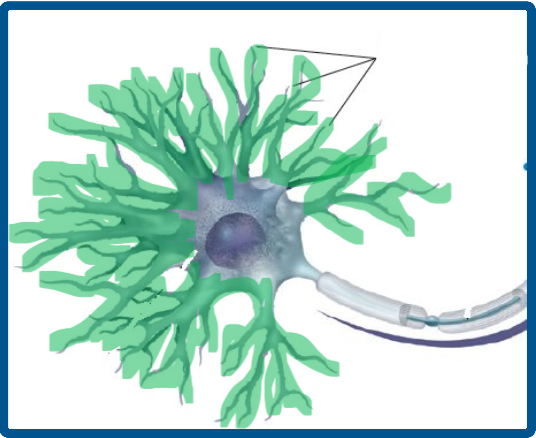
Dendrites
A neurons often bushy, branching extensions that receive and integrate messages
Axon
the segmented neuron extensions passes messages through its branches to other neurons or to other muscles or glands

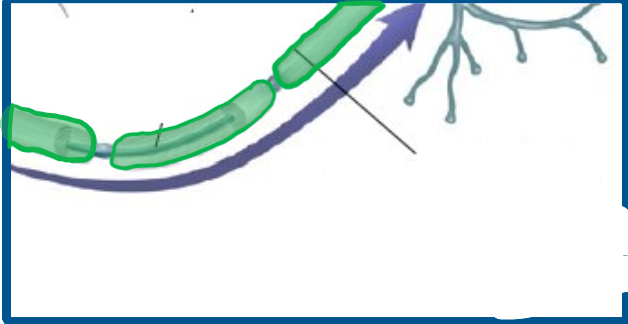
Myelin Sheath
a fatty tissue layer that segmentally encases the axons of some neurons
Terminal Branches
ends of the axon containing terminal buttons which hold synaptic vesicles that store neurotransmitters

Glial Cells
Cells in the nervous system that support, nourish, and protect neurons
may also play a role in learning, thinking, and memory
Neural Impulse
A neuron sends a message by firing an impulse — action potential
Action Potential
a neural impulse; a brief electrical charge down an axon
Threshold
the level of stimulation required to trigger a neural impulse
Refractory Period
a brief resting pause that occurs after a neuron has fired
All-or-none response
a neurons reaction of either firing at full strength or not firing at all
Synapse
The junction between the axon tip of the sending neuron and the dendrite or cell body of the recieving neuron
Neurotransmitters
chemical messengers that cross the synaptic gap between neurons
when released by the sending neuron, neurotransmitters travel across the synapse and bind to receptor sites on the receiving end
influences whether the neuron will generate neural impulses
Acetylcholine (ACl)
- neurotransmitter -
muscle action
learning
memory
Malfunction examples: Alzheimer’s, Myasthenia Gavis
Dopamine
- neurotransmitter -
feelings of pleasure
→ positive feelings
Examples of malfunction: Schizophrenia, Parkinsons
Serotonin
- neurotransmitter -
mood
sleep
arousal
Examples: Undersupply → depression
Norepinephrine
- neurotransmitter -
alertness
arousal
Gaba
- neurotransmitter -
slows down brain activity
feel calm
less stress and anxiety
relaxation
Glutamate
- neurotransmitter -
overstimulation
migraines
seizures
Endorphins
- neurotransmitter -
natural opiates — pain killer
Substance P
- neurotransmitter -
more chronic pain
Reuptake
a neurotransmitters reabsorption by the sending neuron
Endorphins
natural opioid-like neurotransmitters linked to pain control + pleasure
Agonist
a molecule that increases a neurotransmitters action
Antagonist
a molecule that decreases a neurotransmitters action
Endocrine System
the body’s slow chemical communication system
a set of glands + fat tissue that secrete hormones into the bloodstream
Hormones
chemical messengers that are manufactured by the endocrine glands, travel through bloodstream, affect other tissues