AP Biology Unit 1 - Chemistry of Life
 Call Kai
 Learn
Learn Practice Test
 Spaced Repetition
 Match
Match Flashcards
 Knowt Play
1/55

There's no tags or description
Looks like no tags are added yet.
Name | Mastery | Learn | Test | Matching | Spaced | Call with Kai | Chat |
|---|
No analytics yet
Send a link to your students to track their progress
56 Terms
What is the chemical formula of water?
H2O
What is polarity?
Polarity means having opposite charges within the same molecule.
What makes water molecules polar?
The oxygen in the water molecule has a higher electronegativity than hydrogen, giving oxygen a partial negative charge and the hydrogen atoms a partial positive charge.
What is cohesion?
the attraction of water molecules to other water molecules.
What is adhesion?
the attraction of water molecules to molecules of other substances
What is a hydrogen bond?
Hydrogen bonds form between hydrogen atoms (slight positive charge) and negatively charged atoms. When water molecules are near each other the hydrogens in one atom are attracted to the oxygen atoms in the other water.

Remember this is what hydrogen bonds between water molecules look like.
CLICK THIS
How does waters polarity effect surface tension?
the hydrogen bonds between water molecules cause cohesion of water molecules at the surface of a body of water
How does waters polarity effect its high solvency?
water can dissolve substances that are polar or ionic. The slight charges on the water molecules attract the charges of these substances, causing them to dissolve.
How does waters polarity effect its density depending on its state of matter (ice or liquid)?
Density refers to how tightly packed the particles or a substance are. As the water solidifies, hydrogen bonds cause the molecules to be spaced out evenly, causing the solid form of water to be less dense than the liquid.
How does waters polarity effect its high heat capacity?
Water can absorb a lot of heat energy because hydrogen bonds need to be broken before water molecules can start speeding up to change from solid to liquid or liquid to gas.
Hydrophobic definition
“water fearing”, refers to molecules that are nonpolar and repel water (like lipids)
Hydrophilic definition
“water loving”, refers to molecules that are polar and attracted to water.
The three most common elements in living things are?
C, H, and O
which type of macromolecules contain nitrogen?
proteins + nucleic acids
which type of macromolecules contain phosphorus?
nucleic acids + 1 type of lipid (learn more in unit 2)
which type of macromolecules sometimes contain sulfer?
some proteins
What are the 4 main types of macromolecules?
Carbohydrates, Lipids, proteins, nucleic acids

Which of the main 4 macromolecules is this?
Carbohydrate

Which of the main 4 macromolecules is this?
Lipid
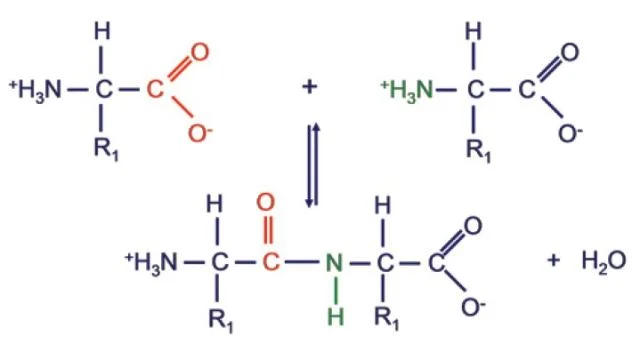
Which of the main 4 macromolecules is this?
protein

Which of the main 4 macromolecules is this?
nucleic acid
Whats the difference between a monomer and a polymer?
Monomers are small individual molecules that link together to form larger molecules called polymers. Polymers are large molecules made up of repeating monomers bonded together.
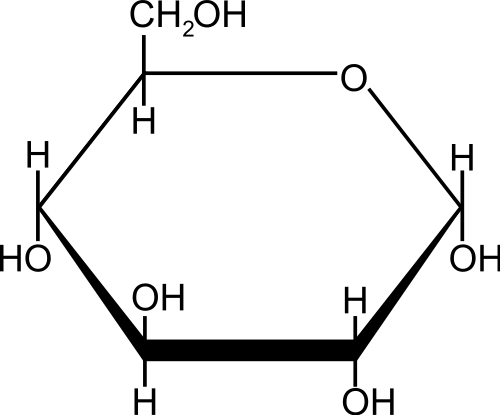
What is a monomer of Carbohydrates?
monosaccharide

What is a monomer of lipids?
glycerol + fatty acids (lipids are technically not polymers because they aren’t large chains of repeating monomers

What is a monomer of proteins?
amino acids

What is the monomer of nucleic acids?
nucleotides

Define dehydration synthesis
joins monomers together to form polymers. In the process a molecule of water is produced as a by-product. Hydrolysis is the opposite.

Define hydrolysis
polymers are broken down during hydrolysis, and water is used as a reactant. dehydration synthesis is the opposite.

Whats the difference between saturated and unsaturated fatty acids?
“saturated” means full. Saturated fats have only single bonds in their hydrocarbon chains, so there is a maximum number of hydrogen atoms bonded to the carbon atoms. Unsaturated fatty acids have one or more double bonds in the chain, so less hydrogens are needed to fulfill the bonding requirements of the carbon atoms.
How does the structure of the fatty acid relate to whether it is solid or liquid at room temperature?
because of the double bonds in unsaturated fatty acids, their shape is usually bent. This prevents the molecules from stacking together closely, and the space between the molecules causes them to be liquid at room temperature. Saturated fatty acids have straighter chains, so they are able to pack more tightly together, making them solid at room temperature.
What is the function of Carbohydrates?
they are used primarily for energy
What is the function of Lipids?
they are used for energy storage and cell membrane structure
What is the function of Proteins?
They are used in most cellular functions such as structure, transport of materials, immunity, and speeding up chemical reactions (enzymes)
What is the function of Nucleic Acids?
they store and transmit genetic information
What is the general structure of an amino acid? What four components do all amino acids share?
All amino acids have a central carbon, a carboxyl group (COOH), and amino group (NH2), and a singular hydrogen atom.
What feature of an amino acid is different for each one?
Each amino acid has its own unique R group (also called side chain)

What is the primary structure of a protein? What type of bonds hold the primary structure together?
Primary structure is the sequence of amino acids held together by specific covalent bonds called peptide bonds

What is the secondary structure of a protein? What two shapes are associated with the secondary structure? What bonds hold it together?
The secondary structure is the first level of folding (usually into an alpha helix or beta pleated sheet). This level of structure is held together by hydrogen bonds between carboxyl groups and amino groups of different amino acids.
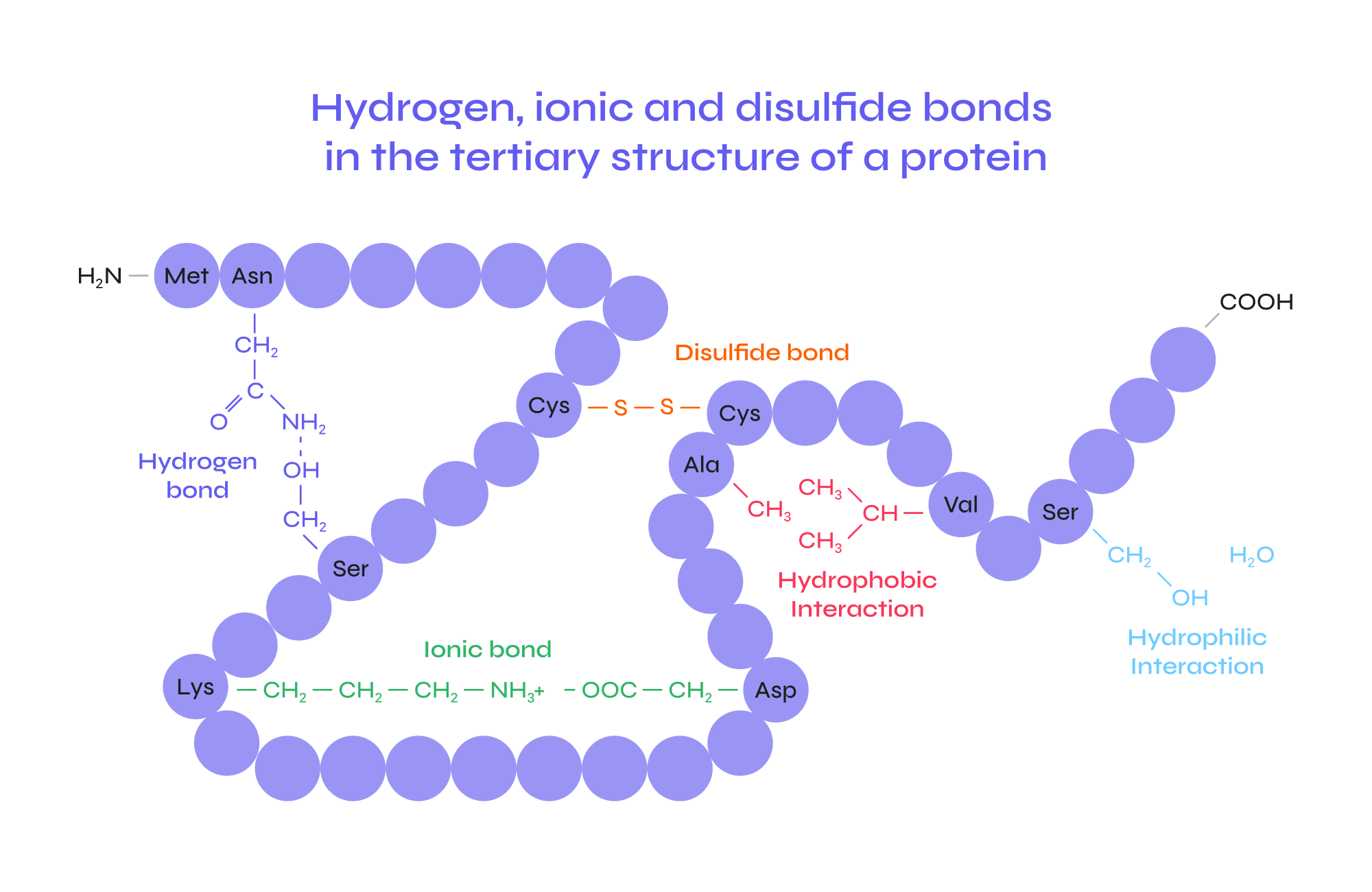
What is the tertiary structure of protein? What types of bonds/interactions hold together the tertiary structure.
Tertiary structure is additional folding that forms the 3D shape of the protein. It is held together by different interactions between the R groups of the amino acids (hydrogen bonds, ionic bonds, disulfide bridges, or hydrophobic interactions)

What is the quaternary structure of protein? what types of bonds/interactions hold together the quaternary structure?
Quaternary structure is not found in all proteins. It results from more than one polypeptide chain bonding together. Just like tertiary structure, it results from interactions between different R groups.
What denaturation is? What are some factors that might cause denaturation of proteins?
Denaturation happens when something in the environment (heat, pH) causes the structure of the protein to change. This often results in the protein not being able to function correctly.
how to identify the independent and dependent variables in an experiment
The independent variable is the variable that is changed or manipulated by the researcher. It is the one factor that does not stay constant. The dependent variable is the variable that may potentially change in response to the independent variable. It is the measured outcome in the experiment.

how to identify a controlled variable (constant) in an experiment?
Controlled variables are factors that stay the same throughout the entire experiment.
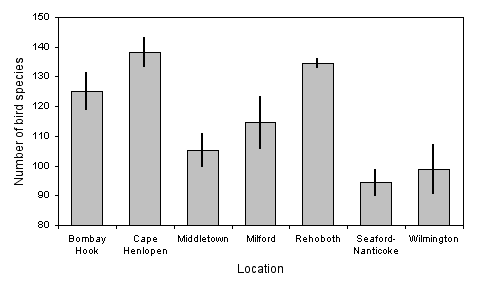
how to read a bar graph?
Make sure to read the title and labels on both axes when looking at any graph.

what the error bars on a bar graph tell you? How can we use the error bars to identify if the results of the experiment are statistically significant?
Error bars show the range of where the actual mean may be compared to the calculated mean. If the results of the experiment are statistically significant, the error bars will not overlap.
Which is not a property of water?
Water has low surface tension
Polarity is due to differences in…
electronegativity between two atoms

Which two functional groups are connected during this dehydration synthesis reaction?
Carboxyl group (COOH) and amino group (NH2)
Glycogen and cellulose are both polysaccharides composed of glucose monomers, yet they serve very different functions. Which of the following best explains why these molecules have different biological roles despite sharing the same monomer?
different glycosidic bond types produce different molecular shapes and properties
Which of the four classes of macromolecules are nonpolar and hydrophobic?
lipids
What three components make up the structure of a nucleotide?
sugar, phosphate group(PO4), nitrogen base
What is the hydroxyl group?
-OH
What is the phosphate group?
-PO4
What is the carboxyl group?
-COOH
What is the amino group?
-NH2