WCT: Pond and Riparian
 Call Kai
 Learn
Learn Practice Test
 Spaced Repetition
 Match
Match Flashcards
 Knowt Play
1/39

Earn XP
Description and Tags
Test 1
Name | Mastery | Learn | Test | Matching | Spaced | Call with Kai | Chat |
|---|
No analytics yet
Send a link to your students to track their progress
40 Terms
Broad-leaved Arrowhead – Sagittaria latifolia – Alismataceae
• Basal lobes on the leaves are usually spreading and pointing down, giving leaf an arrow shape
• Entire rhizome is edible
Pond edges and shallow areas

Wild Calla
• Marshy areas, bogs and swamps (Shallow muddy waters)
• Leaves smooth-edged, heart-shaped & flower a single white spathe with spadix within
• All parts of plant are poisonous

Nodding beggarticks
Lance-shaped leaves with teeth on margins
• Sunny yellow flower heads are often “nodding”
Pronged seeds phoresy seed dispersal*

Spotted Joe Pye Weed
• Leaves in whorls of 4-5, stem somewhat purple and spotted
• Composite pink flowers clustered at the top of the stem, which can be over 1m high
• Has a fluffy look to the flat-topped inflorescence

Common winterberry
Elliptical leaves with blunt teeth, widest at tip
• Flowers grow in leaf axils and fruit is a bright red berry that persists through the winter
-Tight to stem berries (Green-Red)
Spotted Jewelweed
Distinctive flowers, orange with red-brown spots. Seed pods explode. (Split and throw seeds everywhere)
• See small-flowered jewelweed (above) for uses
-Stream edge

Speckled (Gray) Alder
Alder of wet areas. Leaves ovate to round, double-toothed edge, with paired veins more than 10
• New buds stalked
• Medicinal uses include treatment of insect bites & poison ivy; also used as a dye.

Green (Downy, Mountain) Alder
• Prefers drier sites than speckled. Leaves elliptical, finely toothed, with paired veins less than 10 veins
• Underside of leaves shiny green with fine hairs. New buds NOT stalked.
• Medicinal uses include treatment of insect bites & poison ivy; also used as a dye.

Small-leaved Watercress
• Spreading, tangled mass of shoots
• Slow-moving waters and pools (By Springs)
• Edible raw or cooked with a peppery flavouring

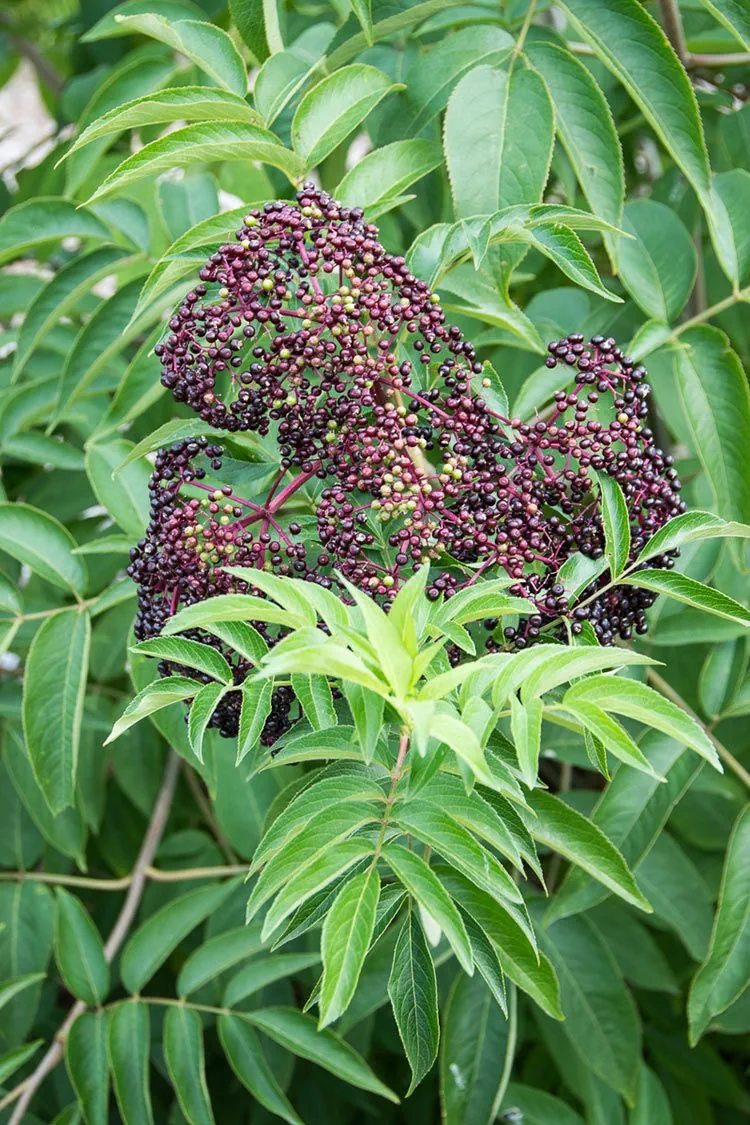
Common Elderberry
• Only shrub (along with red elderberry) with opposite pinnate leaves. Twigs have WHITE pith. Compound
• Purple-black fruit, produced in flat-topped clusters, used in jams, jellies, preserves, pies, and
some wines
• Typically found in streamside/riparian habitats, as opposed to Red Elderberry which prefers dry/upland habitats
-Has raised brown lenticles
Eastern White Cedar
Overlapping scale-like foliage resembles fan shape on the branch
• Considered rare in NS & PEI (found mostly in western end of PEI)
• Grows in variety of conditions, from swamps to old pastures. Wet to somewhat dry soil.

Bulrush
• Tall species, conspicuous in shallow ponds and around salt marshes, stems can be 3-sided
• Flowers/seed on spikelet, achene (seed) has bristles (think bulrush has bristles)
• Culinary and medicinal uses, as well as used for making baskets and mats

Common woolly bulrush
• Small spikes with conspicuous bristles give a woolly appearance
• Grows in wet meadows and swamps, Very tall
• See bulrush (above) for uses

Sedge
• Sedges have edges – in cross-section stems are triangular
• In wet areas and poorly drained soils
• Flowers arranged on spikes
Roll three edges to stem

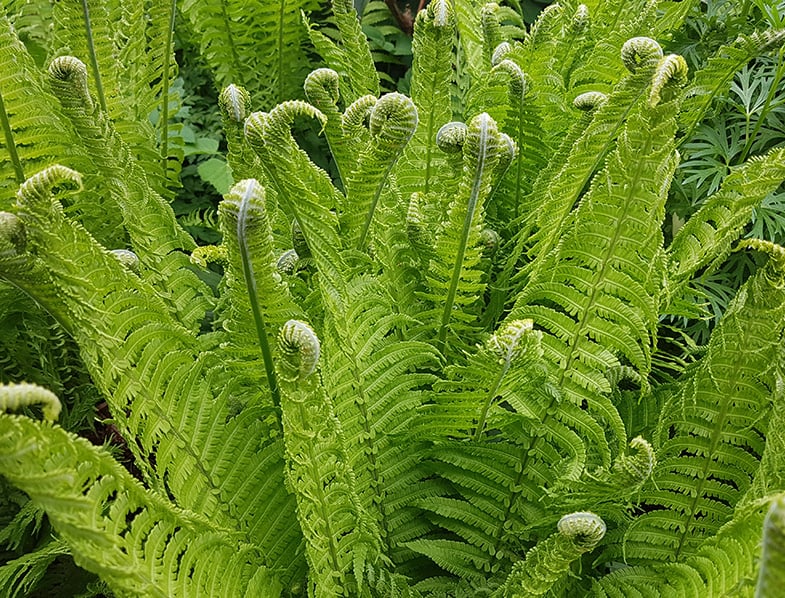
Ostrich fern
Large fern that comes up in a clump from a black knot-like rhizome.
• Sterile fronds resemble ostrich plumes. Separate fertile fronds grow in the middle of the clump.
• Best known for ONLY EDIBLE fiddleheads in early spring, which are the fronds unfolding
• Streambanks and wet areas
Sensitive fern
Wavy edges on sterile frond (leaf) make this an easy one to spot. Tiny beads on fertile frond
• Fertile frond rolls tightly and persists through the winter (wilts in cold)
• Grows in wet areas

Water horsetail
• Grows in dense colonies, in shallow water (rhizomatous)
-Rhizomatistem (Connected underground)
• “Leaves” are very small, black-tipped scales at joints of stem
• As with other Equisetaceae, historically used for scouring (high silica content)
-Strobilus on top (Reproductive structure)

Siberian Water Milfoil
• Thread-like leaves are arranged in whorls
• Found in brackish or alkaline water
-Slow/modified stems

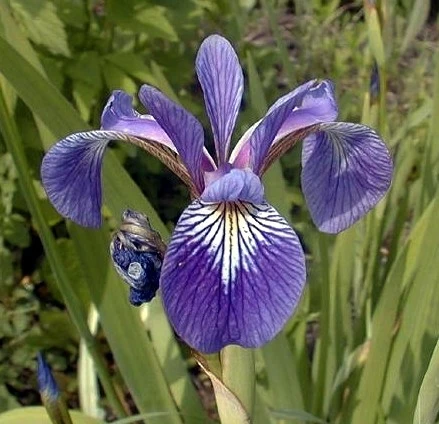
Harlequin Blue Flag
• Leaves long and narrow, in a fan-like arrangement up the stem
• Six petals on the flowers, 3 largest called ‘falls’ and droop, other 3 erect
• Poisonous
-Has bright green seed pods
-Leaves reminiscent of cattail leaves
Rush
Very common wetland plants and found in roadside ditches
• Hollow, round stem
• Inflorescence often appears to be on the side of the stem rather than the tip

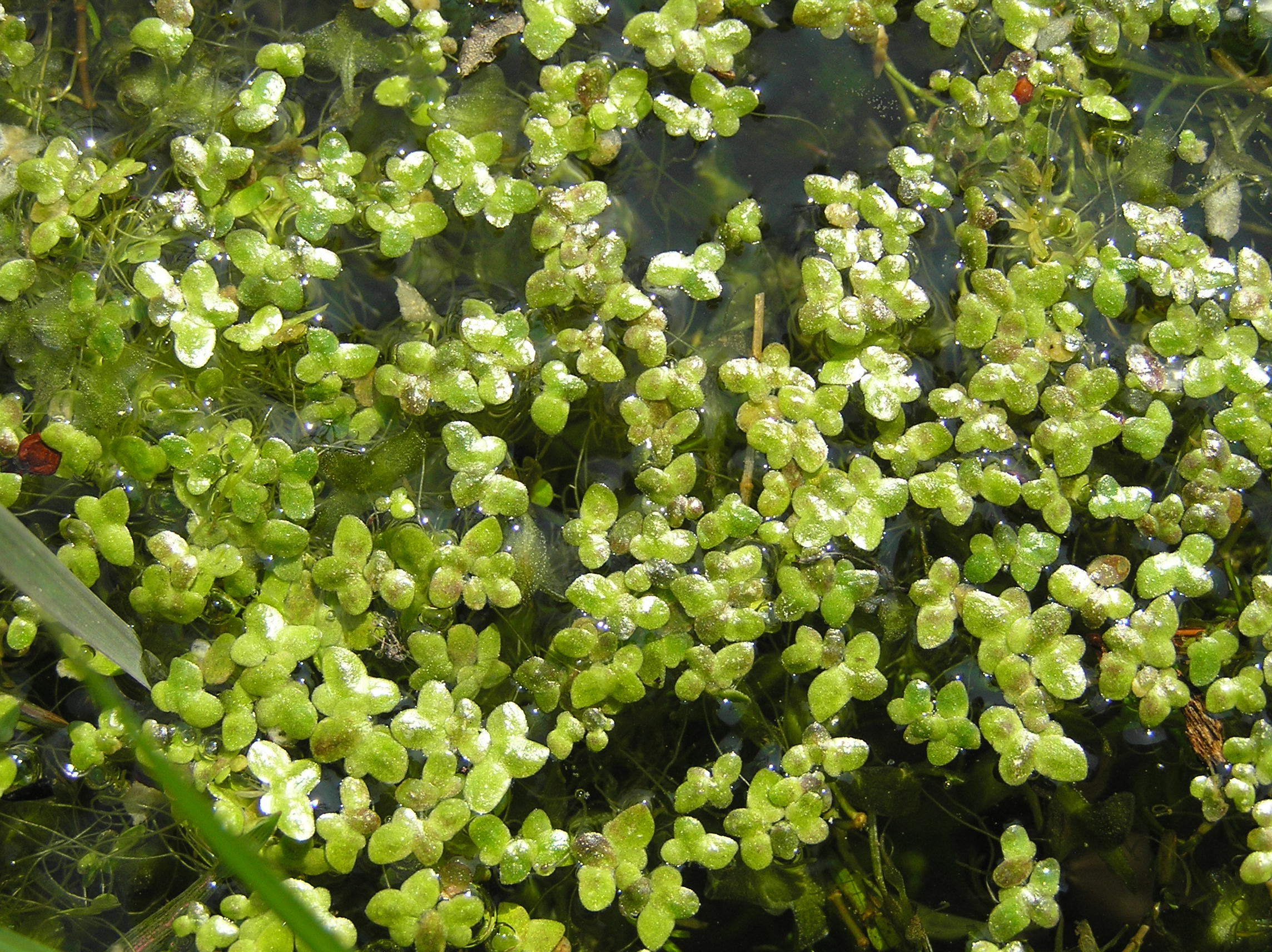
Turion duckweed
Minute aquatic plant, found floating in or on water
• Not differentiated into stems and leaves; instead, the flattened portion is known as a thallus
-Classic aquarium, light green root
Purple Loosestrife
Tall spikes of pinkish-purple flowers in summer and into early fall
• Square stem, woolly leaves
• Highly invasive plant of wetlands and wet areas

Bog Buckbean
• Grows in shallow water. Flowers early, star-shaped, white or pink petals with long hairs.
• Rhizomatous, forms mats with leaves held 10-30cm above the water
• Leaves are trifoliate, hairless, smooth

Smartweed spp.
• Pink or white flowers, usually clustered in a dense spike
• Found on borders of ponds and cattail marshes, in muddy areas
• Tearthumb is the name commonly given to a species of smartweed that has short downward-pointing bristles all along its stem

Clasping-leaved pondweed
No stalk, leaves are “clasped” around the stem alternately (No petiole)
• Flowers June-September, olive-green and small on short stalk, curving up just above the water’s surface

Creeping buttercup
• Deeply divided leaves, coarsely toothed and covered with stiff hairs
• Bright yellow flowers on erect stems, rounded petals often overlap
• All buttercups are poisonous to varying degrees if ingested

Tall Meadow-rue
One of the tallest wildflowers, at up to 1.5m high
• Compound leaves with shallow, terminal lobes, white flowers
Very common summer plant in marshes, meadows, ditches, and wet areas

Yellow Marsh Marigold
• Leaves rounded and deeply notched at the base, stem is hollow
• Common in wet woods or ditches, yellow flower stands out in early May/June

White Meadowsweet
• Simple coarsely toothed leaves
• Flower head is pyramid-shaped, white or pale pink flowers, look almost fuzzy from a distance

Willow
Shrub or small tree with narrow elliptical leaves (lots of hybridization)
• Contains salicin (related to aspirin) and has been used for centuries to treat pain and inflammation
• May have stipules (projections on either side of petiole)
-Always Wet
-yellow-green stem

Burreed
• Flat, narrow leaves, some species up to 1m tall
• Closely related to cattails
• Fruit is conspicuous – round and spiked in appearance (Many seeds, golf ball sized)

Broad-leaved Cattail
• Wide leaves, no gap between the staminate (male) and pistillate (female) spikes
• Pistillate spike looks like sausage
• Edible and medicinal uses, as well as used for stuffing bedding, diapers, mattresses, pillows, life jackets, etc.

Narrow-leaved cattail
• Leaves 3-7mm wide, staminate and pistillate spikes have a gap of at least 5mm
• Pistillate spike looks like hot dog
• See broad-leaved cattail for uses

Stinging Nettle
• Tall plants that can be found in disturbed areas and riparian zones
• Leaves are ovate, opposite with burning, stinging hairs on upper and lower surfaces
• Minute and green, wiry-looking trails of flowers produced in axils of leaves

Sweet Gale
Low shrub with red-brown stem, alternate spoon-shaped leaves with teeth at the tips
• Leaves fragrant when bruised
• Male catkins, female “flowers” are a cluster of styles (tube-like structures that lead to ovary)
• Found along edges of streams, still waters, and other damp habitats

Fragrant Water-lily
• Round leaves with purple-red undersides & sharp angle at notch/base of leaf
• Veins radiating from the petiole, white flower (sometimes pinkish)
• Rhizomatous, forms mats on water surface

White Turtlehead
• Non-branching, square, tall stems
• Grows in ditches and wet areas
• Individual flowers appear two-lipped, with hairs on bottom inside
• Medicinal uses include stimulating appetite, and for indigestion and constipation

Common Reed
-Grows in large colonies, very invasive
• Largest grass, up to 2m, with many spikelets
• Common on the upper borders of saltmarshes

Pondweed
Aquatic plants growing mainly in freshwater streams and ponds
• Alternate leaves, either partially or fully submerged, depending on species
• Much hybridization – definite identification often impossible

Liverwort (Bryophyte)
• Circular structures (gemmae) shaped like cups are characteristic of this genus
• Liverworts named because the leaf is lobular, looks like a liver; “wort” old word for plant
• Reproductive capsule is black on a translucent stalk
• No stems or leaves, only thallus (term used for body of a nonvascular plant)
