Chapter 5: Integumentary System
 Call Kai
 Learn
Learn Practice Test
 Spaced Repetition
 Match
Match Flashcards
 Knowt Play
1/56

Earn XP
Description and Tags
Key study point: - Functions of the Integumentary system - Components of Integumentary system - Components of the Epidermis - Components of the Dermis - Types of Perspiration - Types of Glands - Types of Cells - Types of Proteins - Accessory Structures - Abnormalities and Skin Conditions - Clinical/Medical Applications
Name | Mastery | Learn | Test | Matching | Spaced | Call with Kai | Chat |
|---|
No analytics yet
Send a link to your students to track their progress
57 Terms
What are the functions of the Integumentary System?
Protection
Excretion
Temperature maintenance
Nutrient storage: stores
Vitamin D3 synthesis
Sensory detection
Characteristics of the Integumentary system
largest organ
selectively permeable
Vitamin D synthesis:
ultra violent light from the sun hits the skin
passes through the melanin sunscreen
and causes chemical change in blood.
leading to the formation of Vitamin D
★ Vitamin D is necessary for the body to absorb calcium
What does the integumentary system consist of?
The cutaneous membrane
Accessory structures
Subcutaneous layers
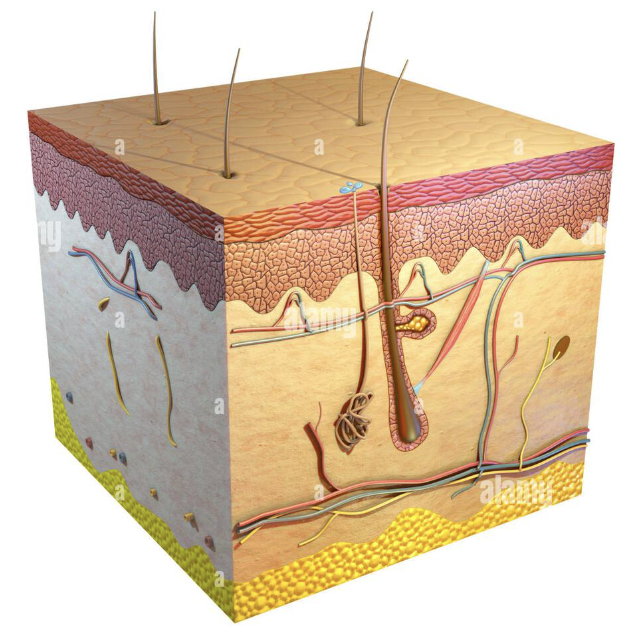
What does Cutaneous Membrane consist of?
Epidermis and Dermis
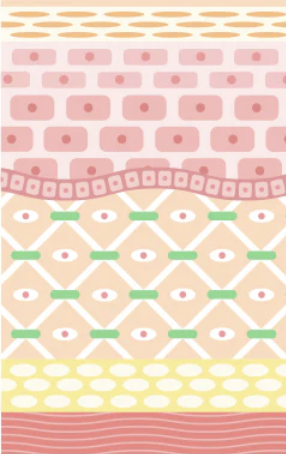
Hypodermis
Adipose tissue that absorbs shock & insulates
Subcutaneous layer below the skin
Not part of skin
Anchors skin to underlying structures (muscles)
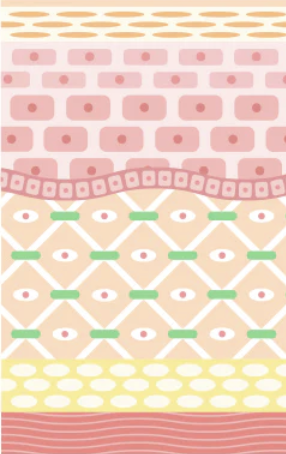
What is the Epidermis? Why is it called that?
Keratinized stratified squamous epithelium
Skin cells are usually called stratified squamous cells, but in the Epidermis they are filled with keratin (a waxy protein) and are called Keratinized epithealium.
What are the Layers of the Epidermis?
Stratum Corneum (superficial)
Stratum Lucidum (only in thick skin)
Stratum Granulosum
Stratum Spinosum
Stratum Basale/Germinativum (deepest)
Stratum Corneum (Horny layer)
20 to 30 layers (thick layer) of dead keratinocytes
superficial
Functions:
Protect deeper cells from environment and water loss (water resistant)
Protect from abrasion and penetration
Barrier against biological, chemical, and physical assaults
Stratum Lucidum (clear layer)
Few rows of dead keratinocytes
Only in thick skin
Superficial to the Granulosum
Stratum Granulosum (granular)
Consists of alive keratinocytes that are undergoing a great deal of physical changes, turning them into the tough outer cells of the epidermis
Cells above this layer die
Stratum Spinosum (prickly layer)
Thick cell layers that contain keratinocytes, melanin granules, and has the highest concentration of dendritic cells and desmosomes
Stratum Basale/Germinativum (basal layer)
Deepest epidermal layer and is the site of mitosis.
A single row of stem cells that are actively mitotic
attached to the dermis
Apoptosis
Controlled cellular suicide
Nucleus and Organelles break down, Plasma Membrane thickens
Cells change from Stratum Basale to Stratum Corneum
Cells of the Epidermis
Melanocytes: epithelial cells that synthesize the pigment melanin
Keratinocytes: produce the fibrous protective protein called keratin
Dendritic cells: macrophages that help activate the immune system
Tactile/Merkel cells: associated with sensory nerve endings
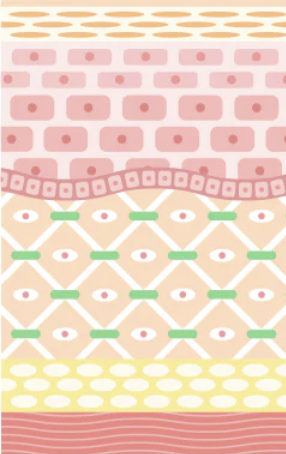
Dermis
strong, flexible connective tissue and is well supplied with blood vessels, nerves, and lymphatic vessels
Layers of the Dermis
The Papillary Layer
The Reticular Layer
The Papillary Layer
Superficial layer that contains blood vessels and nerves
forms dermal papillae that give rise to fingerprints
very thin
Dermal papillae
Superficial projections
contain capillary loops, touch receptors, & free nerve endings
The Reticular Layer
Contains bundles of collagen and elastic fibers responsible for the strength of the skin
very thick
forms cleavage and flexure lines
Elastin in Elastin fibers
a protein that permits stretching and recoiling of the skin
Collagen fibers
cause cleavage lines that are important to surgeons
Incisions parallel to cleavage lines gap less and heal more
readily
What is skin color determined by?
melanin, carotenes, and hemoglobin
Melanin
A pigment synthesized by Melanocytes
Carotene
Yellow to orange pigment that can be converted to vitamin A
gathers in stratum corneum
Cyanosis
Oxygen starved skin
Blue skin color
Low oxygenation of hemoglobin in the skin
Erythema
redness
Fever, hypertension, inflammation, allergy
Pallor
blanching (pale skin)
Anemia, low blood pressure
Jaundice
yellow skin coloration
Bruises
clotted blood beneath skin
What is insensible perspiration?
water loss due to evaporation of fluid that has penetrated the skin
What is sensible perspiration?
water excreted by sweat glands
An albino lacks the ability to produce what?
melanin
Appendages/Accessories of the Skin
Hairs and hair follicles
Nails
Sweat glands
Sebaceous (oil) glands
Hair
Composed of the shaft and the root
has 3 layers of keratinized cells:
medulla: inner core
cortex: middle layers
cuticle: outer layer
Shaft
Visible part of hair that sticks out of the skin
Root
Part of hair embedded in the skin
Hair follicle
where hairs originate
composed of the root and shaft
Hair cuticle
layer of hard keratin that coats the hair
a dead protective layer
Hair bulb
Hair follicle receptor with sensory nerve endings (touch receptors)
The hair matrix:
Different hair colors are caused by what?
Melanocytes
Nails
Made of hard keratin
have free edge, a nail plate attached to the skin, and root embedded in the skin
Where does nail production occur?
The nail root
The nail cuticle
overlies the root
The nail bed and the nail matrix
The nail matrix is located in the nail bed and is responsible for nail growth
Eccrine/Merocrine sweat glands
Produce true sweat
abundant on palms of hand, forehead, and soles of feet
Secretion of these glands are sympathetic nervous system
Used to prevent overheating
Apocrine sweat glands
Produce a fat and protein-rich true sweat
Become active at puberty
Ceremonious glands
Modified apocrine glands found lining the ear canal
secrete earwax aka cerumen
Mammary glands
Modified sweat glands that secrete milk
Sebaceous (Oil) Glands
Secrete sebum and are all over the body, except soles and palms
function as Holocene glands: they secrete oil into hair follicle or to a pore
Keratin
A waxy, protective protein of hair, nails, and skin
Dermatitis
Skin inflammation that involves the papillary layer
Scar tissue is the result of..
Large numbers on Collagen fibers and very few blood vessels in an injured area
Skin can regenerate because of what?
Stem cells in both the epithelial and connective-tissue after injury
Stretch marks occur when…
the skin is so stretched that it exceeds its elastic limits
Dendritic cells
help activate the immune system
Keratinocytes
produce the fibrous protective protein called keratin
Tactile/Merkel cells
associated with sensory nerve endings