OB/PEDS - Exam 3
 Call Kai
 Learn
 Practice Test
 Spaced Repetition
 Match
 Flashcards
 Knowt Play
1/99

There's no tags or description
Looks like no tags are added yet.
100 Terms
What are other names for postpartum?
Postpartum: 6 weeks after delivery
Puerperium
Postpartal period
4th trimester
Postpartum Family Wellness
Family centered care
Information
Time for interaction with baby
Supportive environment
Wait for assessment times depending on situation
Postpartum - Principles of Nursing Care
Revitalization of energy (mental and physical)
Normal Involution (uterus shrinking)
Preventing infection (reproductive and urinary systems)
Promoting healing of tissue
Normal lactation or suppression (breastfeeding and education of suppressing milk)
Postpartum - Physiological Changes
*Know their baseline
Vital signs:
Temperature
Greater than or = to 100.4 = fever = infection
Increased in first 24 hours
Blood pressure
Decreased and HR increased with blood loss
HTN won’t resolve fast
Pulse
Bradycardia
Tachycardia
Assessment of the Postpartum Client
Focus on reproductive and urinary within head-to-toe
BUBBLEEE
Breast
Uterus
Bowel
Bladder
Lochia
Episiotomy
Extremities
Emotions
Postpartum Assessment - Breast
BF or formula?
BF - in-depth assessment
Formula - don’t palpate breast (ask questions rather), tight fitting bra
Inspect
Note size, color, shape
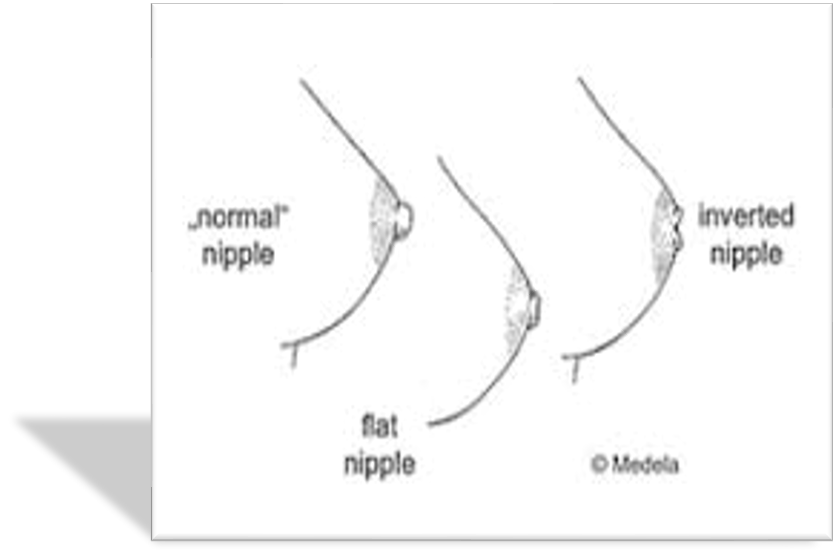
Nipples (type)
3 types: everted (normal), flat (difficult for latch), inverted (difficult for latch) - see picture
Engorgement
Complications
Bruising, redness, cracks, bleeding
Issues with latch (need whole nipple for latch)
Palpate → soft (colostrum) or firm (producing milk)
When can you begin to breastfeed?
Right away (within the first hour), otherwise baby goes into a recovery period (18-24 hours)
Postpartum Assessment - Uterus
Fundus (top of uterus)
Involution - cramping of uterus due to shrinking and clotting vessels leftover from placenta
Myometrial contractions
Autolysis
Firm vs. boggy
Firm uterus is tight, contracted, and well-toned, whereas a boggy uterus is soft, spongy, mushy, or relaxed
Fingerbreadths
Postpartum Assessment - Fundus
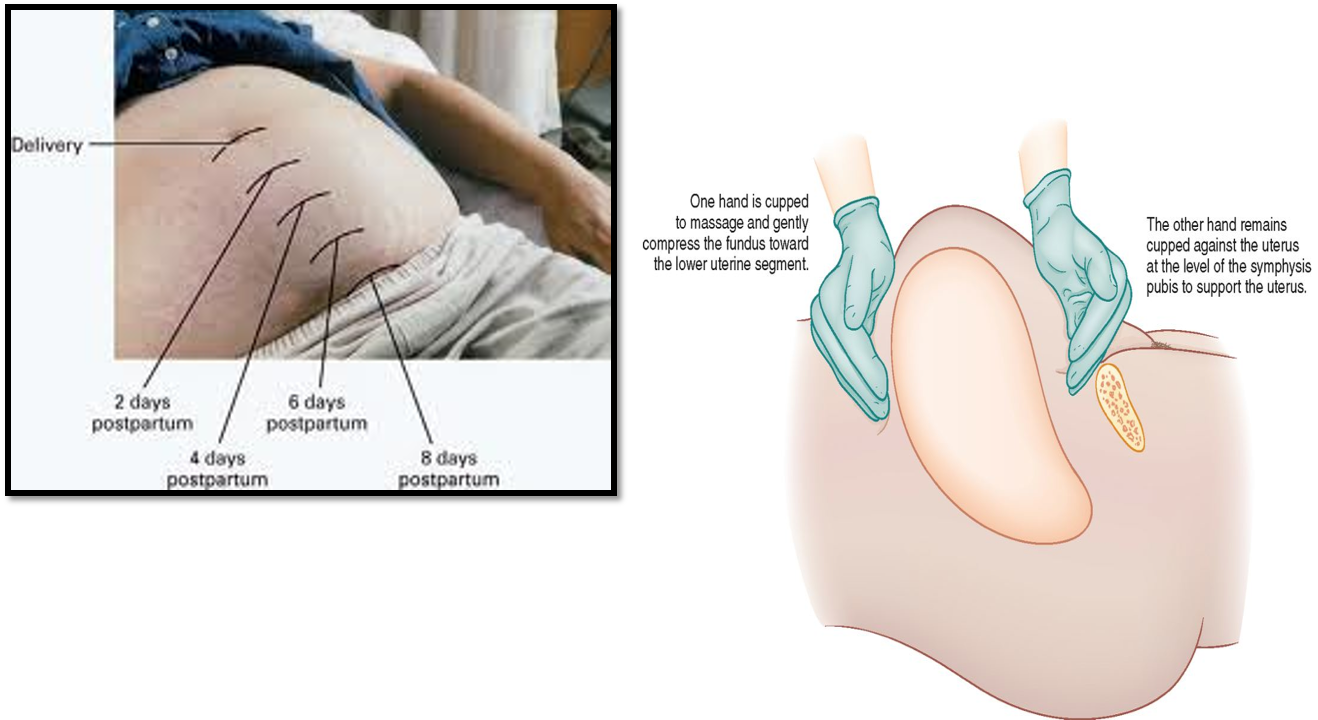
Uterus is midline of the abdomen at the umbilicus after delivery
Up to the right = full bladder
Concern if fundus is above the umbilicus and not firm
Fundus will shrink 1 fingerbreadth/day post delivery
Note location
Note firm (contracting) or boggy (mushy sponge; not contracting - circular motions with fingers and fundus starts contractions)
ALWAYS support with bottom hand to avoid inverting the uterus
C/S → lower the hand above the incision line (if transverse; if vertical go to the sides)
Postpartum Assessment - Abdomen
Bowel Sounds first!
C-section
Low transverse vs. vertical
Dressing stays on for 24 hours then we assess:
REEDA
Redness
Edema
Ecchymosis
Drainage
Approximation

Postpartum Assessment - Bladder
Diuresis - lots of output (due to fluids, epidural)
Void within 6-8 hours after delivery or after catheter removal (usually 3 voids)
Frequent small voids may indicate retention and overflow
Due to fear, risk for infection
Exhaust all methods to allow them to pee
Postpartum Assessment - Bowels
Bowel elimination usually occurs 2-3 days after delivery
Use of stool softeners
Fluids
C/S → want bowl sounds and passing gas (movement helps)
Postpartum Assessment - Lochia
Discharge after delivery
*Red for 3-4 days

Postpartum Assessment - Lochia Measurement
Scant, light, moderate, and heavy
When did she change pad last? (every 2-3 hours is expected)
Note TACO
Type
Amount (look at pad and bed)
Clots (large is abnormal)
Odor (foul = infection)

Postpartum - Vaginal Changes
Poor muscle tone
Edema → cold packs (decreases edema and numbs) for the first 24 hours, warm packs after 24 hours
Bruising
Lacerations
Episiotomy - a surgical cut made through the perineum (the tissue and muscle between the vaginal opening and the anus) during the second stage of vaginal childbirth to widen the birth opening

Postpartum Assessment - Episiotomy
*Turn to side to assess, can visualize hemorrhoids
REEDA
Redness
Ecchymosis
Edema
Drainage
Approximation

Postpartum Assessment - Extremities
Ask: do you have pain in your arms and legs?
Edema
+1-+2 (resolves on own)
Common in lower extremities (can be due to potocyin → retains fluid)
Assess for clots
Pain/tenderness, redness, swelling, warmth
Homan’s sign - a clinical test where a patient feels pain or discomfort in the calf or behind the knee when the foot is forcibly and abruptly pulled upward (dorsiflexed) while the knee is flexed
Postpartum Assessment - Emotions
*Assess the whole time
Emotional status
Bonding and attachment
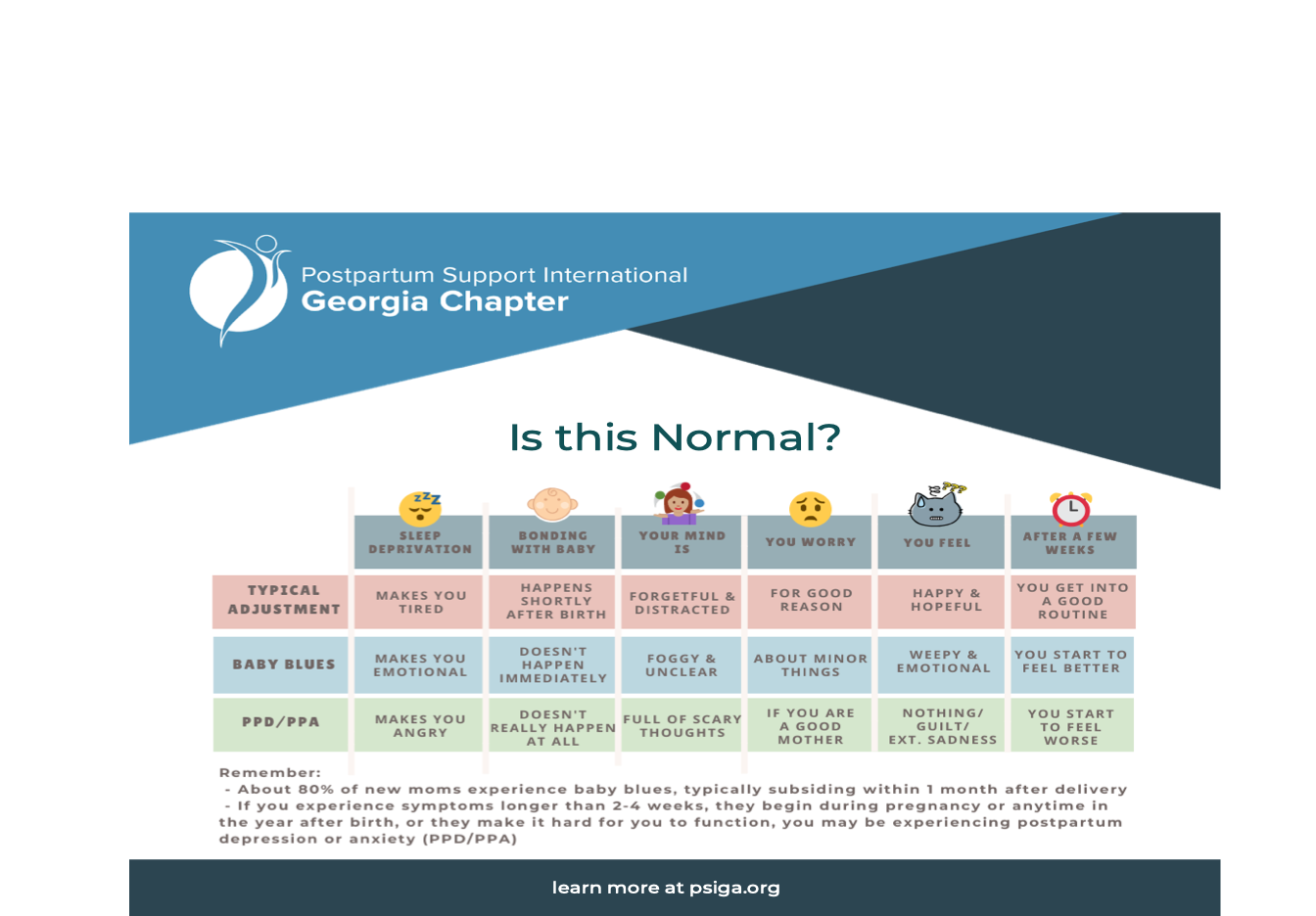
Postpartum Affective Disorders - Postpartum Blues vs Postpartum Depression vs Psychosis
Transient period of depression that occurs in most women during first week or two after birth
Edinburg Postnatal Depression Scale - 10-item self-report questionnaire used to screen for perinatal and postpartum depression
Postpartum - Nursing Interventions to Promote Health
Complete postpartum assessment
Promote urinary and bowel function
Promote perineal healing and teach self care measures
Provide breast care (no soap/lotions) and teach self care measures
Teach abdominal and pelvic strengthening exercises (kegele exercises 25-30 reps several times a day)
Postpartum Hemorrhage
*Most common
Early - occur in first 24 hours
Late - occur after first 24 hours
Massive vs. slow and steady (still a hemorrhage!)
Postpartum Hemorrhage Pathophysiology
Tone
Uterine atony (cause of a full bladder?)
No contractions = bleeding
Trauma
Lacerations and hematomas
Tissue
Retained placenta fragments, clots, membranes left. inside uterus
Thrombin
Inherited and acquired blood disorders (EX> Von Willebrand disease, disseminated intravasulcar coagulation, thrombotic thrombocytopenic purpura)
Traction
Pulling on umbilical cord to extract placenta before it separates

Postpartum Hemorrhage - Clinical Risk Factors
Polyhydramnios → increased amniotic fluid
Multifetal gestation → twins, etc…
Macrosomia
Rapid labor
Prolonged labor
Incomplete placenta at birth
Atonic uterus
Previous uterine surgery
Malposition of the fetus
Forceful pulling when placenta isn’t separated
Hereditary inheritance
History of PPH
Postpartum Hemorrhage - Nursing Interventions
Uterine massage (firms uterus)
Frequent voiding
Assess H&H (iron tablet)
Meds
Oxytocin (Pitocin) → 1st line
Cytotec
Methergine
Hemabate
Assess urinary output
Encourage rest
Encourage foods high in iron
Safety
Rise slowly to minimize orthostatic hypotension
Seated while holding the newborn
*Not in order
Puerperal Infection
An infection of the reproductive tract within the first 10 days after birth or abortion (+ elective)
Puerperal Infection - Predisposing Factors
Traumatic delivery
Prolonged/difficult labor
Dehydration
Excessive vaginal exams
PROM (premature rupture of membranes)
Anemia
Retained Placental Fragments
Hemorrhage
Puerperal Infection - Prevention of Infection
Good perineal care
Hygiene practices
Thorough hand washing
Adequate fluid intake
Diet high in protein and Vitamin C
Mastitis
Inflammation of the breast tissue, generally caused by staphylococus organisms (red, warm, unilateral)

Prevention of Mastitis
Proper feeding techniques
Supportive bra at all times to avoid milk stasis
Good hand washing
Prompt attention to blocked milk ducts
Treatment for Mastitis
Regular, complete emptying of the breasts
Good infant positioning and latch-on
Antibiotics (full course; can BF on antibiotics)
Report flu-like symptoms
Deep Vein Thrombosis
Formation of blood clot in lower extremities
3 major causes:
Hypercoagulability of blood
Venous stasis
Injury to epithelium of the blood vessel
*SCD (compression devices) 1st 24 hours c/s moms

Deep Vein Thrombosis - Treatment
Avoiding circulatory stasis
Anticoagulants
Safety
Common Postpartum Discomforts
PP chill
After pains (tx with ibuprofen, increased cramping when BF)
Breast/nipple soreness
Urinary stasis
Constipation
Perineal discomfort
Hemorrhoid
Postpartum - Nutrition
Increased calories for BF
Fluids
Prenatal vitamin (continue to take while healing)
Activity After Delivery
Sex
Resume after episiotomy healed and lochia stopped
Lubrication may be required
Contraception
Potential limiting factors
*Resume after 6 weeks postpartum
General activity
Sleep and rest
Exercise
Increase in bleeding or pain indicated re-evaluation of activity
Postpartum - Teaching
Self-care
Infant care
Infant nutrition
Breast feeding
Postpartum - Self-Care Teaching
Breast
General activity
Diet
Exercise
Pelvic rest
Peri-care
Cesarean birth
Medications
Birth control
Doctors appointment
Postpartum - Birth Control/Family Planning
Decision by woman and partner
Consider culture, religion, and economics
Availability
Contraception
Barrier method - condom, spermicidal gel or foam
Hormonal contraception
Progestin-only for BF moms and estrogen-progestin contraceptives okay for nonlactating moms, not ideal for BF (reduce quality and quantity of milk; if must start, wait until BF is established, 6 weeks)
Plan to begin after 6 weeks
*Ovulation occurs before menstruation; therefore, BF is not a reliable method of contraception

Postpartum - When to Call the Doctor
PP blues lasting more than 2 weeks
Heavy bleeding
Large clots
Fever
Odor
Redness or pus from incision
Pain
Frequent urination
Questions or problems
Neonate vs. Infant
Neonate - birth to 28 days
Infant - under 1 year of age
Neonatal transition - occurring the first few hours of life
Newborn - Respiratory
Fluid filled > air filled
Surfactant: a surface-active phospholipid critical for alveolar stability
L/S (Lecithin and Sphingomyelin) ratio of 2:1 is more evident in 35+ GA infant
*Early = immature lungs = respiratory issues
*C/S = suction
Newborn - Reflex Breathing Triggers
Cord clamped and cut (causes chemical changes):
Low blood oxygen levels
Increased blood carbon dioxide
Low blood pH
Temperature changes
Decreased in hospital
Drying (with blanket; sensory)
*Crying = breathing
Newborn - Respiratory Rate
Normal 30-60/min
Apnea more than 20 seconds is abnormal
Periodic breathing (pause) lasting 5-15 seconds
Nose breathers
Obstruction = suction
Bulb syringe = don’t overuse (causes inflammation of mucous membranes)
Newborn - Circulatory Changes
First breath closes the following shunts:
Forman ovale
Ductus arteriosus
Ductus venosus
Murmur, not symptomatic, <24 hours = is okay
>24 hours, murmur, cyanosis (lips) = not okay
Newborn - Heart Rate
Normal 110-160
Apical Pulse 1 full minute (for RR + HR)
Murmurs
BP 50-75 mmHg systolic and 30-45 mmHg diastolic
Don’t take in a newborn
Thermogenesis
Heat production
Normal temperature - 97.7-99.5
Newborns have trouble with maintaining normal temperature due to excessive heat loss rather than impaired heat production
Heat is produced by:
Shivering
Non-shivering
Brown fat (vascular fat; see picture for location)
Baby’s don’t shiver
Keep baby warm on moms chest (skin to skin)
*Axillary temperature first (rectal temps damage tissue)
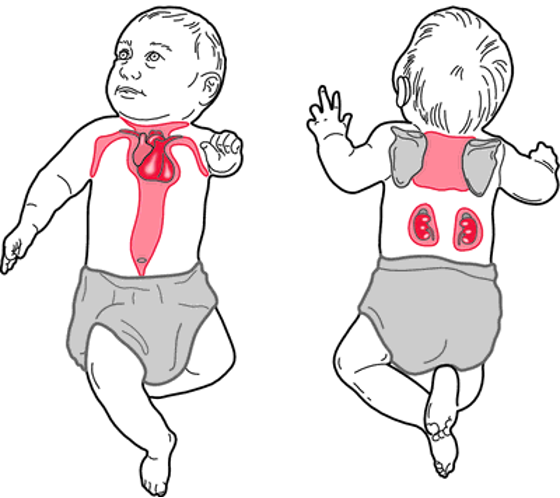
Sites of Brown Fat
Midscapular area
Around neck
Axilla
Around trachea
Esophagus
Abdominal aorta
Kidneys
Adrenal gland
*Can be broken down = cold stress occurs

Newborn - Heat Loss
Convection
Exposure to cool air currents (positioning)
Radiation
Exposure to cool objects near infant (outside wall)
Evaporation
Wet body surface
Remove fluid after delivery asap
Spit up = change clothing
Wait for first bath (8-12 hours); cover baby where not bathing during bath
Conduction
Cool surface exposure on infant (cold clothes, towels, stethoscope)
Scale - use covers
*Don’t overheat baby = increased risk of SIDS (1 extra layer than us, hats outside only)
*Assess temperature last
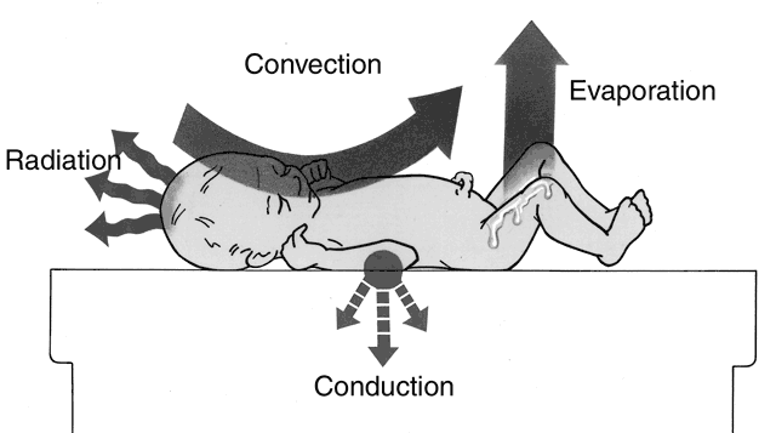
Cold Stress
Excessive heat loss resulting in compensatory mechanisms (increased respirations and non-shivering thermogenesis) to maintain core body temperature

Newborn - Digestive
Reflexes
Suck + swallow (term)
Enzymes
Stomach capacity
Bowel sounds
1st 30 mins-hour of life
Stool-meconium
*Premature = feeding issues
*Over feed = spit up (bottle)

Newborn - Stools
1st day = 1 pee and 1 poop and so on
Pee, poops, and gaining weight = adequate nutrition
Breastfed babies
6-10 small, semi liquid yellow stools per day by 3rd or 4th day after milk production is established
Seedy = broken down protein
Formula-fed babies
1-2 stools per day, more formed, yellow or yellow brown
Meconium stool
Transition from meconium, brown to green

Newborn - Urination
6-8 wet diapers per day
Should have first urination in first 24 hours of life
Bilirubin
Broken down RBCs
Conjugated (direct) - conversion of yellow pigmented fluid into a water-soluble pigment
Unconjugated (indirect) - breakdown of hemoglobin from RBCs = liver = excretable form (supposed to)
Not an excretable form and a potential toxin
Deposits in tissues = jaudice
Total = sum of both = <3 mg/dL = normal (low due to mom, increased after cord clamped)

Physiologic Jaundice
Acceleration of destruction of RBCs impaired conjugation of bilirubin; not pathological normal variation of newborn
Imbalance between the production and elimination of bilirubin
Babys liver has to “catch up” = levels increase after 1st 24 hours
60% of FT and 80% pre-term babies on 2-3 day
Pathologic Jaundice
Occurs within the first 24 hours (underlying condition → infection)
Needs hydration, warmth, monitor for adequate stools, early feedings, phototherapy
Breastfeeding Jaundice
Rise after the first 24 hours; need to increase number of feeedings
Measurement of Bilirubin
Bilimeter
Blood test → heel stick (most accurate)
*Turn yellow in face first

Bilirubin Levels in Newborns
Based on age ond levels
Low risk zone (no interventions)
High risk zone (when bilirubin deposits in tissues = deposits in brain (kernicterus); interventions like phototherapy)

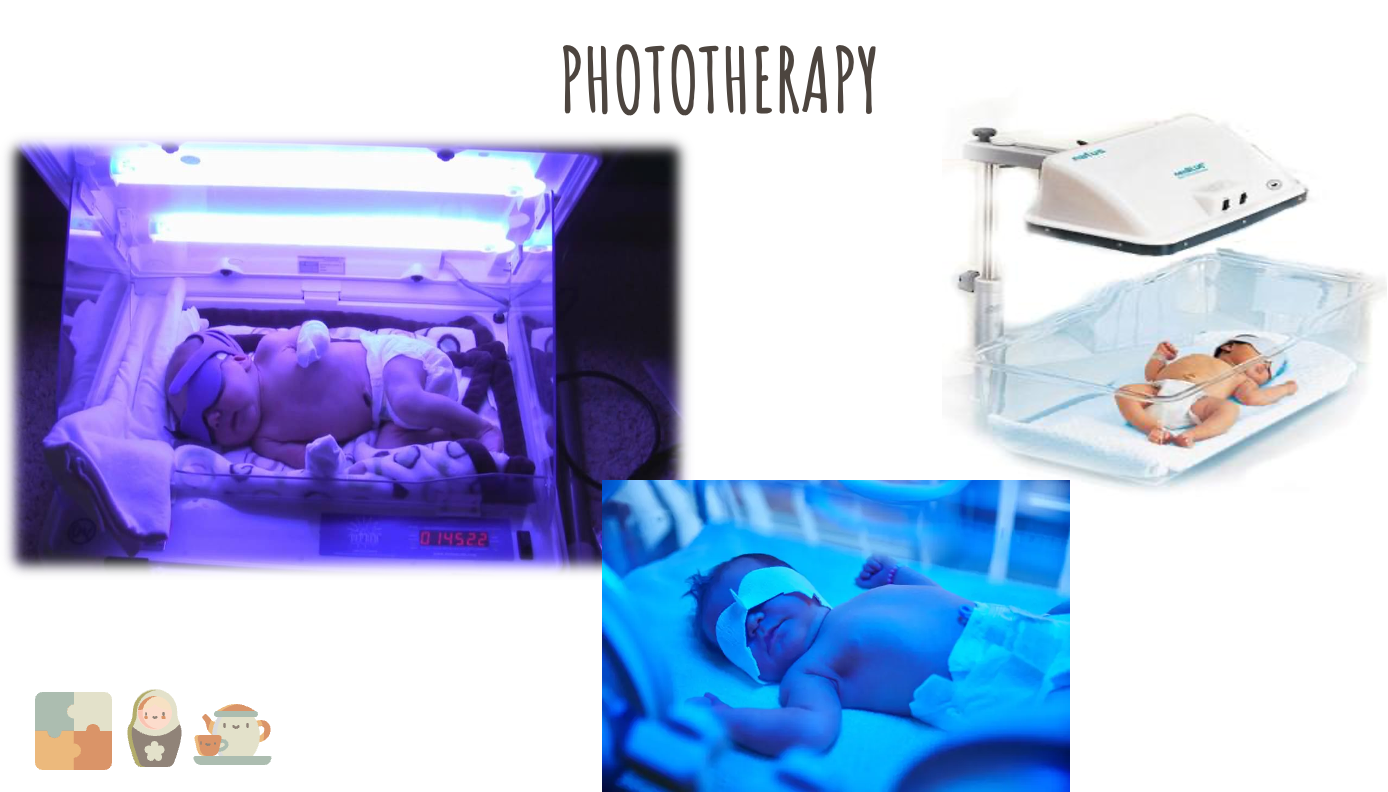
Phototherapy
Assessments:
Temperature
Skin
RR
I+O’s → make sure excreting bilirubin
Functions as liver (photobili)
Pathologic jaundice = treat underlying cause (like infection)
Eyeglasses

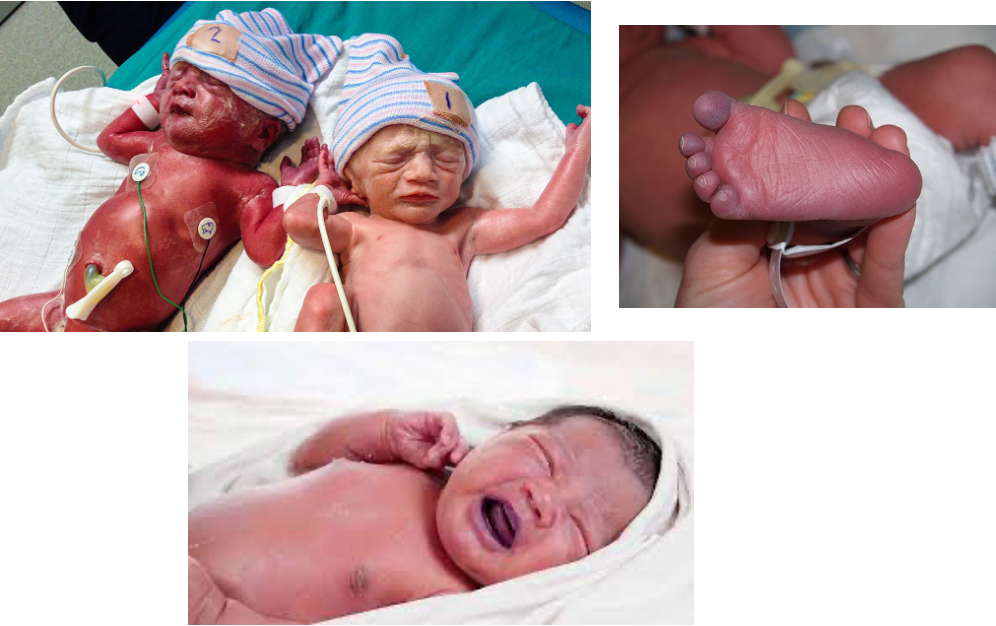
Newborn - Integumentary Color
Pallor (when 1st born)
Pink
Jaundice
Cyanosis
Acrocyanosis (blue in hands and feet; take minutes to hours to subside; normal)
Newborn - Laungo
Fine hair (decreased in term babies) → vernix caseosa keeps on

Newborn - Milia
Plugged glands (leave alone)

Newborn - Telangiectatic Nevi
“Stork bites” → fades

Newborn - Erythema Toxicum
Newborn rash
Goes away on its on; due to sensitive skin
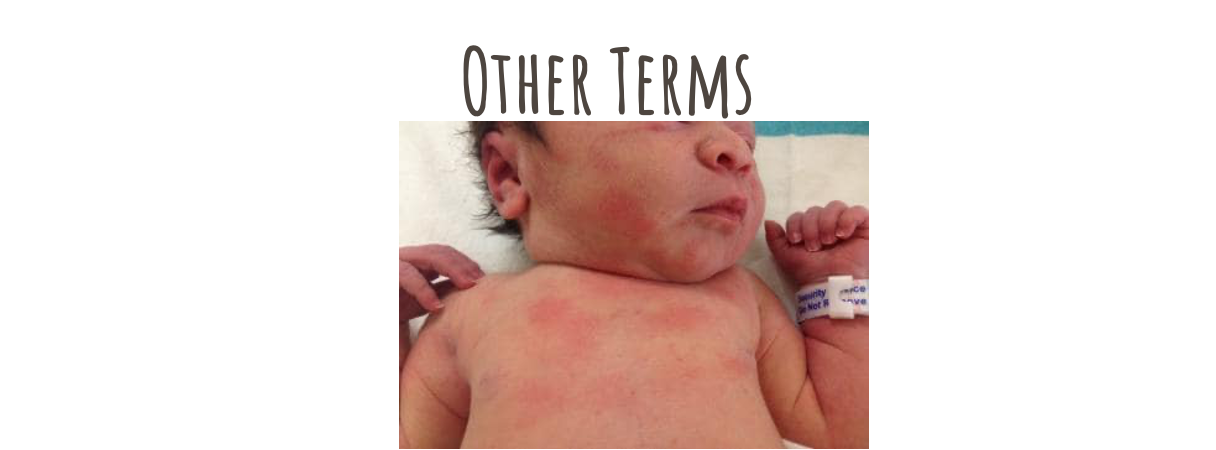
Newborn - Mongolian Spots
Darker skin spots
Common in lower back and buttocks

Newborn - Vernix Caseosa
White cheese (protects from amniotic fluid + infection)
Keep on baby till 1st bath

Common Reflexes of the Newborn
Tonic neck
Palmar grasp (hold hands)
Planter grasp
Moro (“starle”)
Root
Suck
Step
Babinski (stroke bottom of foot = toes fan outwards)
APGAR
Assessment after birth, warrants interventions
Perfect score: 10 (1st min),10 (5 mins)
< 6 is a concern

Newborn - Physical Assessment
Vital signs (temperature last)
Cry
Measurements
Head
Neck
Skin
Face
Chest
Abdomen
Extremities
Genitalia

Newborn Measurement
Not a priority due to golden hour
Weight
Average is 3405 g (7 lb 8 oz)
Range 2500-4000 g (5lb 8oz - 8lb 14 oz)
Length
Average 50 cm (20 in)
Head circumference (largest part of body)
33-35 cm (13-14 in)
Chest circumference
Average 32 cm (12.5 in)
Newborn - Head/Neck
Molding
Sutures overlap = cone head = fit in birth canal
Cephalhematoma
Blood/fluid in head
Caput Succedaneum

Newborn - Face/Eyes/Ears
Symmetry
Eye color established 3 months
Eyelids edematous during first few days of life
Nose: small and narrow
Mouth: lips pink
Saliva scant
Epstein’s Pearls (white matter)
Thrush
Ears: top of ears (pinna) should be parallel to the outer and inner canthus of the eye
Newborn - Abdomen
Should be cylindrical, protrude slightly, and move with respiration
Preterm = protudes/concaves
Auscultate bowel sounds before palpation

Newborn - Umbilical Cord
White and gelatinous
Cord bleeding is abnormal
Assess for infection
Umbilical hernia
Cord begins drying 1-2 hours after birth (shrivels and blackens by 2nd or 3rd day)
AVA
2 arteries
1 vein
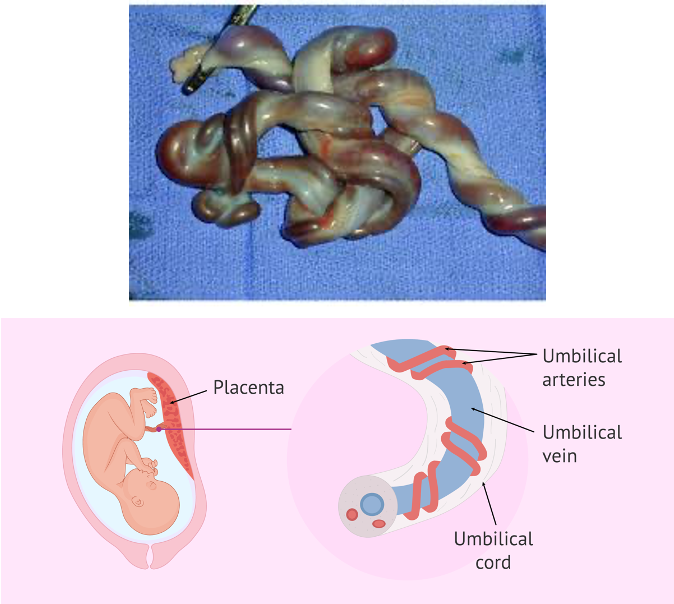
Newborn - Genitalia
Male
Hypospadias
Cryptorchidism
Hydrocele (fluid in scrotal sack, resides on own or drain)
*Swollen when first born due to increased levels of female hormones
Female
Pseudomenstruation (false period)
Smegma (think white substance, protective, don’t remove
Hydrospadias
Urethra not at tip of penis (warrants surgery)

Cryptorchidism
Testicles don’t descend into scrotum
Expected in preterm; term → infertility (surgery)

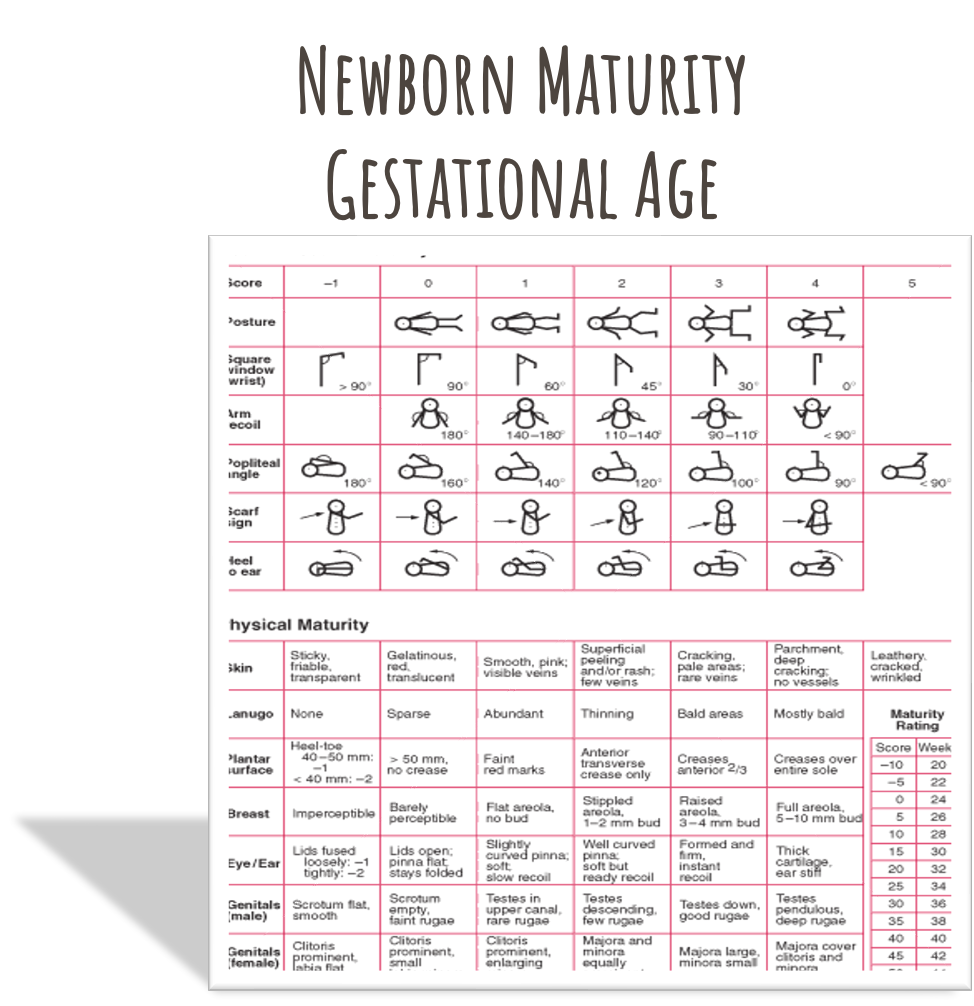
Newborn Maturity GA
Preterm
Term
Post term
Dubowitz or Ballard Scale Rating and Classification
SGA
Small of gestational age; weight less than the 10th percentile (usually <5.5 lb)

AGA
Appropriate for GA, between 10th and 90th percentile

LGA
Large for GA; more than the 90th percentile (usually >9lbs or anything greater than 4000g)
Glucose (decreases once cord is cut; >40 is normal)

Newborn - Physical Maturity
Skin - leathery, cracks, veins, visible
Plantar surfaces - creases over sole
Breast - nodule and areolar area
Ear - pinna
Male genitals - scrotum, testes, rugae (wrinkles → less in preterm)
Female genitals - clitoris, labia majora, labia minora

Newborn - Immediate Care
Maintain clear airway
Thermoregulation
Medications
Vitamin K (AquaMephyton) IM → promotes blood clotting
Erythromycin (antibiotic opthalmic ointment) → prevents infection that would cause eye issues
Hepatitis B vaccine
Initiation of first feeding (15 finger feed drops = feed)
Parent-newborn attachment

IM Injection Newborn
LEG ONLY
25 G needle
Vastus lateralis

Neonatal Distress
Retractions
Nasal flaring
Grunting
Facial grimacing
Cyanosis
Abdominal distention
Vomiting
Jitteriness (BG < 40)
Ongoing Newborn Care
Thermoregulation
Nutrition
Suctioning (bulb syringe)
Safety
General
Hospital safety
Care seat
SIDS
Circumcision (due to risk of infection + cancer)
Bonding
Care of baby
Newborn screening and immunizations
Screening - “PKU”
Helps detect disorders
Some feedings on board before hand
Sleep

Nutritional Needs of Newborn
105-108 kcal/kg/day
Formula (fat content unchanged) fed babies gain weight faster than breast fed babies
Lose weight in first 3-4 days (no fat in BM, loose 10% of birth weight)
Weight gain about 10g/kg/day or 5-7 oz./week
BM is digested more easily
Milk produced is exactly what the baby needs (whether full or preterm)
Signs of Dehydration in Newborn
Depressed fontanelles
Rapid, weak pulse
Elevated low-grade temperature
Dark, concentrated urine
Dry, hard stool
Number of changed diapers decreased
Dry skin with little turgor
Elevated specific gravity (1.020)

How does the breast make milk?
Ducts and alveoli grow during pregnancy under influence of progesterone and estrogen (also same hormones that make breast milk)
Small amounts of colostrum (1st milk; antibodies, laxative), 1-2 teaspoons), per feed (small stomachs, size of a marble, + frequent feeds)
Delivery of placenta triggers hormones prolactin and oxytocin
Prolactin-produces milk
Oytocin-milk let down reflex (ejection of milk)
Stimulation of breast (increased stimulation = more milk; pumps while in NICU)
The more often the breast is emptied, the more milk is made (supply and demand)

Interference with Milk Supply
Anything that interferes with growth of alveoli and ducts, progesterone levels, or other hormone levels, or breast stimulation
Some women don’t stimulate enough milk
Breast surgery? (yes, no if reduction/cancer (+meds))
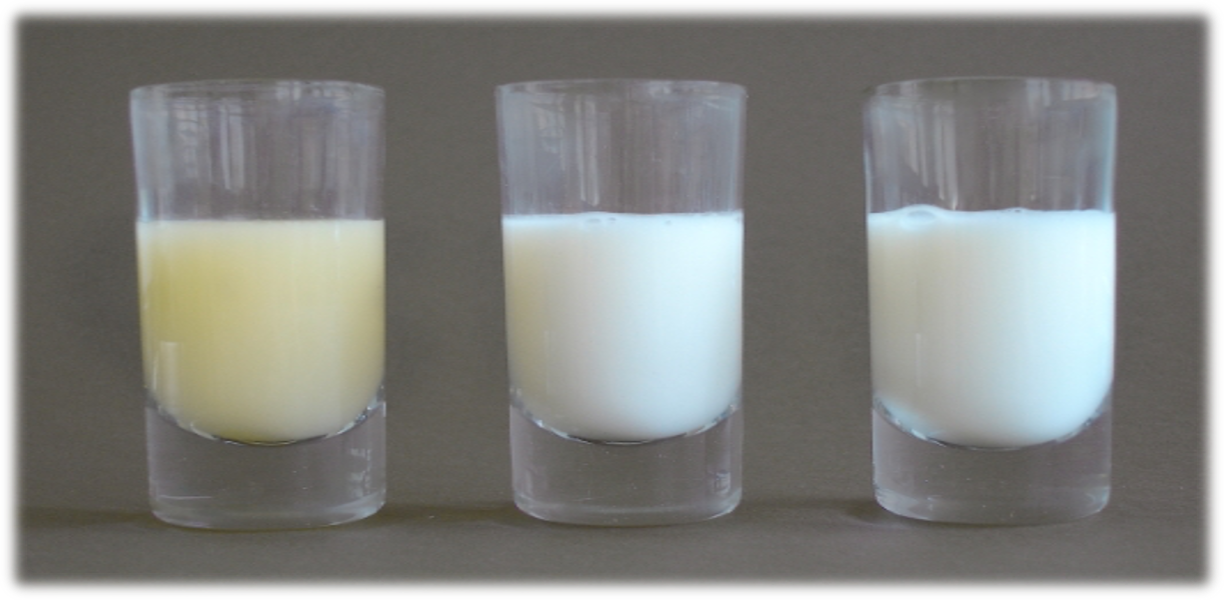
Colostrum
First milk
Yellowish creamy fluid
Thicker than milk
Contains: low fat, high protein, fat-soluble vitamins, minerals
Coats and protects baby’s digestive tract
Laxative effect
Passive immunity
Develops during pregnacy lasting several days after delivery

Transition Milk
Day 3-4 → weeks
Soft → firm breasts
Produced from end of colostrum until 2 weeks postpartum
Changes appearance and composition
Contains: more fat, sugar, vitamins, and calories

Mature Milk
Look thinner and more watery than cow’s milk
White, can be slightly blue-tinged in color
Foremilk (“appetizer”) - beginning of feeding contains more water, less fat higher lactose
Hindmilk (“entree”) - higher fat content
20 kcal/oz
Recommended for first 6-12 months of life
Don’t watch the clock when feeding
Feed q2-3 hours
Always offer other breast to baby, then start with that breast next feeding
Golden Hour
1st hour of baby life → wide awake → recovery sleep (18-24 hours)
Baby alert and ready to fedd within 1-2 hours after birth
Optimum place for baby to recover from birth is skin to skin on mothers chest (BG stable, warm, RR stable)
Baby will instinctively root and seek out breast
Recovery sleep
Advantages of Breast Milk
Inhibits bacteria growth
Easy digestion of lactose, lipids, fatty acids, amino acids
Varies in content and need of newborn
Helps with maternal-newborn attachment
Convenient, safe, and free of cost
Disadvantages to Breastfeeding
Medications passed from mother to newborn (antidepressants)
HIV or AIDS of mother (No BF; common to BF in third world countries d/t lack of water, clean bottles)
Excludes the father (mothers can pump)
Working mothers
Position + Latch
1) moms in a comfortable position (bring baby TO breast, not breast to baby)
Hamburger latch (wide mouth then latch; milk not just at nipple, need as much breast tissue as possible)
Prevents sore nipples and cracked nipples
Allow efficient milk transfer

Signs of an Effective Latch
Mouth open wide
Lips flared outward
Large amount of areola in mouth
Ear and jaw moving
Actively sucking and swallowing
Mom feels strong tug on breast, not painful
Signs of an Ineffective Latch
Mouth not open wide
Small amount of breast in mouth
Clicking/smacking sounds
Painful
Common cause of sore nipples