Upper Appendicular Skeleton Midterm 2
 Call Kai
 Learn
Learn Practice Test
 Spaced Repetition
 Match
Match Flashcards
 Knowt Play
1/81

There's no tags or description
Looks like no tags are added yet.
Name | Mastery | Learn | Test | Matching | Spaced | Call with Kai | Chat |
|---|
No analytics yet
Send a link to your students to track their progress
82 Terms
Appendicular skeleton consists of
126 bones
Upper limb
arm, forearm, and hand bones
Lower limb
thigh, leg, and foot bones
Pectoral Girdle
bones attach upper limb to axial skeleton
Arm
between shoulder and elbow, consists of humerus
Forearm
between elbow and wrist, comprises radius and ulna
Hand
contains carpal & metacarpal bones and phalanges
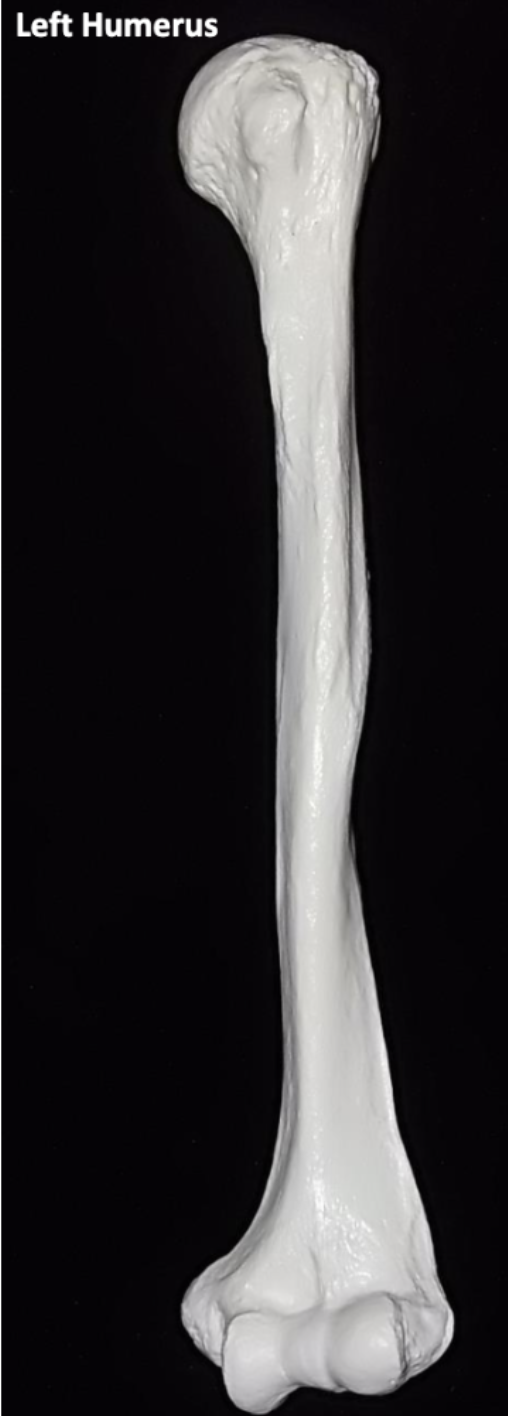
Humerus Bone (Arm)
Longest and largest bone of upper limb

Head (humerus proximal end)
smooth rounded surface that faces medially to articulate with glenoid fossa of scapula, forms glenohumeral joint (shoulder joint)
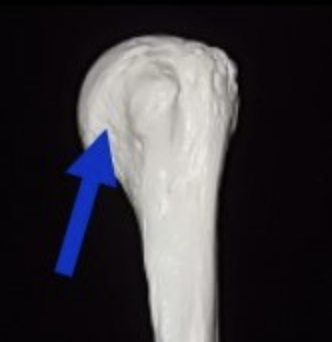
Anatomical neck (humerus proximal end)
located below the head of humerus
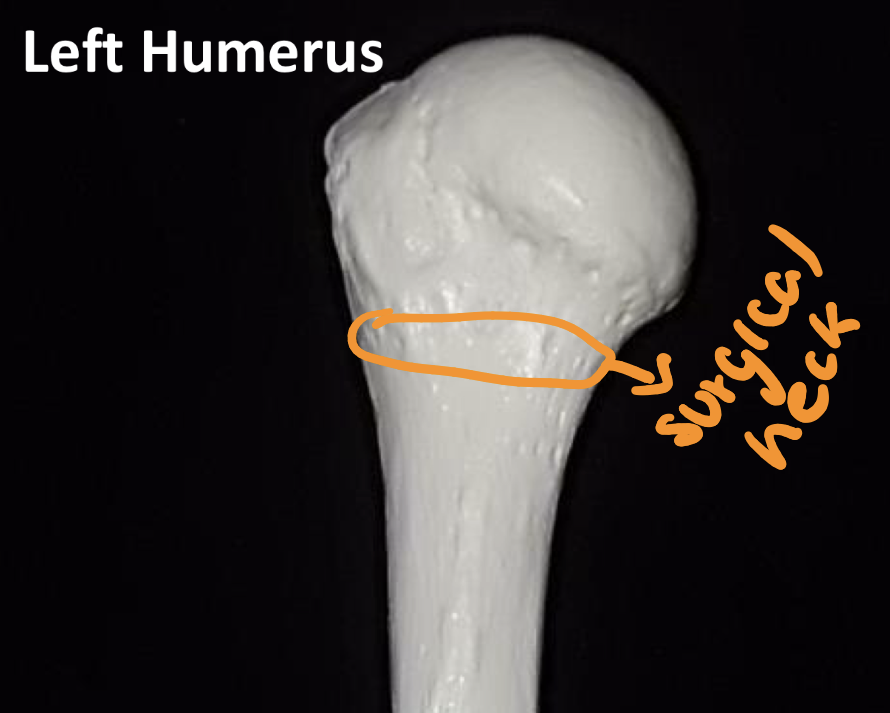
Surgical neck (humerus proximal end)
common site for fractures

Greater and lesser tubercles (humerus proximal end)
muscle attachment site, greater is lateral, lesser is medial

Intertubercular/bicipital groove (humerus proximal end)
passage for tendon of biceps brachii muscle, found between tubercles
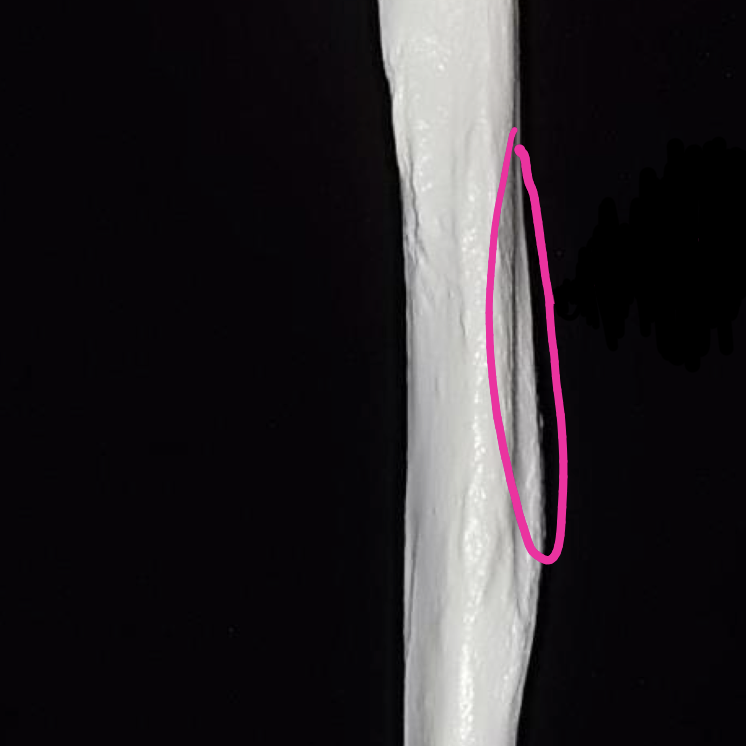
Deltoid tuberosity (humerus shaft)
located laterally on humerus, attachment site for deltoid muscle
*Tuberosity is a rough spot in a bone. We typically receive vaccines on deltoid muscle

Trochlea (humerus distal end)
condyle (smooth, rounded surface) articulates with ulna (trochlear notch of ulna), it’s medial to the capitulum
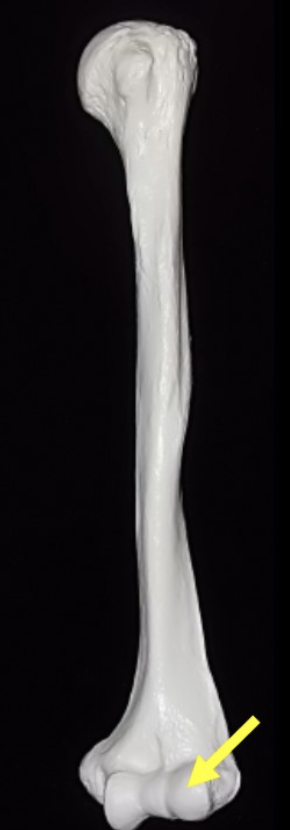
Capitulum (humerus distal end)
condyle that articulates with radius (head of radius), it’s lateral to trochlea

Medial epicondyle (humerus distal end)
site for muscle attachment on medial aspect of humerus, bump on medial side and is more pronounced than lateral epicondyle

Lateral epicondyle (humerus distal end)
site for muscle attachment on lateral aspect of humerus

Olecranon fossa (humerus distal end)
posterior big indentation, receives olecranon process of ulna during forearm extension
*Olecranon = elbow
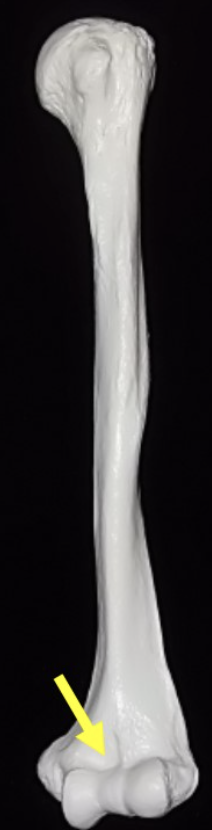
Coronoid fossa (humerus distal end)
indentation found above trochlea, received coronoid process of ulna during forearm flexion

Radial fossa (humerus distal end)
indentation above capitulum, receives head of radius during forearm flexion

Radius bone (forearm)
most lateral bone in forearm
*thumb is the “antenna” for the “radio”

Head (radius proximal end)
smooth rounded surface articulates with capitulum of humerus
*For radio to work you need to “capture” the signal

Radial tuberosity (radius shaft)
attachment site for biceps brachii muscle

Styloid process (radius distal end)
prominent bony projection, bump that we feel on our wrist

Ulnar notch (radius distal end)
small indentation that articulates with head of ulna, receives head of ulna

Ulna Bone (forearm)
most medial bone
*Proximal end: OTC (Over The Counter medication)

Olecranon process/olecranon (ulna proximal end)
bony protuberance that moves into olecranon fossa of humerus in extension and moves out of fossa in flexion
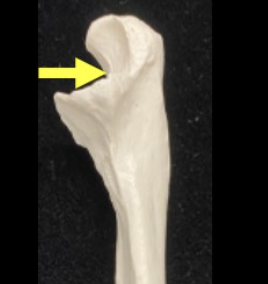
Trochlear notch (ulna proximal end)
indentation in ulna bone (the inside of the U of ulna) articulates with trochlea of humerus bone
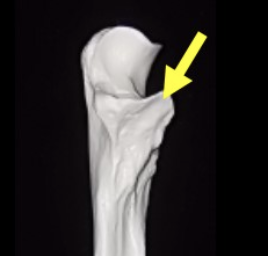
Coronoid process (ulna proximal end)
bony protuberance that moves coronoid fossa of humerus during flexion and moves out of fossa during extension

Radial notch (ulna proximal end)
small indentation that articulates with head of radius, receives head of ulna

Head (ulna distal end)
smooth rounded surface that articulates with ulnar notch of radius

Styloid process (ulna distal end)
prominent bony projection, bump that we feel on our wrist
Radius and ulna bones articulation
allow pronation and supination of forearm
Interosseous membrane
between shafts of radius and ulna bones
Proximal and Distal Radio-Ulnar joints
Proximal: head of radius articulates with radial notch of ulna
Distal: head of ulna articulates with ulnar notch of radius
Humerus, radius, and ulna bone articulation
form elbow joint, allow flexion and extension of forearm
During flexion and extension (at all times!)
head of radius articulates with capitulum of humerus, trochlear notch articulates with trochlea of humerus
Flexion
head of radius goes into radial fossa of humerus, coronoid process of ulna goes in coronoid fossa of humerus, olecranon process exits olecranon fossa of humerus
Extension
head of radius exits radial fossa of humerus, coronoid process of ulna exits coronoid fossa of humerus, as olecranon process into olecranon fossa of humerus
Hand bones
Carpals: 8 short bones in wrist, organized into 2 rows
Metacarpals: 5 long bones in palm
Phalanges: 14 long bones in fingers and thumb

Carpals
bones that form our wrist
Proximal row: Some (scaphoid) Lovers (lunate) Try (triquetrum) Positions (pisiform)
Distal row: That (trapezium) They (trapezoid) Can’t (capitate) Handle (hamate)
*Trapezium is beneath thumb, triquetrum comes before pisiform, capitate is beneath middle finger

Metacarpals
bones that form palm of hand, numbered 1-5 starting at thumb (pollex)
I: under thumb
II: under index
III: under middle finger
IV: under ring finger
V: under pinky
Phalanges
bones that form our fingers (& toes), each hand has 14 phalanges, 2 in thumb and 3 in each of other fingers
*Phalanges: plural, phalanx: singular
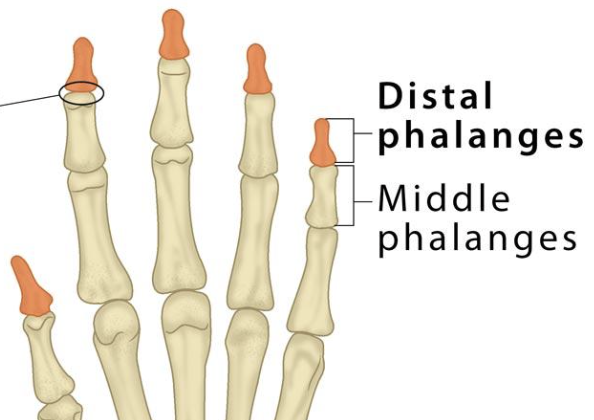
Distal phalanx
most distant from torso, it’s at tip of fingers

Proximal phalanx
most proximal to torso, phalanx closest to metacarpal

Middle phalanx
in the middle, between distal and proximal phalanges
*pollex does NOT have middle phalanx
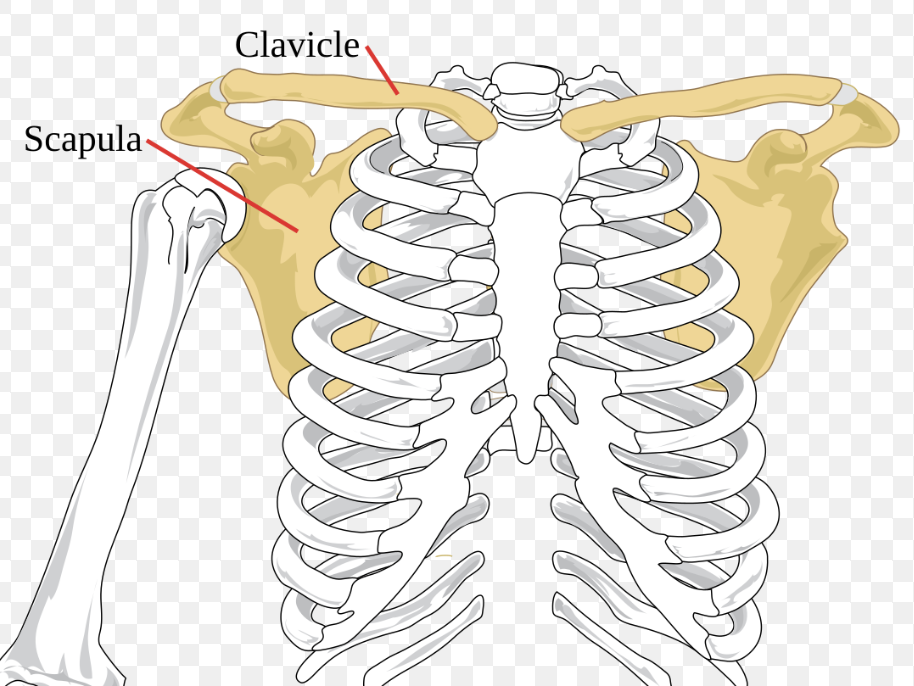
Pectoral Girdle
Attaches upper limbs to axial skeleton, consists of scapula and clavicle (move as a unit). Clavicle: only bone attaching to axial skeleton, sternoclavicular joint is the only bony articulation between pectoral girdle and axial skeleton. The single point of attachment allows extensive mobility in shoulder joint (great mobility for upper limbs)

Scapula (shoulder blade)
flat bone with triangular shape, articulates with humerus via glenoid fossa and clavicle via acromion process

Spine (of scapula)
ridge in posterior aspect of scapula
*you can feel the scapular spine by passing your fingers on top of shoulder blade

Acromion process
bony protuberance in lateral aspect of scapula, articulates with acromial end of clavicle
*imagine spine “extending” laterally and sticking out, that is the acromion process (or acromion)

Supraspinous fossa
fossa superior to spine

Infraspinous fossa
fossa inferior to spine

Subscapular fossa
fossa anterior aspect of scapula

Suprascapular notch
notch at superior border of scapula

Coracoid process
attachment point for coracobrachialis muscle

Glenoid fossa
shallow, smooth indentation facing laterally and articulates with head of humerus, forms glenohumeral joint (shoulder joint)

Clavicle (collarbone)
long bone, S-shaped, with medial and lateral ends and a shaft

Sternal end
medial end of clavicle, articulates with sternum forming the sternoclavicular joint

Acromial end
lateral end of clavicle, articulates with acromion of scapula forming acromioclavicular joint
Articulations of Pectoral Girdle
Gelnohumeral joint (shoulder joint) is between head of humerus and glenoid fossa of scapula. Acromioclavicular joint is between acromial end of clavicle and acromion process of scapula. Sternoclavicular joint is between sternal end of clavicle and sternum (the ONLY bony articulation between pectoral girdle and axial skeleton)
Which of the following bones is found in the arm?
Humerus
The pectoral girdle attaches the upper limb to the:
axial skeleton
Which condyle of the humerus articulates with the ulna?
Trochlea (medial condyle)
The olecranon fossa receives the olecranon process of the:
Ulna (prevents hyperextension)
Which bone is the most lateral in the forearm?
Radius
The __________ of the ulna articulates with the head of the radius
radial notch
The _________ of the radius is located just below the head and serves as a muscle attachment site
radial tuberosity
The ________ of the ulna is a C-shaped structure that articulates with the trochlea of the humerus
trochlear notch
The _______ process is found at the distal ends of both the ulna and the radius and can be felt at the wrist
styloid
At the distal radioulnar joint, the head of the ulna articulates with the:
ulnar notch of the radius
During elbow flexion, which structure of the ulna fits into the coronoid fossa of the humerus?
coronoid process
What part of the radius articulates with the capitulum of the humerus?
head
Which carpal bone articulates with the radius?
Scaphoid
How many phalanges are found in one human hand?
14
Which of the following is part of the distal row of carpal bones?
Trapezium
The thumb (pollex) lacks which phalanx?
middle
Which bone(s) does not make up the pectoral girdle?
Humerus
*Pectoral girdle: only clavicle and scapula
What structure of the scapula articulates with the clavicle
acromion
Which of the following is NOT a function of the pectoral girdle?
Attach the lower limb to axial skeleton
The _______ end of the clavicle articulates with the sternum
sternal
The _______ is a bony ridge on the posterior scapula that separates the supraspinous and infraspinous fossae
spine