#15 the digestive tract (visceral smooth muscle, mesentery, peritoneum, histology)
 Call Kai
 Learn
 Practice Test
 Spaced Repetition
 Match
 Flashcards
 Knowt Play
1/59

There's no tags or description
Looks like no tags are added yet.
60 Terms
what is the digestive tract formed from
gastrointestinal tract
accessory organs
gastrointestinal tract is
a tube that stretches from mouth to anus
accessory organs example
Teeth, tongue, salivary glands, pancreas, liver, gall bladder
the digestive tract functions in
ingestion
digestion
absorption
defecation
digestion
Large molecules are broken down into smaller molecules
mechanical digestion
chewing, churning of food, segmentation of food, peristalsis
chemical digestion
enzymes and acid secretion function to break down food
absorption
End products are taken up into the blood and the lymph
defecation
Elimination of wastes and undigested materials
where is visceral smooth muscle found
in digestive tract
visceral smooth muscle is composed of
thin and thick myofilaments
why doesn’t smooth muscle have the same striations as cardiac and skeletal muscle
No myofibrils or sarcomeres
cell structure of visceral smooth muscle
spindle shaped, one centrally located nucleus
how is smooth muscle arranged
sheets
syncytium
smooth muscle sheet that operates as a unit
how are the cells of visceral smooth muscle connected
gap junctions for simultaneous muscle contractions
peritoneum
largest serous membrane
visceral peritoneum
serosa of organ wall
parietal peritoneum
lines wall of abdominal cavity
the peritoneal cavity is filled with
serous fluid
what is the mesentery
double layer of peritoneum
fused sheet of two serous membranes
where does the mesentery extend to
digestive organs from the wall of the abdominal cavity
the mesentery provides a route for
blood vessels, lymphatics and nerves to reach the viscera (digestive organs)
mesentery functions
Hold organs in place
Store lipids
what does the mesentery bind to the wall of the abdominal cavity
small and large intestine
location of mesentery
dorsal attaching to the posterior abdominal wall
some attach to the anterior abdominal wall

what is the omentum
folds of the visceral peritoneum
greater omentum
mesentery that covers the transverse colon and the small intestine

what does the greater omentum provide
protection
stored energy
insulation
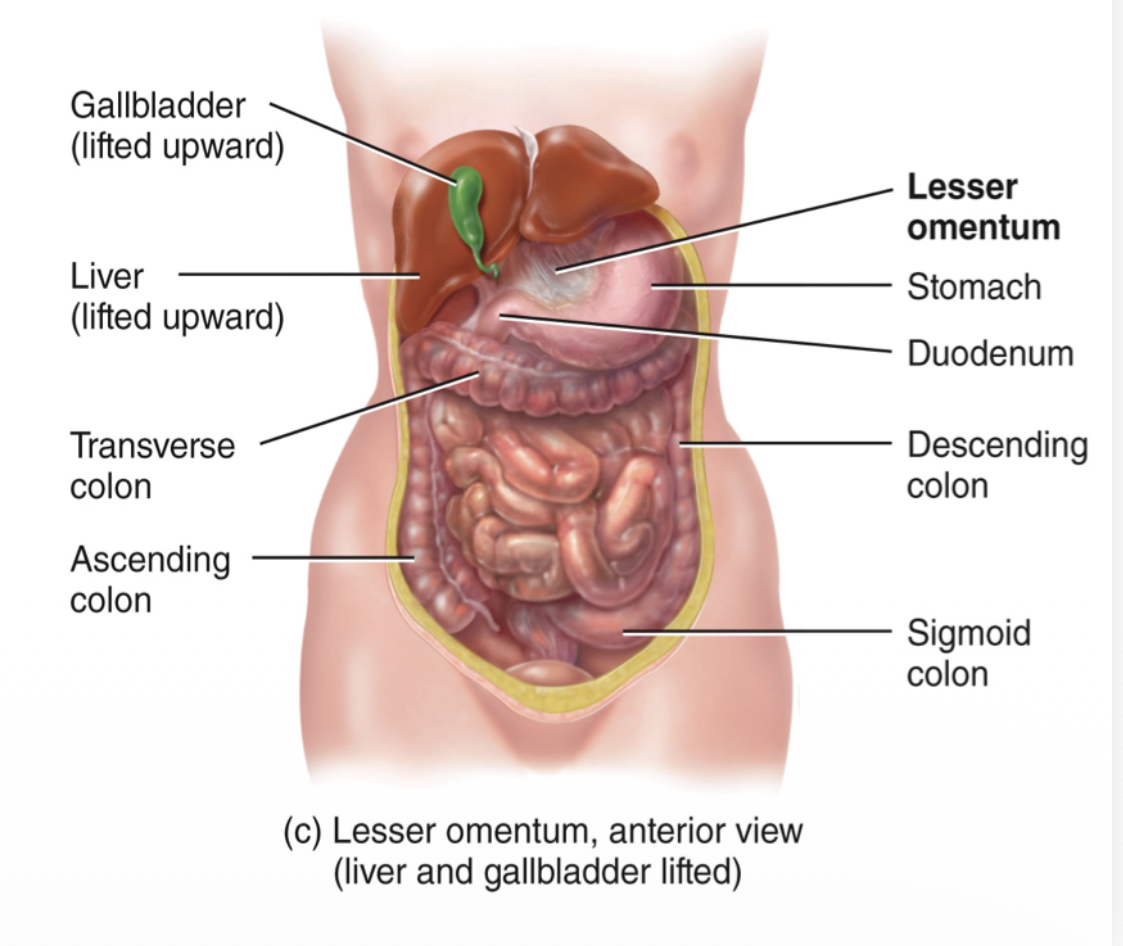
lesser omentum
mesentery that connects the stomach & duodenum to the liver
peritonitis
inflammation of the peritoneum
retroperitoneal organs are located
posterior to the peritoneum
parietal peritoneum on retroperitoneal organs is located on
the anterior surface of the organ
adventitia
connective tissue located on the posterior surface of the organ
examples of retroperitoneal organs
pancreas
duodenum
ascending and descending colon
kidneys
4 main layers of the digestive tract from outside in
serosa / adventitia
muscularis externa
submucosa
mucosa
the digestive tract’s layers extend from
esophagus to the anal canal
serosa
visceral peritoneum
outermost protective layer of organs in the peritoneal cavity
what organs contain both a serosa and an adventitia
retroperitoneal organs
pancreas
duodenum of small intestine
what is the serosa called in the esophagus
adventitia
what tissue is in serosa
areolar connective tissue and simple squamous epithelium
example of organs with serosa
stomach
lower small intestine
most of large intestine
liver
gall bladder
muscularis externa
layer of visceral smooth muscle
what do contractions of the muscularis externa do
motility
moves and mixes food along digestive tract
what layers compose muscularis externa
inner circular layer
outer longitudinal layer
where is the myenteric nerve plexus located
between the muscularis externa's inner layer and outer layer
submucosa tissue
areolar connective tissue
what does the submucosa bind
mucosa to muscularis externa
what does the submucosa contain
lymph and blood vessels
where is the submucosal nerve plexus
submucosa
mucosa
innermost layer of the digestive tract that faces the lumen
what is the mucosa composed of
mucous membrane
three layers of the mucosa
muscularis mucosa
laminate propia
mucosal epithelium
muscularis mucosa is located nearest to
submucosa
lamina propria of mucosa is composed of which tissue
areolar connective tissue
where is lamina propria located in the mucosal layer
in the centre
what does laminate propria contain
blood, lymphatic vessels and lymphatic tissues
what cells are in mucosal epithelium
goblet cells
what structures have stratified squamous epithelium
mouth
pharynx
esophagus
anal canal
what structures have simple columnar epithelium
stomach
small intestine
large intestine