ARTH 205 Painting Identification Review
 Call Kai
 Learn
 Practice Test
 Spaced Repetition
 Match
 Flashcards
 Knowt Play
1/50

There's no tags or description
Looks like no tags are added yet.
51 Terms

Raphael, The School of Athens, 1511
fresco in the Vatican featuring Plato, Aristotle, and Pythagoras debating the creation and existence
includes references to classical sculpture that may have inspired Raphael
idealized, Grand Style, designo, precise

Titian, Venus of Urbino, 1538
oil paint —> colore, layers, licked surface, colors communicate form
woman is the passive subject, meant to be viewed by the male viewer
academic nude, idealized Venus, part of art canon
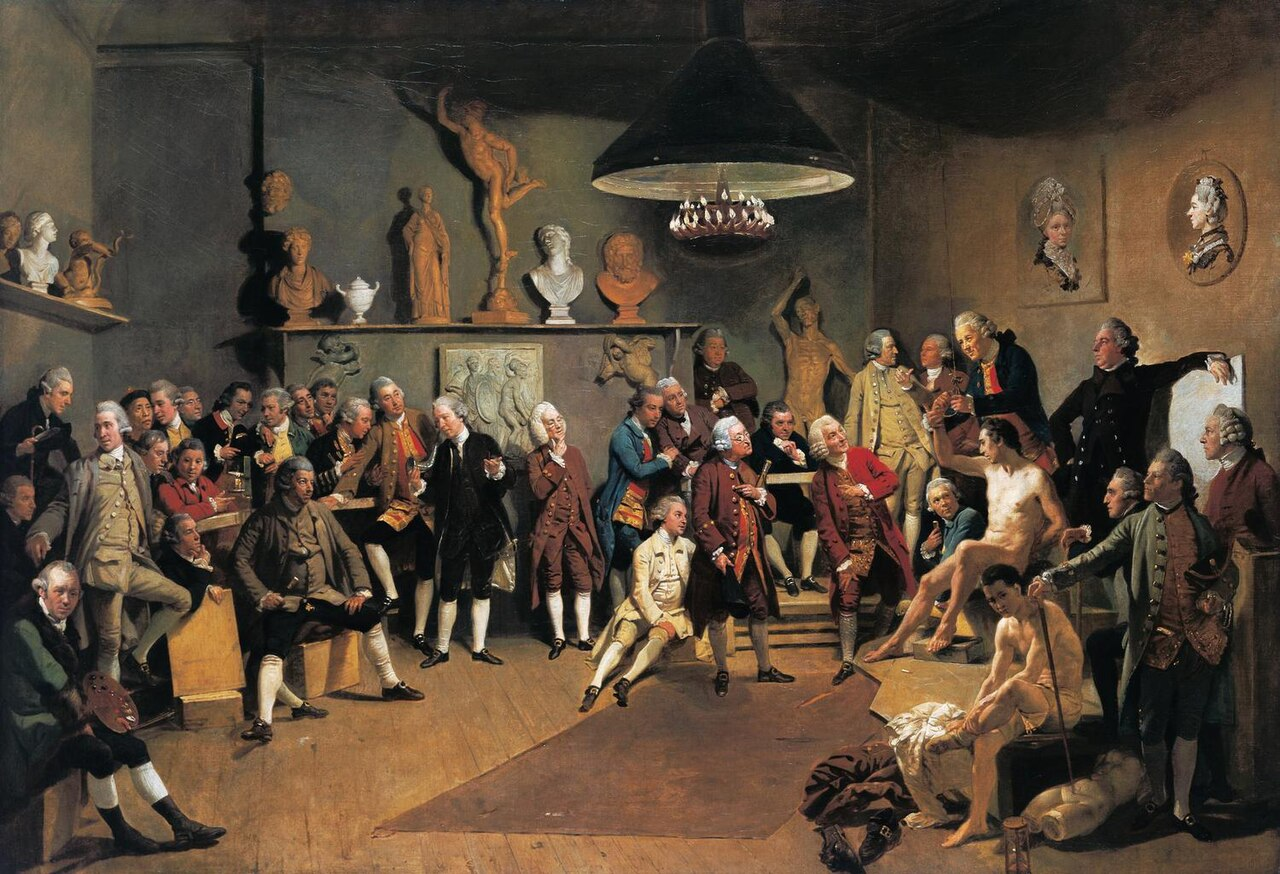
Johann Zoffany, The Portraits of the Academicians of the Royal Academy, 1771-72
only features men as the artist, honors the female founders by featuring them on the walls
not appropriate to have nude men around women
women are the subjects of art, not the creators
men must be honorable and not sleep around
age-restrictions around life drawing classes
steps of art school
young artists started in the Antique School, where they would study sculpture
plaster casts, create direct copies of important works
students would have to submit a drawing of classical sculpture —> if it received a medal then they could graduate to the Life School
Life School = study of anatomy and movement
employed physicians and anatomists as teachers, studied preserved specimens and cadavers
measuring the ability to create an accurate rendering of the human form
Royal Academy, where they can study under masters
painted in Neoclassical style

Elisabeth Vigee LeBrun, Mary Antoinette and Her Children, 1787
Louis XVI puts money into the art world to try and please the increasingly angry populous —> more women in the art world (ex. Elisabeth Vigee Le Brun)
she paints with Rococo style but with a bit more muted tones and subtlety, transitions between Rococo and Neo-Classicism
painted Antoinette to restore her reputation as a mother and caregiver
looking to the future (the kids, and the loss of one)
references Virgin Mary, links Marie Antoinette to religious piety
Rococo characteristics (soft colors and form, open mouth, luxury)
Rococo and Neoclassical

Jacques-Louis David, Oath of the Horatii, 1784
depicts moment before brothers go to a duel
addresses the balance between duty/honor and emotion/choice
women in the painting will either lose a husband or a brother
commissioned by Louis XVI, talking about an oath to Rome over family
Davide also includes themes of brotherhood and unity that can be read as revolutionary fervor
a huge painting —> large commission!
Neoclassical

Jacques-Louis David, The Death of Marat, 1793
depicts Marat’s assassination in his bathtub —> martyred while fulfilling his duties
in the middle of writing papers to soldiers’ widows
similar to images of Jesus’s death and sacrifice, as well as Roman sculpture
painting contemporary events while using past references and ideals (doesn’t feature much blood, dies “well”)
smaller scale, more intimate
Neoclassical

Jacques-Louis David, Cupid and Psyche, 1817
flips the story around: Psyche will wake up and see Cupid at sunrise —> go on a bunch of trials because of Cupid, not her own curiosity
Cupid is smirking
Davide references colors of French flag, mustard sheet similar to Napoleon
Might be Davide saying he is a victim of circumstance, reacting to the major player of the time
Reign of Terror + French Gov instability messes up the art market
Davide becomes friends with Napoleon —> back to large-scale propagandistic art
escapes to Brussels when that fails too
Neoclassical
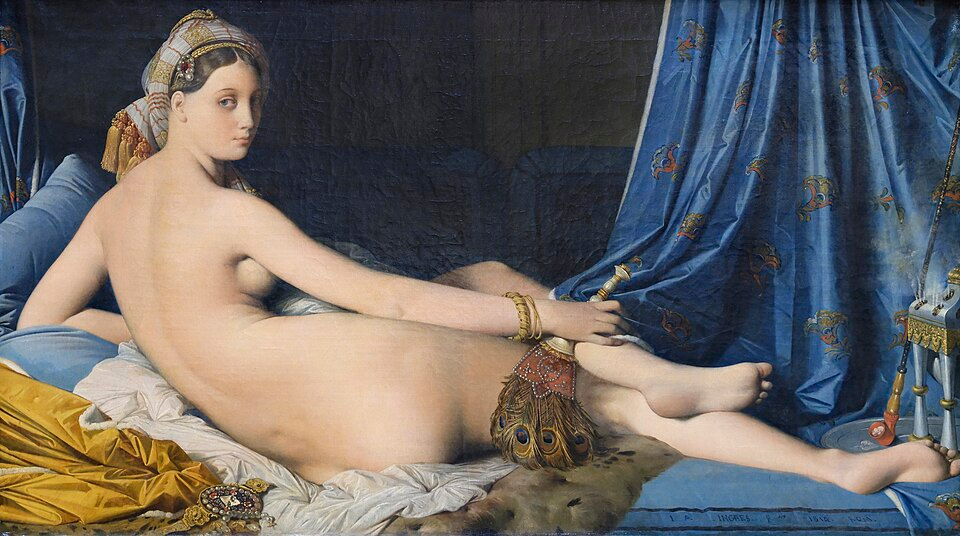
Jean-Auguste Dominique Ingres, La Grande Odalisque, 1814
Neoclassical, Orientalist
idealized body, her back is too long, looking back at the viewer seductively
fetishizes her, made for a European straight male audience
meshes random icons of various Middle Eastern cultures
Théodore Géricault, The Raft of the Medusa, 1818-1819
famous shipwreck (contemporary subject), heavily criticized by the public because the Bourbon Monarchy failed to appoint a good captain
triangular shape —> eye goes to the man on top of the pile
not savages eating each other, trying to work together
Gericult interviewed survivors, sketched the dying men, read reports of the ship
still idealized bodies, muscular and angular, figures are at life-sized
emotionally intense —> the sublime, mixture of excitement and horror
start at neutral —> experience either pleasure or pain (additive)
take away pleasure —> feel delight, at a safe enough distance to not be at risk
heroic subjects are being heroes because they’re surviving against the impossible
human beings struggling to survive, not being martyred or swearing an oath
Romanticism
Eugène Delacroix, The Death of Sardanapalus, 1827
depicts the death of an over-indulgent king; when his populous rebelled, he ordered the death of everything he owned (his wives, animals, etc) and set it to be burned
he is waiting for the death to be over, waiting for his time
similar composition to Wrath of Medusa, a triangle formed by bodies
reflects views on Arabian culture
turbans, elephants, multiple wives, gold, fabric
sensuousness, indulgence, evil-ness
Romanticism, Orientalism

Eugène Delacroix, Liberty Leading the People, 1830
second French revolution of 1830, painting was finished the same year
Marianne symbolizes liberty for the Jacobins (activated allegory)
idealized, reflects the ordinary women that fought at the barricades
revolutionary cap, symbolizes freedom from slavery
cross-class unity (factory worker, bourgeois, schoolboy)
moving into the space of the viewer
sublime (dead soldiers), not heroic —> willing to fight makes them heroic
Romanticism

Eugène Delacroix, Women of Algiers in their Apartment, 1834
maintains European racial hierarchies
3 light-skin women being lazy while a dark-skin woman is active —> believed to be serving them, not explicit though
we’re supposed to see them as beautiful because they are white
uses white models out of convenience
Muslim women were often veiling, not allowed to be in a space without a male family member/husband
no cultural background to model, depicting figures in art was a taboo in Islamic culture
smoking a hookah, lounging —> implies luxury and exotic lifestyle, emphasis on lazy
a harem is fantasy and voyeurism, men can penetrate the female space, very popular to depict in European piece
Western artist is allowed to invade these spaces because they believe they hold power over these cultures
Romanticism, Orientalism
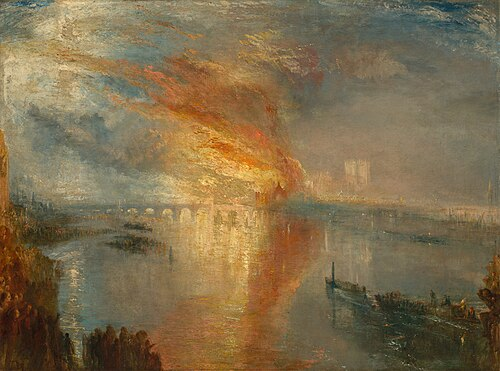
Joseph Mallard William Turner, The Burning of The Houses of Lords and Commons, 16th October, 1834, 1835
depicts a socially and politically engaged moment —> conveys meaning
Ruskin approved of this piece
Romantic

Gas Lamp, 1848
fails to pass Sir Henry' Cole’s False Principles of Design
form should follow function, look to non-Western design to learn how to create good art that reflects function
ornament is secondary to utility
art isn’t being true to the materials —> metal will get too hot
imitative —> why is a lamp trying to be a flower
no symmetry
overly ornamental, not naturalistic —> flowers aren’t gold
definitely not Arts and Crafts

Richard Redgrave, Jug, 1847
follows Cole’s False Principles of Design
art is being true to the materials —> glass, able to see what’s inside
not trying to be something it’s not —> looks like a jug
symmetrical —> everyone gets an equally beautiful view
simple, naturalistic —> grass at the bottom, flowers blooming on top
Arts and Crafts

Dante Gabriel Rossetti, The Girlhood of Mary Virgin, 1849
constrained space, everything pushed to the front, landscape is blocked
no change in tone —> space isn’t receding
bright colors, similar to illuminated manuscript
used lead white as a base instead of a dead color
flat, on a grid, straight lines, uniform lighting, pan-focal
dry appearance of fresco/watercolor
deviation from chiaroscuro
Christian iconography that is grounded in reality, there’s a purpose behind it that goes beyond its symbolism
lily = Virgin Mary, it’s actively growing, being embroidered carefully by Mary
grapevine = symbolizes the blood of Jesus
modeled by members of the Rossetti family —> not idealized, not professional
still very clearly unique to the era of photography and science, not copying medieval art
PRB

John Everett Millais, Christ in the House of His Parents, 1849-50
very accurate, studied in a woodshop, the subjects are modeled after real carpenters
depicts Jesus, his parents, and John the Baptiste
criticized = using regular people to depict the holy family, Jesus is young
cast redheads, associated with Jewish and Irish —> hated them
Jesus has a poke in his hand, dirt under his fingernails
notches in the table, textiles worn by subjects
true to the story of Jesus, he’s gross and poor
PRB

A.W.N. Pugin, Bread Plate, 1850
functions as a plate, meant to be gathered around
depicts the wheel that grind wheat, includes the wheat sprigs, cycling of the seasons
symmetrical, everyone is even, having access to the bread and the words
Christian imagery of bread
“waste not, want not”, too much is waste
encasta process, embedded design within the tile, common medieval technique
building something to last
Arts and Crafts

Gustave Courbet, The Stone Breakers, 1851
presumed to be lost during WW2
two men breaking stones to pave for a road, probably will lead to Paris
laying groundwork for the modern city
can also deconstruct the roads to build barricades
genre painting, everyday life subject but putting it on the big scale —> reveals the ugliness of society and poverty
exhibited in the 1851 salon, criticized because the subjects are ugly and boring
mad that Courbet made “ugly” art
everything is beautiful and idealized —> challenging Romanticism
puts working-class on the same level as the emperors and generals
blocks the continuation of the landscape —> isolation
used dirty and muted colors, a gritty quality, trying to reflect the ugliness of the situation
comments on the modern assembly line, the inescapable generational poverty
impossible to get out, only a little bit of sky, no depiction of the road
able to identify with the working-class, elevating while criticizing, not making fun
faces aren’t visible, able to project yourself onto them
also critiques the type of anonymous, factorial labor
Realism
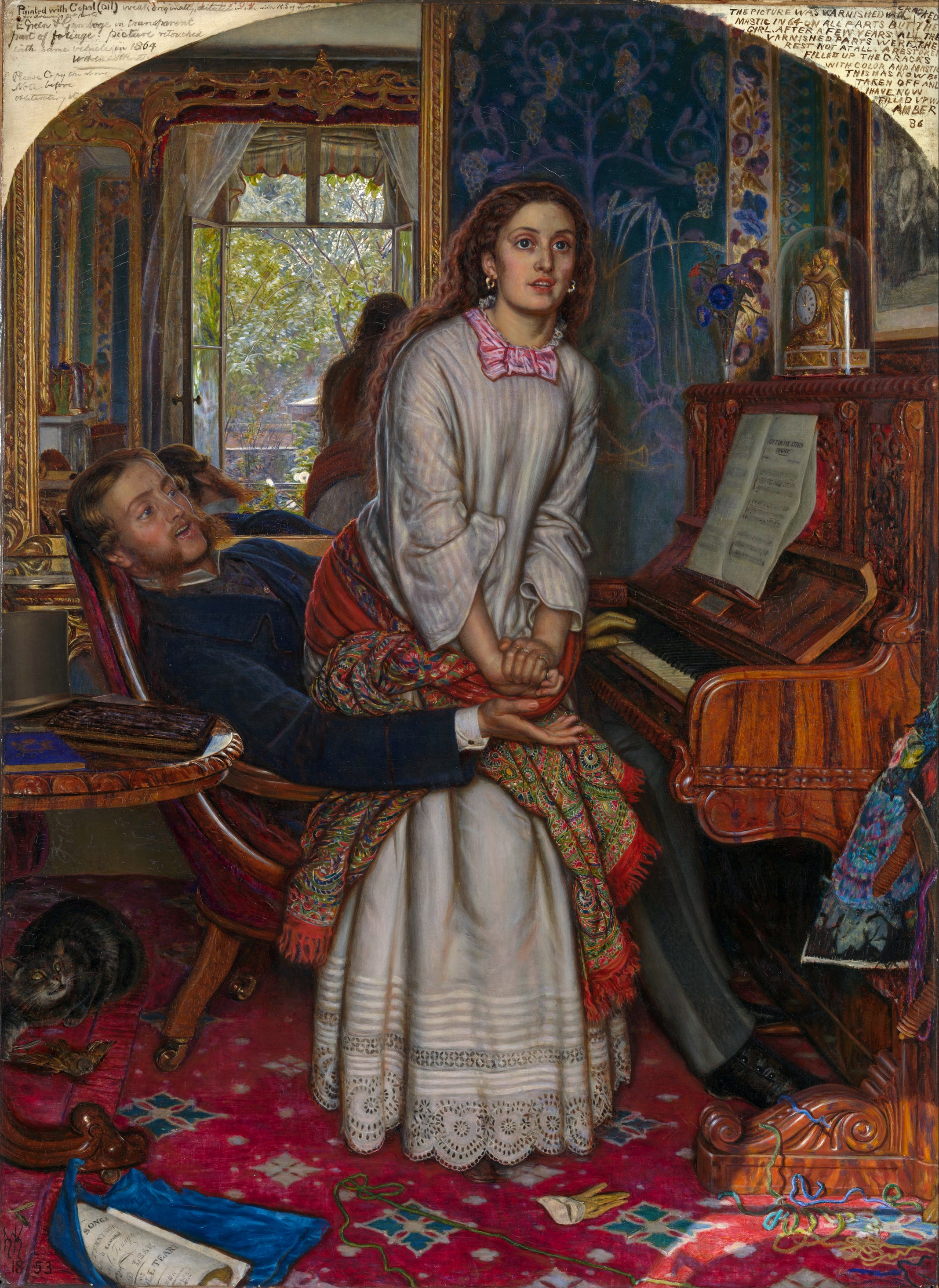
William Holman Hunt, The Awakening Conscience, 1853
depicts a mistress with a gentlemen in a “lover’s den” (men would rent out living spaces for their mistresses, furnishing it with cheap stuff)
she has a ring on every finger but her own
Hunt was the son of a textile manufacturer —> knows what good quality is
cheap, mass-produced items
the piano is veneer, can play itself; not a nice piano
sheet music that has a song about wanting to go back to childhood freedom
has a beginner, mass-produced embroidery set; already falling apart
mass-produced books on the table
wearing an English replication of an Indian cashmere shawl
a bird trying to escape the cat’s paws
implicates the man in her suffering (gendered and class restrictions that keep her in these poor conditions)
narrative includes a mirror (like Manet)
includes a bunch of surface-level and cheap representations of the natural world
the moment when she realizes she wants leave and escape out to nature (God)
Hunt is moralizing the woman and blaming the man, still doing the same thing in real life
the model is based off his own mistress
PRB

Gustave Courbet, The Painter’s Studio: A Real Allegory Summing up Seven Years of My Life as an Artist, 1855
working class little boy next to a nude woman
surrounded by the exploited and exploiters (features Charles Baudelaire)
nude woman in a contemporary setting, she was paid to take off her clothes
she is painted as allegory in the painting of the painting, but is depicted as a real person in the actual painting
challenging the audience and the academic nude
Realism

Oscar Rejlander, The Two Ways of Life, 1857
depicts the canon idea of how you can well or poorly based on Jesus
photograph, depicted in a major exhibition
scandal because it depicted female nudity in photography
a real woman, thought to be pornographic
trying to elevate photography by using fine art tactics
can’t escape the association with reality —> crossed line of image vs. reality
composite image = putting a bunch of images together to create a larger one
gluing, planning, math, etc. needed to put together —> very difficult
exposes the audience’s knowledge that painter’s depicted working class bodies
bodies for sale and for consumption
medium intercepts this idea
plays with anonymity, women themselves are unknown and invisible
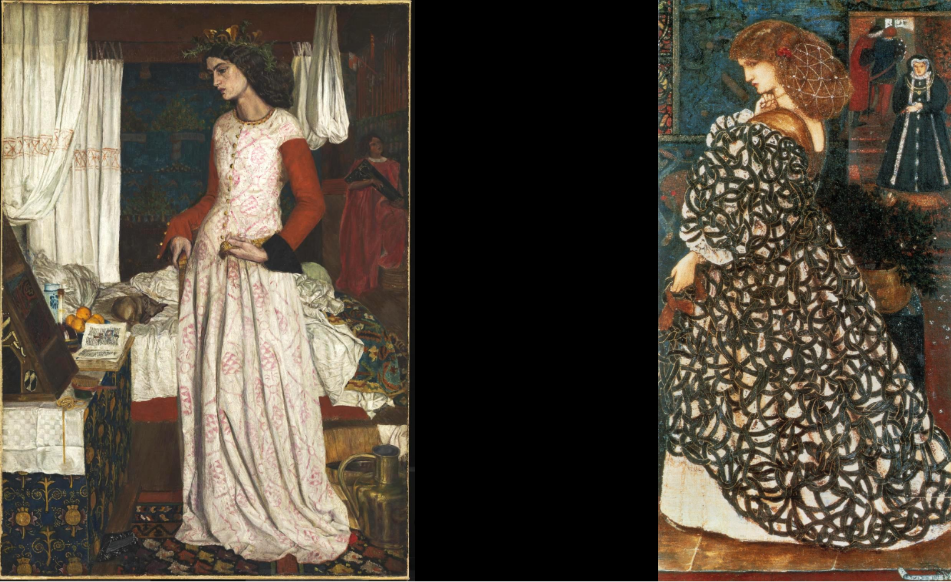
Edward Burne-Jones, Sidvonia von Burke, 1860
William Morris, La Belle Iseult, 1858
some of the only paintings by Morris and Burne-Jones
reflects his interest in fabric and crafts
Arts and Crafts but influenced by PRB

Dante Gabriel Rossetti, Bocca Baciata, 1859
not a portrait, a genre painting —> difficult to tell what we’re supposed to be getting from the work
meant to be for erotic and sensual pleasure, way too scandalous for Victorian England
her mouth is the key element to focus on, just kissed
her skin is soft, hair is beautiful, toying with a flower
no moral, meaning, or message, not PBR
trying to evoke a sensory experience from the work —> synesthesia
Rossetti’s “Stunner’s Era”
finds women he finds beautiful or interesting, uses them as his muse
not beautiful by Victorian standards
Rossetti pursuing the unique —> trying to find a new type of beauty
depicts them as erotic and beautiful, looking at viewer head-on
not feminist, still objectifying and depicting them as passive beings
Aestheticism

James McNeill Whistler, Symphony in White, No. 1: The White Girl, 1861
uses a musical reference to tell the viewer that it’s not about the model, it’s about a musical sensation
orchestra = people playing different instruments in harmony
think of the piece like you think of music
how does the composition make you feel?
not narrative, binds music and visual in a synesthetic way
reuse of white and pale colors, in harmony together
visible brushstrokes, very loose, almost musically and dancing of the line
she is very far form the bottom of the painting, similar to PRB and Manet with the flattening of space
can’t tell where the rug ends
Aestheticism

Édouard Manet, Music in the Tuileries, 1862
depicts a common leisure space for the bourgeois —> groundbreaking to depict this in fine art
Manet features himself as keeping a distance but still witness to the crowd, the flaneur
figures are still flat, look like cardboard cutouts, not much depth, figures moving into our space
frontal figures are easily discernible but the further ones are blurry —> still legible with less brushstrokes (impressionism!)
mixes social classes (military, bourgeois, lower middle class)
Impressionism

Édouard Manet, Laure, 1862-63
depicts Laure, the black model that posed in Olympia
either ignored by art historians or faulted for the sexuality for the painting
poorly rendered, isn’t able to properly depicts her skin and face
she’s wearing traditionally African clothing but she’s a French woman
Impressionism, Orientalism

Édouard Manet, Dejeuner sur l’herbe, 1863
depicts naked women, not nude
her park outfit is right in front of her, she just took it off
massive painting —> elevates to a larger scale, confronts audience directly again
contrasted by the contemporaneity dressed men
woman is looking at the viewer, she’s a real life person with a direct gaze
extends imaginary space of the painting to the viewer
implicates the viewer in their watching
uses muddier colors to flatten the picture —> trying to expose that painting is paint on a canvas
bodies are very flat, no modeling (shading) on the body
too bright, too pan-focal, very flat

Édouard Manet, Olympia, 1863
references Titian’s Venus D’Urbino in composition
Olympia has clear contemporary fashion —> not able to be an allegory
slippers, kimono, black choker, jewelery
direct gaze, more stiff and confrontational
representations of female sex
cat doesn’t know the viewer and doesn’t like him
maid is bringing flowers
depicts a prostitute as a nude, not an allusion or allegory
common name for prostitute, choker, red hair
identifiable woman posing (the model wasn’t a prostitute)
covers her genitals with aggressiveness (can be penetrated, autonomous over her body, comes about through the exchange of money and commodity)
the viewer is trying to buy sex from her
realist depiction of modern sexuality while confronting the implied male viewer that is canon in academic art —> modernism!
Laure (the black model), mostly ignored by art history, otherwise was faulted for the sexuality of the painting
France redefining black women as paid women —> in modern clothing, Laure is not posing as a nude (Manet could neverrrrr see her as nude), not meant to sexualize her the way we sexualize Olympia
Laure is being paid for her labor, autonomous (also a model), similar to Olympia
a black body doesn’t equal a slave body
worsened racism through caricatures for the work instead of silencing them
both women work to symbolize modernism, (the white woman is not a sexual object, the black woman is not a slave)

Alexandre Cabanel, Birth of Venus, 1863
passive, coy, but not ashamed of her body
mythologized, casted as a goddess
no body hair but lots of head hair
not based off a certain woman (except they are)
doesn’t depict an actual vagina (no menstruation, birth, sex)
innocent and demure but imply eroticism
painter acts as a middleman between working class woman posing for the painting and the academic nude, removes the humanity from the figure
protects artists from being accused of impropriety

Jacques-Eugène Feyen, Le Baiser enfantin (The Childish Kiss), 1865
black women being paid for their labor —> economic independence and autonomy
dressed in modern clothes
a black body doesn’t equal a slave body
Realism

Dante Gabriel Rossetti, The Beloved, 1865-66
finds women he finds beautiful or interesting, uses them as his muse
not beautiful by Victorian standards
Rossetti pursuing the unique —> trying to find a new type of beauty
depicts them as erotic and beautiful, looking at viewer head-on
not feminist, still objectifying and depicting them as passive beings
Aestheticism, Orientalism

Pierre-Auguste Renoir, Odalisque, 1870
exotic and sexual but also lazy, traditional, anti-innovation —> justified colonial imperialism
trying to make pure beauty —> seeing women as only decorative/beautiful ignores the social constructs of womanhood
a limiting type of beauty
Impressionism, Orientalism
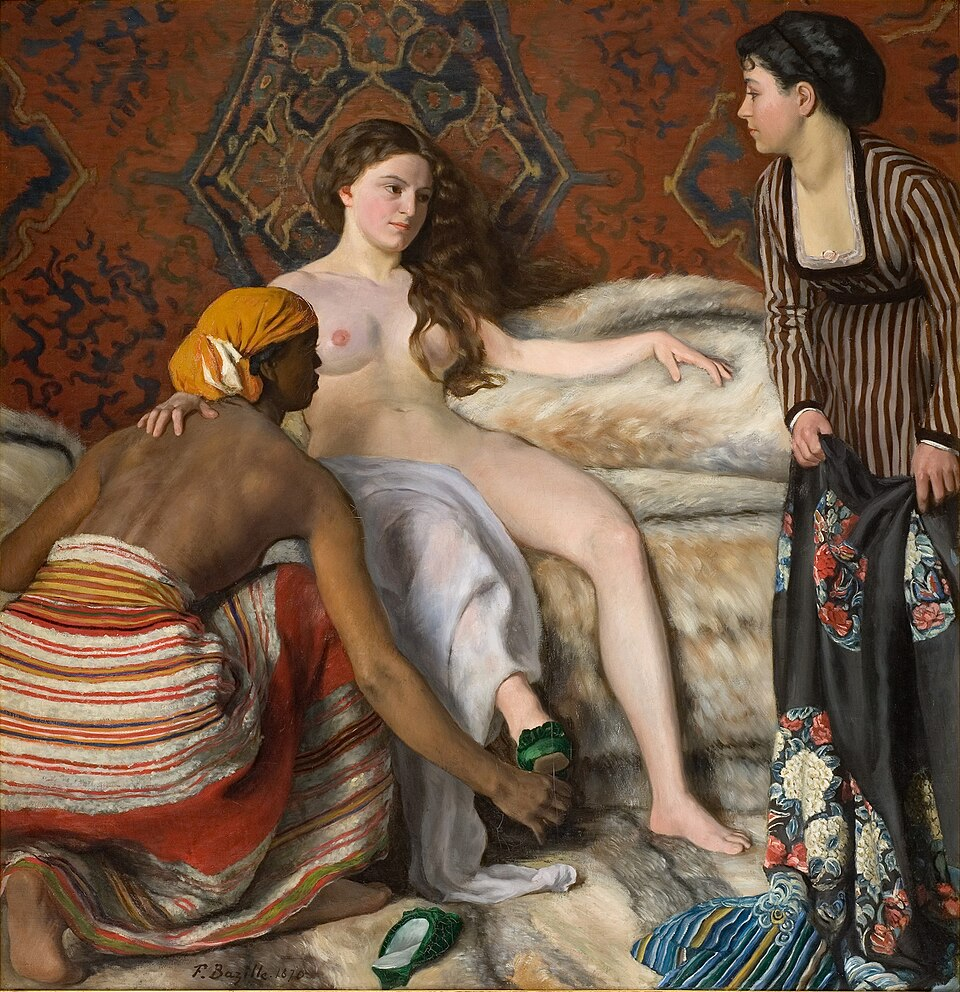
Frédéric Bazille, La Toilette, 1870
exotic and sexual but also lazy, traditional, anti-innovation —> justified colonial imperialism
black woman being paid for her labor, autonomous
a black body doesn’t equal a slave body
Impressionism, Orientalism

Claude Monet, Impression Sunrise, 1872
depicts modern industrial port in early morning
figures are just dark marks, water isn’t blended
called Impressionists as an insult by a critic
trying to capture the feeling of a moment; the subject isn’t the port, it’s Monet’s memory of the port
part of the First Impressionist Exhibition in 1874
painting en plein air to capture changing light and feeling
facilitated by the creation of a paint tube
rejects chiaroscuro and tenebrism
light is coming from everywhere
equalizing brushstrokes —> foreground, middleground, and background are all flat
brushstrokes are rough across the canvas
not trying to pretend it’s not a painting
borrowed from 17th cent. Flemish art
Impressionism

Pierre-Auguste Renoir, La Loge, 1874
flaneur has a magnifying goggles
not looking at the stage, looking at the stage
watching everyone else, able to sink into the background
the woman at the front is made available to the viewer
in the light and facing us, able to see her face and body
uses the color of the flowers to look from her breasts to her mouth to her hair

Jean Lecomte du Nouÿ, A Eunuch’s Dream, 1874
a eunuch is smoking opium, dreaming of a woman he wants to have sex with
opium is an illegal product, sold by England to force China to depend on them financially, symbolizes imperialism
supposed to be in Egypt but includes cacti, an empty desert that represents a bygone era —> not modern, stuck in the past —> modernity is unique to Europe
Persian rugs, turban, East Asian man, decorative plates —> for a European audience
mixes up cultural symbols
idea that eunuchs served a harem but they couldn’t be sexually viable —> castrated
little cherub is holding a knife —> the man can’t fulfill his sexual desires
a red handprint by the artist’s signature implies that he is the one castrating the figure
sinister and violent
Orientalism
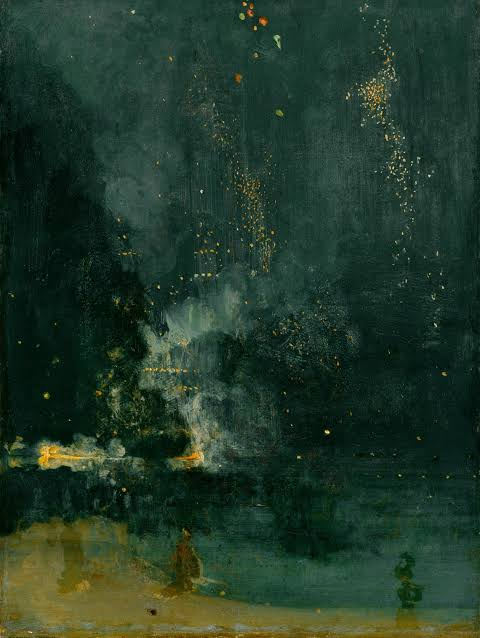
James McNeill Whistler, Nocturne in Black and Gold; The Falling Rocket, 1875
depicting fireworks show, depicted in an art gallery with electric lighting overhead
Ruskin doesn’t like this piece, publishes critique in newspaper —> Whistler sues for libel
he believes people are being exploited for their money, not okay for social/moral good
Whistler wins the case because he’s witty and logical
says they’re paying for the knowledge of art, it took him 2 day to paint but years to learn how
becomes bankrupt afterwards
tanks Ruskin’s career, was a super respected art critic
compared the piece to J.M.W. Turner (which he liked because it depicted a socially and politically engaged moment)
believes art should have a moral or message, depicting random fireworks is useless
both are similar in art style, not about the visual technique but the meaning
Aestheticism
Gustave Caillebotte, Paris Street, Rainy Day, 1877
from an affluent family, free from financial restraint, donated his collection and works to state
captures Parisian renovated intersections
boulevards are widened, cobblestones carefully placed, streetlamps
new apartment buildings and commercial spaces on street level
very large 2x3 meters —> immersive
pays attention to fashion because it identifies social class
(mustaches = bourgeois masculinity, bow tie and top hat, veil covers her eyes, wearing pearls)
background includes presence of working class (woman wearing an apron, man carrying a ladder, women appearing by themselves on the way to work)
captures different classes interacting in public
umbrellas are all the same between figure (modernity and manufacturing), everyone can get the same thing
captures the impression of a fleeting moment and everyday life but still intentionally composed
Impressionism

Édouard Manet, Café Concert, 1878
depicts nightlife space, very new for the time
singing, dancing, drinking, community, brings people from social classes together
day starts for some (barmaids), ends for others (customers)
figures are next to each other but not interacting
left-hand woman
plainly dressed, sitting alone with a beer, slumped and smoking, a woman all by herself —> working class, finished the day
presence of women by themselves in public —> anxieties (are they there for entertainment, sex work, or labor?)
barmaid in the back is taking a break by taking a swig of beer
slightly flushed, probably being called over by other patrons
top-left woman
dancer and entertainer
depicts her reflection in a mirror —> viewer needs a second to realize the man is the only one looking at her, also flattens the perspective and reduces depth
right-hand man
classic bourgeois (top hat, monocle, suit)
the flaneur, observing without being questioned of his intentions
Impressionism

Mary Cassatt, In the Loge, 1878
woman projecting a gaze with the goggles
her figure is more enshrouded
side profile, wearing black and mostly hidden, holding a fan that can cover herself
wearing yellow gloves
a man looking at her, climbing over the side of the theater
though she’s projecting a gaze, she is still victim of a gaze
Cassatt was blocked from going to events that the flaneur would be able to
Impressionism
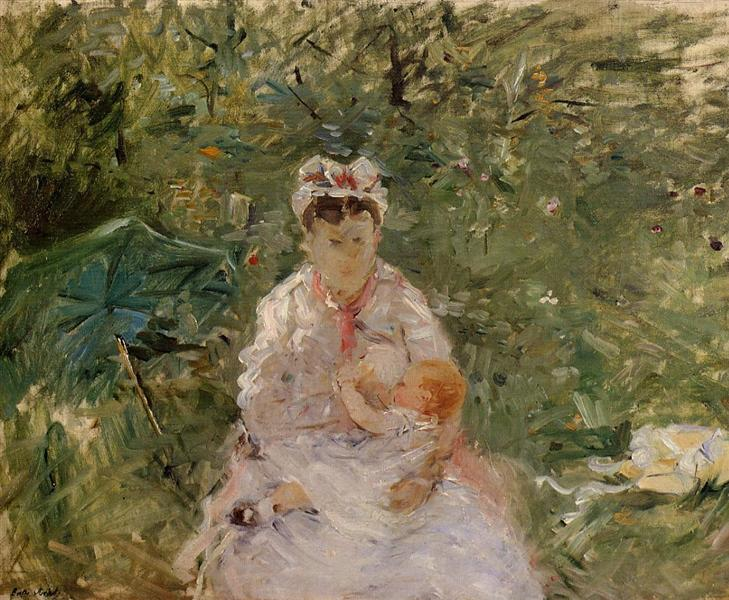
Berthe Morisot, The Wet Nurse, 1880
Renoir depicted the ideal mother breastfeeding her child
limits women from having rights and trying to leave the house
naturalize the role of woman to try and keep them from hiring wet nurses and maintain autonomy
autonomy of the mother implied by the wet nurse breastfeeding instead of the mother
Morisot is a mother, capturing the woman that lets her be an artist
the daughter is well-rendered while the wet nurse’s facial features are obscured and dissolves into brushstrokes
giving a sense of light
the should has lighter brush strokes —> gives impression that there’s light there
blotchy patches that are unblended
Impressionism

Édouard Manet, Bar at the Folies-Bergère, 1882
the viewer is male because it’s reflected in a mirror
woman is a bartender, selling liquor
implication of her selling herself
reference with choker
her body is similar to objects around her
flowers on her breast similar to ones in vases
her waist in a corset is similar to the bottles
Impressionism

William Morris, Strawberry Thief, 1883
inspired by birds in his garden, lightheartedness
designed by Morris but there’s a whole team behind him
someone to carve the design in the block, someone to discharge the indigo to print
Arts and Crafts
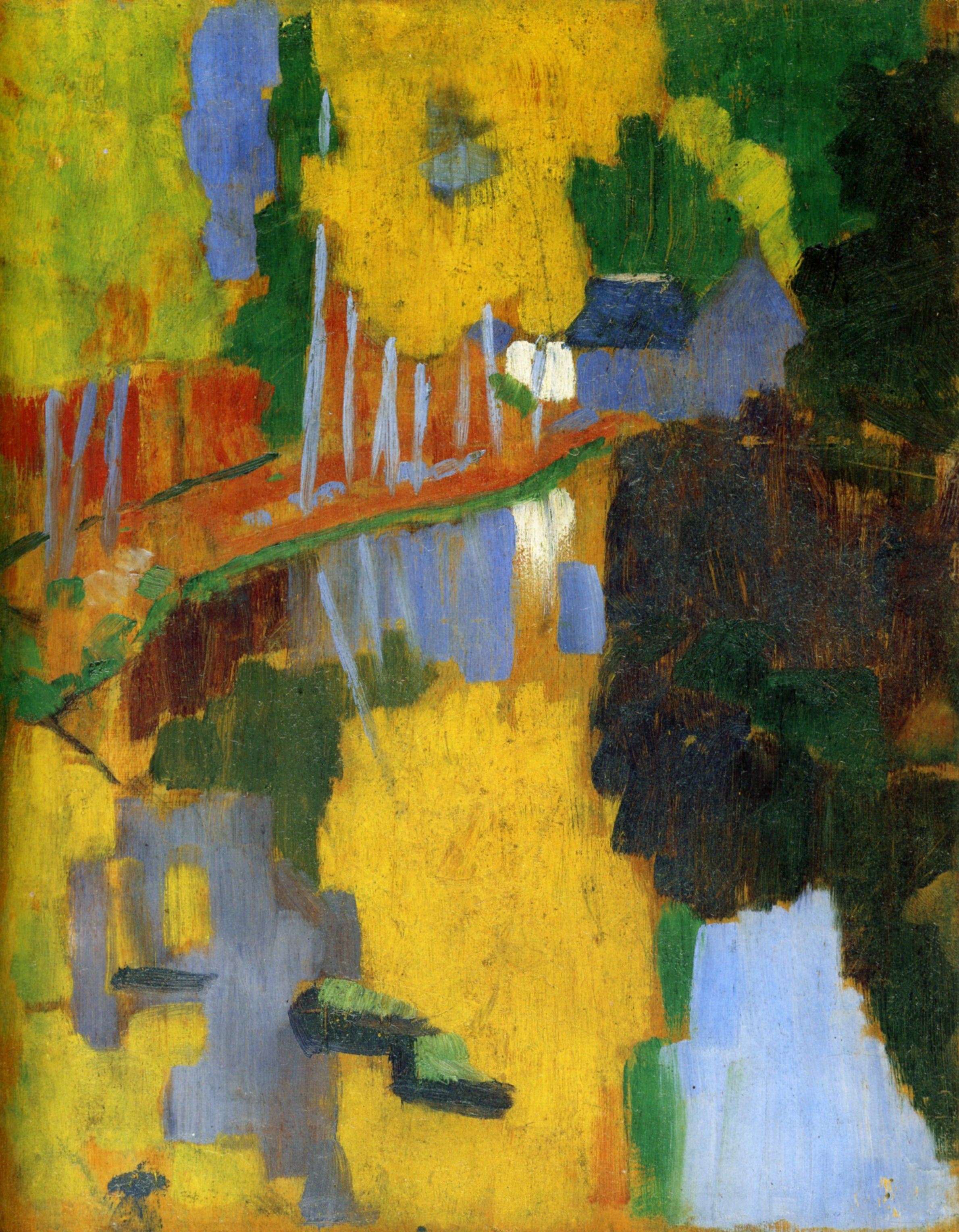
Paul Sérusier, The Talisman, 1888
challenged academy-ism
idealized beauty, copying masters, emphasis on line and form, canon and tradition
started by making smaller paintings that were personal, intimate, and contemplative
reflected the unique painter, not the outside world
represents the painter’s imagination and spirituality, very ethereal and cerebral
embrace the painting-ness of painting: use thick paint, flat
curvilinear patterns
Nabis, Cloisonnism
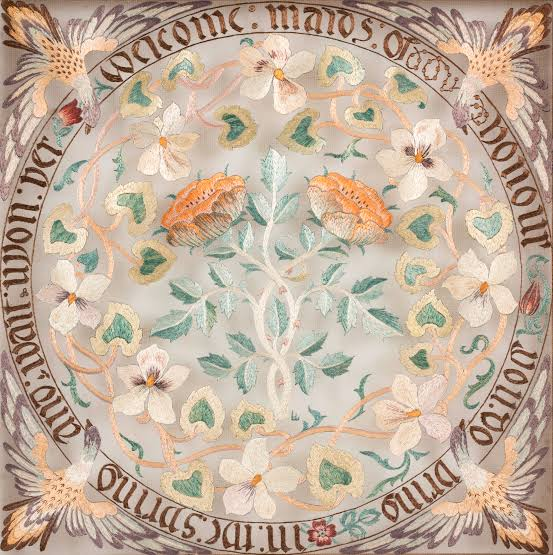
May Morris, Maids of Honour, c. 1890
labor-intensive art (embroidered on mesh, literally nothing revealed on the back)
sold cheaper versions for different audiences
socialist part of their art
Arts and Crafts

William Morris, William Harcourt Hooper, and Edward Burne-Jones, A Dream of John Ball, Kelmscott Press, 1892
high quality, expensive but meant to last
made on vellum, a long-lasting medieval paper type
Morris acting against wastefulness of the goods
his goods are meant to be shared (large books)
Arts and Crafts

Maurice Denis, L'Échelle dans le feuillage, or Arabesques poétiques pour la décoration d'un plafond, 1892.
very large —> immersive
repetitive subjects
Denis’s piece is mystical, representing a musical motif that symbolizes passion of music (made for a musician)
wealthy art patrons commissioned the Nabis to decorate their homes
painters become decorators
more mystical, intimate, and personal subjects
Nabis

Paul Gauguin, Where do We Come From? What Are We? Where are We Going?, 1897
believed the best art was derived from “primitive” societies because they were the most pure form of society
the simplicity in their art was naive —> spiritual and pure
depicted women in a primitive state, among nature, very simple form and design
Gauguin sees “artifacts”, leaves his family for Tahiti because he wants to live in a simple paradise
Tahiti is a colony, he doesn’t care, instead trying to preserve the fantasy
depicts nude women (despite the missionary presence, women were no longer naked and were instead converted and clothed)
he was attracted to their nude bodies —> more sexually available for his fantasy
free from European oppressive society
trying to depict symbols of religion and spirituality of Tahitian culture —> failing
a figure picking in apple (like Eve in Eden) = Tahiti is a sort of paradise for him
features a Peruvian mummy but depicts her like she’s Tahitian
pulls from different cultures wildly, mixing references like an idiot
influences an entire generation of artists in primitivism
trying to find a culture (ex. Tahiti) that’s closer to nature —> purity
believed secularity in France was ruining society
still believed to be inferior
value a naive way of seeing through feeling
art doesn’t have to be narrative, only the way its forms are organized
the noble savage = primitive people are uncorrupt and pure because they are savage and not modern
Cloisonnisme, Orientalism, Primitivism, Symbolism

Pablo Picasso, Les Demoiselles d’Avignon, 1907
Picasso was part of the Spanish Art Academy, works among the avant-garde in Paris
cubism
new way of looking at form on a 2d canvas
the first experiment into cubism, worked with Braque
complete flattening of 3d space —> no ground
color blocking, direct application of color, essentialized geometric forms
women’s faces are based on African mask —> otherness that can be uncomfortable
academic nude is meant to cause pleasure, this only causes fear
bodies are sharp, angular, color blotted; can’t get a sense of their femininity
look more aggressive and active in their bodies
their eyes are wide and alert
viewer doesn’t want to/can’t hold them
female sex workers are a source of anxiety for STDs
these subjects are often depicted with animalistic/scary features
almost featured a student doctor checking them for venereal disease
Cubism

Henri Matisse, The Blue Nude, 1907
accused of deliberate ugliness when exhibited at the Salon
independent figure, not classically trained
features consistent with academic nude
visually accessible nude female body, given to the viewer as an object to observe
ambiguous gaze
in an idyllic setting, not a clear time
diverges from academic nude
very flat, difficult to tell what direction we’re watching from
overuses the arabesque line to the point that it’s horrifying
muscular, short hair —> implies masculinity and activity (counters passive languidness)
visual brushstrokes, low-finish, not naturalistic
leaves parts of the canvas exposed
Fauvism