Art History Post Midterm
 Call Kai
 Learn
 Practice Test
 Spaced Repetition
 Match
 Flashcards
 Knowt Play
1/23

There's no tags or description
Looks like no tags are added yet.
24 Terms
Maison Carree
Nimes, France, 1st c. CE
One of the best-preserved Roman temples to survive in the territory of the former Roman Empire
Corinthian columns, deep portico
inspired Thomas Jefferson’s Virginia State Capitol

Arch of Titus
1st c. CE
Erected by Domitian to commemorate victory of his father (Vespasian) and brother (Titus) over Judaea
Deification of Titus is referenced in the inscription

Dura Europos
3rd c. CE
ancient Hellenistic, Parthian, and Roman border city located above the Euphrates River
Liturgy
a body of rites prescribed for public worship; Liturgy is enacted, performed; ceremonial ritual
Consecration of the Tabernacle:
creation and consecration of portable tent / tabernacle during Israelites’ Exodus from Egypt, that housed the Ark of the Covenant, the chest in which Moses placed the tablets containing the Ten Commandments)

Emperor Constantine
Legalized Christianity in 313; renowned for his transformation of Roman politics; the founding of Constantinople
Colossus of Constantine 312-315 CE, marble

Aula Palatina/Constantinian Basilica
300-310 CE
Roman palace basilica and, later, an early Christian structure built during the reigns of Constantius Chlorus and his son Constantine the Great
largest extant hall from classical antiquity

Hagia Sophia
532-537 CE, concrete
by Byzantine emperor Justinian the Great
was the largest cathedral in the world for nearly a thousand years
name meaning Holy Wisdom

Pendentive
a triangular segment of a spherical surface, filling in the upper corners of a room, in order to form, at the top, a circular
support for a dome

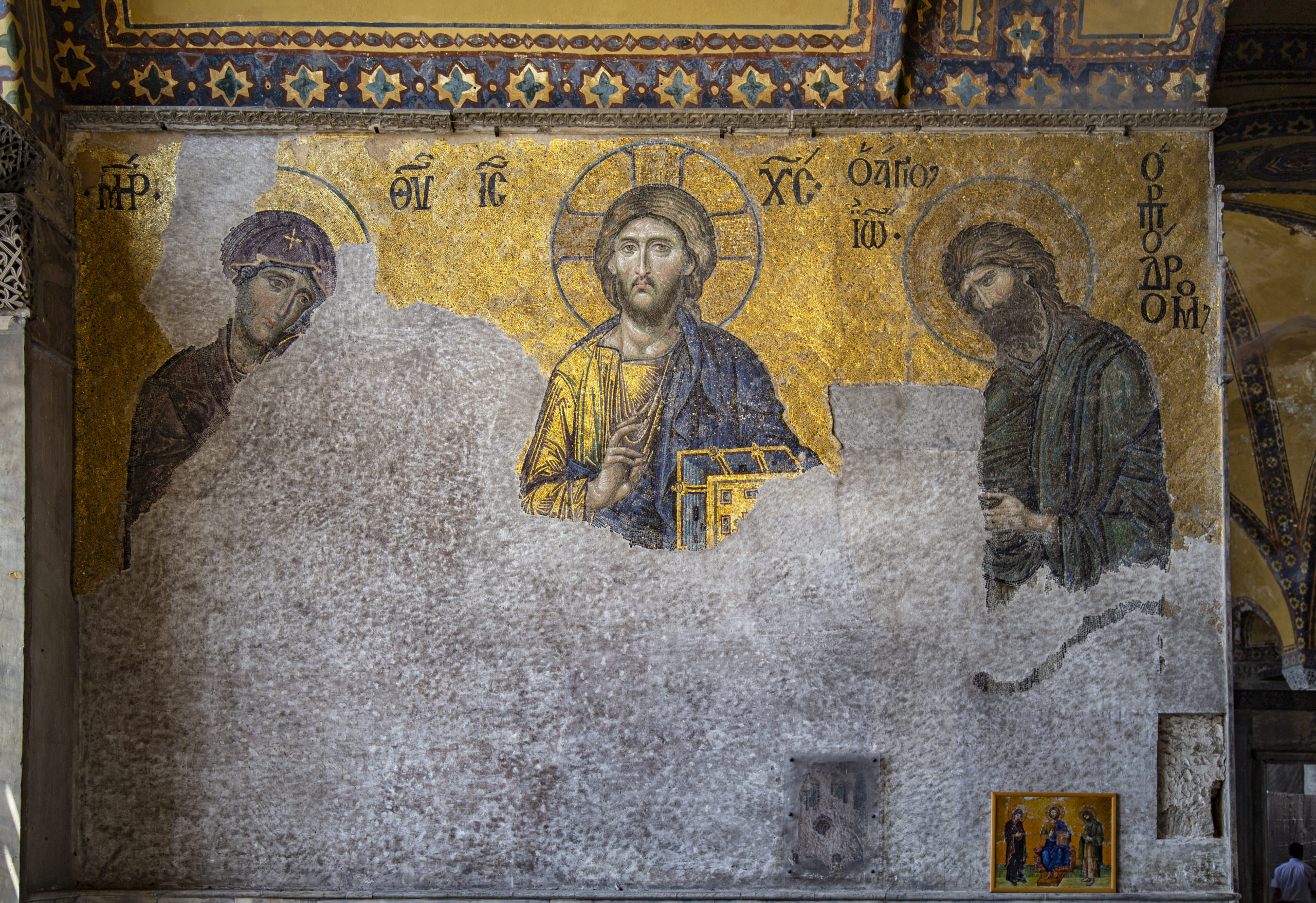
Deësis
tripartite icon showing Christ usually enthroned between the Virgin Mary and St. John the Baptist
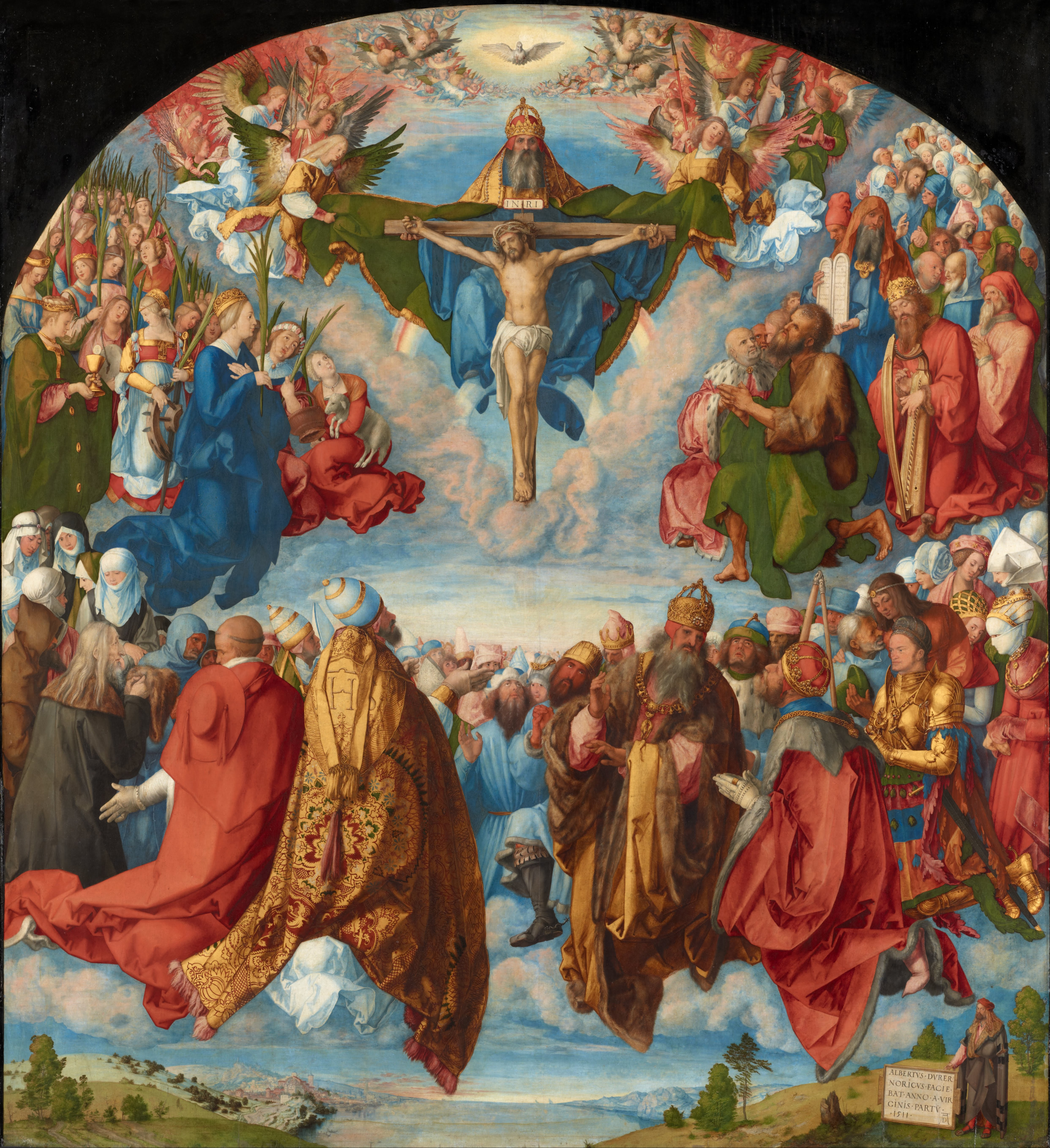
Landauer Altar (Adoration of the Trinity)
Albrecht Dürer, oil on panel, 1511, KHM
Last Judgement, Tympanum
c. 1130–46 CE
Central Portal on west façade of the Cathedral of Saint Lazare, Autun, France,
divided into souls going into heaven or hell, Jesus in the middle

Garden of Earthly Delights
Hieronymus Bosch, 1505-1510. Oil on wood

Martin Luther
(1483–1546)
Protestant Reformation
wrote 95-Theses
anti-Catholic

Cathedral of Pisa
opened 1063
Baptistery of Pisa begun 1152

Pulpit in the Siena Cathedral
Artist Nicola Pisano
Carrara marble, 1265-1268
hexagonal-based, innovative for the time
narrative cycle of five panels illustrating significant scenes from the Life of Christ

Enthroned Madonna and Child
Byzantine Madonna
c. 1250-1275
tempera on poplar panel

Ognissanti Madonna
Giotto di Bondoni,
1306. Tempera on panel
Maestà: Virgin enthroned and surrounded by a court-like company
epth; foreshortening, naturalistic

Madonna Enthroned with Angels and Prophets
Cimabue, from Santa Trinità, Florence, Italy, ca. 1280–1290, tempera and gold leaf on wood
Striations, Elongation, Hieratic; schematic

Musa I / Mansa Musa
(c. 1280–c. 1337),
was the ninth Mansa of the Mali Empire, one of the most powerful West African states. He has sometimes been called the wealthiest person in history.
spread cold coins in europe, popularizing gold leaf in painting

Fresco
a technique of mural painting executed upon freshly laid ("wet") lime plaster. Water is used as the vehicle for the dry-powder
pigment to merge with the plaster, and with the setting of the plaster, the painting becomes an integral part of the wall.
associated with italian renassaince painting
word meaning fresh

Arena Chapel (Cappella Scrovegni)
Giotto di Bondone,
1305–1306,
fresco (Padua, Italy)
commissioned by banker for sin of usury
scenes: Annunciation, Birth of the Virgin, Nativity, Adoration of the Magi, Entry into Jerusalem, Betrayal of Jesus, The last Supper, Crucifixion, Lamentation, Last Judgement

Giovanni Arnolfini and His Bride
Jan van Eyck, 1434. Oil on wood,
seeing outside of perspective with mirror on back wall, seeing Van Eyck
