Anesthetic Devices
 Call Kai
 Learn
 Practice Test
 Spaced Repetition
 Match
 Flashcards
 Knowt Play
1/61

There's no tags or description
Looks like no tags are added yet.
62 Terms
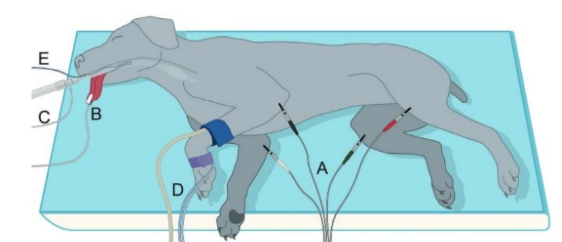
what is E
temperature probe

what is c
capnograph

what is b
pulse oximeter probe

what is d
doppler probe and cuff

what is a
ECG
ECG stands for
Electrocardiogram
define ECG Tracing
a graphic representation of the electrical activity of the heart as it travels through the conduction system and heart muscle
5 main questions to ask when assessing an ECG tracing
Are all the P’s and QRS’s the same and do they appear normal?
Is there a P wave for every QRS?
Is there a QRS following every P?
Are the PR intervals normal and the same?
Are the RR intervals the same?
VPC stands for
Ventricular Premature Complexes

whats wrong?
Ventricular Premature Complexes
what causes Ventricular Premature Complexes (4)
Heart disease
Drugs
Hypoxia
Acid base or electrolyte disorders
define asystole (2)
flat line
No electrical activity detected
what causes asystole (2)
Cardiac arrest
leads have come off

whats wrong?
Ventricular Fibrillation
define Ventricular Fibrillation (2)
Absence of recognizable complexes
Undulating baseline
what causes Ventricular Fibrillation
cardiac arrest
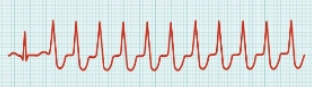
whats wrong?
Ventricular Tachycardia
define Ventricular Tachycardia
Cessation of heart contractions or pulses despite presence of electrical activity on ecg tracing
PEA stands for
Pulseless electrical activity

whats wrong?
Pulseless electrical activity
define Pulseless electrical activity
Cessation of heart contractions or pulses despite presence of electrical activity on ecg tracing

whats wrong
second-degree (partial) block

whats wrong
atrial fibrillation

whats wrong?
ventricular fibrillation

whats wrong
third-degree block

what Twave morphology?
normal
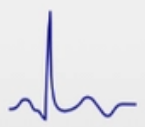
what Twave morphology?
biphasic

what Twave morphology? (2)
Bifid / notched
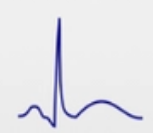
what Twave morphology? (2)
broad / slow

what Twave morphology?
flat

what Twave morphology?
hyperkalemia

what Twave morphology?
repolarization variant

what Twave morphology?
ischemia

what Twave morphology?
strain
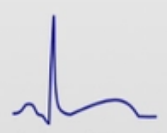
what Twave morphology?
prolonged QT interval
how far does the Esophageal stethoscope go
about the level of the fifth rib.
The Doppler probe contains a crystal that emits — — — and another crystal that — the — —
ultrasound frequency waves, receives the returning echoes
procedure of a Doppler blood flow detector (10)
Clip any hair from probe area
Apply ultrasound gel to the concave portion of the probe.
Select a cuff that has a width 30%–50% of the circumference of the
extremity used for the reading (wrap intravenous [IV] tubing around the
limb to measure it). Place the cuff snugly over the limb or tail, proximal to
where the probe will be placed.Place the probe over the appropriate artery distal to the cuff (coccygeal,
median palmar, median plantar, or dorsal pedal artery).Turn on the amplier. Adjust the position of the probe until a signal is
acquired.Attach the manometer and bulb to the cuff tubing.
You may tape the probe in place, but do not apply the tape tightly or the
artery will be occluded and no readings will be possible.Inate the cuff until the sound stops.
Slowly release pressure from the cuff until the rst “whooshing” sound
is heard. This represents the PSYSTake ve readings. Discard the highest and lowest values and average
the remaining values to determine the PSYS
define Sphygmomanometer
an instrument, much like the pressure manometer on an anesthetic machine, which measures pressure within a cuff.
an spo2 value of 95 - 100% means
normal
an spo2 value of 90 - 94% means
early hypoxemia
an spo2 value of 85 - 89% means
severe hypoxemia
an spo2 value of less than 85% means
medical emergency
define Pulse Oximeter
estimates the saturation of hemoglobin (So2) expressed as a percentage of the total binding sites
pulse oximeters dont work well on — —
pigmented areas
capnograph aka
End-Tidal CO2 Monitor
A capnograph measures …
the amount of CO2 in the air that is breathed in and out by the patient.
end tidal aka
etCO2
define etCO2 (2)
Level at the end of exhalation
Expired CO2 closely mirrors arterial CO2
inCO2 aka
Inspired CO2
define Inspired CO2 (2)
Level during inhalation
Should be 0
CO2 level determined by 3 factors
Metabolism
Perfusion
Ventilation
Oxygen analyzers measure the percentage of oxygen in inspired gases by
sampling gas from a spacer that can be placed between the inspiratory tube and the y-piece
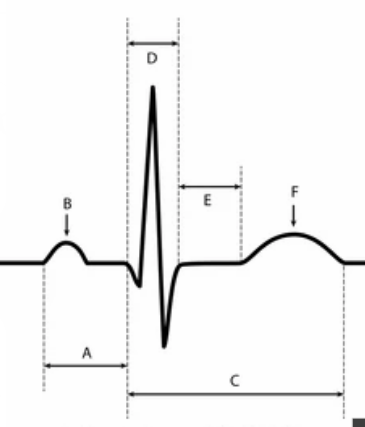
what is a
PR interval

what is b
P wave

what is c
QT intrval

what is d
QRS complex

what is e
ST segment
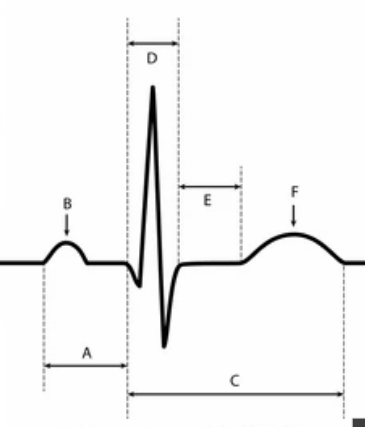
what is f
T wave

what is 2
Q wave

what is 4
R wave

what is 5
S wave