Banksy Artwork Analysis
 Call Kai
 Learn
 Practice Test
 Spaced Repetition
 Match
 Flashcards
 Knowt Play
1/17

Earn XP
Description and Tags
Vocabulary flashcards analyzing key artworks by Banksy, covering their form, context, target audience, and core socio-political commentary.
18 Terms

Ghetto for Life
An urban artwork located in the Bronx that juxtaposes a prim, wealthy butler with an urban youth to satirize the commercialization and gentrification of street culture by the fine art establishment.

God Bless Birmingham
A winter installation in Birmingham, UK, featuring painted reindeer pulling a street bench occupied by an unhoused man named Ryan, highlighting homelessness and peak consumerism during the holidays.

If Graffiti Changed Anything
A street art piece referencing Emma Goldman's quote on voting and featuring a rat symbol to cynically question political efficacy while demonstrating how illegal street art sparks political conversation.
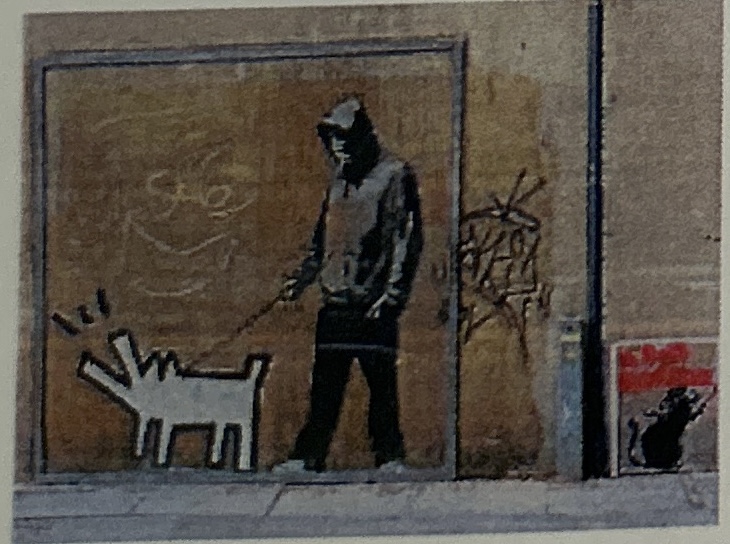
Choose Your Weapon
An artwork contrasting a realistic youth with a stylized cartoon dog referencing Keith Haring, created during a UK media panic over youth gang culture to position creative expression as a non-violent weapon.

Falling Shopper
A high-wall stencil stencil depicting a woman falling while clinging to a shopping cart, placed in a wealthy commercial district to symbolize the crushing weight of consumerism and debt in modern capitalism.

Cameraman and Flower
An urban piece setting heavy camera equipment against a small flower, criticizing society's media-obsessed drive to document and destroy natural beauty rather than experience it directly.

The Girl and the Balloon
An iconic London stencil depicting a monochromatic girl losing a red balloon alongside the phrase "There is always hope," representing fleeting innocence, loss, and quiet optimism.

Painting for Saints (Game Changer)
An artwork created for Southampton General Hospital during the COVID-19 pandemic, depicting a child choosing a nurse doll hero over discarded Batman and Spider-Man figures to honor healthcare workers.

Sirens of the Lambs
A mobile installation featuring a truck full of squeaking plush animal toys driven through New York City's Meatpacking District, exposing the hidden suffering of factory farming and consumer cognitive dissonance.

The Son of a Migrant from Syria
A artwork in "The Jungle" refugee camp in Calais, France, depicting Steve Jobs with an early Apple computer and bindle to challenge xenophobia by highlighting the heritage of Apple's founder.

Show Me the Monet
A gallery painting recreating Claude Monet's The Water Lily Pond with sunken shopping carts in the water, using a pun on "Show me the money" to criticize capitalism and environmental degradation.

The Season's Greetings
A mural in Port Talbot, Wales, showing a child catching what seems to be snow, but is revealed around the wall corner to be toxic industrial ash from a burning dumpster fire.

Graffiti Removal
An artwork showing a municipal worker cleaning ancient cave paintings off a wall, mocking society's arbitrary distinction between revered historical art and modern street vandalism.

Don't Forget Your Scarf
A subversion of a street warning sign delivering a tender maternal message that subtly encourages protesters to cover their faces, blending daily routine with anti-authoritarian rebellion.

No Trespassing
An American street piece depicting a Native American figure beside a modern property sign, exposing the historical hypocrisy of property laws on stolen indigenous land.

Banksy Rug
A "Gross Domestic Product" pop-up store item featuring a sickly, dead Tony the Tiger as a rug to critique corporate monopolies and the sugar industry's impact on children's health.

Banksy Baby Mobile
A crib mobile surrounded by surveillance cameras featured in the "Gross Domestic Product" exhibition, critiquing the oppressive surveillance state that conditions children to accept monitoring from birth.

The Hand That Feeds
A street stencil visually depicting the idiom "biting the hand that feeds you," acknowledging Banksy's self-aware paradox of profiting from wealthy art collectors who buy his anti-capitalist art.