Analgesics and Local Anaesthetic Drugs
 Call Kai
 Learn
 Practice Test
 Spaced Repetition
 Match
 Flashcards
 Knowt Play
1/43

There's no tags or description
Looks like no tags are added yet.
44 Terms
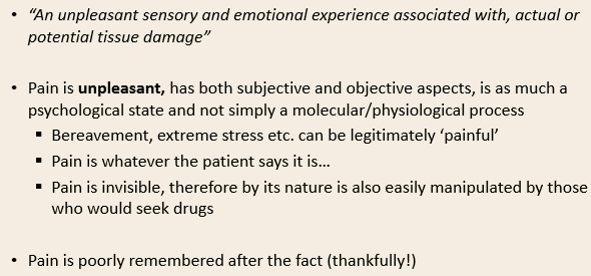
What is Pain?
What is the Gate Theory of Pain?
Sometimes pain is not linked to detectable tissue damage
Sometimes tissue damage is not (very) painful
Melzack and Wall 1965 theory:
C fibres (afferent) let pain through
A-beta fibres (afferent) stimulate inhibitory neurones
Descending pathways prevent central passage
-I.e. deliberate decisions to not feel pain
How can Pain be Assessed?

WHO Pain Ladder

What are Opioids?

What are the Different Opioids Receptors?

What are the Different Types of Opioids?

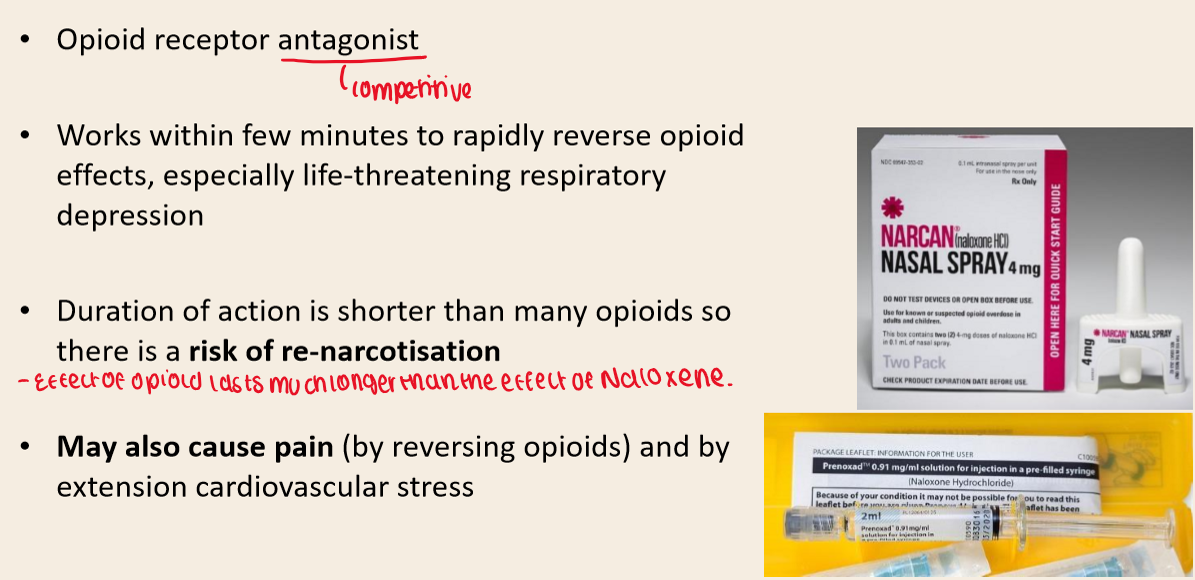
What is Naloxone?
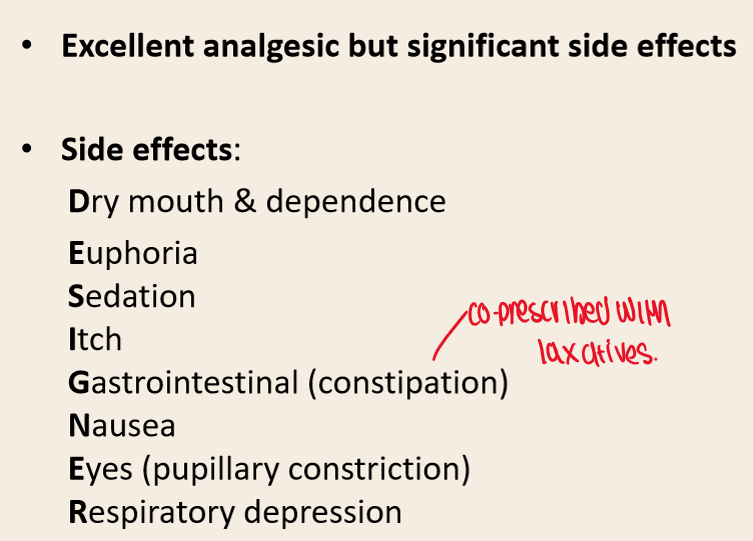
What are the Side Effects of Opioids?
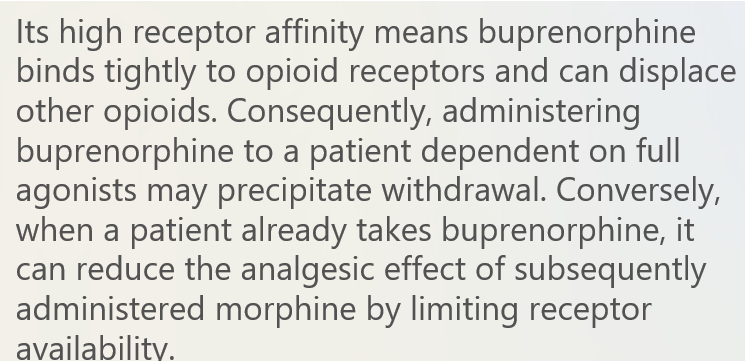
What is Buprenorphine?

What is the Mechanism of Action of Buprenorphine?
Other Analgesics: NSAIDs

What are the Side Effects of NSAIDs?

What is Aspirin (Acetylsalicylic Acid)?
Irreversible COX 1 and 2 inhibitor
Aspirin Side Effects- Salicylate Toxicity

Aspirin Side Effects- Reye’s Syndrome

What is Paracetamol (Acetaminophen)?
Centrally acting COX-1 and 2 inhibitor, but also has active metabolite (AM404) with endocannabinoid and TRPV1 receptor interactions
Does not significantly reduce inflammation
No significant antiplatelet action
Excellent analgesic and anti-pyretic
What is the Mechanism of Action of Paracetamol?
Paracetamol produces analgesic and antipyretic effects predominantly within the central nervous system, probably involving inhibition of prostaglandin synthesis, although its precise mechanism remains incompletely understood.
What are the Side Effects of Paracetamol?
At therapeutic doses, paracetamol is generally well tolerated and, unlike NSAIDs, has little effect on gastric mucosa or platelet function.
What Happens in Paracetamol Overdose?
Overdose: hepatotoxicity/glutathione depletion
In overdose, more paracetamol is converted to the toxic metabolite NAPQI (N-acetyl-p-benzoquinone imine); glutathione becomes depleted, allowing NAPQI to damage hepatocytes and potentially cause acute liver failure.
Glutathione (GSH)
A plentiful endogenous molecule that protects cells from damage caused by normal oxidative metabolism (i.e. the everyday activities of the cell can cause it damage, and GSH prevents some of this).
GSH helps neutralize reactive oxygen species and other potentially damaging reactive molecules before they can damage important cellular components. GSH is particularly important in the liver, where it helps detoxify reactive metabolites produced during the metabolism of drugs, foodstuffs, and metabolites throughout the body that end up in the bloodstream.

How is Paracetamol Overdose Reversed?

N-acetylcysteine (NAC) – N-acetylcysteine is the antidote for paracetamol poisoning and principally works by restoring glutathione availability, allowing toxic NAPQI to be detoxified.
What is Ketamine?
Actions on many different receptors
Primarily a non-competitive antagonist of the NMDA receptor
Kappa and delta opioid receptors
‘Dissociative’ general anaesthetic at higher doses
Sedative effect at moderate doses
Analgesic effects at lower doses
Why is Ketamine used Over Other Drugs?

What are the Side Effects of Ketamine?

What are Sedatives?
A medically induced state of reduced conscious level, awareness, anxiety or responsiveness
Continuum Level of Sedation

What are Benzodiazepines?
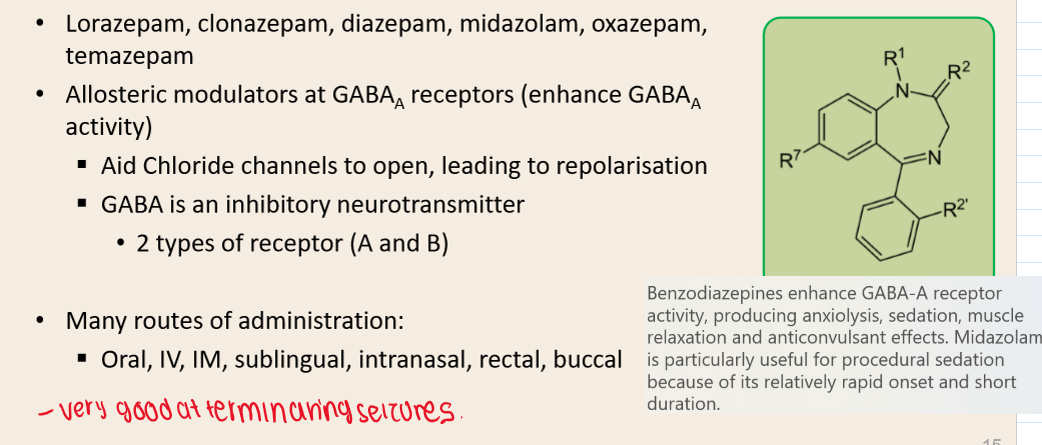
What are the Risks of Benzodiazepine?

What are the Side Effects of Benzodiazepines?
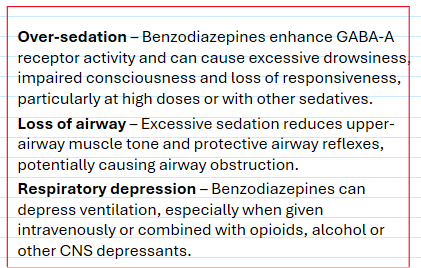
Management- ABC

How can Benzodiazepine Overdose be Reversed?
Flumazenil is a benzodiazepine reversal agent.
Works by competitively binding to the same site on GABAA receptor, without activating it.
Can cause seizures, particularly in people with epilepsy or benzodiazepine dependence
Can also induce arrythmias
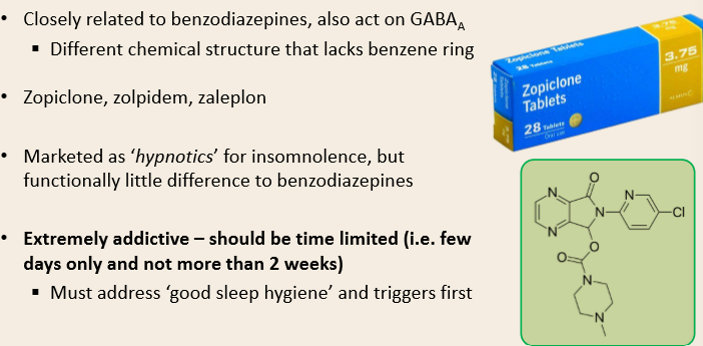
What are ‘Z-Drugs’?
What are Local Anaesthetics?

What is the Mechanism of Action of Local Anaesthetics?

Local Anaesthetics- Amino-esters

Local Anaesthetics- Amino-amides

What is Cocaine?
In addition to voltage gated sodium channel blockade, cocaine also inhibits noradrenaline, dopamine and serotonin reuptake in nerve endings
Sympathomimetic properties
Used in ENT surgery as part of Moffett’s solution to reduce bleeding by causing vasoconstriction
What is the Mechanism of Cocaine?

What are the Side Effects of Cocaine?

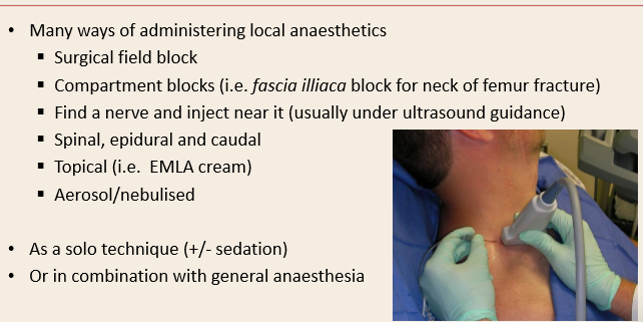
Where are Local Anaesthetics Administered?
What is Local Anaesthetic Systemic Toxicity (LAST)?
Voltage-gated sodium channels are not just found in nerves
They are particularly abundant in heart and brain
How does Local Anaesthetic Systemic Toxicity Work?

Local Anaesthetic Systemic Toxicity- Intralipid
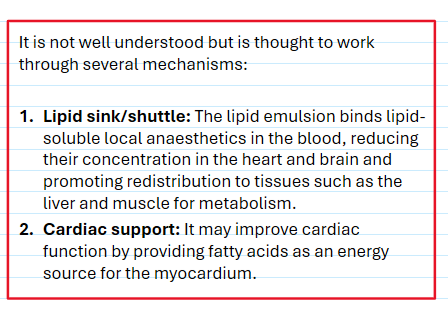
Intralipid- AAGBI Safety Guidelines
