Modula 1.5a - 1.6d Key Terms
 Call Kai
 Learn
 Practice Test
 Spaced Repetition
 Match
 Flashcards
 Knowt Play
1/59

There's no tags or description
Looks like no tags are added yet.
60 Terms
Consciousness
our awareness of ourselves + environment
cognitive neuroscience
study of the brain activity linked w/ mental processes
dual processing
principle that info is often simultaneously processed on separate conscious + unconscious tracks
blindsight
ability to respond to a visual stimulus w/o consciously perceiving them
parallel processing
processing multiple aspects of a stimulus/problem simultaneously + enables your mind to take care of routine business – UNCONSCIOUS!
sequential processing
processing 1 aspect of a stimulus/problem at a time + best for solving new/diffuclt problems – CONSCIOUS!
(sleep
a periodic, natural loss of consciousness)
circadian rhythm
24 hr biological clock; regular bodily rhythms (for ex: of temperature and wakefulness)
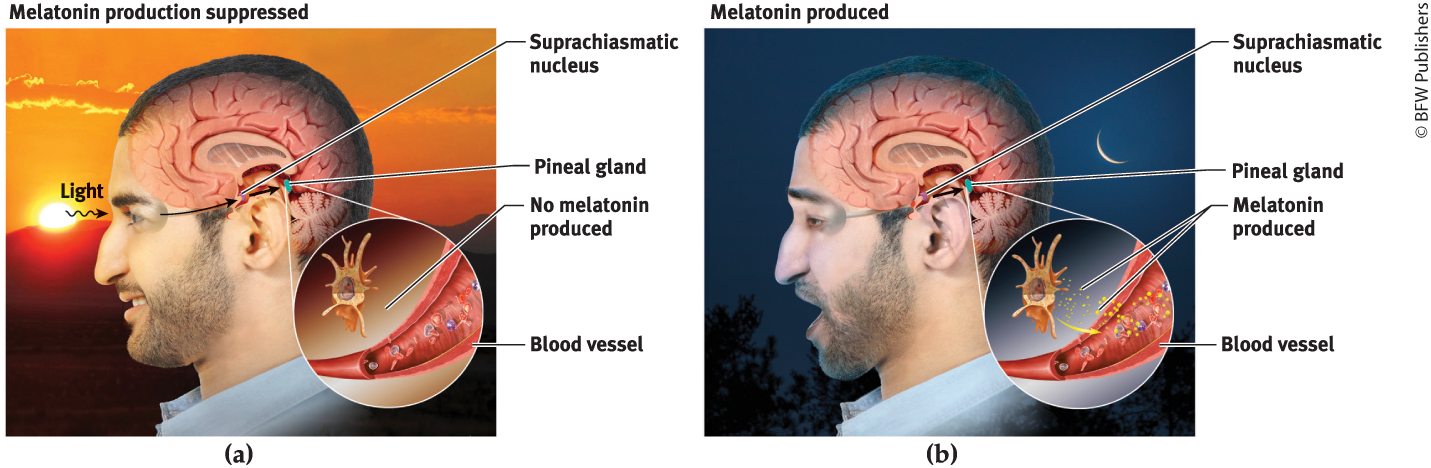
linked to suprachiasmatic nucleus (SCN) → pair of cell clusters in the hypothalamus that controls circadian rhythm
In response to light, the SCN adjusts melatonin production, THUS decreasing melatonin
Sleep Cycle
repeats every 90 mins
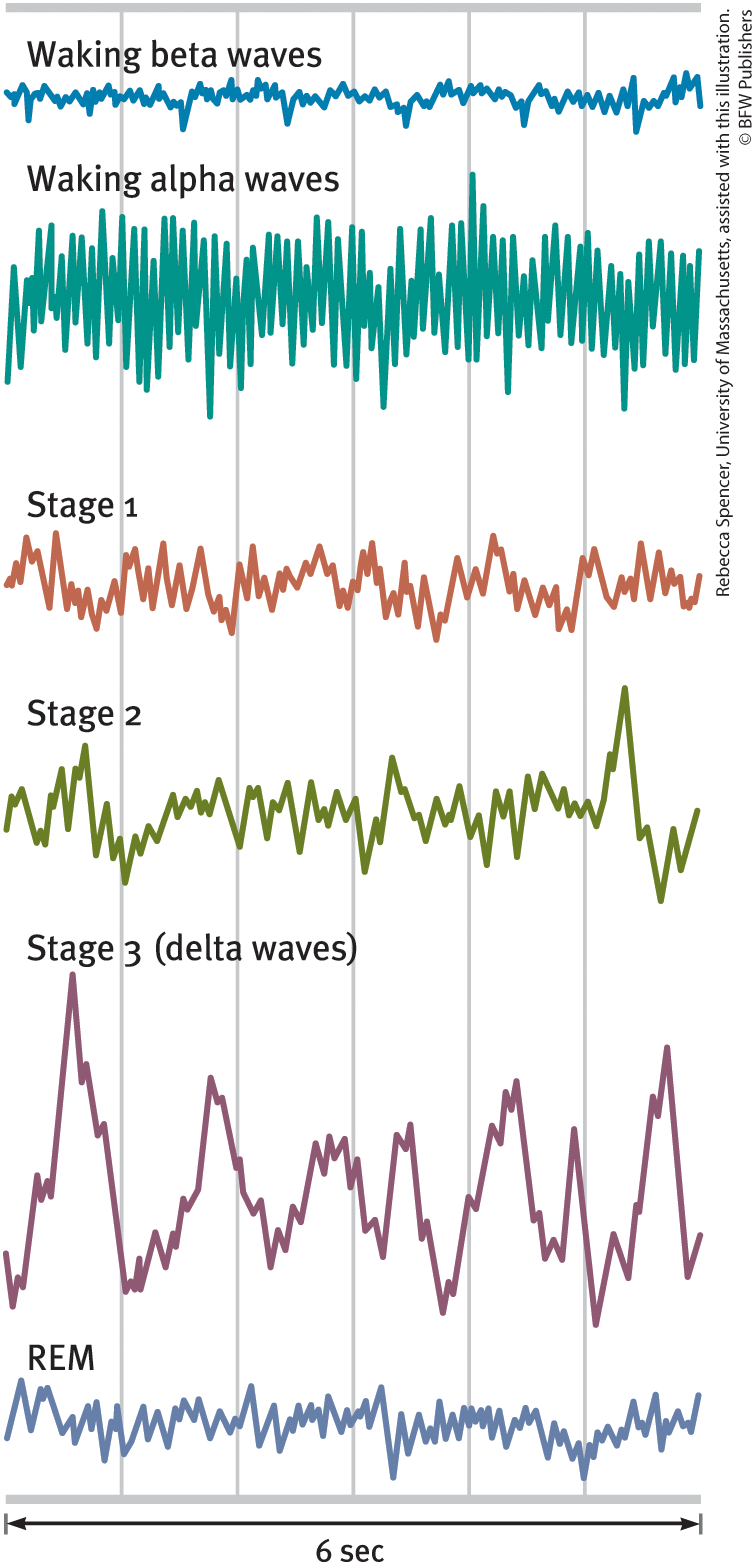
Nrem1 (non-rapid eye movement) → light sleep + may experience hynagogic sensations → sensations of falling; slow breathing + irregualr brain waves + 15-20 mins + Alpha waves → fast brain waves of a relaxed + awake state
Nrem2 → “Sleep Spindles” (short burst of rapid activity/energy in the brain) on an EEG, deep sleep BUT can be easily awaken + 15-20 mins
Nrem3 → deepest stage + hard to wake + 20-30 mins + Delta waves → slow waves
return back to Nrem2
then REM (rapid eye movement) → 10 mins + heart rate rises + rapid & irregular breathing + dreams occur + paradoxical sleep (essentially paralyzed) b/c muscles are relaxed AND motor cortex is active BUT the brainstem blocks its messages
1, 2, 3, 2, REM
hallucinations
false sensory experiences
lack of sleep = weight gain + messes w/ hormones, metabolism, and brain’s responses to food by…
increasing ghrelin: hunger-arousing hormone, and decreasing leptin: hunger-suppressing
increasing cortisol: stress hormone that stimulates the body to make fat, and decreasing metabolic rate
disrupting gene expression, which increases risk for heart disease
enhancing limbic brain responses to the mere sight of food + decreasing cortical responses that help us resist temptation
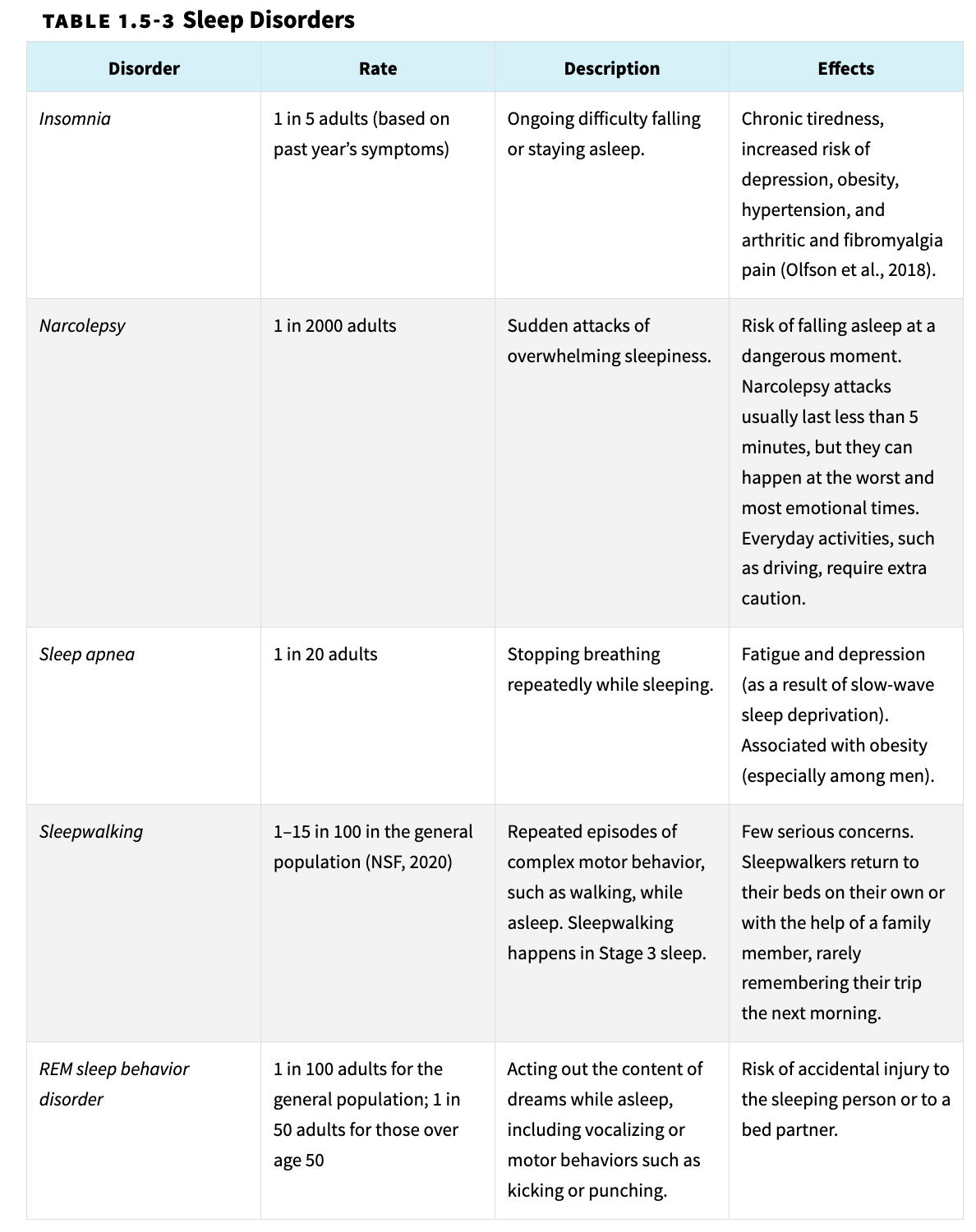
sleep disorders
insomnia → difficulty falling or staying asleep
narcolepsy → you will suddenly fall asleep w/ NO warning
sleep apnea → interrupted breathing during sleep
REM sleep behavior disorder → acting out dreams b/c the paralysis of REM DOES NOT occur
(dream
a sequence of images, emotions, and thoughts passing through a sleeping person’s mind.)
Dream theories
Main 3 Theories:
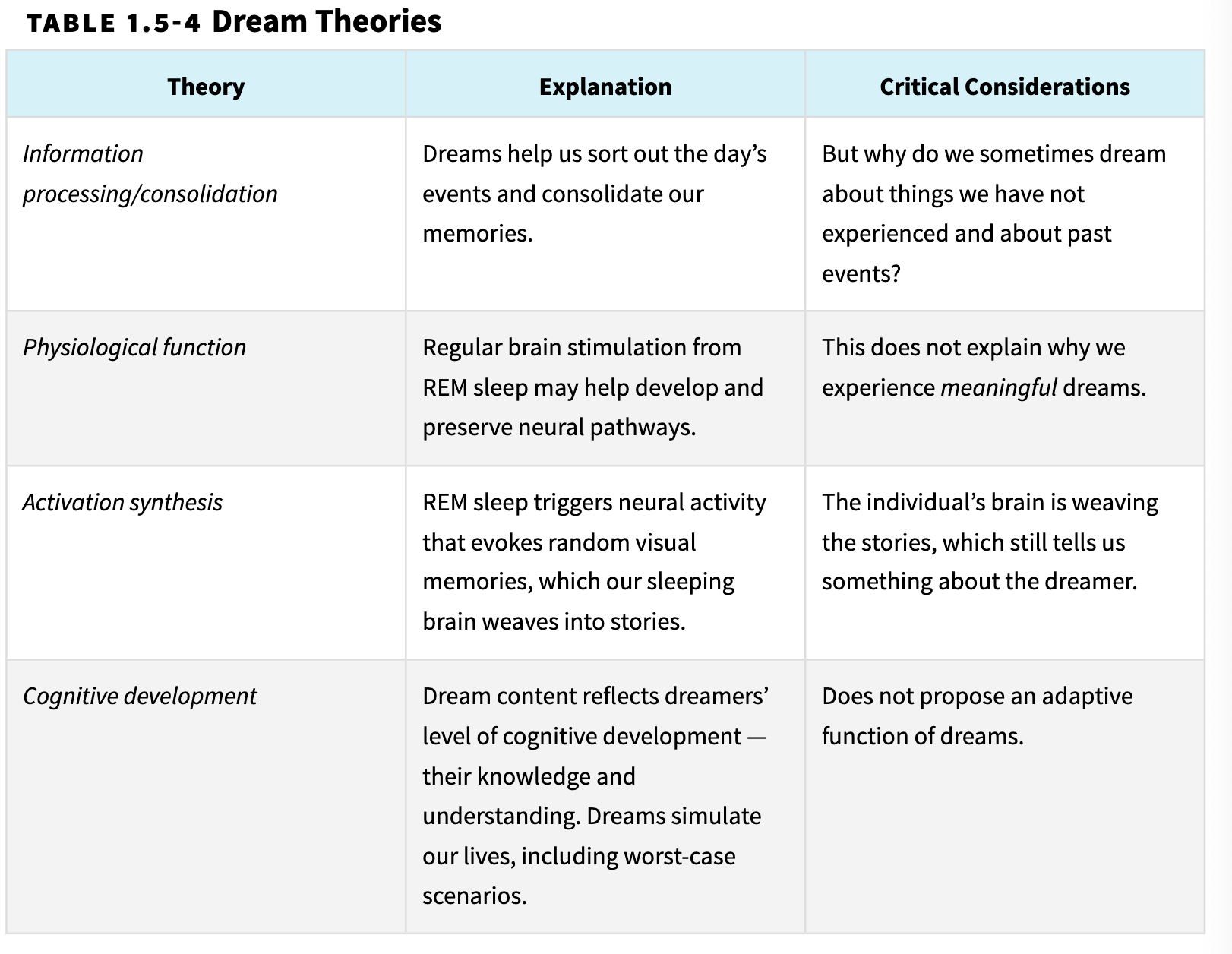
Information processing/consolidation: Dreams help sort the day’s events + consolidate them in memory.
Activation-synthesis theory → the brain’s attempt to synthesize random neural activity (+ Where dreams have no meaning)
The brain synthesizes these random images + sensations w/ existing memories + emotions to create a narrative, which can explain the bizarre nature of dreams
Sigmund Freud pscyhodynamic wish-fulfillment theory → dreams are a way to fulfill unconscious wishes that are unacceptable when conscious
He proposed that dreams have two components: the manifest content (the actual story of the dream) and the latent content (the hidden, symbolic meaning). He believed that interpreting the latent content could help people resolve inner conflicts
Other Theories:
(Physiological function → Regular brain stimulation may help develop and preserve neural pathways in the brain.)
(Cognitive development → Dreams reflect the dreamers’ level of development — their knowledge and understanding.)
his idea that dreams provide insight into the unconscious HOWEVER dreams are actually MEANINGLESS**
REM rebound
spending extra time in REM the next time you sleep
sensation
our sensory receptors → sensory nerve endings that respond to stimuli; + nervous system receive and represent stimulus energies from our environment
perception
the process by which our brain organizes + interprets sensory info
bottom-up processing
info processing that begins w/ sensory receptors + works up to the brain’s integration of sensory info
top-down processing
info processing — YOU interpret what your senses detect
transduction
conversion of on form of energy into another that our brain can use: Vision processes light energy. Hearing processes sound waves. All of our senses
receive sensory stimulation, often using specialized receptor cells
transform that stimulation into neural impulses
deliver the neural information to our brain
psychophysics
study the relationships between the physical energy we can detect + its effects on our psychological experiences
Gustav Fechner
studied the edge of our awareness of absolute threshold → minimum stimulus energy needed to detect a particular stimulus 50% of the time
signal detection theory
predicting how + when we detect the presence of a faint stimulus amid background stimulation (noise) + assumes there is no single absolute threshold + that detection depends partly on a person’s experience, expectations, motivation, and alertness.
subliminal priming
CANNOT consciously detect 50% of the time + below your absolute threshold
difference threshold
or the just noticeable difference: JND + amount of change require to “notice” a change w/in a sense
That detectable difference increases with the size of the stimulus. If we listen to our music at 40 decibels, we might barely detect an added 5 decibels (the jnd). But if we increase the volume to 110 decibels, we probably won’t detect an additional 5-decibel change
Weber’s law
to perceive a difference, two stimuli must differ by a constant minimum percentage (not a constant amount).
for ex: Two lights must differ in intensity by 8%
sensory adaptation
When constantly exposed to an unchanging stimulus, we become less aware of it b/c our nerve cells fire less
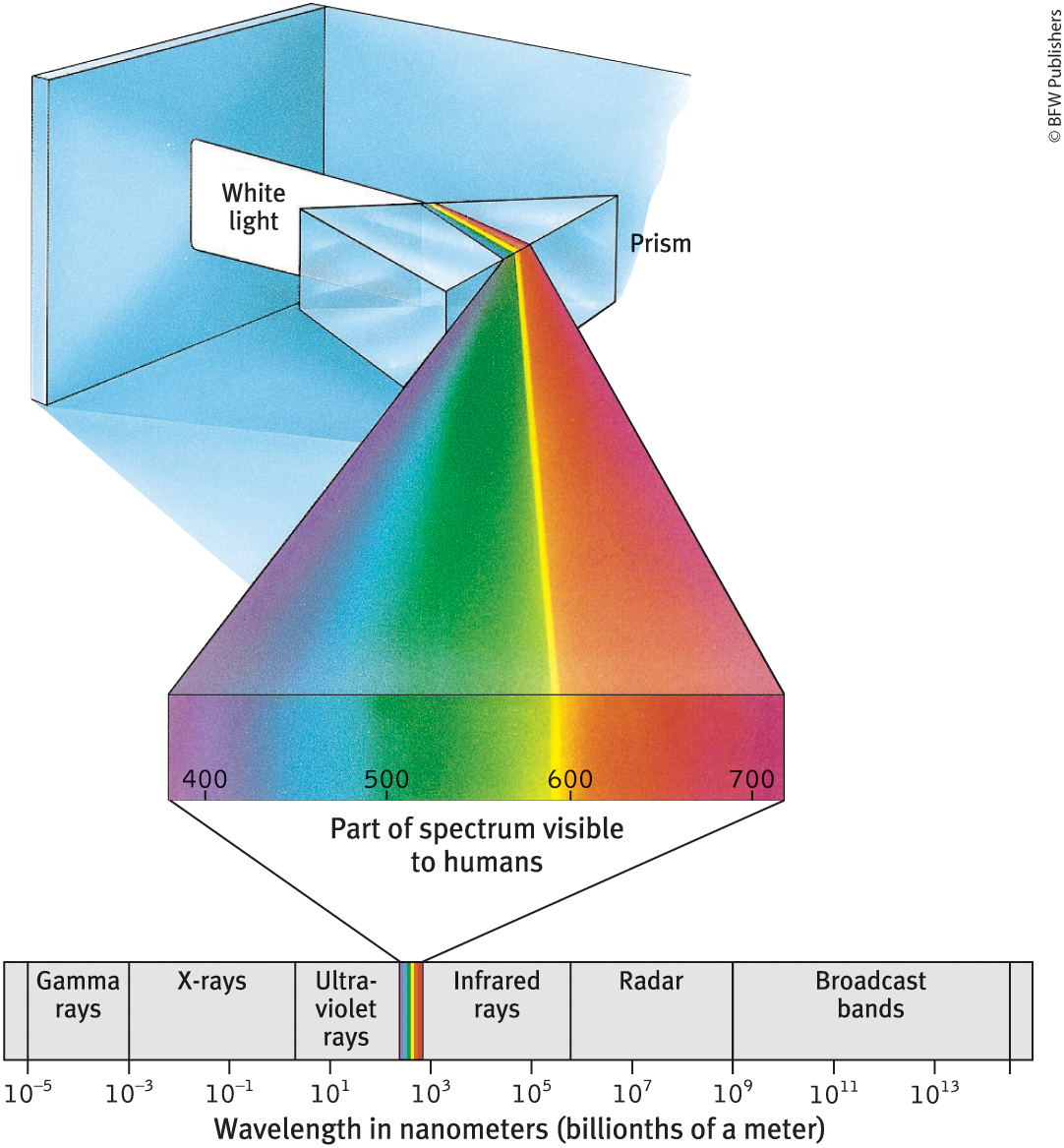
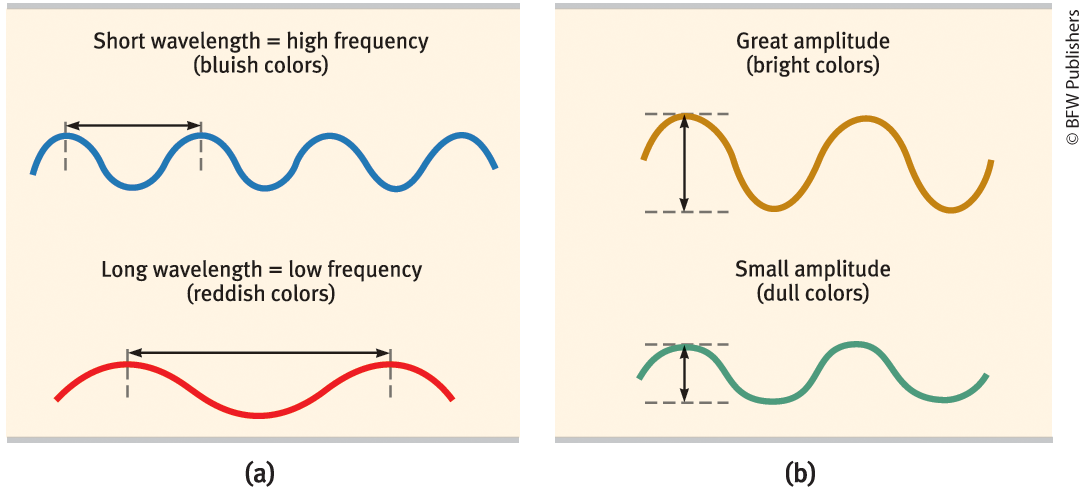
wavelength
distance from the peak of one light/sound wave to the peak of the next + determines hues → color
intensity
the amount of energy the wave contains + influences brightness
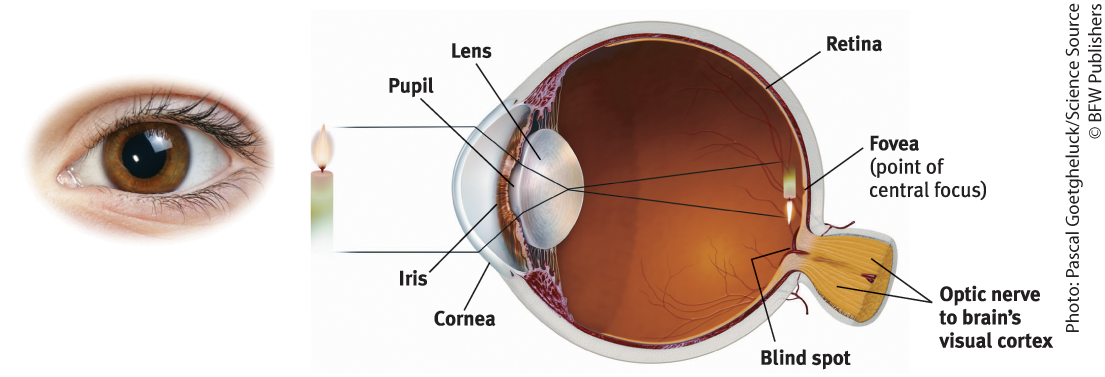
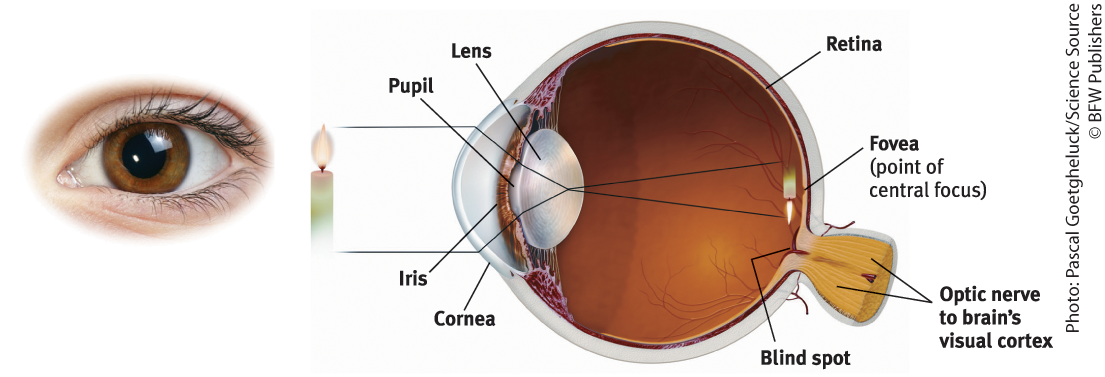
cornea
eye’s clear, protective outer layer + bends light to help focus
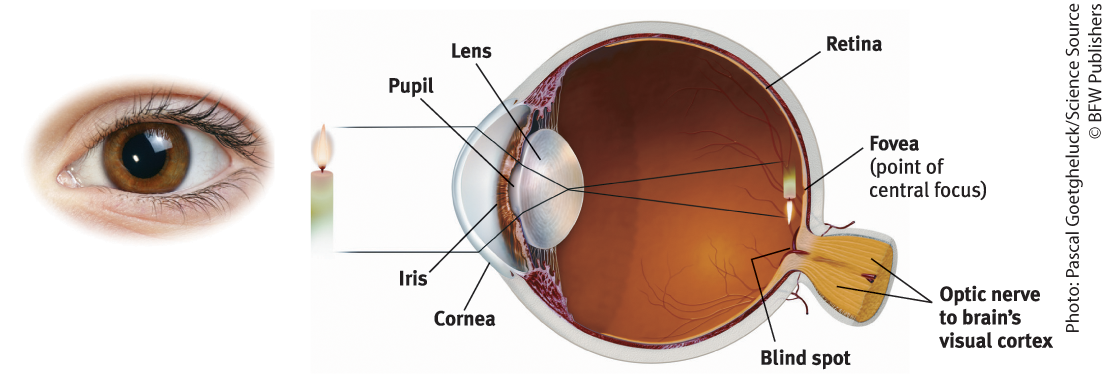
pupil
adjustable opening in the center where light enters
iris
colored muscle that controls in response to light intensity the size of the pupil opening
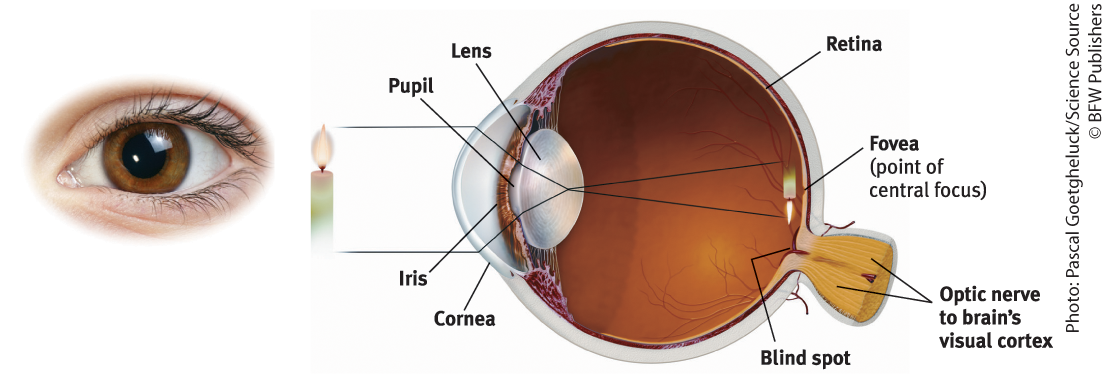
lens
after passing through pupil, light hits the transparent structure (behind pupil) + changes shape to focus images
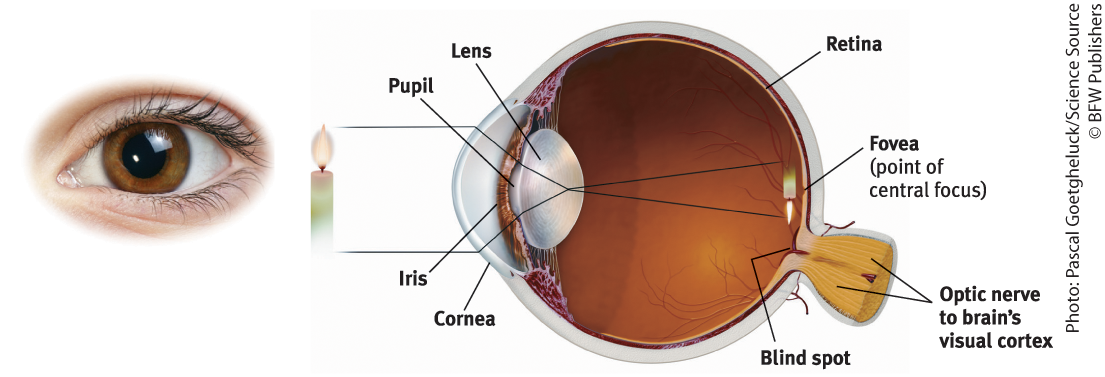
retina
multilayered tissue lining the back inner surface of the eyeball
accommodation
process to focus the rays, the lens changes its curvature + thickness
rods
retinal receptors that detect black, white, and gray + sensitive to movement; necessary for peripheral and twilight vision, when cones don’t respond
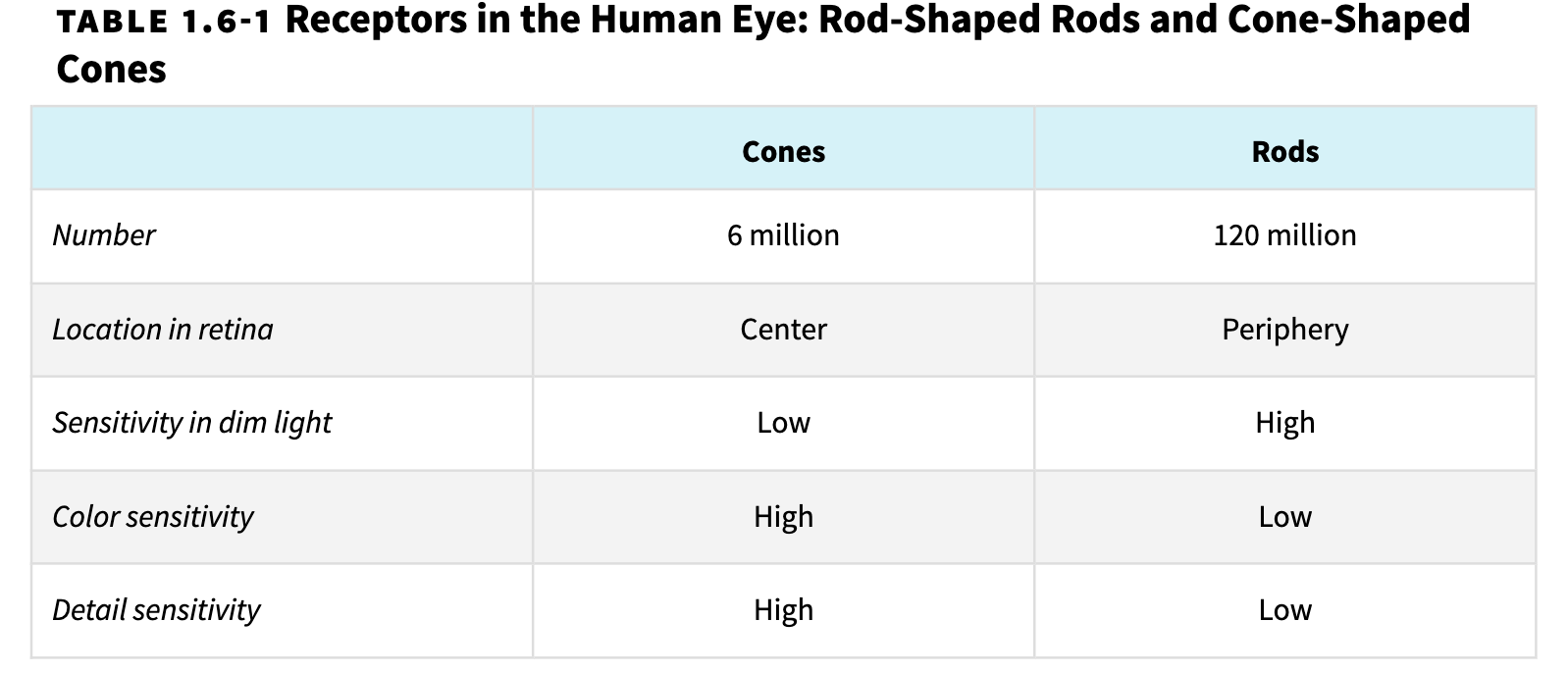
cones
retinal receptors that are concentrated near the center of the retina + function in daylight/well-lit + detect fine detail + give rise to color sensations
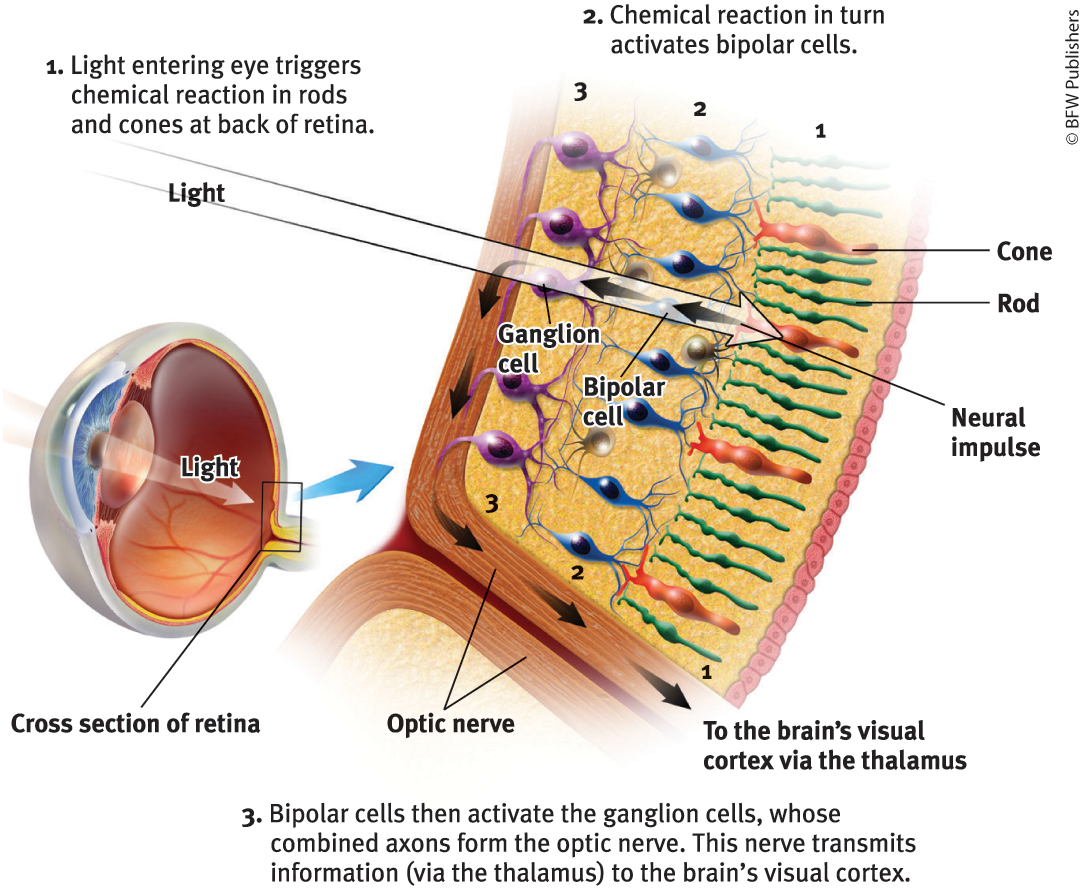
optic nerve
nerve that carries neural impulses from the eye to the brain
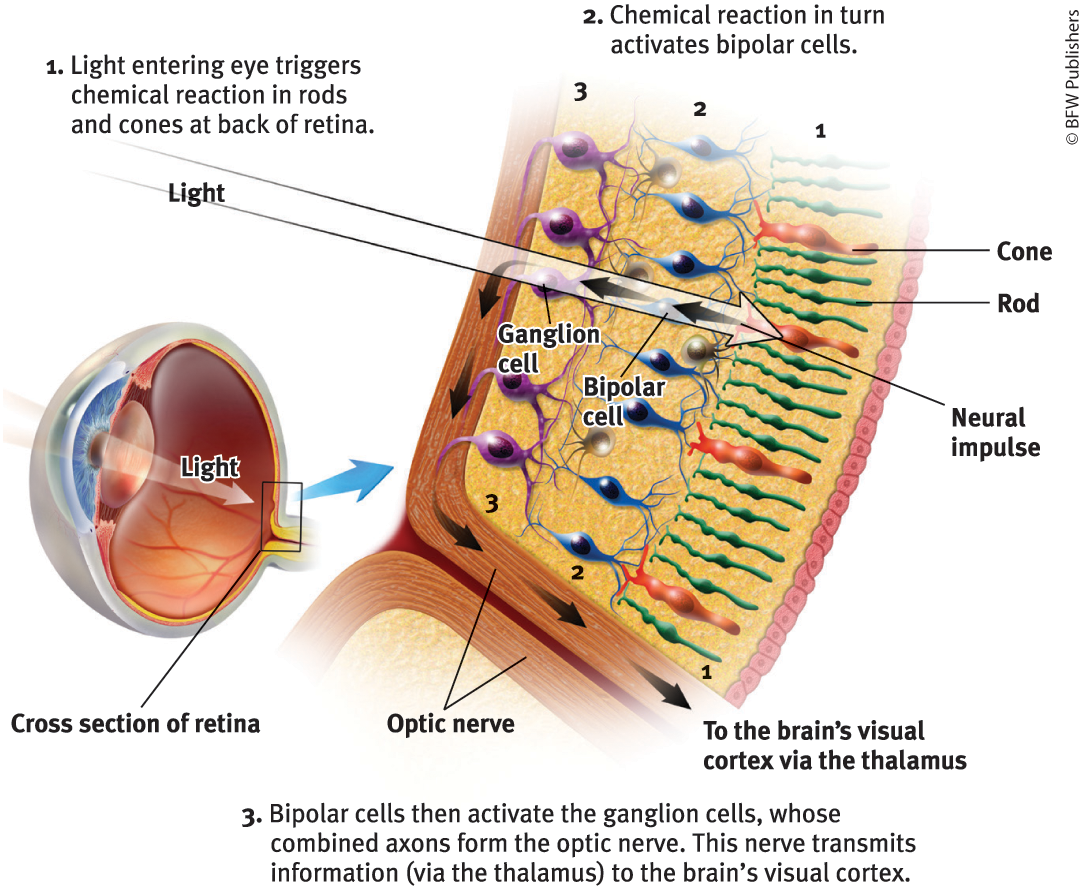
blind spot
no receptor cells + optic nerve leaves the eye
fovea
retina’s area of central focus
Young–Helmholtz trichromatic (three-color) theory
retina contains 3 diff color receptors: red, green, blue, which can produce the perception of any color
ex: the retina has no separate receptors especially sensitive to yellow. But when red and green wavelengths stimulate both red-sensitive and green-sensitive cones, we see yellow
opponent-process theory
opposing retinal processes: red-green, blue-yellow, white-black enable color vision
ex: some cells are stimulated by green and inhibited by red; others are stimulated by red and inhibited by green
antagonistic relationship + negative after images
feature detectors (David Hubel and Torsten Wiesel worked on this)
nerve cells in the occipital lobe’s visual cortex that respond to a scene’s specific visual features — to particular edges, lines, angles, and movements
parallel processing
doing many things at once
audition
sense of act/hearing
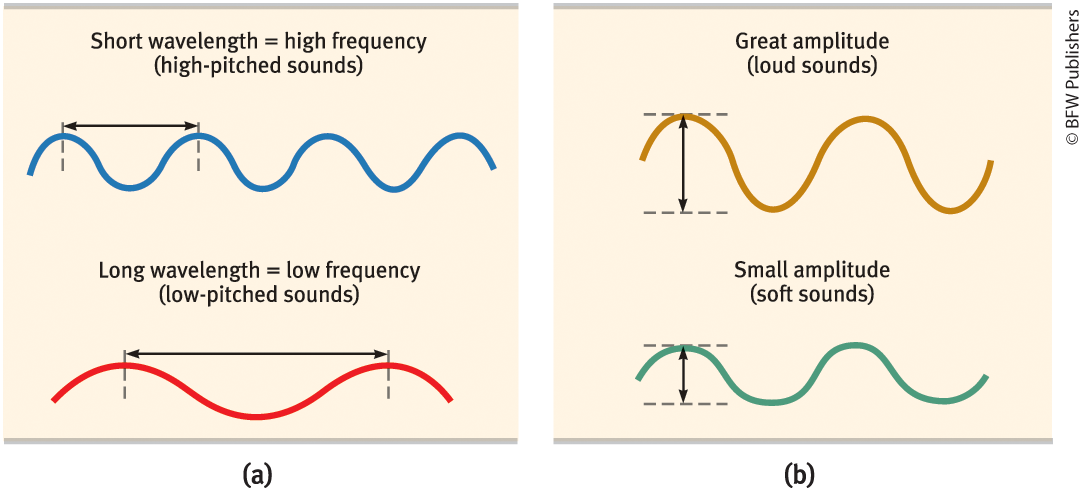
frequency
# of complete wavelengths + determines pitch → high/low tones
middle ear
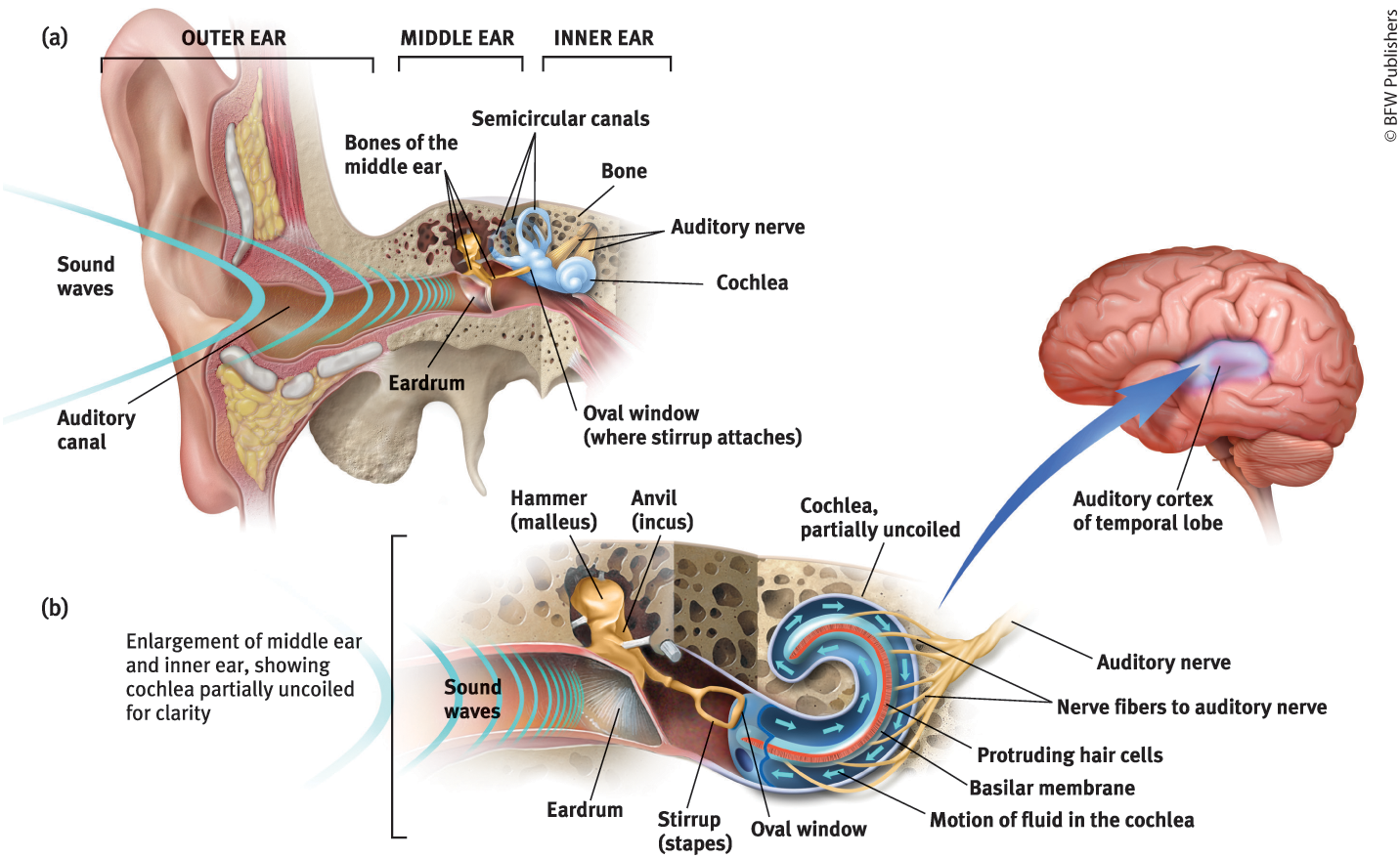
a piston made 3 tiny bones (hammer [malleus], anvil [incus], and stirrup [stapes]) that picks up vibrations + transmits them to the cochlea → a snail-shaped tube in your inner ear → innermost part of the ear, containing the cochlea, semicircular canals, and vestibular sacs
sensorineural hearing loss
common hearing loss caused by damage to cochlea’s receptor cells or the auditory nerve (also called nerve deafness)
conduction hearing loss
uncommon hearing loss caused by damage to the mechanical system that conducts sound waves to the cochlea
cochlear implant
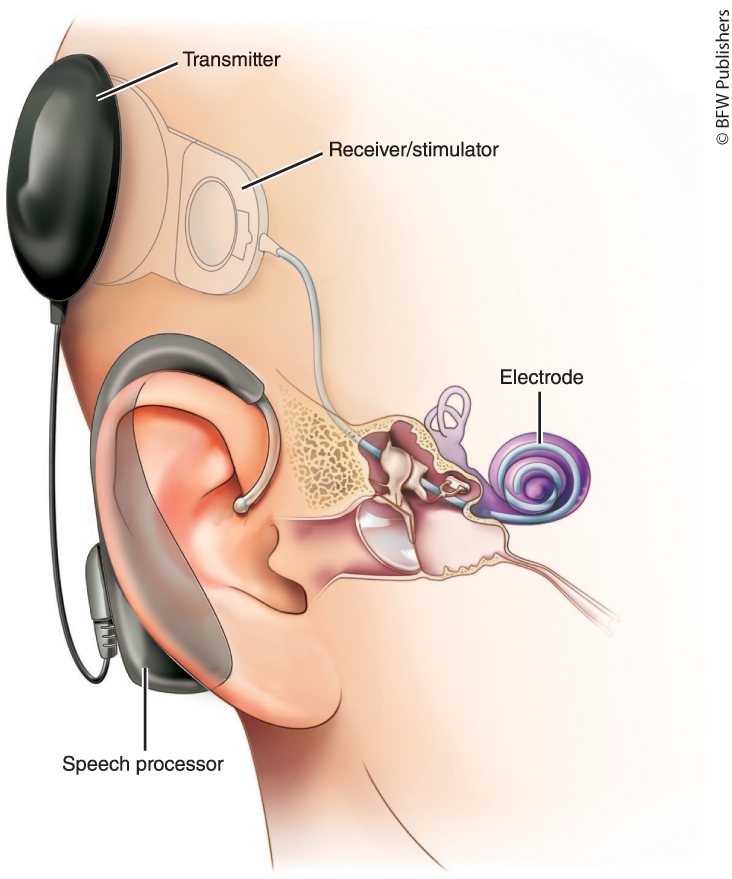
device for converting sounds into electrical signals + stimulating the auditory nerve through electrodes threaded into the cochlea
place theory
theory that links the pitch we hear w/ the place where the cochlea’s membrane is stimulated + explain how we hear high-pitch sounds NOT low pitch
frequency theory
theory that the rate of nerve impulses traveling up the auditory nerve matches the frequency of a tone, thus enabling us to sense its pitch
gate-control theory
spinal cord contains a neurological “gate” that controls the transmission of pain messages to the brain
gustation
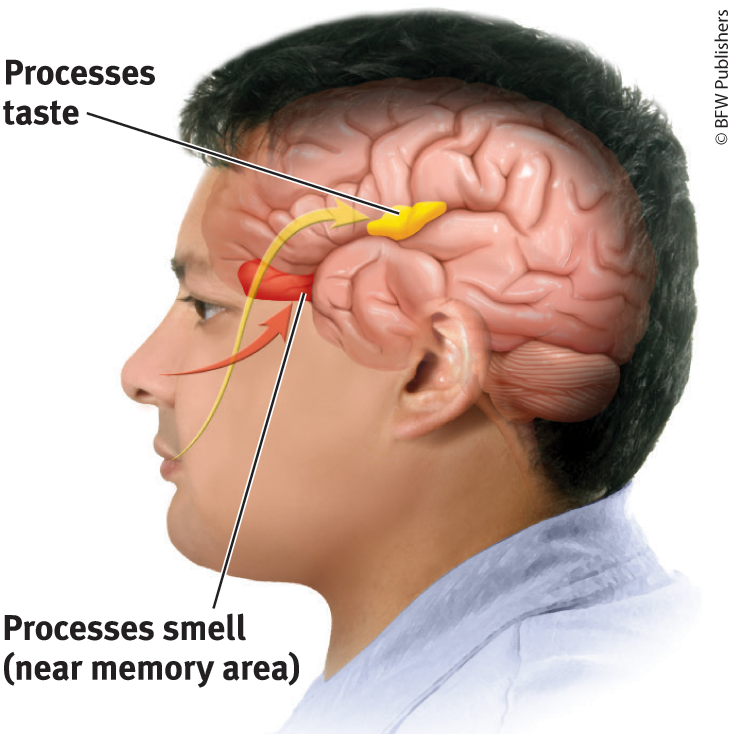
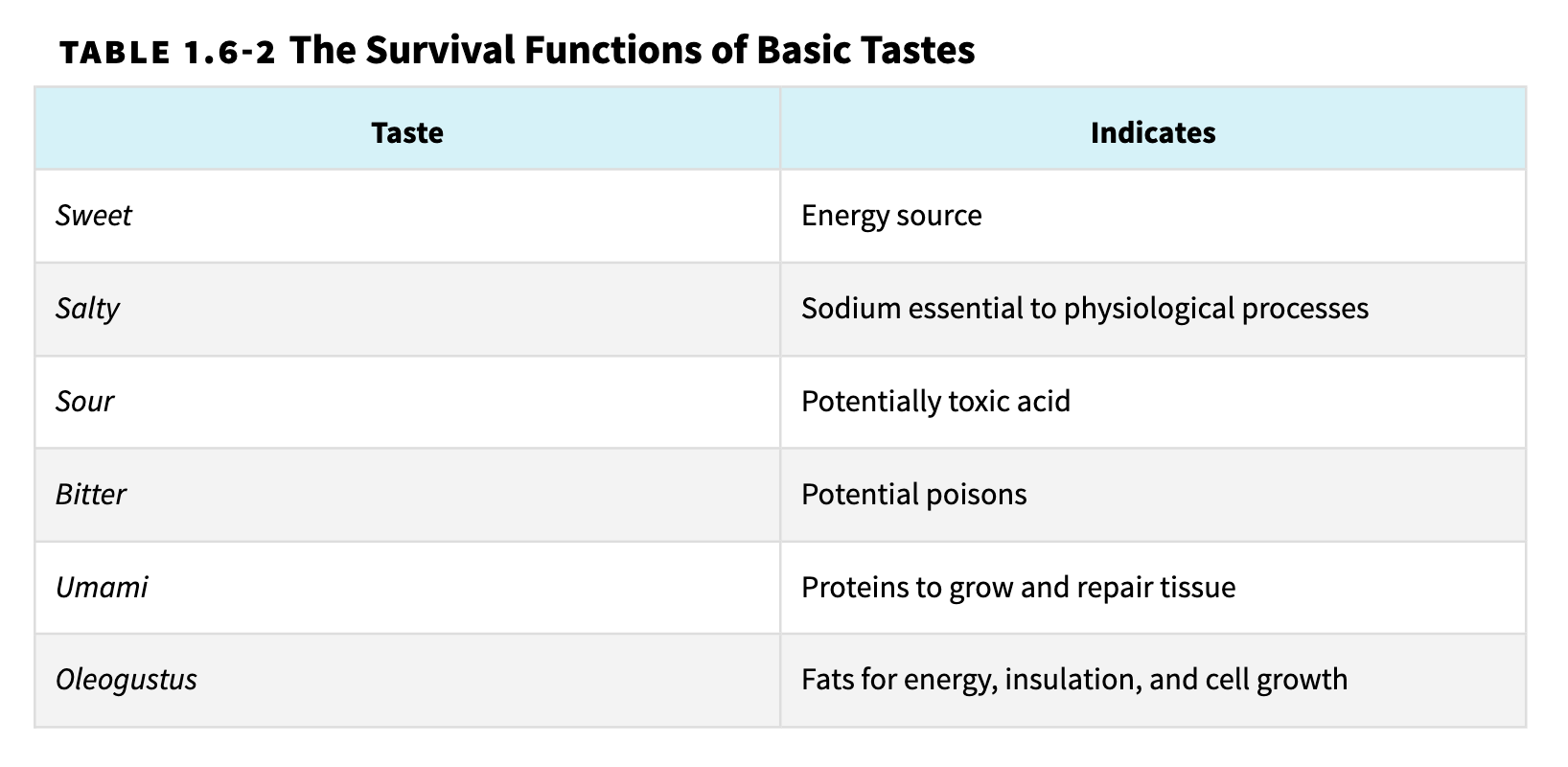
sense of taste
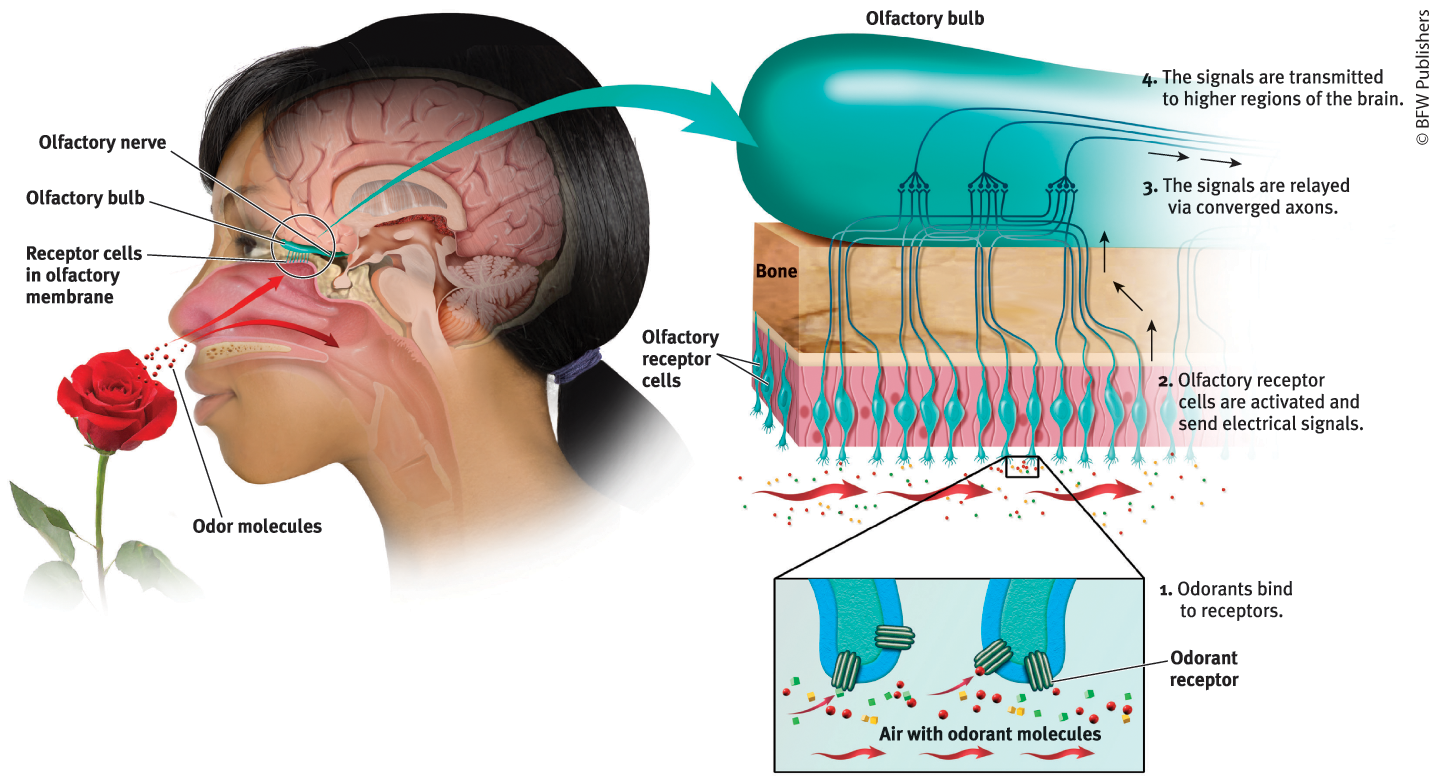
olfaction
sense of smell
kinesthesis
our system for sensing the position + movement of individual body parts.
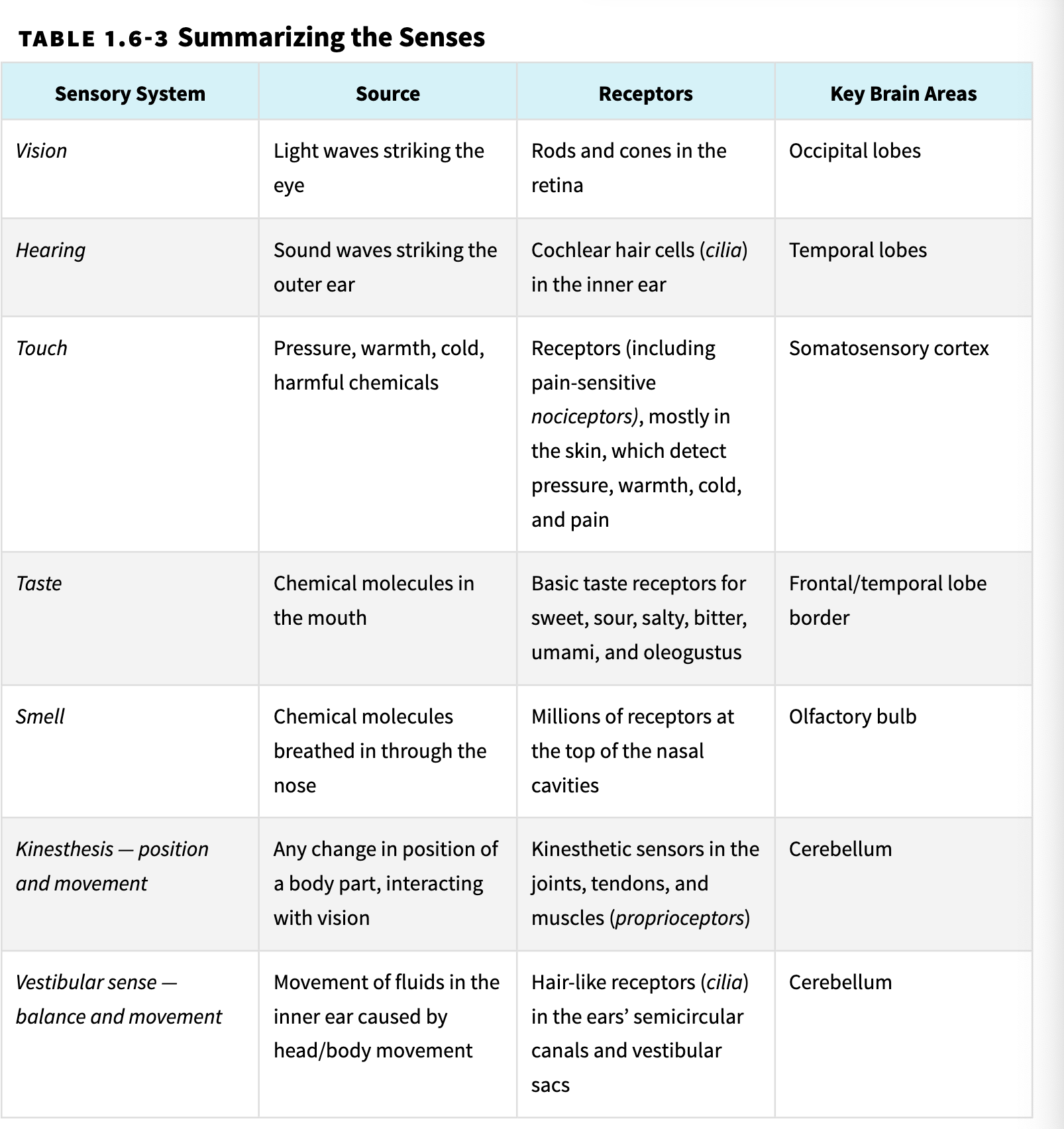
vestibular sense
our sense of body movement + position that enables our sense of balance.
sensory interaction
one sense may influence another
embodied cognition
the influence of bodily sensations, gestures, and other states on cognitive preferences and judgments
Judgments may mimic body sensations: Sitting at a wobbly desk and chair may make relationships seem less stable
Hard chair, hard on crime: People who sat in a hard chair, compared with a soft chair, gave harsher punishments to criminals, and to college students who cheated on a final paper
Steps on how light waves get turned into vision w/ 5 eye parts
light enters the eye through the cornea, which bends light to help provide focus
then light passes through the pupil + the iris. The iris which adjust the size of the pupil to control how much light enters
Then the light hits the lens, which focuses the light into an image on your retina at the back of your eye
The retina converts the focused light into electrical signals
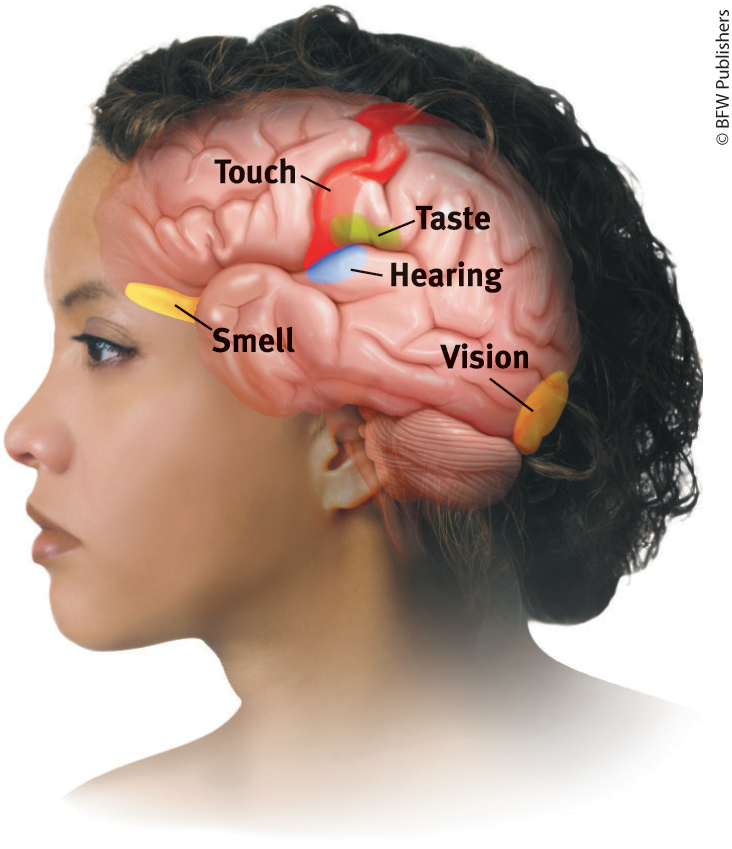
THEN the electrical signals are sent to the occipital lobe of the brain by the optic nerve.