lab exam 1
 Call Kai
 Learn
Learn Practice Test
 Spaced Repetition
 Match
Match Flashcards
 Knowt Play
1/49

There's no tags or description
Looks like no tags are added yet.
Name | Mastery | Learn | Test | Matching | Spaced | Call with Kai | Chat |
|---|
No analytics yet
Send a link to your students to track their progress
50 Terms
Which type of cell division occurs to produce cells that are genetically different from the parent cell?
meiosis

Identify the SPECIFIC type of tissue (NOT epithelial/connective/muscle/nervous categories) shown in the entire image below.
Hyaline Cartilage

Identify the structures indicated by the arrows at label 1 in the image below.
Nuclei

Identify the area indicated below using correct anatomical terminology.
sural

List one FUNCTION of this tissue. Be specific.
allows diffusion of gases, like O2 and CO2 exchange in lungs

What is the FUNCTION of the structure at label 1?
stomach

Identify the SPECIFIC type of tissue (NOT epithelial/connective/muscle/nervous categories) shown in the entire image below.
areolar connective tissue
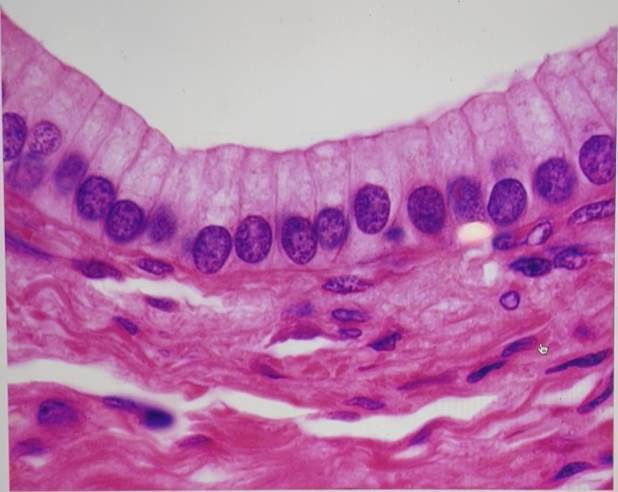
Identify the SPECIFIC type of tissue (NOT epithelial/connective/muscle/nervous categories) shown in the image below.
simple columnar epithelium

IDENTIFY the tissue category (epithelial/connective/muscle/nervous) shown in the image below.
nervous tissue

On rat dissected below, identify the structure indicated by the arrow at Label A
liver

List one FUNCTION of this tissue. Be specific.
allows for stretching to let urinary bladder expand

WHERE in the body would you find the tissue type shown below?
heart wall

Identify the specific layer of the epidermis indicated by the arrow.
stratum corneum
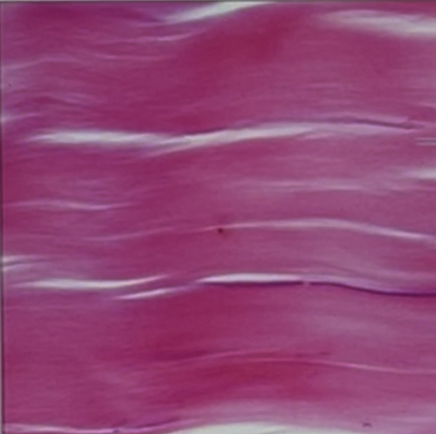
Name a specific FUNCTION of the tissue type shown below:
reduces friction

Identify the SPECIFIC tissue type (NOT epithelial/connective/muscle/nervous categories) shown in the image below.
pseudostratified columnar epithelium

WHERE in the body would you find the tissue type shown below?
in the bone
The serous membrane that covers the lungs is called the:
pleura

Identify the SPECIFIC tissue type (NOT epithelial/connective/muscle/nervous categories) shown in the image below.
dense irregular connective tissue
True or False: In osmosis, water moves from an area of high solute concentration to an area of low solute concentration.
False
Which layer of the epidermis would be immediately deep to the stratum spinosum?
stratum basale
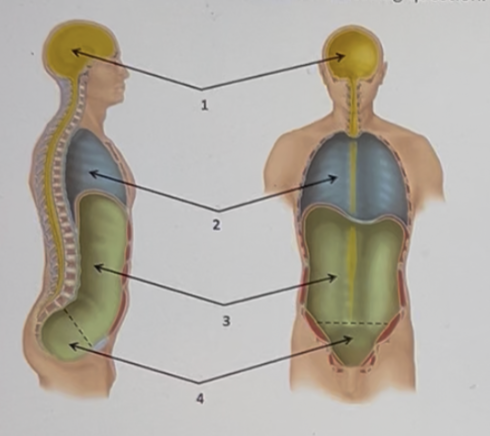
Using the image below to answer the following question: List one organ that can be found in body cavity labeled 4.
urinary bladder
True or false: high molecular weight compounds diffuse faster than low molecular weight compounds.
False

Which stage of cell division is shown below?
metaphase

List one FUNCTION of this tissue. Be specific.
support

Identify the structure at Label 2 on the diagram below:
nucleolus
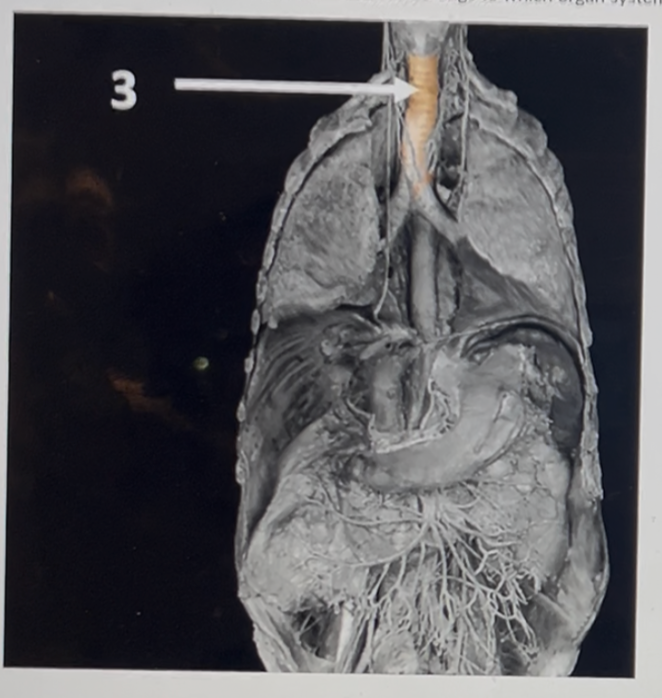
The structure indicated by the arrow at Label 3 belongs to which organ system?
respiratory
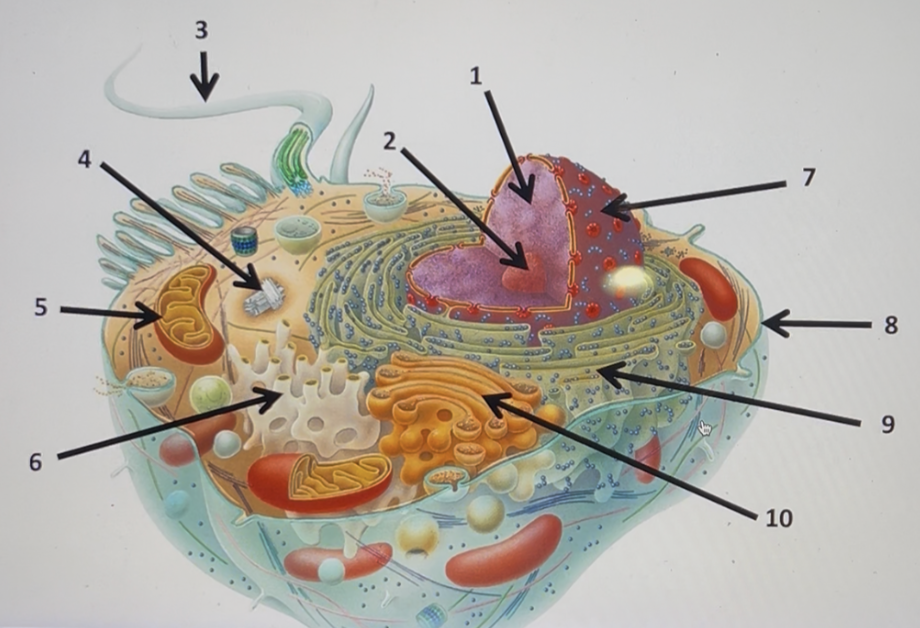
Identify the structure at Label 4 on the diagram below:
centrioles

WHERE in the body would you find the tissue shown below?
lungs
The anatomical term that pertains to the back of the head is:
occipital
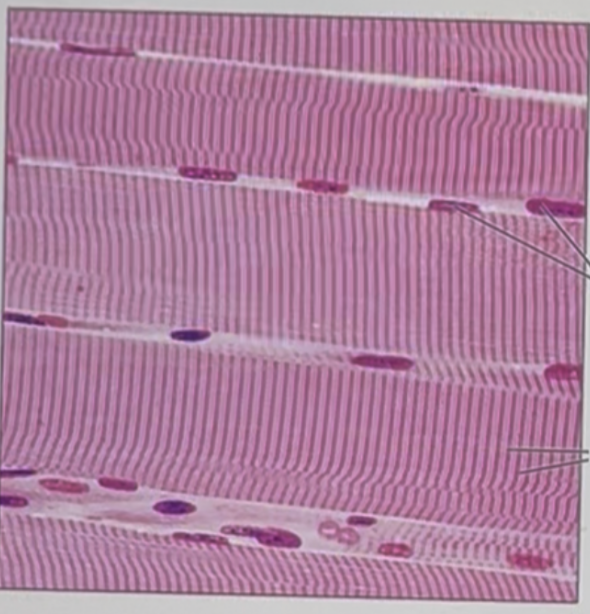
Identify the SPECIFIC tissue type (NOT epithelial/connective/muscle/nervous categories) shown in the image below.

What would happen to the cell in solution 3?
the cell will shrink (crenate).
Write the best word that completes the following sentence: The patellar region is __ to the popliteal region.
anterior

Identify the area indicated below at Label 2 using correct anatomical terminology.
carpal

Identify the structure indicated by the arrow at Label 2.
urinary bladder

Identify the structure indicated by the arrow at Label 3 in the image below.
arrector pilli muscle

Identify the structure at Label 10 on the diagram below:
golgi apparatus
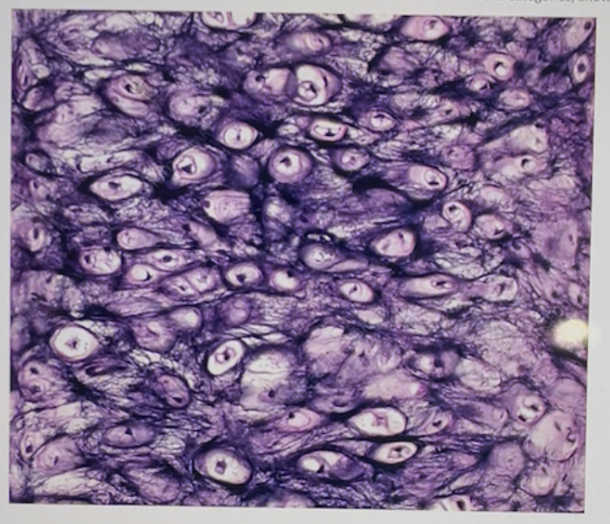
Identify the SPECIFIC type of tissue (NOT epithelial/connective/muscle/nervous categories) shown in the entire image below.
elastic cartilage

WHERE would you find the tissue type shown by the entire image below.
stroma of liver

Which sectional body plane is shown in the image below?
transverse

Which sectional body plane is shown in the image below?
coronal

Identify the SPECIFIC type of tissue (NOT epithelial/connective/muscle/nervous categories) shown in the entire image below.
spongy bone connective tissue

Identify structure 6 indicated by the arrow in the image below. Be specific?
sebaceous gland
Passive processes like __ do not require the cell to expend energy because the kinetic energy of the solute particles cause them to move.
simple diffusion

Identify the layer of the skin indicated by Label 1.
epidermis

Which stage of cell division is shown below?
anaphase

Name a specific FUNCTION of the tissue type shown in the image below:
transport nutrients (oxygen, carbon dioxide)
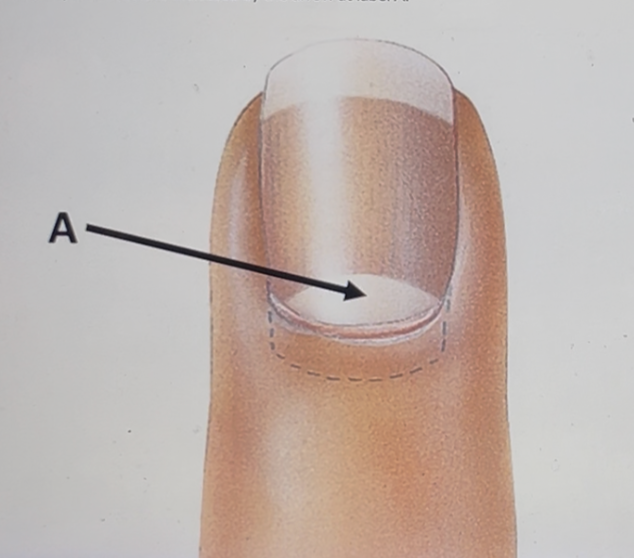
Identify the structure indicated by the arrow at label A
lunula

What is incorrect about anatomical position shown in the image below?
palms facing outward
Insert the appropriate directional term to complete sentence below. The shoulders are __ to the hips.
superior

Identify the SPECIFIC type of tissue (NOT epithelial/connective/muscle/nervous categories) shown in the image below.
simple cuboidal epithelium