4.4 - AUSTRALIA'S COURT SYSTEM
 Call Kai
 Learn
 Practice Test
 Spaced Repetition
 Match
 Flashcards
 Knowt Play
1/16

There's no tags or description
Looks like no tags are added yet.
17 Terms
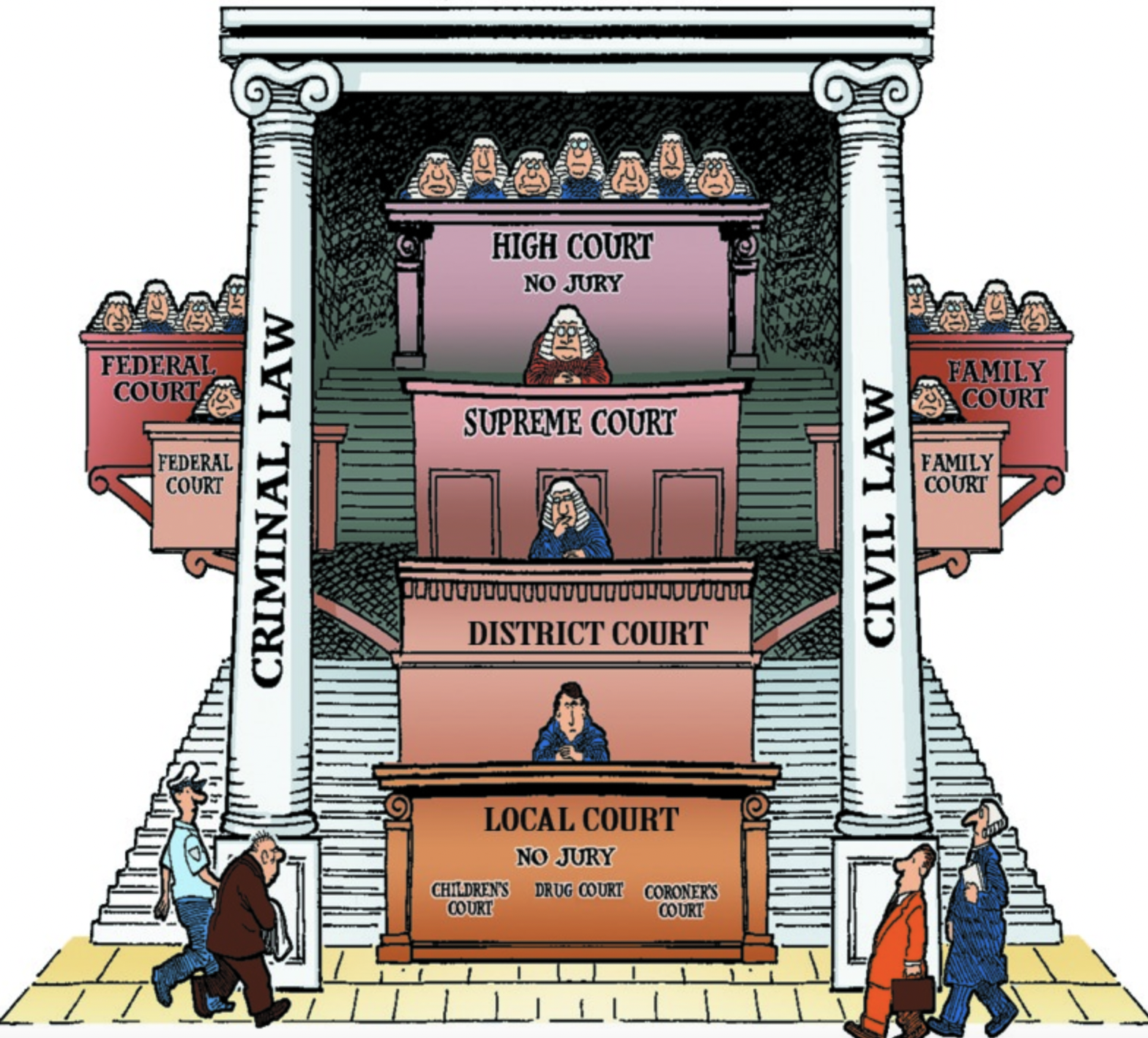
How are the courts sorted in Australia?
Courts are organised in a hierarchy: relates to the seriousness of the offence
What does ‘appealing’ a court decision mean?
An application for a legal decision to be reviewed in a higher court: this happens if an individual is unhappy with the ruling of a lower court
What is the order of the court hierarchy? (include special courts)
High Court of Australia
The Supreme Court
The District Court
The Local Court
Special courts: Children’s Court, Coroner’s Court, Family Court of Australia, The Drug Court of NSW
What is a magistrate?
a court official who hears cases in the lowest court of law
can imprison an offender for up to 2 years per offence/max of 5 years
qualified legal practitioners
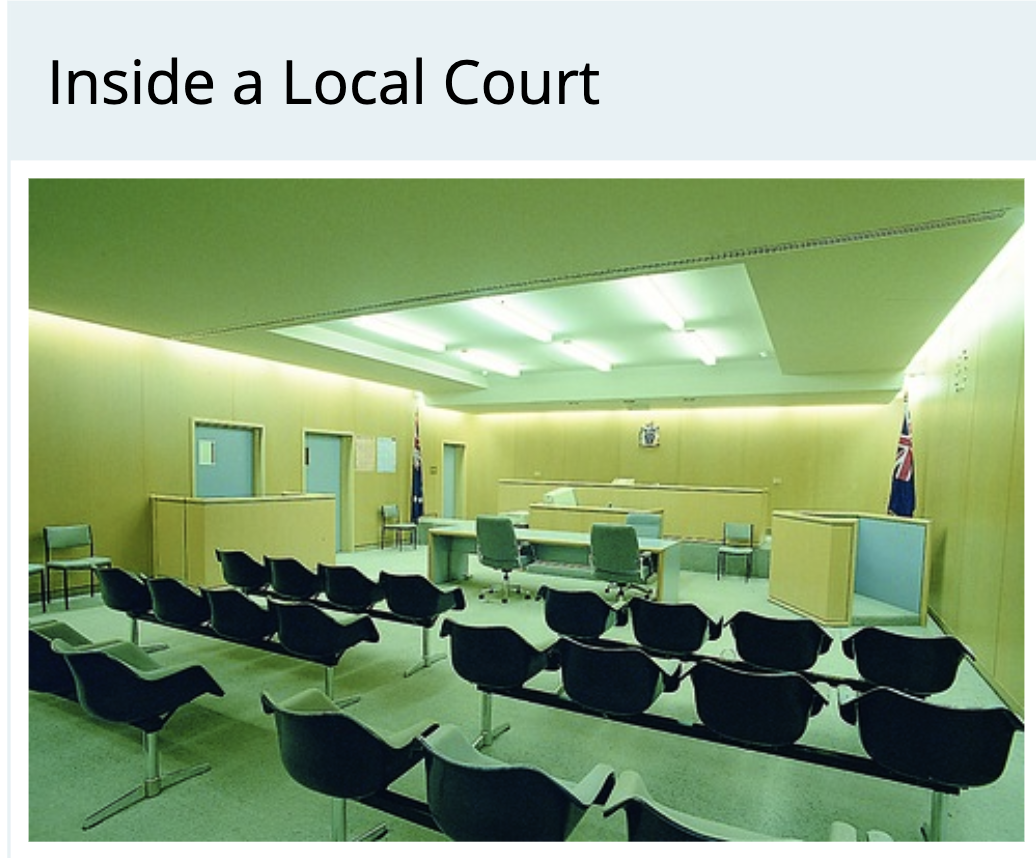
What is The Local Court responsible for?
at the bottom of the hierarchy
160+ local court in NSW
All criminal cases and 90% of civil start here
No jury
Magistrate instead of judge
Also deals with minor civil disputes of up to 100k
Hears summary offences (minor offences) e.g. stealing
What is the District Court responsible for?
‘Middle court’ in the state legal system
Cases heard by judges
Hears serious civil cases (100k - 750k)
Hears serious criminal cases e.g. manslaughter, armed robbery
All motor vehicle accident cases
Hears appeals from The Local Court
Can or cannot have a jury (by request)
If found guilt, judge will decide on an appropriate sentence
Where is the District Court located?
Sydney
What is the Supreme Court responsible for?
highest court in NSW
deals with the most serious criminal cases e.g. murder, treason, sexual assault
serious civil cases (+ $750 000)
located in Sydney
appeals from two lower courts
judgements of the Supreme Court are binding on all lower courts
can impose a wide range of sentences
What does ‘going on circuit’ mean?
When judges of the Supreme and District Court move around to different locations to hear cases: hold sessions of their courts in major regional centres
What is The High Court of Australia responsible for?
located in Canberra
deals with appeals from state or territory Supreme Courts
hears cases concerning the interpretation of the constitution
through reaching verdict, creates laws that then affect the powers of parliaments
shifts balance of power away from the states and towards the federal government (Commonwealth)
federal court, so any decision it makes applies to whole country
no jury, 7 judges (Chief Justice and six Justices)
decisions final
What are the four specialised courts?
Children’s Court
Coroner’s Court
Family Court of Australia
The Drug Court of NSW
What is the Children’s Court?
deals with cases involving the care and protection of children and young people
people under 18 who have committed crimes
closed to the public and media
similar personnel to the Local Court, however specifically trained for younger people
What is the Coroner’s Court?
special Local Court
investigates deaths by unnatural causes
determines identity of deceased and the date, place, circumstances and medical cause of death
investigates cause and origin of fires/explosion
What is the Family Court of Australia?
helps Australians resolve complex family law matters e.g. divorce, parenting disputes
What is the only grounds needed for divorce in Australia?
That the marriage has irretrievably broken down. Demonstrated by the couple being separated for over 12 months.
What is The Drug Court of NSW?
tries to provide long-term solutions for offenders caught up in cycle of drug use and crime
must be eligible for the Drug Court Program
offender must take regular drug tests and reg
encourages offenderes to:
become sober
get a job
reduce need to commit crimes
What do offenders part of The Drug Court of NSW do?
regular drug test
regular visit to court to report on progress
often get applause of cheering as a reward