ap bio unit 3 exam 1 review
 Call Kai
 Learn
 Practice Test
 Spaced Repetition
 Match
 Flashcards
 Knowt Play
1/29

There's no tags or description
Looks like no tags are added yet.
30 Terms
what type of macromolecule is an enzyme?
protein
define the term catalyst and describe how catalysts affect chemical reactions in cells
catalysts are compounds that increase the rate of a chemical reaction by lowering the activation energy (energy required to cause the reaction). biological catalysts are called enzymes, which speed up reactions in cells
how does an enzyme impact a chemical reaction (graph)?

what is an enzyme
a protein that functions as an organic catalyst to speed up the rate of a chemical reaction
what is a substrate
reactant molecules in an enzymatic reaction; what an enzyme attaches to
what is the active site
the portion of an enzyme that binds substrate and converts it to product
what is an inhibitor
a compound that decreases the activity of an enzyme
what is the enzyme-substrate complex
a temporary molecular structure formed when a substrate molecule binds to the active site of an enzyme
what is activation energy
the energy input necessary to reach the transition state; the energy required to cause the reaction
describe the relationship between the enzyme’s active site and its specific substrate
an enzyme’s active site and the substrate must have the same physical (shape, size, etc.) and chemical (polarity, charge, etc.) properties
describe the lock-and-key model of how an enzyme binds with a substrate
the enzyme’s active site (the keyhole) has a rigid, pre-formed geometric shape that is an exact, complementary match for its specific substrate. each enzyme-substrate pair perfectly fits together at the active site
enzyme specificity
each enzyme has exactly one substrate it binds to/reacts with
describe the induced fit model of how an enzyme binds with a substrate
an enzyme's active site is a flexible, non-rigid structure that molds and adjusts its shape in response to the substrate, positioning it in an optimal position for the reaction to occur, lowering the activation energy
when substrate binds to active site, enzyme changes shape to facilitate reaction
describe the relationship between the structure of a protein and its function
the structure of a protein directly determines its function. the folding (structure) of a protein depends on the intermolecular forces between amino acid R-groups which then determines the protein’s function. if this folding is altered in any way, its function will also be altered
what is denaturation and how does it affect enzyme function?
denaturation is the unfolding of a protein due to high temperatures or too high or low pH levels. if an enzyme denatures, it reduces its efficiency or even loses its function
what are two environmental changes that may result in enzyme denaturation?
high temperatures
too high or low pH levels
is enzyme denaturatoin always a permanent loss of function?
no, because some misfolding is correctable
how might the concentration of an enzyme impact the rate of enzyme activity?
as enzyme concentration increases, the rate of enzyme activity increases as long as the substrate is in excess

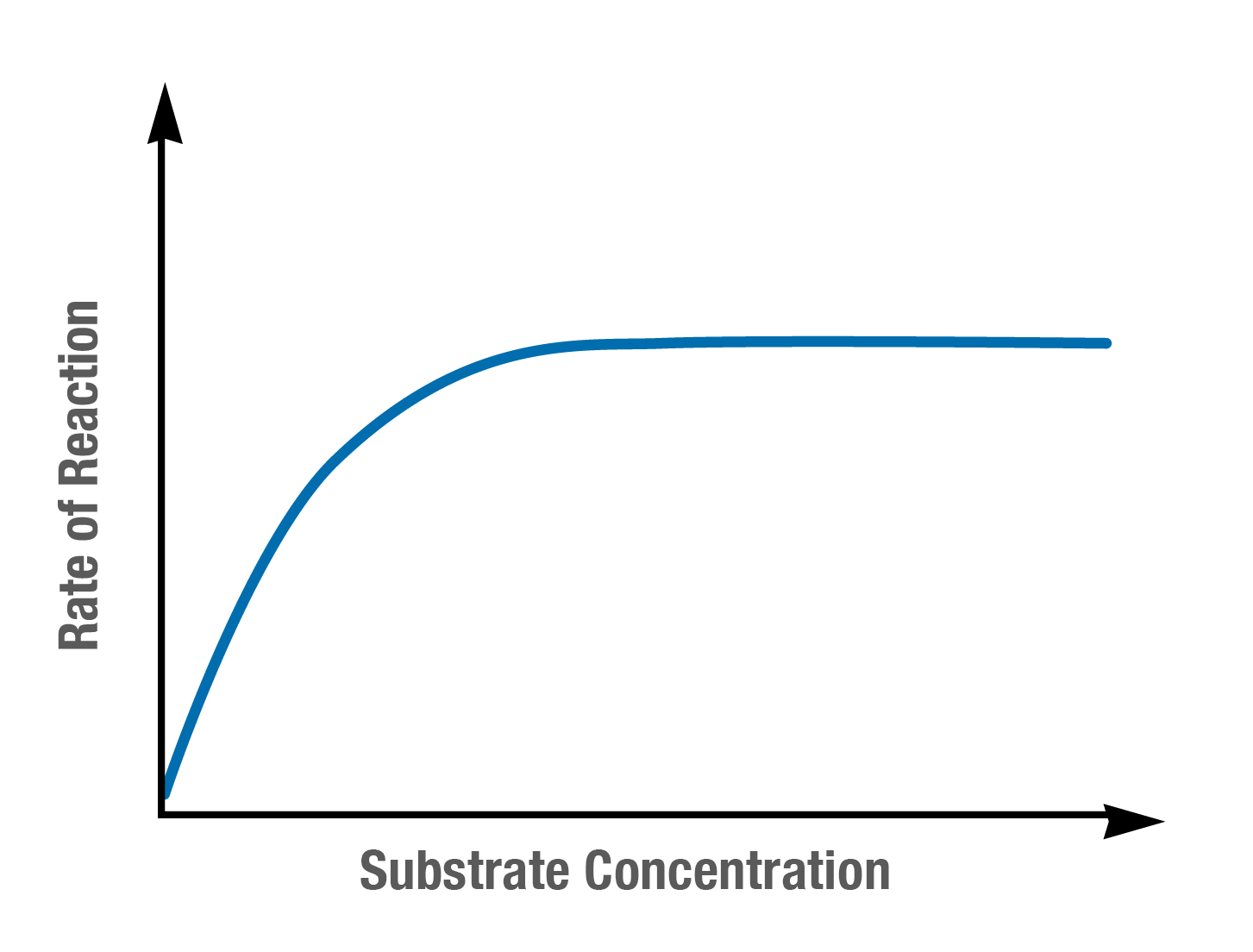
how might the concentration of a substrate impact the rate of enzyme activity?
as substrate concentration increases while the amount of enzyme stays constant, the rate of enzyme activity increases to a point but hits a maximum rate of reaction since there is only a set amount of enzymes to facilitate the reaction
how might the concentration of a product impact the rate of enzyme activity?
as product concentration increases while the enzyme concentration stays constant, the rate of enzyme activity/rate of reaction decreases because the amount of substrate the enzyme can react with decreases
what is the relationship between temperature and molecular movement? how does this apply to enzyme reaction rate?
as temperature increases, kinetic energy also increases, causing molecules to move faster and collide more often. this increases the rate of enzyme reactions since the rate of collisions between the enzyme and substrate increases
what is the difference between a competitve and non-competitve/allosteric inhibitor?
competitive: binds to enzyme’s active site, blocking substrate from binding to active site
non-competitive/allosteric: bind elsewhere on enzyme on allosteric site, changing the shape of the active site and preventing substrate from binding to active site due to the shape change
what does exergonic mean
describes reactions with a negative ∆G that proceed spontaneously and release energy
what does endergonic mean
describes reactions with a positive ∆G that are not spontaneous and so require an input of energy
what does anabolic mean
reactions use energy to build more complex molecules from relatively simple raw materials
synthesis (dehydration synthesis)
endergonic
A + B —> AB
what does catabolic mean
reactions break down larger, more complex molecules into smaller molecules and release energy in the process
degradation (hydrolysis)
exergonic
AB —> A + B + energy
what is metabolism?
the sum of all chemical reactions within a living organism
what are the three factors affecting enzymatic speed
substrate concentration
temperature and pH
enzyme concentration
what is a metabolic pathway and why are they common in living organisms
series of chemical reactions that build or break down molecules in cells; a connected sequence of chemical reactions inside a cell that takes a starting molecule (substrate) and transforms it step-by-step through intermediate compounds into a final product
allow for efficient use of energy since the product of one reaction becomes the reactant in the next reaction, with each reaction in a pathway being small and specific, allowing a single enzyme to handle just one minor change very quickly
what is feedback inhibition and how does it regulate metabolic pathways
a cellular regulatory mechanism where the end product of a metabolic pathway temporarily inhibits an enzyme involved in an earlier step of the same pathway (typically the first) by binding to the allosteric site. this prevents the beginning substrate from binding to the enzyme, so the entire process cannot proceed until an adequate amount of the product is depleted
what is a coupled reaction
the driving of a non-spontaneous reaction by a spontaneous reaction
endergonic and exergonic reactions are partnered (happen at the same time) to use energy in a more efficient way