Hearing Aids, Cochlear Implants
 Call Kai
 Learn
 Practice Test
 Spaced Repetition
 Match
 Flashcards
 Knowt Play
1/59

There's no tags or description
Looks like no tags are added yet.
60 Terms
power source, microphone, microchip/amplifier, and receiver
all technology needs these parts…
power source
battery(s) - disposable or rechargeable OR power plug
microphone
the place the sound comes into the device from environment
microchip/amplifier
the digital technology that modifies the sound to support the user (digital signal processing)
receiver
the place the modified sound leaves the device and is entered into the ear
air conduction and bone conduction hearing aids
what are the two types of hearing aids?
air conduction hearing aids
multiple styles and power levels
digital technology
multiple programs/settings
3 levels of technology (basic, mid-level, high end)
bone conduction hearing aids
deliver sound through bone vibration
attach to skull by implanted screw or magnet (young children use with a headband)
more limited styles and power levels
fewer programs/settings
hearing aid batteries
include 675, 13, 312, and 10
run on # of hours (depends on how many hours a day
#10 is used for smaller aids with less features
rechargeable
many hearing aids are now _______
13 and 312
which hearing aid battery sizes are the most common?
rechargeable hearing aids
most last 24 hours and are fully charged in 4 hours
people with severe hearing loss wear these because they wear them at night to hear for emergencies
hearing aid manufacturers
starkey, widex, resound, phonak, oticon, and signia
starkey
is a hearing aid manufacturer that does good with custom fit
widex
is a hearing aid manufacturer used for tinnitus patients and music lovers
phonak
is a hearing aid manufacturer that is used for ski slope audiograms (trouble with higher frequency sounds)
resound
is a hearing aid manufacturer that works well with cochlear implants
oticon and signia
are hearing aid manufacturers that are good for new patients
mini behind the ear
also called receiver in the canal (RIC) or receiver in the ear (RITE)
pros: discrete/small, colors to match hair/skin, comfortable, no plugged up feeling, and no earmold impression/can buy “off the shelf”
cons: limited low frequency amplification, wax can migrate into the receiver (have to change receivers), need regular in-office cleanings and replacements, and can get wind noise

traditional behind the ear (BTE)
pros: wide power range abilities (for patients who refuse CI), earmold can be cleaned and/or replaced as needed (infants and children need frequent new molds as ear grows), controls slightly larger and easier to manipulate, and easily pairs with HAT
cons: may be more conspicuous, earmold causes a plugged-up feeling, and possible wind noise

completely in the canal (CIC)
pros: very discrete/”invisible”, needs string to remove, less/no wind noise, can use phone normally
cons: very small controls/hard to manipulate, cannot be used in children’s ears (not enough room), too small for additional features like telecoil and directional microphone, can feel plugged up, moisture and wax migration can damage the aid, can only use small battery so battery life is shorter, does not connect to HAT

in the canal (ITC)
pros: can accommodate telecoil, directional microphone, less plugged up feeling than CIC, especially if vented
cons: still slightly visible, susceptible to moisture and wax damage, small battery/limited battery life, wind noise, does connect to HAT
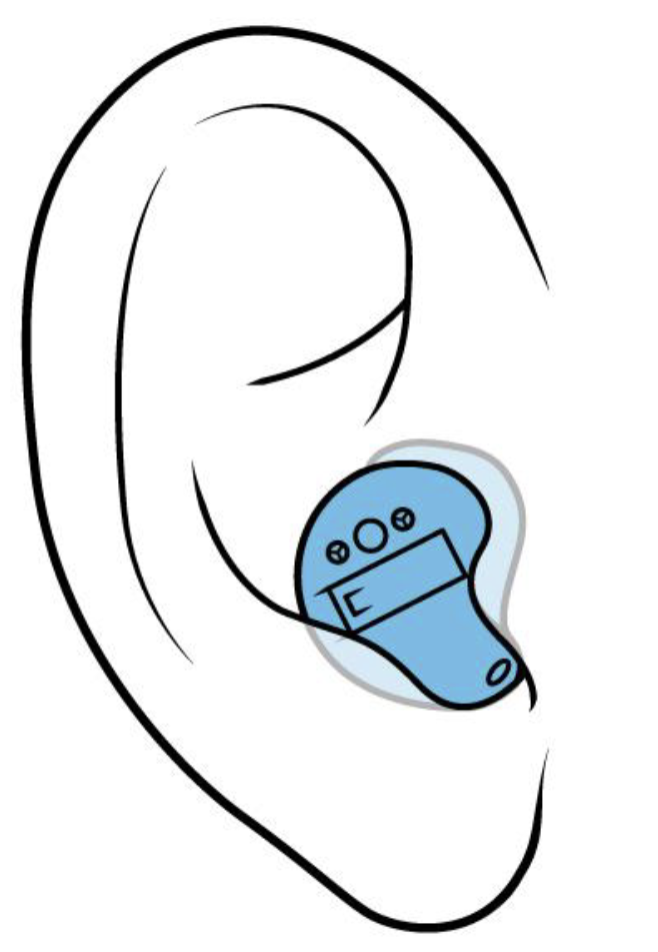
in the ear (ITE)
pros: larger size better accommodates telecoil, directional or duel microphones, can add streaming capabilities (bluetooth), and easier to handle than ITC/CIC
cons: highly visible, telecoil smaller so not as strong as BTE, wind noise, and wax/moisture damage

gain from digital hearing aids
digitally varied by the amount of incoming sound, varies depending on frequency, set through software via computer interface, and can be different for each program/setting
volume from digital hearing aids
no volume control (or limited volume) and hearing aid analyzes incoming signal and adjusts gain as prescribed in the software
on/off from digital hearing aids
open/close battery case, no switch/button and opening and closing the battery door also resets hearing aid to program #1
programs from digital hearing aids
2-4 programs for different listening situations, change programs by pushing button or cell phone app, and can be de-activated for children, compromised adults
features of hearing aids
gain: differs by predetermined frequency bands (called channels)
microphone directionality: directional, omni directional
multiple programs: everyday, noisy, telephone, for places with a lot of echo
noise reduction
feedback reduction
telephone connection (t-coil)
data logging: can see how many house per day and in what types of sound environments
true
true/false: no hearing aid will completely eliminate noise
feedback reduction
in hearing aids, stops annoying high-frequency whistling, squealing, or buzzing sounds that happens when amplified sound escapes the ear canal and re-enters the microphone to form a loop
frequency response
digital hearing aids have multiple frequency bands (4 to 16)
originally, research does not support benefits of more than 8 bands
each band can be programmed with its own gain and compression features
frequency bands are a group of frequencies (500-1000 Hz, 3000-5000 Hz)
feedback
squealing or buzzing sound emitted from hearing aid because of sound leaking out
ear canal (poor seal/poor fitting device)
ear mold (too small/big; crack in tubing)
ear hook (crack'; loose connection)
hearing aid (needs repair)
escaped sound being picked up by the microphone and re-amplified (causes distortion, some users can hear it, some cannot; depending on hearing loss)
telecoil
used for phone access
used for looping systems (individual streamer used for TV, HAT, phone, room system in museum, theatre, movies)
directional microphone
picks up sound coming from a particular direction in preference to others (usually forward)
picks up signal where mic is pointing (can be front, back, sides)
dual microphones
compares/contrast signals and reduces background noise
like being able to prioritize speech rather than noise
wireless capabilities
allows connection to HAT (hearing assistive technologies)
bluetooth streaming
allows wireless access to other media (TV, cellphone, computer)
can be streamed to both ears simultaneously (better word discrimination)
requires devices to be paired
is used in most remote microphone technologies
also used in “biaural” hearing aids
telecoil
induction loop in hearing aid interfaces with induction loop in telephone
hear clearly through telephone without feedback
also used with “loop systems” in theaters, movies, churches, and other public venues
available in air and bone conduction hearing aids (except CIC) and in cochlear implants
cros aids
used for asymmetrical hearing loss or single sided deafness
looks like two hearing aids
hearing aid on “worse/dead” side transmits sound wirelessly to the “better/normal” ear (all sound enters the better ear)
sounds are mixed and timing cues are preserved so user “feels like” they are hearing from both sides
increases performance in noise
provides localization cues
cros
for people who have complete or severe single-sided deafness and normal or near-normal hearing in the other ear
bicros
for people who have complete hearing loss in one ear and existing hearing loss in the better ear
lyric
is a disposable hearing aid that is inserted by audiologist; worn 24/7 until battery dies; replaced by audiologist
pros: invisible, don’t have to manipulate (placed right before eardrum)
cons: no additional connectivity, limited power range, requires replacement every 8-14 weeks, costs about $3000 per ear/per year

lyric
a type of hearing aid that is not available to adults with chronic ear infections, signifiant wax production, very small, narrow, or oddly shaped ear canals
can shower and splash in water, but cannot “swim/dive”
bone conduction aids
3 manufactuers
can be unilateral or bilateral
can connect to other technologies
up to 7 years old, use a headband
older than 7 years old, use magnet or screw attachment

atrophy of the unaided neural system
impacts pathways and efficiency of the central system
binaural summation
amplified sound from both ears reaching brainstem at some time produces an increase of 3 dB
binaural squelch
ability to hear in noise
localization
head shadow effect
ability to tell where sound is coming from
head shadow effect
head acts as a barrier for high frequency sounds
if sound is coming from left side, it will take a couple of seconds to reach the right side)
one side amplification
when there is unilateral loss, very poor speech recognition, and no auditory nerve
cochlear implants
have up to 22 channels that are inserted into cochlea
hybrid implants
acoustic amplification + electrical stimulation helps preserve low frequencies and helps with clarity of higher frequencies
currently approved for adults only (18+)
multichannel stimulation
feature of cochlear implant with electrode array with multiple contacts (channels) inserted into scala tympani which then lays just under the scala media/organ of corti
transcutaneous connection of external and internal hardware
feature of cochlear implant where there are magnets under the skin and on top relay the digital info
telemetry
feature of cochlear implant
computerized check of the integrity of the electrode array post surgery
M level
feature of cochlear implant
is maximum tolerance (LDL)
T level
feature of cochlear implant
is threshold (can detect 50% or 2/3)
candidacy for cochlear implants
PTA = 60 dB or worse
adult: moderate to profound hearing loss or greater, speech recognition of < 40% with amplification, single sided deafness, no medical contraindications
pediatric: 8 months or older, severe to profound hearing loss, no (or limited) auditory skill development with hearing aid trial, cochlear dead regions, no medical contraindications
pre-implant assessments
audiological → medical/surgical (cochlear shape, obstacles to surgery, other medical concerns for surgery survival) → speech and language (children) → psychological (acceptance of varied outcomes, complications) → social work (family, personal resources to be successful, children’s ability to attend LSL therapy sessions 2/week → educational (children)
risks with cochlear implants
vestibular - little dizzy
taste
facial paralysis
failure/malfunction
infection: meningitis, implant site
magnetic fields: hand held screeners at security, MRIs, risks with AED resuscitation