Lab exam
 Call Kai
 Learn
 Practice Test
 Spaced Repetition
 Match
 Flashcards
 Knowt Play
1/28

There's no tags or description
Looks like no tags are added yet.
29 Terms
Dorsal/Posterior
The back surface of body
Ventral/Anterior
Front of body
Caudal
Towards tailbone
Cephalic
Towards head
Aorta, R/L ventricle/atrium, sup/inf vena cava

Pulmonary artery, pulmonary veins, bicuspid/mitral valve, tricuspid valve

Semilunar valves

Coronary artery

Arteries/arterioles
Blood moves AWAY from heart
Veins/venules
Blood moves TOWARDS heart
Capillaries
Small vessels that connect arterioles and venules. Exchange of materials with cells.
Path of blood
Chordae tendineae
String-like structures that hold atrioventricular valves in place
Erythrocytes
Red blood cells
Leukocytes
White blood cells
Thrombocytes
Platelets
Sphygmomanometer
Pressure of blood flow can be measured by applying the least amount of pressure that will prevent blood from passing.
Apply cuff, close valve, pump pressure to 180mmHg, slowly release valve and listen for sound of blood pulsating through artery (systolic pressure), allow pressure to decrease until blood flows uninterrupted (diastolic)
Systolic pressure
the top number in a blood pressure reading, measuring the force of blood pushing against artery walls when the heart beats and contracts
Diastolic pressure
the bottom number in a blood pressure reading, measuring the force of blood against artery walls while the heart rests and refills between beats.
Baroreceptors
Detect changes in BP. Respond to low BP in brain by immediately sending signal to heart to increase heart rate
Normal BP
120/80mmHg… <140 for systolic, <90 for diastolic…. >140/90 = hypertension
Erythrocytes on slide
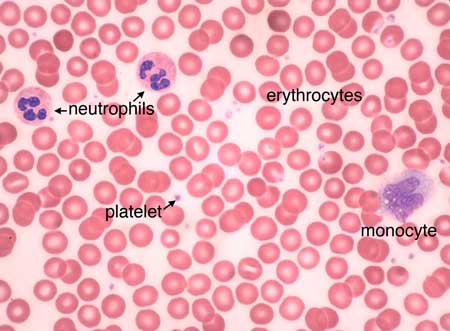
Leukocytes on slide

3 main parts of coxal (hip) bone

Hyoid bone

Axial skeleton

Appendicular skeleton

Muscle diagram
