Childbearing Exam 2
 Call Kai
 Learn
 Practice Test
 Spaced Repetition
 Match
 Flashcards
 Knowt Play
1/119

There's no tags or description
Looks like no tags are added yet.
Name | Mastery | Learn | Test | Matching | Spaced | Call with Kai | Chat |
|---|
No analytics yet
Send a link to your students to track their progress
120 Terms
Critical Factors in Labor
Passageway
Passenger
Position
Physiologic Forces of Labor
Psychosocial considerations
What is the passageway in labor?
pelvis
cervix
vagina
pelvic floor muscles

Gynecoid Shape

Android Shape

Anthropoid Shape
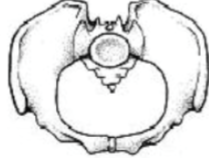
Platypelloid Shape
Passenger in Labor
Head (fontanelles help determine position)
Attitude
Lie
Presentation
What shape is the anterior fontanelle?
diamond
What shape is the posterior fontanelle?
triangle
What is the normal posture?
flexion (“fetal position”)
What is a fetus’ Longitudinal Position?
parallel to mother’s spine
What is a fetus’ transverse position?
perpendicular to mother’s spine
Types of Presentations
cephalic
breech
shoulder
What is engagement?
occurs when the widest part of the baby's head passes down through the mother's pelvic inlet
What is station?
the level of the baby's head as it moves down through the mother's pelvis during pregnancy and labor
Ranges from -5 to +5
How is the fetal position written?
1st letter: R or L
2nd letter: landmark of presenting part
3rd letter: landmark is anterior, posterior, or transverse
Psychosocial Considerations
hopes
fears
preparation
support system
Signs of Impending Labor
lightening
braxton hicks
cervical changes
bloody show
rupture of membrane
burst of energy
First Stage of Labor
onset of labor & ends w/ full dilation
Phases of First Stage of Labor
Latent/Early: talking, excited, smiling
Active: discomfort & anxiety increase
Transition: restless & anxious; intense labor
Characteristics of True Labor
progressive cervical dilation & effacement
regular contractions
frequency, intensity, & duration increase
discomfort in back radiating to front
walking is uncomfortable
rest/warm bath doesn’t help
Characteristics of False Labor
no cervical change
irregular contractions
no obvious increase
discomfort in abdomen
walking, rest, & warm bath help
Cardinal Movements of Labor
Descent
Flexion
Internal rotation
extension
restitution
external rotation
expulsion
Second Stage of Labor
cervix is fully dilated to birth of baby
strong urge to bear down
crowning
Third Stage of Labor
birth of baby to delivery of placenta
Signs of Placental Separation
a rounded uterus rises in abdomen
sudden gush of blood
umbilical cord protrudes further from vagina
Fourth Stage of Labor
mom’s body adjust from delivery (4 hrs after)
adjust to blood loss
thirst & hunger
chills
uterus must contract
Maternal Response to Labor
HR & BP increase during contractions
supine —> sudden hypotension d/t vena cava
hyperventilation + sweating —> dehydration
polyuria
solid food not absorbed
What is a toco?
a contraction monitoring device placed near the fundus
Ultrasound transducer
a monitor placed over fetal back to measure FHR
Intrauterine Pressure Catheter (IUPC)
placed in uterus to measure contraction frequency, duration, & intensity (more accurate)
Fetal Scalp Electrode
attached to fetal head to record FHR
Leopold Maneuver
a method to determine fetal position
Causes for Fetal Tachycardia
maternal fever
dehydration
medications
fetal prematurity, anemia, hypoxia
Causes of Fetal Bradycardia
maternal hypotension
head or cord compression
fetal hypoxia
FHR: Baseline Variability
Absent (non-reassuring)
Minimal (<5 bpm)
Moderate (6-25 bpm)
Marked (26+ bpm)
FHR Accelerations
15 beats faster than baseline for 15 seconds = fetal movement & stimulation (OK)
FHR Early Decelerations
d/t pressure on fetal head (OK)
FHR Late Decelerations
d/t uteroplacental insufficiency (non-reassuring)
FHR Variable Decelerations
d/t compression of the umbilical cord (not concerning unless repetitive)
Category I FHR Tracing
Reassuring
110-160 baseline
moderate variability
no variable, prolonged, or late decels
Category II FHR Tracing
needs continual ax (not non/reassuring)
Category III FHR Tracing
Non-reassuring - immediate intervention
absent variability
late or variable decels
bradycardia or sinusoidal pattern
Nursing Interventions for Abnormal FHR
Lie mom on her left side
Increase IV fluids
Oxygen (10 L/min) & stop oxytocin
Notify HCP
When to go to hospital
membrane rupture
decreased fetal movements
regular, frequent contractions (5 / 6-8 min apart for 1 hr)
vaginal bleeding
consistent headache
Nursing Interventions for First Stage of Labor
monitor vitals, contractions, FHR
encourage walking, voiding
vaginal ax PRN
offer clear liquids
breathing & relaxation techniques
position
hygiene
Nursing Interventions for Second Stage of Labor
do not leave alone
position for effective pushing
explain sensations (BM, bear down, burning/splitting)
monitor
Assisting with Delivery
support perineum as bb crowns
breathing exercises
check for nuchal cord
suction bb’s mouth & nose
deliver anterior shoulder by pulling on head
Nursing Interventions for Third Stage of Labor
newborn care (respiration & warmth)
placental birth (oxytocin)
APGAR Scoring
HR
Respiration (crying)
muscle tone
reflex irritability (cry)
color
Newborn Respiratory Rate
30 - 60 (no grunting, nasal flaring, or retractions)
Newborn Muscle Tone
flexed elbow & knees
Newborn Reflex Response
cry
Newborn Skincolor
pink, blue-tinged hands & feet
Nursing care at delivery
weight
ID baby & parents
initiate attachment behaviors
document
Nursing Interventions for Fourth Stage of Labor
oxytocin
sutures or local anesthesia for episiotomy
clean perineum & ice
reposition for comfort
clean linen & warm blanket
Side Effects of Epidural
hypotension
instrument birth
surgical birth
Side Effects of Inhaled Analgesia
nausea
vomiting
dizziness
Methods to reduce pain of labor
water immersion
relaxation techniques
acupuncture
massage
nonopioid medication
Systemic Sedatives
for early/latent phase for relaxation & rest
can lower APGAR score
Types of Systemic Sedatives
benzo
H1-receptor antagonist (promethazine HCL, benadryl)
Narcotic Analgesics (systemic)
for stage 1/active phase
to inhibit pain impulses
side effects
resp depression
hypotension
Types of Narcotic Analgesics (systemic)
fentanyl
nuban
morphine
Nitrous Oxide
systemic analgesic
safe, effective, inexpensive
self-administered
Risks of Analgesics
mild (vertigo, urinary retention, pruritis)
moderate (N/V, hypotension)
severe (systemic toxicity, bradycardia, respiratory depression, convulsions, cardiac arrest)
Precautions of General Anesthesia
clear liquid diet
NPO
antacid (aspiration)
tilt left
patent IV line
Analgesic Considerations for preterm labor
fetus doesn’t metabolize drug as much
avoid analgesia & general anesthetics
Analgesic Considerations for Preeclampsia
epidural is preferred
hypo/HTN is more acute
Analgesic Considerations for DM
vulnerable to poor placental blood flow
hypotension can deplete blood flow to fetus
use IV preload & tilt left
Signs of Preterm Labor
pain in abdomen, back, or pelvis
cramps
ROM
vaginal bleeding or discharge
pelvic pressure
urinary frequency
diarrhea
Interventions for Preterm Labor
bed rest
cervical cerclage
progesterone
infection tx
tocolysis
corticosteroids (lung maturity)
Interventions for PROM
prolong gestation to 34 wks
infection prevention
prevent umbilical cord prelapse
What is abruptio placentae?
premature separation of the placenta from the uterine wall
Risk factors of Abruptio Placentae
previous hx
HTN
abd trauma
fibroids
overdistention of uterus
alcohol
Marginal Placental Abruption
separate at the edges of placenta
dark red blood
no abd pain
fetal risk: preterm, anemia, hypoxia, brain damage
Central Placental Abruption
at the center
blood trapped behind placenta
tender abd
abd girth increases
rigid, board-like abd
Complete Placental Abruption
massive vaginal bleeding
most severe - can lead to fetal death
risk: hemorrhagic shock or disseminated intravascular coagulation
What is placental previa?
placenta is implanted improperly in lower uterine segment; can cover cervical opening
What is cervical insufficiency?
painless dilation of cervix w/o contractions d/t defect; can lead to repetitive loss or preterm birth
Intervention for cervical insufficiency
cerclage
Risk from Multiple gestation
preg loss
diabetes
HTN
HELLP syndrome
PE
preterm
PROM
Oligohydramnios
less than normal amount of amniotic fluid
Risks of Oligohydramnios
pulmonary hypoplasia
formation of anomalies
cord compression
Interventions of Oligohydramnios
smaller fundal height
amnioinfusion
variable decel = common
Dystocia
abnormal labor patterns (power, passenger, passage)
Shoulder Dystocia
a delivery emergency where a baby's head is born, but one of the shoulders gets stuck behind the mother's pubic bone
Normal Contractions
3-5 in 10 min; relaxed for 1 min
Tachysystole
>5 contractions in 10 min; less than 60 secs between each contraction
Risk factors of Tachysystole
oxytocin
cocaine
ROM
placental abruption
Interventions for Tachysystole
stop oxytocin
empty bladder
notify HCP
Hypotonic Labor
decreased frequency & intensity; slow progress of labor
Causes of Hypotonic Labor
false or early labor
induction w/ unripe cervix
cephalopelvic disproportion
passenger (macrosomia, malpresentation, malposition)
Interventions of Hypotonic Labor
monitor usual stuff & manage oxytocin
Causes of Post-term Preg
deterioration of placenta & fetus probs
reduced blood supply
decreased fetal O2
reduced nutritional supply
Interventions of Post-term Preg
non-stress test, biophysical profile
assess estimated DOB
Common Fetal Malposition
occiput posterior (baby’s head facing mom’s spine)
Fetal Malpresentations
military
brow
face
breech
transverse (shoulder)
Types of Breech Malpresentations
Frank (flexed hips & extended knees)
Footling (hips extended w/ foot presenting)
Complete (flexed hips & knees)
Causes of Breech Malpresentation
placenta implantation problems
uterine & fetal anomalies
multiple gestation
Risks of Breech Malpresentation
umbilical cord prolapse
head entrapment
high morbidity & mortality