ART HISTORY MIDTERM STUDY GUIDE
 Call Kai
 Learn
Learn Practice Test
 Spaced Repetition
 Match
Match Flashcards
 Knowt Play
1/30

There's no tags or description
Looks like no tags are added yet.
Name | Mastery | Learn | Test | Matching | Spaced | Call with Kai | Chat |
|---|
No analytics yet
Send a link to your students to track their progress
31 Terms

1. The Last Judgment Portal — Chartres Cathedral
Christ as Judge
Portal as a Religious Threshold
Church Sculpture as Salvation

The Last Judgment Portal — Saint-Lazare Cathedral
Contrast between Salvation and Damnation
Weighing of Souls
Sculpture to Encourage Moral Behavior

3. The Last Judgment Portal — Notre-Dame de Paris
Public religious instruction of Moral Accountability
Gothic Sculpture in Architecture
3 part arrangement
Comparison: the three Last Judgment portals
Work | Best distinguishing point |
|---|---|
Chartres | Religious authority and the development of Gothic cathedral sculpture |
Autun | Dramatic, expressive imagery designed to emphasize the consequences of judgment |
Notre-Dame, Paris | Gothic naturalism and a carefully organized, multi-level judgment scene |
Albrecht Dürer — Apocalypse in Pictures (1498)
Overall significance of the series
Based on the Book of Revelation: Dürer translated the biblical account of the end times into a sequence of images depicting persecution, divine punishment, monstrous beasts, and the destruction of the existing world order.
Woodcut and print culture: The images were made using relief printing, allowing multiple copies to circulate. This helped apocalyptic imagery reach a much wider audience than a unique painting or church mural.
Visual storytelling: Each image presents a dramatic event from Revelation, allowing viewers to follow a larger narrative across a series.
Northern Renaissance style: Dürer's intricate lines, energetic compositions, and convincing bodies combine close observation of the physical world with supernatural subject matter.

The Four Horsemen of the Apocalypse
Universal judgment
Technical achievement
Horsemen Represent Calamities in Book of Revelation

Martyrdom of St. John
John’s Persecution
Contrast between Victims and Agressors
Religious Suffering

Opening of Fifth and Sixth Seals
Souls who Killed for Faith wanting Justice
Contrast between Heaven and Earth
Martyrs Connecting Earthly Punishment to Eventual Judgment

Opening of the Seventh Seal
In Revelation, 7 Angels Represent Silence before Catastrophe
Divine Order behind Destruction
The Transition to Trumpet Judgments

The Beast with Lamb's Horns and Beast with Seven Heads
7 Headed Beast represents Threatening Powers
Lamb Beast represents Deceptive Powers
Visualizes Conflict between Divine Authority and Evil

1. Hieronymus Bosch — Last Judgment (1492)
.
Humanity Facing Consequences of Sin
Contrast between Divine Order and Earthly Disorder
Painting as a Moral Warning
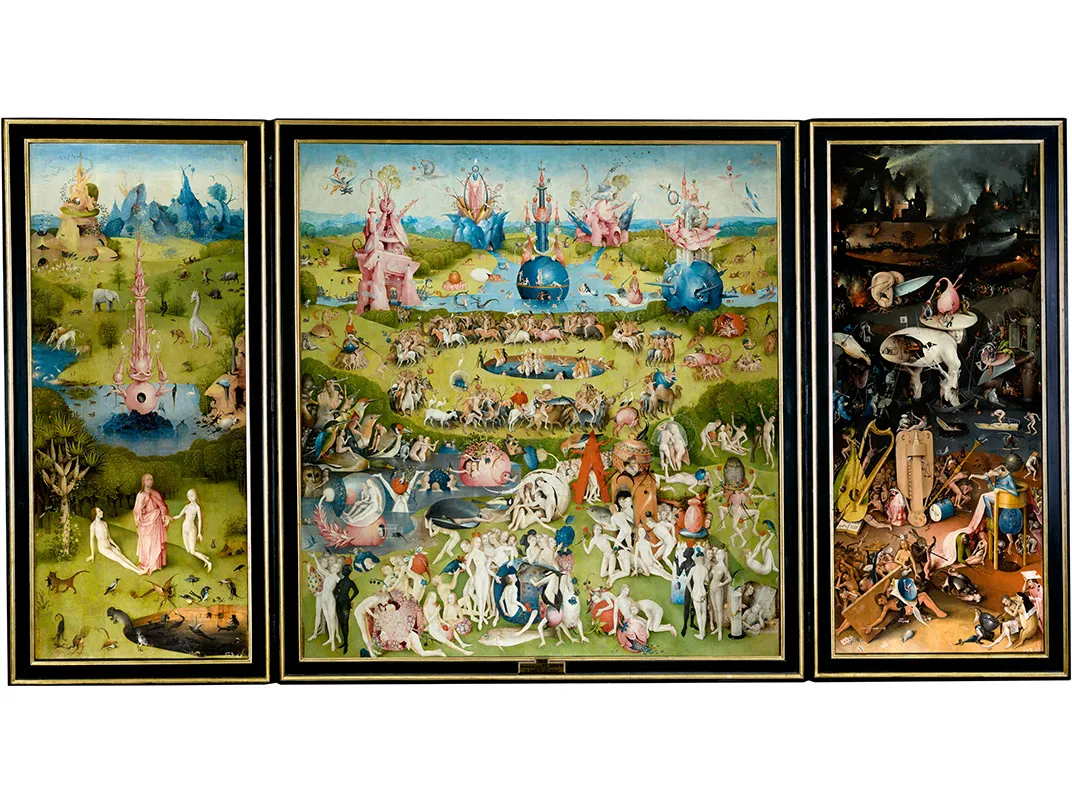
Hieronymus Bosch — The Garden of Earthly Delights (c. 1490–1500)
Three-part narrative: The triptych moves from the Garden of Eden on the left, through a crowded central world of earthly pleasure, to a dark and terrifying vision of Hell on the right. Its arrangement invites viewers to compare innocence, indulgence, and punishment.
Tran
The central panel and earthly pleasure: Naked figures interact with oversized fruit, birds, and fantastical forms. These unusual objects have inspired interpretations involving sexuality, desire, pleasure, and the temporary nature of worldly gratification.
The relationship between pleasure and damnation: The contrast between the central panel and Hell raises questions about whether unchecked desire leads to spiritual destruction. The work's precise meaning remains debated, so it is important not to treat every symbol as having one certain interpretation.
Hell and the corruption of familiar objects: Musical instruments and everyday objects become instruments of torture in the right panel. This transformation makes earthly pleasures appear capable of becoming sources of suffering.
Triptych format: When opened, the three panels create one connected visual narrative. The format encourages the viewer to interpret the scenes in relation to one another rather than as separate paintings.
Bosch comparison: Last Judgment vs. The Garden of Earthly Delights
Both works explore sin and the consequences of human behavior through fantastic imagery.
Last Judgment emphasizes divine judgment and punishment
The Garden of Earthly Delights places greater emphasis on the relationship between earthly pleasure and eventual consequences.
Both paintings use grotesque creatures and imaginative settings to communicate religious and moral ideas.

Dome of the Rock, Umayyad Dynasty
Sacred Shrine
Qur’anic Inscriptions on God and Jesus
Conveyed Prestige of Islam
Falnama of Shah Tahmasp, Safavid Iran
Book of Divination and Storytelling
Manuscripts for Seeking Guidance on Uncertain Situations
Importance of Books as Objects of Spiritual Significance

Day of Judgement
Falnama of Shah Tahmasp, Safavid Iran
Apocalypse Through Persian Manuscript Painting
Depicts Accountability and Divine Power
Religious Guidance Through Falnama
Order within Supernatural Events

Wall Against Gog and Magog
Falnama of Shah Tahmasp, Safavid Iran
Protection Against Apocalypse (Gog and Magog)
Architecture as a Symbol of Control
Dhu’l Quarnayan Connects to Manuscript on Traditions of End Times

Adam and Eve
Falnama of Shah Tahmasp, Safavid Iran
Origins of Humanity
Islamic Interpretations of Judaism and Christianity
Human Responsibility

Michelangelo: Last Judgement
Powerful Christ
Swirling Composition
Controversy over Nudity during Catholic Reform

Great Stupa of Sanchi
Circumabulation (Worshippers Walk Clockwise)
Toranas (Gateways) depicting Buddha’s Life (Jataka Narratives)
Aniconism Representing Buddha’s Life through Symbols
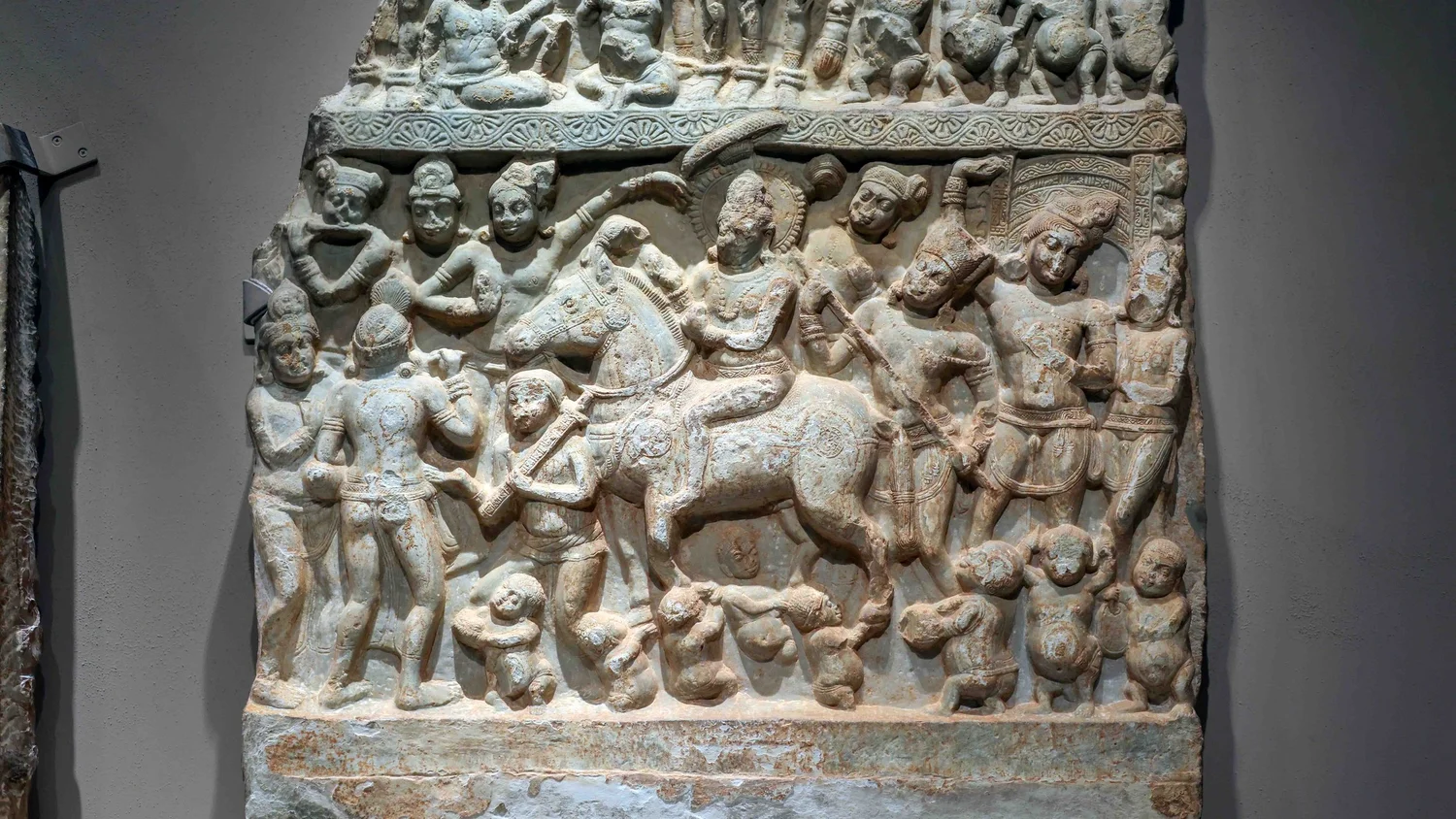
Torana Scene: The Great Departure
Great Stupa of Sanchi
Departure Marking the Beginning of a Road to Enlightenment
Abandonment of Privilege for Spirituality
Aniconic Representation of Buddha through Horses and other Symbols

Torana Scene: Temptation of the Buddha by Mara & his Armies
Great Stupa of Sanchi
Mara as the Force of Temptation
Bodhi Tree/Empty Throne Identifying Buddha’s Enlightenment
Victory through Spiritual Discipline

Torana Scene: Jataka— Buddha as Monkey King
Great Stupa of Sanchi
Previous life of Buddha (Enlightenment from Many Lives)
Monkey King Sacrifices Body to help other Monkeys (Compassion)
Animal Imagery as Moral Instruction

Dipankara Jataka, Gandhara
Buddha’s past life encounter with Dipankara
Buddha’s Commitment to Buddhahood
Buddha’s act of Hair Spreading so Dipankara can pass (Generosity)

Yamantaka, Destroyer of the God of Death
Wrathful Deity = Power of Wisdom to overcome Suffering
Multiple Arms, Heads, & Weapons for Confronting Obstacles Simultaneously
Fierce Expression to overcome Lord of Death (Yama)
Wheel of Life
Wheel (Samsara) represents cycle of birth, death, and rebirth
Lord of Death (Yama) holds the Wheel, representing how beings are Subject to Death
Wheel Depicts 6 Realms (Different Conditions of Existence)
Chenrezig Sand Mandala
Chenrezig Associated with Compassion
Geometric Structure creating Sacred Universe
Sand Mandala representing Impermanence
Shiva Nataraja, Chola Period
Shiva as Lord of Dance
Dance = Universe being Dynamic
Ring of Fire = Energy Surrounding Universe
Elephanta Caves, Trimurti Sculpture
3 Faces = Different Aspects of Shiva
Trimurti = 3 Major Divine Functions
Communicates Divine Reality has Contrasting Qualities
Androgynous Shiva, Elephanta Caves
Combination of Male and Female Forms
Unity of Complementary Forces
Divine Completeness