Organic chemistry reactions and other things to know
 Call Kai
 Learn
 Practice Test
 Spaced Repetition
 Match
 Flashcards
 Knowt Play
1/24

There's no tags or description
Looks like no tags are added yet.
25 Terms
What are all the compounds in the Strong Base/Weak Nucleophile category
NaH, DBN, DBU, KOtbu
What are all the compounds in the Strong Base/Strong Nucleophile category
HO-, MeO-, EtO-
What are all the compounds in the Weak base/Strong nucleophile category
I - , Br - , Cl - , RS- , HS - , RSH, H2S
What are all the compounds in the Weak Base/Weak nucleophile category
H2O, MeOH, EtOH
What kind of reaction happens with a Strong base/ Weak nucleophile reaction with a primary, secondary, and tertiary alkyl halide
E2 for all three
What kind of reaction happens with a Strong base/Strong Nucleophile with a primary secondary, and tertiary alkyl halide
Primary = E2 (minor) and SN2 (major) Secondary = E2 (major) and SN2 (minor) Tertiary = E2
What kind of reaction occurs with a Weak base/Strong nucleophile with a primary, secondary, and tertiary alkyl halide
Primary = SN2 Secondary = SN2 Tertiary = SN1
What kind of reaction occurs with a Weak base/Weak nucleophile with a primary, secondary, and tertiary alkyl halide
Primary and secondary = no reaction/cannot happen Tertiary = a half and half mixture of SN1 and E1
What is the structure of acetone and what kind of solvent is it
Polar Aprotic

What is the structure of N-N-dimethylformamide(DMF) and what kind of solvent is it
Polar Aprotic

What is the structure for Dimethylsulfoxide(DMSO) and what kind of solvent is it?
Polar Aprotic

What is the structure for Acetic acid and what kind of solvent is it?
Polar Protic

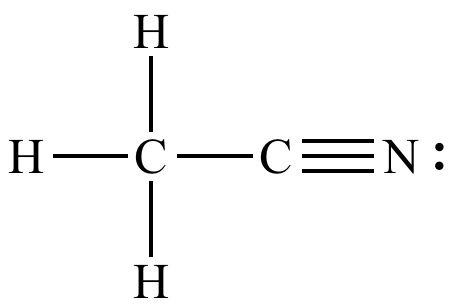
What is the structure for Acetonitrile and what kind of solvent is it
Polar Aprotic
What is the Structure for potassium tert butoxide and what is special about it
This is the only base that prefers the hofman product (less substituted) over the zaitzev product(more substituted)

What is the Structure for DBN

What is the structure of P-totuenesulfonylchloride (PTS-Cl) and what does it go hand in hand with in reactions
Pyridine (base)

What is the structure of pyridine

What is an Acid Catalyzed Dehydration of an alcohol
Converting an alcohol into an alkene by removing a OH group and the acid is regenerated at the end of the reaction. The end product is the Zaitsev product. Also done with a concentrated acid and done under high temperatures with heat.
What is an SN2 reaction and what is its rate law
A SN2 reaction is a substitution reaction that is done in one step. The LG leaves while the nucleophile attacks the carbocation. This reaction is done simultaneously and inverts the stereochemistry when finished. Rate = k[R-X][Nuc]
What is an E2 reaction and what is its rate law
An E2 reaction is a one step elimination reaction where a strong base removes a proton and a leaving group departs simultaneously to form a alkene with a pi bond. The Beta hydrogen must be antiperiplanar to the leaving group. Rate = k[R-X][Base] and is 2nd order kinematics.
What is an E1 reaction
An E1 reaction is a two step elimination reaction that eliminates the alkyl halide to form a alkene with a pi bond. The difference from E2 is that the E1 mechanism happens in 2 steps meaning there is a carbocation intermediate. This carbocation intermediate can rearrange and will if there is a more stable position for it to be in. E1 reactions also favor higher temperatures when working. SN1 and E1 processes are competative. Rate = k[R-X]
What is an SN1 reaction mechanism
An SN1 reaction is a two step substitution process. This process has a carbocation intermediate meaning that it will rearrange if a more stable carbon is available to it. This also forms a racemic mixture(1:1 ratio of stereoisomers). The SN1 pathway prefers lower temperatures. Rate = k[R-X]
What are the key components of an Acid catalyzed hydration
Seen as dil. H2SO4 (or any acid) or aq H3O+ or aqueous H3O+. Has markovnikov addition meaning the halogen adds to the more substituted carbon of the alkene. This can also rearrange and will if there is a more stable product. Learn the mechanism of this it will be asked on the test.
What are the key components of Oxymercuration/Demercuration
Has two main elements, the first step is written as 1) Hg(OAC)2, H2O and then number 2) NaBH4. This reaction uses markovnikov addition meaning the halogen adds to the more substituted carbon of the alkene. It also cannot rearrange and uses anti addition. This kind of reaction also has a cyclic mercurium intermidiate
What are the main components of Hydroboration/Oxidation
Has two main elements, the first step is written as 1) BH3 . THF and the second is 2) H2O2, NaOH. This uses Antimarkovnikov addition meaning the halogen adds to the less substituted carbon of the alkene. It cannot rearrange and uses syn addition to add the hydrogen and OH group.