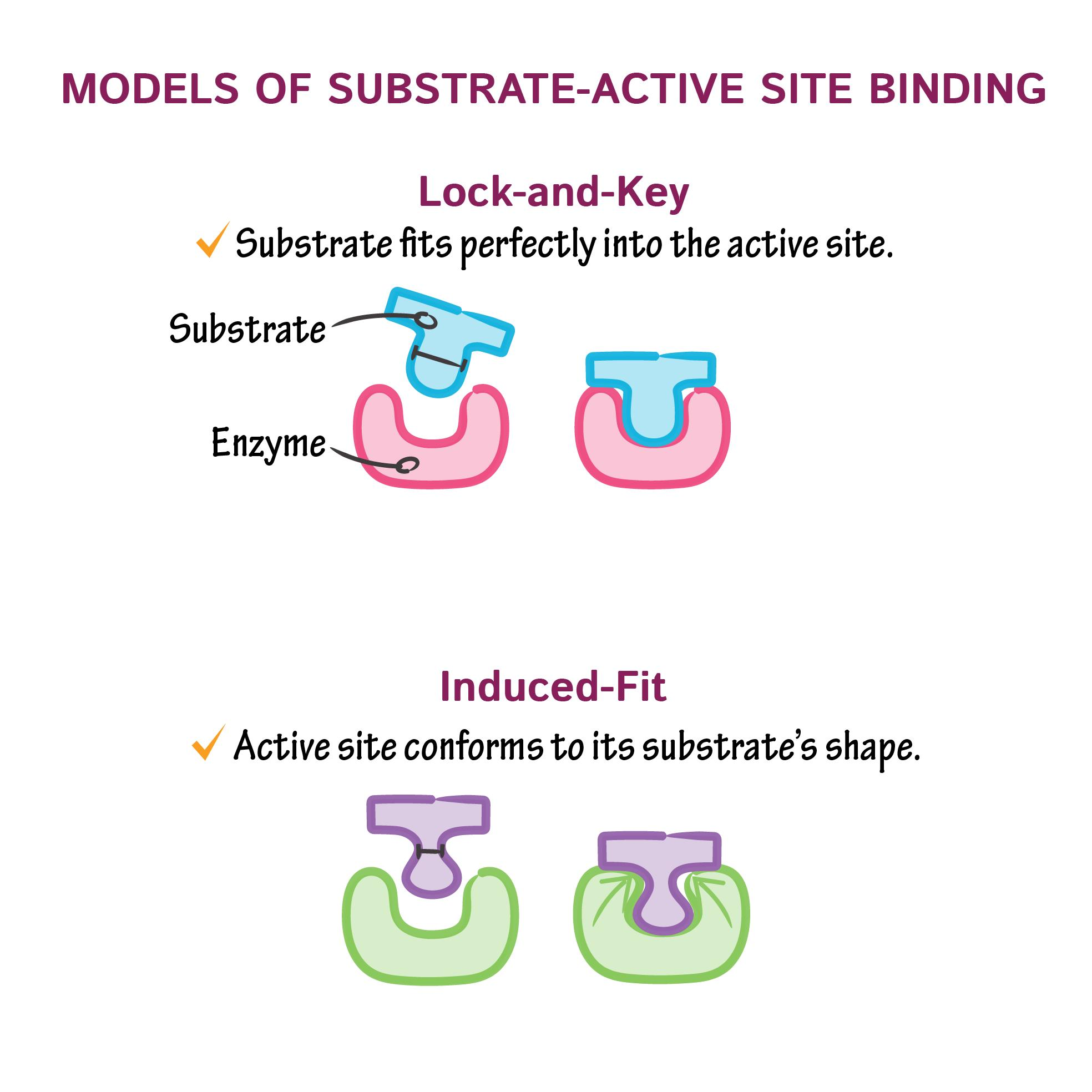
Bio Quiz 6
 Call Kai
 Learn
 Practice Test
 Spaced Repetition
 Match
 Flashcards
 Knowt Play
1/138

There's no tags or description
Looks like no tags are added yet.
139 Terms
metabolism
the totality of all the chemical reactions occurring within an organism. It is an emergent property, in which individual molecules interact with one another in organized ways, and the result is the complex system known as _.
chemical reaction
a process that changes one set of chemical substances into another. Occurs when atoms in molecules are rearranged, breaking some chemical bonds and forming others to create different substances
emergent property
a characteristic/feature that results from the interactions of many smaller parts in an organized system
metabolic pathway
A _ is a series of defined chemical reactions in which a starting molecule is changed through several steps to produce a final product. Each individual step is catalyzed by a specific enzyme.
molecule A (starting material) → molecule B (intermediate) → molecule C (intermediate) → molecule D (final product)
_ are regulated by the following:
a cell can regulate the enzymes responsible for the _, slowing or speeding up particular reactions, that way products are produced at an efficient pace (not too quickly or slowly). This helps the cell balance metabolic supply and demand.
enzyme
a biological catalyst, usually a protein, that speeds up a chemical reaction without being permanently consumed by that reaction. Generally, _ work on particular reactants because their structure and chemical properties suit that reaction.
catabolic pathways
a type of metabolic pathway, in which complex molecules break down into simpler molecules (breakdown pathways). _ release energy that can be captured and used by the cell (downhill)
energy released can either be captured for cellular work or transferred to the surroundings as heat
ex: cellular respiration. During cellular respiration, cells break down glucose through a series of reactions, using oxygen in aerobic respiration and producing carbon dioxide and water overall.
glucose + oxygen → carbon dioxide + water + usable energy
anabolic pathways
a type of metabolic pathway in which complex molecules are built from simpler molecules (a.k.a biosynthetic pathways). _ require an input of energy (uphill)
ex: protein synthesis, photosynthesis
ATP (adenosine triphosphate)
a molecule that cells commonly use to transfer energy to many cellular processes
downhill
refers to a process in which usable energy is released (overall)
uphill
refers to a process that requires a net input of energy (overall)
bioenergetics
the study of how energy flows through living organisms, examining how organisms obtain energy, transform it, transfer it, and use it to power life processes
energy
_ is the capacity to cause change. It allows cells to do work and carry out the processes necessary for life
intermediate
a molecule formed in the middle of the pathway is called an _.
molecule A (starting material) → molecule B (_) → molecule C (final product)
substrate
The molecule an enzyme acts on is called its _.
enzyme + _ → enzyme + product
kinetic energy
energy associated with motion
ex: moving bicycle, flowing water, moving molecules
potential energy
stored energy associated with an object’s position or structure
ex: water held behind a dam, energy associated with the arrangement of electrons in molecules, a book sitting high on a shelf
thermal energy
a type of kinetic energy associated with the random motion of atoms and molecules. everything made of matter contains atoms or molecules that are moving. In:
solids: particles vibrate around positions
liquids/gases: particles move more freely
Only works when there’s a suitable temperature difference (2 objects that are the same temperature can’t have a net flow of heat between them, so _ still exits, but there isn’t a temperature difference between the 2 objects for a heat engine to exploit)
heat
thermal energy being transferred from one object or region to another because of a temperature difference. It’s still energy, but the energy spread out as _ is generally less available to do work than energy maintained in a usable chemical or physical gradient.
chemical energy
a type of potential energy, associated with the arrangement of atoms and electrons in molecules that can be released through chemical reactions
ex: glucose contains _ that cells can make available through cellular respiration. provides energy as the formation of new bonds releases more energy than is required to break the original bonds. The overall _ determines whether energy is released or required.
Breaking a chemical bond requires energy
Forming a chemical bond releases energy
energy transformers
Organisms are _. This means that energy isn’t created by organisms, but rather taken, transformed, transferred, and eventually released into their surroundings. This process usually looks like:
light energy from sun → photosynthesis in plants (where light energy produces energy-rich organic molecules) → food (animals obtain chemical energy by eating plants or other organisms) → cellular respiration (cells transfer energy from organic molecules into usable forms) → cellular work and heat (energy supports life processes, while some is transferred to the surroundings as heat)
thermodynamics
the study of energy transformations and transfers. Allows scientists to understand what happens when energy changes form, how much energy is available to do work, and why certain processes can occur without an additional energy input
system
the part of the universe that we are studying
surroundings
everything that surrounds a system
isolated system
An _ exchanges neither matter nor energy with its surroundings (i.e a thermos bottle). Because the system cannot exchange matter or energy with its surroundings, it moves towards equilibrium (ΔG = 0)
ex: an _ hydroelectric system, where the water levels eventually equalize and there’s no longer a height difference to drive the process

open systems
an _ can exchange both matter and energy with its surroundings (i.e organisms)
ex: an _ hydroelectric system, where a river continuously supplies water to the upper reservoir while water leaves the lower reservoir

closed system
A _ exchanges energy (as heat or work) but not matter with its surroundings
energy cannot be created nor destroyed
The first law of thermodynamics states that _. Rather, it’s transferred or transformed. This is also known as the principle of conservation of energy.
The total amount of energy in the universe remains constant, and cannot suddenly appear or disappear
energy changes form or moves between places
total energy is conserved
energy transformations increases the total entropy of the universe
the second law of thermodynamics states that _. Energy can’t be recycled to do work forever, as some is lost to the surroundings as heat. Therefore, energy transformations have a direction. The heat lost to surroundings contributes to the total entropy of the universe (increasing). The total energy is still conserved, but there’s now less available to perform additional work.
We consider the system as well as its surroundings.
total entropy increases in a spontaneous process
energy becomes more dispersed overall in natural energy transformations
the availability of energy to perform work generally decreases as energy is dispersed
entropy
a measure of how dispersed energy is and how many microscopic arrangements are available to a system (disorder)
the more energy lost as heat, the higher the _
spontaneous process
a process that is energetically favorable under the given conditions and can proceed without a continuous external energy input to drive it (Δ G < 0)
ex: water flowing downhill, rusting, an explosion
nonspontaneous process
a process that is not energetically favorable under the given conditions and requires an energy input or coupling to another process to proceed in that direction
ex: water pumped uphill
<
If the change of Gibbs free energy (Δ G) is _ 0, the forward process is thermodynamically favorable.
The final state (products) have less free energy than the initial state (reactants), releasing free energy overall
a reaction that moves from a higher-free-energy state to a lower-free-energy state
Exemplifies spontaneous processes (in the forward direction)
>
If the change of Gibbs free energy (Δ G) is _ 0, the forward process requires energy input or coupling to a favorable process and is not thermodynamically favorable, receives free energy overall
The final state (products) has more free energy than the initial state (reactants)
Exemplifies a non-spontaneous process (in the forward direction)
=
If the change of Gibbs free energy (Δ G) is _ 0, the system is at equilibrium
The forward and reverse reactions continue at equal rates
increasing
_ biological complexity is consistent with the laws of thermodynamics. This is because the second law doesn’t say that every individual system must become less organized at every moment, but rather that the total entropy of the universe increases during spontaneous processes.
organisms obtain energy from their surroundings and use it to grow, develop, reproduce, and maintain their structures
the sun supplies the energy that supports most ecosystems. plants capture some of that energy through photosynthesis, and passes it through food webs. energy eventually leaves ecosystems as heat.
organisms become more organized → surroundings receive energy and matter (heat and metabolic waste products) → total entropy increases
biological order
an organism’s entropy can decrease (becoming more organized/complex) while the total entropy of the organism and surroundings increases. This is not a violation of the second law of thermodynamics
Gibbs free energy (G)
_ is used to determine whether a process (or a particular chemical reaction) is thermodynamically favorable under specified conditions.
Also known as free energy, _ is the portion of a system’s energy available to perform work under the relevant conditions, particularly when temperature and pressure are constant.
It’s a measure that helps us determine how much energy is available to do work and whether a reaction is thermodynamically favorable (under particular conditions).
A measure of a system’s tendency to change (the less free energy, the more stable)
free energy, temperature, enthalpy
Δ G means change in _
Δ T means change in _
Δ H means change in _
enthalpy
_ is the total heat content of a thermodynamic system at constant pressure. Tracks energy lost or gained as heat during physical or chemical reactions
chemical equilibrium
the state in which the forward and reverse reactions occur at equal rates, so the concentrations of reactants and products have no net change. The forward and reverse reactions continue at equal rates, exemplifying dynamic equilibrium
net change = 0
Think: a ball rolls downhill, and it’s gravitational PE decreases. Similarly, as a chemical system proceeds spontaneously toward equilibrium, its free energy decreases. Once at equilibrium, a chemical system cannot spontaneously move away from equilibrium in a way that produces net work.
Cannot produce net work by simply allowing the reaction to move forward as there’s no net free-energy decrease available from the reaction itself. A living cell must maintain chemical conditions away from equilibrium to keep doing work
exergonic reaction
An _ is a reaction that releases free energy overall. Δ G < 0, so the G final < G initial. The reaction is thermodynamically favorable in the forward direction.
Cells can couple an _ to a process that requires energy, as some the free energy released can be harnessed to do work (some is transferred to the surroundings as heat).
The magnitude of the -ΔG tells us the maximum amount of non-expansion work that could be obtained under the specified conditions if the reaction proceeded reversibly. The greater the decrease in free energy, the greater the maximum amount of work the reaction can provide.
ex: cellular respiration: ΔG = -686 kcal/mol (releases free energy), meaning it releases 686 kilocalories of free energy per mole of glucose consumed, some being captured in usable chemical forms (ATP) while some is released as heat
endergonic reactions
An _ is a reaction that requires a net input of free energy to proceed in the forward direction. ΔG > 0, so G final > G initial. The forward reaction is non-spontaneous under the specified conditions.
Ex: building proteins from amino acids, creating and maintaining certain concentration gradients, processes involved in growth and repair
1, 25, 7
Standard conditions:
_ M for each reactant and product
A temperature of _°C
A pH of _
The standard free energy change is commonly written ΔG°’
however, in actual cells, the concentrations of molecules differ from standard conditions, so the actual free-energy change can differ from the textbook value
requires, releases
cellular respiration is an exergonic reaction, releasing energy overall, because breaking chemical bonds _ energy, while forming chemical bonds _ energy. The process is:
energy is required to break the bonds in the reactants
new bonds form as the products are produced
forming the new bonds releases energy
for the overall reaction, the energy released through bond formation and other energy changes exceeds the energy required to break the original bonds
The products have less free energy available than the reactants under the stated conditions, making ΔG negative. Cellular respiration transfers energy through a series of reactions
reversing a chemical reaction flips the sign of ΔG, so photosynthesis is an endergonic reaction
dead
If a cell is at metabolic equilibrium, it is _. This is because a living cell must continually perform work. It needs to:
maintain concentration gradients across membranes
synthesize proteins and other molecules
transport substances
repair and maintain cellular structures
carry out the reactions necessary for survival
These all rely on energy and chemical differences to drive reactions. If the cell’s metabolism reached equilibrium as a whole, it wouldn’t have the sustained free-energy differences needed to perform net metabolic work, and its organized, living processes could no longer be maintained. So, a living cell must remain out of equilibrium.
equilibrium
Some individual reactions can be near equilibrium while the cell remains alive, but metabolism as a whole must remain away from _, maintaining this condition through continuous exchanges with its surroundings, doing so by:
materials (from a cell’s surroundings) flowing in and out of the cell. These incoming materials can provide energy or serve as reactants in metabolic pathways
products of one reaction used in the next reaction, and waste products being removed.
The removal of intermediate products can help maintain conditions that favor the forward reactions.
Removing products and supplying new reactants help maintain the chemical conditions needed for metabolism to continue (i.e CO2 being removed after cellular respiration)
chemical work
A type of work, in which cells use energy to build molecules that would not form spontaneously (i.e small building blocks forming larger molecules, often an endergonic process as it requires an energy input)
monomers → polymers
transport work
a type of work in which cells use energy to move substances across a membrane against the direction they would naturally move (i.e a protein pump)
Substances naturally spread down their concentration gradients. Moving them against that gradient requires energy, supplied by ATP (active transport)
low potential → high potential
ex: a transport protein sits in a cell membrane and helps move substances across it. A pump obtains energy through ATP hydrolysis, triggering a shape change in the pump and allowing it to move ions across the membrane. ATP powers changes in protein shape, enabling transport.
ATP interacts with the transport protein → ATP is hydrolyzed and a phosphate group attaches to the protein → the protein changes shape → the changed shape moves/releases the substance on the other side of the membrane → the protein returns to its original shape and repeats this process
mechanical work
a type of work, in which cells use energy to create movement
ex: muscle cells contracting, cilia beating to move a cell or fluid, chromosomes moving during cell division, motor proteins carrying materials through a cell.
inactive state → active state
Motor proteins use energy to produce movement, traveling along structures in the cell’s internal framework, known as the cytoskeleton (i.e a kinesin motor protein that carries cellular cargo along microtubules and moves to the beta, or positive, end of tubulin).
ATP binds to the motor protein non-covalently → APT is hydrolyzed into ADP + Pi → the motor protein changes shape → the changes in shape and binding allow it to advance along the cytoskeleton → another ATP molecule binds, allowing another cycle
energy coupling
_ means using an energy-releasing process to drive an energy-requiring process. ATP is the main molecule that mediates _ in cells, acting as the cell’s immediate energy source for many particular cellular tasks.
ex: when a cell needs to build a molecule, requires energy, and uses energy released by other reactions inside the cell

3 phosphate groups, ribose sugar, adenine base
ATP has 3 main structural components, including:
The _ is attached in a chain to the sugar
The _ is a 5-carbon sugar
_ is a nitrogen-containing base
Adenine + ribose form adenosine, with the triphosphate group gives ATP its name (adenosine triphosphate).
ATP → ADP + Pi
The i in Pi is a free inorganic phosphate group, and is the third, or terminal, phosphate group.
hydrolysis
a chemical reaction in which a molecule is split through the addition of water.
ATP + H2O → ADP + Pi is referred to as ATP _
ATP _ has a free-energy change (ΔG) of -7.3 kcal/mol under standard conditions (exergonic).
Since cells don’t generally have standard concentrations of all reactants and products, under typical cellular conditions, ATP _ can release approximately ΔG = -13kcal/mol.
lower
Breaking a chemical bond requires energy. ATP hydrolysis releases free energy because the products (along with their interactions with the surroundings) have a _ free energy than the starting materials. therefore, to know if something is overall exergonic or endergonic, you compare free energy between the initial and final stage, rather than solely considering if bonds are broken or formed.
cellular proteins
_ help harness ATP’s free energy to perform chemical, transport, and mechanical work, rather than just having its energy be released as heat
phosphorylation
One of the most important ways ATP powers chemical work is through _. This refers to the transferring of a phosphate group to another molecule. ATP can transfer its terminal phosphate to a reactant:
ATP + reactant → ADP + phosphorylated reactant
It helps couple ATP hydrolysis to a specific chemical process rather than simply releasing energy into the cell in hopes of the energy reaching the correct reaction. Only occurs when the total free-energy change of the combined reactions (ΔG) is negative, making it energetically favorable.
phosphorylated intermediate
The recipient molecule of ATP phosphorylation is called _, which forms during a sequence of reactions and is then used in a later step.
cell signaling
Phosphorylation also matters in _. Adding or removing a phosphate can change a protein’s shape, activity, or interactions with other molecules. This helps cells switch signaling pathways on or off and control their responses.
kinase
a _ transfers a phosphate group to a target molecule, often a protein
phosphatase
A _ removes a phosphate group from a molecule
regeneration of ATP
Cells don’t run out of ATP to be broken down due to the _. This is done by adding an inorganic phosphate group back to ADP:
ADP + Pi → ATP + H2O ΔG = 7.3 kcal/mol (endergonic)
Water is produced as this is a condensation (dehydration) reaction.
The cell couples ATP formation to other energy sources, including catabolic reactions. This is where the energy to rebuild ATP comes from.
cell breaks down energy-rich food molecules through catabolic pathways (cellular respiration) → reactions release free energy → cell captures some of that energy in a usable form → uses that energy to combine ADP + Pi → ATP is regenerated and can power cellular work again
A healthy person has a relatively similar amount of ATP at any given moment.
ribozymes
RNA molecules that can function as enzymes
transition state
The unstable, high-energy condition is called the _.
starting molecules in their initial states → energy is absorbed to reach a high-energy, unstable state → the atoms rearrange
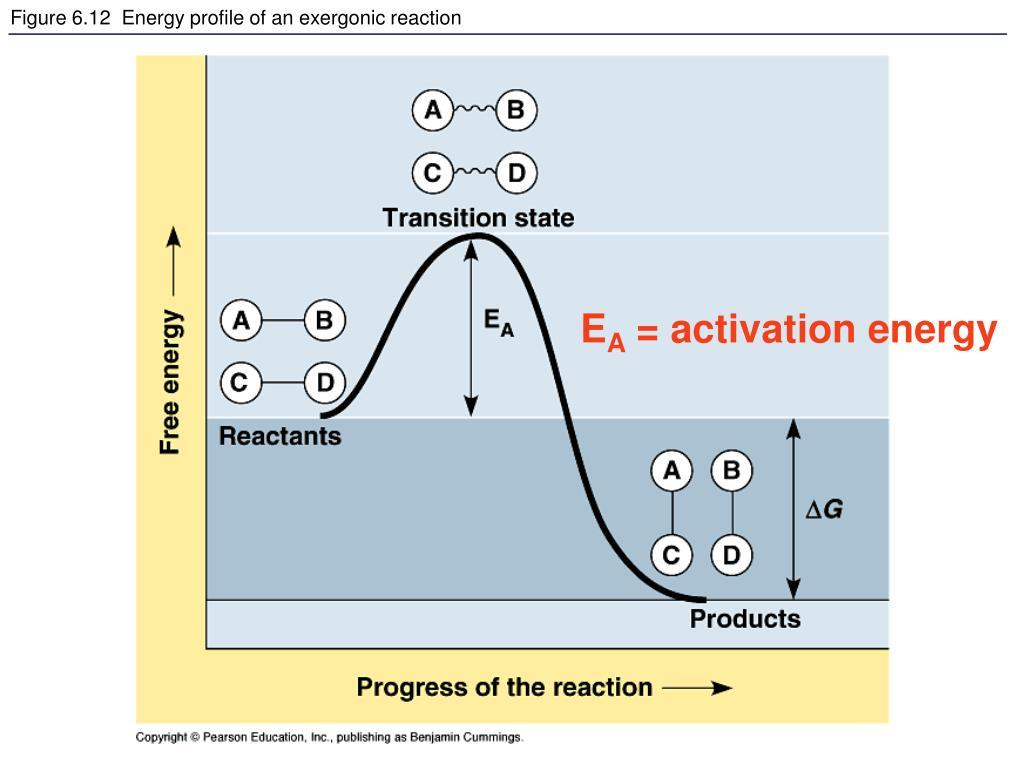
activation energy, EA
the energy needed to get reactants into the transition state is called _, represented by _.

low
_ activation-energy barrier means more molecules can reach the transition state, so the reaction can proceed relatively quickly
high
_ activation-energy barrier means fewer molecules can reach the transition state, so the reaction may be extremely slow
catalysis
Cells need enzymes to speed up chemical reactions rather than relying solely on heat. This is due to:
high temperatures damaging proteins, disrupting their 3D shape and causing them to denature or even kill cells
heat speeding up many reactions, not just useful/target ones
Therefore, cells rely on _, the process by which a catalyst selectively speeds up a chemical reaction. Enzymes are useful because they help particular reactions occur quickly under conditions compatible with life. Enzymes lower activation energy, requiring less energy, and more reactant molecules can reach the transition state under ordinary cellular conditions, making reactions occur more quickly

enzymes
_ can:
lower activation energy
increase the rate of a reaction (quickness)
allow reactions to proceed rapidly at moderate temperatures
selectively catalyze particular reactions
They cannot:
change the overall ΔG of a reaction
turn an endergonic reaction into an exergonic reaction simply by catalyzing it
change the free-energy difference between the reactants and products
They are unable as an _ changes the pathway the reaction takes, not the free-energy levels of the starting materials and final products.
Think: going up a steep mountain to get around it vs. driving through a tunnel inside it
enzyme-substrate complex
When an enzyme binds to its substrate, they form a(n) _. This reaction follows the general sequence:
enzyme + substrate(s): an enzyme encounters its particular/specific reactant molecule(s)
_: the substrate binds to the enzyme
enzyme + product(s): the enzyme catalyzes the reaction, and the products leave
Note: the enzyme is present before the reaction and afterward. The substrate is transformed into the product
ex: enzyme is sucrase (-ase), substrate is sucrose, products are glucose + fructose
sucrase + sucrose + water → sucrase-substrate complex → sucrase + glucose + fructose
active site
the _ is the particular region of an enzyme where the substrate binds and the chemical reaction takes place. It’s usually a small pocket or groove on the enzyme’s surface. It:
binds the appropriate substrate
provides the environment where the substrate is converted into product
Only a small portion of the enzyme may directly form the _. A few amino acids help carry out catalysis, while the rest of the protein (enzyme) maintains the 3D structure.
The _’s shape and chemical properties are important for both substrate recognition and the reaction itself.

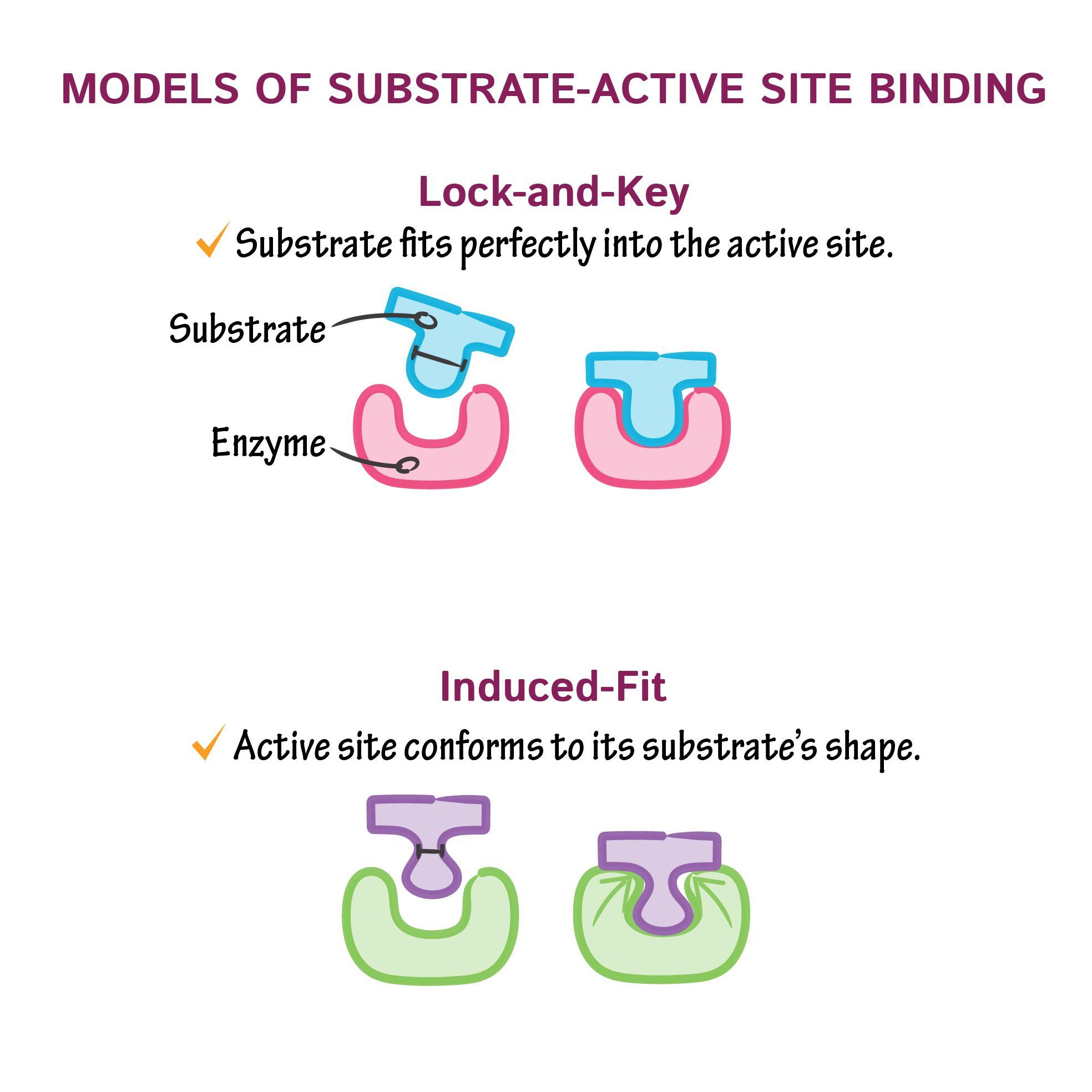
induced fit
Enzymes are flexible molecules and can shift between slightly different shapes. When a substrate initially interacts with the active site, it can cause the enzyme to change shape slightly so the enzyme and substrate fit together more closely, known as _. The shape change:
holds the substrate
helps arrange the chemical groups needed for catalysis
_ describes how the enzyme adjusts its shape after interacting with the substrate.
hydrogen bonds, ionic interactions
In most enzyme reactions, the substrate is held in the active site by weak interactions, including:
_: attractions involving hydrogen and certain other atoms (F, O, N)
_: attractions between groups carrying opposite electrical charges
Both help position the substrate without permanently attaching it to the enzyme.
lower
enzymes can _ activation energy by:
bringing substrates together in the correct orientation: aligns all reactants together which allows the reaction to be more likely to occur
stress of distort chemical bonds: stretches/bends particular bonds in a substrate, pushing it closer to the transition-state configuration and making it easier for the reaction to proceed
provide a favorable microenvironment: the active site can create local chemical conditions that favor a reason (i.e amino acids with acidic R groups can create a relatively low pH environment that helps transfer hydrogen ions (H+) to a substrate
directly participate in the reaction: an amino acid in the active site can participate directly in the chemical process.
substrate concentration
the reaction rate is partly determined by the _, which is how much substrate is present in a given volume.
saturated
The substrate concentration becomes high enough that essentially all the enzyme molecules have their active sites occupied. At this point, the enzyme population is _. Once _, adding more substrate doesn’t increase the reaction rate substantially as the limitation is no longer the availability of substrate.
If all the active sites are occupied, the cell can increase the reaction rate after being _ by producing more enzyme molecules, meaning more active sites are available to process substrate simultaneously.

high
_ temperatures generally increases the reaction rate (enzyme activity).
This is due to molecules moving faster → substrates colliding with active sites more frequently → more collisions can lead to reactions
But, at too _ of a temp, the enzyme’s structure can become disrupted, and the enzyme can become denatured.

denaturation
occurs when a protein loses its normal functional 3D structure. Its shape is maintained by interactions (hydrogen and ionic interactions) as well as other stabilizing forces. Excessive heat can disrupt these interactions.
When an enzyme goes through _, its active site may change shape so that the substrate can no longer bind correctly or be converted into product effectively.
optimal temperatures
An enzyme’s _ is the temperature at which it works efficiently under the conditions being considered.
pH, <, =, >
_ is a measure related to the concentration of hydrogen ions in a solution.
If it is _ 7, it is acidic
If it is _ 7, it is neutral
If it is _ 7, it is basic
_ can effect the charges and chemical interactions of amino acids in an enzyme, changing the enzyme’s shape or interfering with the chemical reactions occurring at the active site. An optimal _ is a _ in which a particular enzyme’s activity is greatest (each having a pH range in which they function effectively)
pepsin, low
_ is a digestive enzyme in the stomach. It works best at a very _ pH because it is adapted to the stomach’s acidic environment.
trypsin
_ is a digestive enzyme that functions in the more alkaline environment of the intestine. It would be denatured in the stomach's highly acidic environment, meaning every enzyme has its own optimal conditions.
cofactor
a _ is a nonprotein component that some enzymes need for their catalytic activity.
Some chemical processes, such as transferring electrons between molecules, are difficult to accomplish using only the amino acids in the enzyme. A _ can provide the chemical properties needed for that process.
A _ may either bind tightly to the enzyme or loosely and reversibly.
inorganic cofactors
these are nonprotein helpers (cofactors) that are inorganic substances, often metal ions (i.e Zinc ions, Iron ions, Copper ions)
coenzymes
_ are organic molecules that function as a cofactor.
Many vitamins are important in nutrition because they either act as _ or provide the raw materials from which _ are made.
enzyme inhibitor
An _ is a substance that decreases or prevents an enzyme's activity.
An enzyme needs to bind substrates and catalyze reactions for it to function effectively. If another chemical interferes with the enzyme, this chemical may be an _.
They can:
regulate metabolism (so not always harmful, as this regulation helps prevent chemical reactions from occurring at inappropriate rates)
affect enzymes in harmful organisms or interfere with essential biological processes
irreversible inhibition
Some inhibitors attach to enzymes through covalent bonds. This can permanently disable the enzyme under the relevant conditions. This are known as _
Reversible inhibition
Other inhibitors bind through weak interactions. They can dissociate from the enzyme, allowing enzyme activity to recover when the inhibitor is no longer bound. This is known as _.
competitive inhibitor
A _ competes with the normal substrate for access to the enzyme's active site. They bind at the active site and compete directly with the substrate
It often resembles the substrate enough to bind to the same region, but it does not undergo the normal productive reaction.
Imagine an enzyme with one available parking space: its active site.
The substrate wants to occupy the space.
The competitive inhibitor also wants to occupy the same space.
If the inhibitor is bound, the substrate cannot use that active site at that moment.
This can be overcome by increasing the substrate concentration. If there are many more substrate molecules relative to inhibitor molecules, the substrate has a greater chance of entering an active site when it becomes available. The inhibitor is not necessarily destroyed. Instead, the competition for the active site shifts in favor of the substrate.

non-competitive inhibitor
A _ binds to a different part of the enzyme rather than competing directly for the substrate's active site. The process is:
The inhibitor binds to another region of the enzyme.
This interaction changes the enzyme's shape.
The active site becomes less effective at catalysis.
The enzyme converts substrate into product less efficiently.
It does not need to occupy the active site to interfere with the reaction. Therefore, simply adding more substrate does not reverse the shape change caused by a pure noncompetitive inhibitor.

sarin
_ is a highly toxic nerve agent. It binds covalently to a serine amino acid in the active site of acetylcholinesterase, an enzyme important in nervous system function. This inhibits the enzyme and disrupts normal nerve signaling. This is an example of an enzyme inhibitor.
Penicillin
_ interferes with an enzyme that many bacteria use to build their cell walls. This prevents the bacteria from carrying out a process necessary for normal cell-wall construction. This is another example of an enzyme inhibitor
DDT and parathion
_ serve as inhibitors of important enzymes in the nervous system
mutation
Step-by-Step evolution of a new enzyme function:
A _ is a permanent change in genetic information. It can change the amino acid sequence of the protein encoded by the gene.
If the _ changes important amino acids, the enzyme's shape or chemical properties may change. It might bind a different substrate or develop a new catalytic activity.
Under certain environmental conditions, a changed enzyme may help an organism obtain resources, survive, or reproduce more successfully.
If the new function improves reproductive success, natural selection can cause the associated gene variant to become more common in the population over generations.
_ introduce genetic variation, and natural selection can favor variants that provide an advantage under particular environmental conditions.
chemical chaos
Imagine that a cell is making a particular amino acid. Once it has enough of that amino acid, continuing to manufacture large amounts of it wastes energy and raw materials.
At the same time, the cell might need to break down food molecules to make more ATP.
If every pathway operated at full speed regardless of what the cell needed, the cell would waste resources and could produce substances in inappropriate amounts. This is known as _.
production, exist
Cells need to control:
when an enzyme is active
where an enzyme is active
how quickly an enzyme works
They can do so by either controlling enzyme _ (switching genes that encode enzymes on or off) or by controlling enzymes that already _ (speeding them, slowing them, or stopping them altogether).
allosteric regulation
occurs when a regulatory molecule binds to one site on a protein and changes the protein's function at another site.
in _ inhibition, the enzyme’s activity decreases
in _ activation, the enzyme’s activity increases
one regulatory molecule binding at one regulatory site can affect the active sites of multiple subunits.

regulatory molecule
A molecule that controls a protein's activity
regulatory site (aka allosteric site)
The location where that regulatory molecule binds
non-covalent
Regulatory molecules bind through _ interactions. These are interactions that do not involve forming a covalent bond between the regulatory molecule and enzyme. They allow the molecule to bind and, in many cases, detach again.
subunit
A _ is one individual component of a larger protein complex.
Many allosterically regulated enzymes are made of two or more _. Each _ consists of a polypeptide chain, which is a chain of amino acids linked together. A polypeptide folds into a particular 3D shape. For most, each _ has its own active site.
The _ of an allosteric enzyme fit together in such a way that a shape change in one subunit can be transmitted to the others, communicating with one another.
allosteric activator
A(n) _ binds to the regulatory site and stabilizes the active shape of the enzyme. The process is:
The enzyme exists in different possible shapes.
An _ binds to the allosteric site.
Binding makes the active shape more stable or more likely.
The active sites function more effectively.
The enzyme's activity increases.
The _ favors that particular shape, making it more likely the enzyme will remain in that state.
ex: ADP acts as an _ for catabolic enzymes.