Modern Asian Art - Test 2
 Call Kai
 Learn
 Practice Test
 Spaced Repetition
 Match
 Flashcards
 Knowt Play
1/30

Earn XP
Description and Tags
From unit 2.2 to 4.2
31 Terms

What is the meaning/context of this painting?
From after Hong Kong is taken by the British
Likely commissioned by a Western trader - showing that the west is putting a foot down in China (here Canton)
Canton was a very important port city
irrational cartography: Western settlements looking over, are bigger, not realistic

What is the context of View of Queen’s Road, Hong Kong, late 1860s-early 1870s?
A multilingual city at the time of port openings, english french and dutch are seen on signs
Sense that the city is open to foreigners

Who is John Tomson?
British photograph travelling across China to document everyday life and produce ethnographic record albums

What is the meaning of John Thomson, “A Chinese Girl,” from Illustrations of China and its People. 1873-74
He is constructing an ethnological hierarchy - interested in the notion of social types
This picture was part of a longer project meant to display the mistreatment of Chinese girls - showing that European intervention is “necessary”
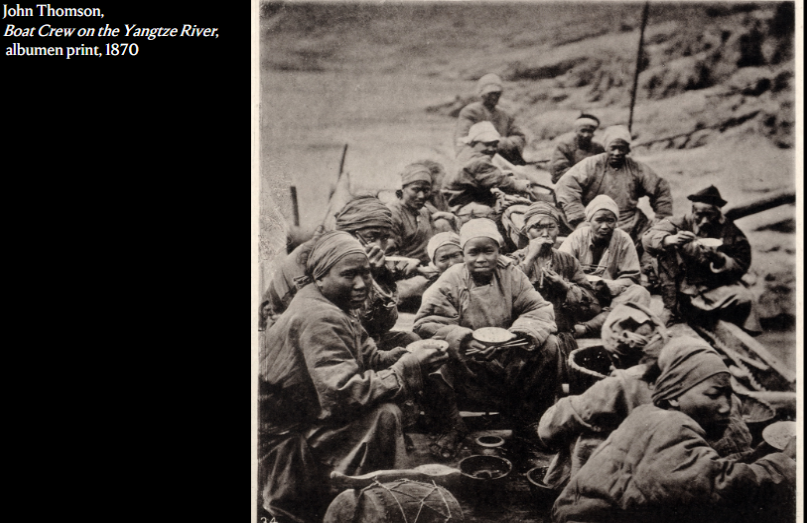
What is the story behind this image?
Cameras at the time have a long exposure time - a composition this crisp required a lot of staging and mastery from Thomson
Not just an image, but a social encounter

How might we compare these two portraits?
One on the left is more intimate, less idealization
Photography is bringing different imperatives for portraiture
A painting is more of an investment in the portrait as a set of public signs
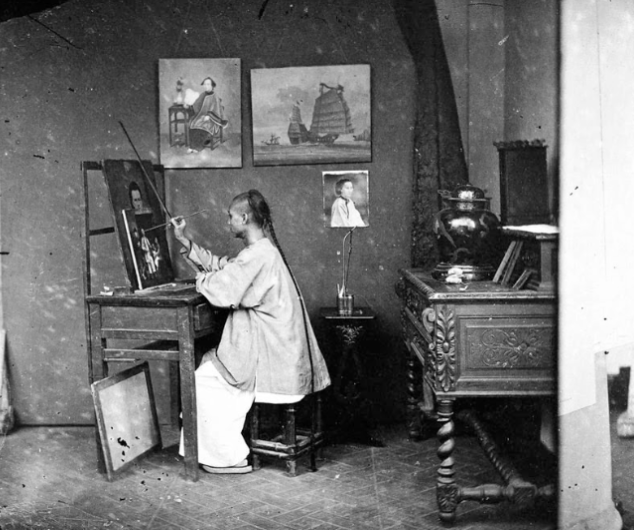
What is this painting about? (China)
John Thomson portrait, he is using two images to get a 3d effect
Self-portrait of the artist, but also of his business - showing his work on the walls, and him focused on his work

What is the context of this painting? (China)
Also a portrait of the business - marketing purposes
Variety of images on the walls - shows you can ger very different types of work here
Street scene in the back - a lot of depth to the image

How are these two artists related?
Lam Qua was apparently Chinnery’s student in his studio in Canton
But works coming out of the studio were signed Lam Qua - so maybe actually his competition?
Unsure if Lam Qua was a real person - or just an artist name
A lot of portraits were done in his same fashion at the time

What is the context behind this work?
The original “Grand Odalisque” is rooted in Orientalism
This is Lam Qua’s version - the image is inverted, curtain color has changed
A lot of chromatic changes - maybe he only had access to black and white print of the original

What art technique is used here?
Reverse glass painting - requires a clear understanding of layering and composition because the image is painted in reverse, behind the glass panel

What is the story behind these Lam Qua paintings? (1830s-50s)
Lam Qua was linked with the medical missionary Peter Parker, who had an eye hospital in Canton
Peter Parker dealt with rare medical conditions
Lam Qua is painting these people - medical records, but he also highlights the person a lot, humanizing them
The doctor saw thousands of patients - did the artist have a deeper bond with those he painted?

What is the meaning of Felice Beato’s The Executioner? (1867-8) (Japan)
Playing up an image of Japan that could be sold to Westerners - staged in a studio
Mount Fuji in the background - iconic imagery
Image of aggressivity, playing into stereotypes
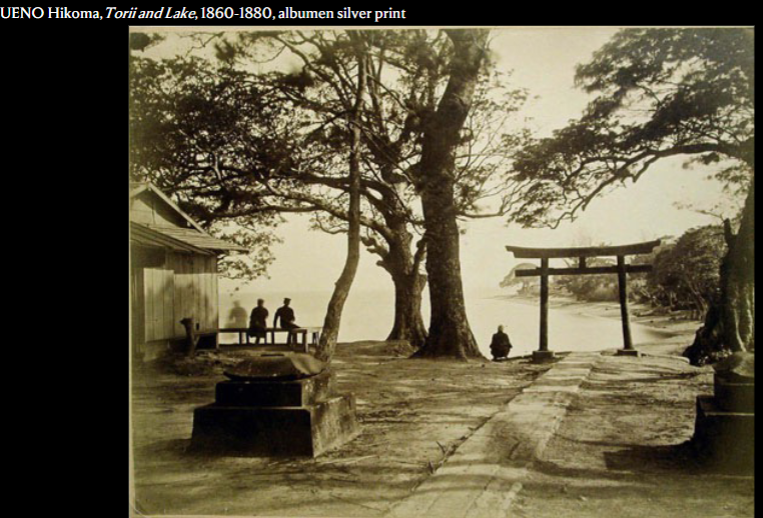
What is the story behind this image? (Japan)
UENO shows his interest in photography as a technical media
Long exposure time makes some figures blurry - is there any staging?
Very successful photographer

Who was KOBAYASHI Kiyochika?
Considered the last great print artist in Japan
Interested in night time scenes - ones photographs cannot pick up very well - he is responding to the competition
Creating images of the modern in some ways - presence of electricity and technology
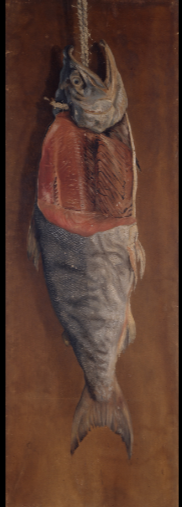
What influence does this Japanese painting show? (oil on paper)
Dutch painting influences - kind of similar to still life style

What is the meaning of Takahashi Yuichi’s Courtesan (Oiran), 1872, oil on canva?
Portrait of a typical entertainer
At the time, entertainers who had more freedom in dress code were gaining the upper ground - her profession is dying
Image was received as showing her in a bad light, hair pins are unorderly, she looks sad and closed off

What is the meaning of these images? (China)
Formula of including old and new regalia - on the right, french military uniform, and on the left, old king regalia
Image was overpainted with gold - self of adorning the person too
There is almost a light coming from the image - idea of worship
We might think of this image as producing presence, ontology, and being, rather than knowledge or truth - different notions of photography

Who was Erb BUNNAG? (Thailand)
Part of the aristocratic Bunnag family
She an amateur photographs - captured daily “behind the scenes” of the aristocratic life
Richer families got access to photography first

What is the context of this photo?
During King Chulalongkorn’s reign, pictures of him were not circulated, only after
Promoting a more down to earth image of the monarchy - time in which a lot of monarchies in the world were being overthrown

What photography technique is used here?
Composite work - merging of two images together - experimental at this time

What is the context of this series?
Meant to be viewed together - she is proposing seriality
Staged photograph but a certain level of playfulness - presenting a more laid back image of the monarchy maybe?

What is the story behind this Erb Bunnag photograph?
Portrait of Dara rasami - princess of a state in northern Siam (Lana)
Rumor in the 19th century that Queen Victoria was trying to amex Lana lead the king to marry Dara - taken hostage for politics
The portrait highlights her dual identity - long hair is a sign of her Lananess
We can see Erb in the mirror - deliberate choice
Sense of privacy - like we are not supposed to be there

What is the meaning of this series of portraits?
King, in his tour of southern Thailand, adopted an Indigenous child and brought him back to the court
Kid is forced to perform - part of a play the king wrote and stage about the Indigenous people in Southern Thailand

Why is the Queen looking into the distance here?
She is fashioning herself after portraits of Queen Victoria
Technique used a lot by the elites at this time

What is the meaning behind this image?
Very courtly portrayal
Sense of pride in where she is from - the north
This is an example of her public persona
Notion of colonial hierarchy - when she was sent back to the north, it was as an agent to the state - encouraging trust from her people
Notion of the reproduction of a colonial mindset

Who was OKAKURA Kakuzo? (1863-1913)
Co-founder of Tokyo Fine Arts School - then ousted from it and co-founds Japan Academy of Fine Arts
Later becomes curator of Chinese and Japanese art at the MFA Boston
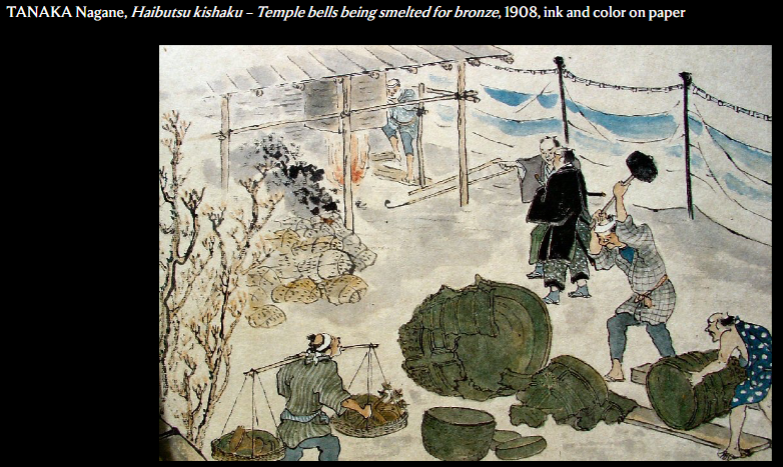
What is the context of this painting?
Insistence on the separation between Buddhism and Indigenous religion - Buddhism as a kind of foreign import

Who was Ernest Fenollosa? (1853-1908)
Leading a project to rehabilitate Buddhism - differentiating from the Tokagawa Buddhism - less involved in worldly affairs
Early theorist of soft power - thinking about Japan’s position of weakness compared to the West
Thinking about how culture can be used as a kind of export

What is the relation between Ernest Fenollosa and this temple?
Fenollosa insisted on opening up the cript of the temple
The monks did not want to, it took a lot of time and effort
Conversation of what we might give up for cultural publicity

What is Nihonga? (1880s)
Literally means Japanese painting
Based a lot in Buddhist imagery - return to the religious image as part of Japanese identity