bio chapter 13

0.0(0)
Studied by 0 people
call kaiCall Kai
learnLearn
examPractice Test
spaced repetitionSpaced Repetition
heart puzzleMatch
flashcardsFlashcards
GameKnowt Play
Card Sorting

1/99

encourage image

There's no tags or description

Looks like no tags are added yet.

100 Terms
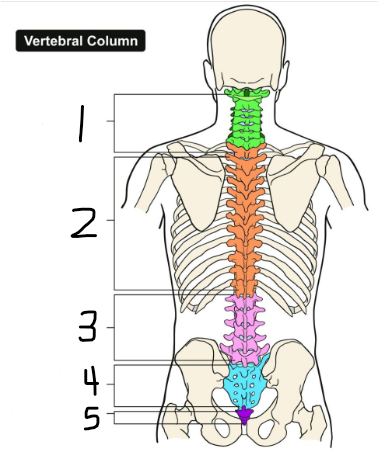
1
New cards
label
label
cervical thoracic lumbar sacral coccygeal
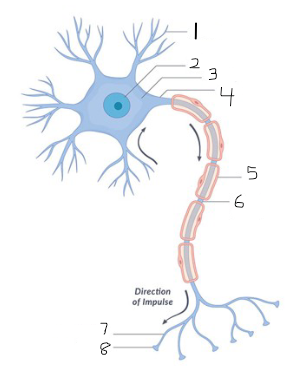
2
New cards
label
label
dendrite nucleus cell body axon myelin sheath node of ranvier axon terminal synapse
3
New cards

lumbar puncture (aka spinal tap) - Procedure in which a hollow ______ is inserted into the spinal canal between _________ near the L-4, or lumbar region to obtain and analyze cerebrospinal fluid

needle vertebrae

4
New cards
Electroencephalogram (EEG) - test that measures and records the __________ activity of the brain, producing a recording of brain waves. Glue __________ to scalp
electrical electrodes
5
New cards

myelography - an imaging test in which a ________ dye is injected into the subarachnoid space to visualize the ______ cord structure and they use an ultrasonic probe to get a visual image of the spine

contrast spinal

6
New cards

Angiography - test, inject dye into ___________ and get an image of blood vessels of the brain. Looking for blood flow, size and _____ of blood vessels

bloodstream shape
7
New cards
the glasgow coma scale - tool that measures level of brain function after ______. Tests three categories: Eye, ______ and motor responses
injury verbal
8
New cards

A perfect glasgow coma score is _. The lowest score possible is a _

15 3

9
New cards
quadriplegia (spinal injury) - loss of ________ in both arms and both legs.
function
10
New cards
Paraplegia (spinal injury) - loss of function in the ____ and lower body.
legs
11
New cards
complete spinal injury - there is no ________ or feeling below the level of the injury.
movement
12
New cards
incomplete spinal injury - there is still some ______ of feeling or movement below the level of the injury
degree
13
New cards
ischemic stroke - most ______ type of stroke. When a blood ____ blocks the blood flow in an artery within the brain
common clot
14
New cards
hemorrhagic stroke - when a blood vessel ______ within the brain (aneurysm)
bursts
15
New cards
Transient ischemic attack (TIA) (aka mini stroke) - disruption of ________ blood flow, issues resolve within 24 hrs - needs immediate medical attention. A _____, self-correcting stroke. Often the _________ to an actual stroke.
cerebral minor precursor
16
New cards

the most common type of meningitis is _________ meningitis (Streptococcus pneumoniae)

bacterial

17
New cards

Streptococcus pneumoniae and Neisseria meningitidis (Meningococcal meningitis) are the types of meningitis that are of major concern in college dorms / _______ housing. Easy to catch, affects mainly _________ and young adults. Should get __________. Even if vaccinated, if you’ve been in close _______ with someone with these, you should get an oral __________.

crowded teenagers vaccinated contact antibiotic

18
New cards
parasympathetic nervous system - pupils constrict, salivation, airways constrict, heart rate _____, stomach digests, intestines digest, bladder constricts, reproductive system increases blood flow, ___________ (tears)
slows lacrimation
19
New cards

sympathetic nervous system - fight or ______. Homeostasis. Pupils dilate, saliva inhibited, airways dilate, heart rate increases, stomach inhibits digestion, liver releases _______, intestines inhibit digestion, adrenals release _________, bladder relaxes, reproductive system decreases blood flow,

flight glucose adrenaline

20
New cards
central nervous system (CNS) - ___________ all parts of body. It receives and __________ sensory input, integrates and stores information, and then _______ all body activities. Consists of the brain and spinal ____.
Coordinates interprets directs cord
21
New cards
Brain - Thought, memory, _______, touch, motor skills, vision, breathing, ___________, hunger and regulates our body. Gray and _____ matter. __ cranial nerves.
emotion temperature white 12
22
New cards
The spinal cord is important for movements and functions: voluntary and ___________, Reporting senses to your brain, Managing your _______
involuntary reflexes
23
New cards

meninges - Coverings that protect the ________ nerve tissue of the spinal cord and brain.

delicate
24
New cards
three meninges - dura mater, _________, pia mater
arachnoid
25
New cards
Dura mater (meninge) – ________ outer covering
toughest
26
New cards
Arachnoid (meninge) – ______ layer
middle
27
New cards
Pia mater (meninge) – _________ covering
innermost
28
New cards
subdural space - between dura mater and _________ space
arachnoid
29
New cards
subarachnoid space - between arachnoid and pia mater, filled with ___
CSF
30
New cards
Cerebrospinal fluid - fluid that ______ the brain and spinal cord.
bathes
31
New cards
3 sections of the brain: cerebrum, __________, brain stem
cerebellum
32
New cards
cerebrum - _______ part of the brain. Interprets five senses, regulates _________ actions that require thinking. Divided into two halves: the left and right ___________.
largest conscious hemispheres
33
New cards
cerebellum: at the base of the brain, responsible for Balance - _______ - coordination - fine motor skills (smaller movements e.g. moving _______ to type or moving mouth to talk)
posture fingers
34
New cards
brain stem - lower part of the brain, ________ brain to spinal cord. regulates _________ body functions that you don’t think about - heart rate - breathing - sleep and wake cycles - __________
connects automatic swallowing
35
New cards
four lobes of brain: Frontal, Parietal, _________, Temporal
Occipital
36
New cards
frontal lobe of brain - front of brain behind ________. involved in speech, _________, abstract thinking, judgement
forehead foresight
37
New cards
parietal lobe of brain - top ____ of brain. involved in _______ processing
back sensory
38
New cards
temporal lobe of brain - sides of brain around ____. memory, visual, and ________ association
ears auditory
39
New cards

occipital lobe of brain - back of brain. connected to ____, responsible for ______

eyes vision

40
New cards
pons - part of the brain ____. Important for sleep, respiration, swallowing, bladder control, hearing, ___________, taste, eye movement, facial expressions, facial sensation, and _______
stem equilibrium posture
41
New cards
Medulla oblongata- part of brain ____. Involved in ___________ functions; breathing, heart rate, blood ________
stem involuntary pressure
42
New cards
midbrain - part of brain stem just _____ ____________
below hypothalamus
43
New cards

Peripheral nervous system - connect CNS to _____ and organs. Autonomic and _______. __ pairs of cranial nerves and __ pairs of spinal nerves

limbs somatic 12 31

44
New cards
autonomic - automatic, without ________ (e.g. digestion, heart rate)
thinking
45
New cards
somatic - thinking about them (e.g. _______)
walking
46
New cards
Cranial nerves - part of the __________ nervous system (PNS) and there are __ pairs of them. Arise from the _____
peripheral 12 brain
47
New cards
neuron - basic ____ of the nervous system (nerve/brain cells)
unit
48
New cards
Hydrocephalus - developmental and __________ disorder. Buildup of CSF in the brain’s __________. Causes ________ in the brain which causes Headache, double vision, poor balance, mental impairment, urinary ____________.
congenital ventricles pressure incontinence
49
New cards
Hydrocephalus can be dealt with through surgery where install catheter/_____ in the brain and run it down through the body and it allows ______ CSF to leave brain through tube
shunt excess
50
New cards
Traumatic brain injury (TBI) - can be caused by Falls, Motor _______ accidents, Sports, Physical ________. Severe traumatic brain injury - Closed and Open injuries (is the _____ open or closed)
vehicle violence skull
51
New cards
mild traumatic brain injury (TBI) symptoms: nausea/vomiting, _________/balance issues, headaches, _________, sleeping less or more than usual, anxiety. Sometimes referred to as ‘mild __________’
dizziness confusion concussion
52
New cards
moderate to severe traumatic brain injury (TBI) symptoms: same as mild plus losing _____________, hearing/vision issues, ______________, trouble communicating, changes in sensory perception
consciousness aggressiveness
53
New cards

epilepsy - CNS disorder. Cause not _____. Can result from a traumatic brain injury, stroke or __________. Abnormal __________ activity in the brain. Causes Seizures, Loss of consciousness, Loss of _____ control

clear meningitis electrical motor

54
New cards
epilepsy symptoms - head and eye deviation, jerking or _________ movements, involuntary chewing, uncontrollable shaking, body __________, loss of consciousness, eye rolling
automatic stiffening
55
New cards
simple focal seizure - no loss of consciousness, _____ sensory and motor disturbances; tingling and ________ lights, involuntary movements
minor flashing
56
New cards
dyscognitive focal seizure - loss of _________ or consciousness; staring and ___________ movements
awareness purposeless
57
New cards
absence seizure - _____ mal seizure, staring into space or “___________”
petit daydreaming
58
New cards
tonic seizure - __________ of muscles
stiffening
59
New cards
clonic seizure - repeated _______ movements of muscles on both sides of body
jerking
60
New cards
myoclonic seizure - jerking or _________ the upper body, arms, or legs but not all at the same time
twitching
61
New cards
atonic seizure - loss of normal muscle ____
tone
62
New cards
tonic-clonic seizure - _____ mal seizure; _______ of all symptoms
grand mixture
63
New cards
trigeminal neuralgia - disorder of cranial nerve. _____ cranial nerve. Intense pain in the face (lips, ____, chin). The area of pain depends on which ______ of the cranial nerve is affected. Can affect eyes, hearing, _______ and facial muscles
Fifth gums branch balance
64
New cards

Bell's Palsy - disorder of _______ nerves. Facial nerve ____________ caused by _____ or immune disorder. inability to control facial _______ on the affected side. Drooping _______, eyelid, facial nerve, corner of mouth. Temporary - few _____ at a time then goes back to normal

cranial inflammation virus muscles eyebrow weeks
65
New cards
bell’s palsy is Not typically a medical emergency, but because it can’t be _____________ from a stroke by normal people, if you see it you should still get them to the emergency __________.
distinguished department
66
New cards

Meningitis - inflammation of the _________; headache, fever and a _____ neck. First ___ meninges (pia and arachnoid). Infectious causes: bacterial (most common), fungal, viral, _________. Severe - results in death if not treated _______

membranes stiff two parasitic quickly

67
New cards

Noninfectious types of meningitis include: __________, Carcinomatous (cancer) meningitis, ____-induced aseptic, Post-traumatic meningitis

Autoimmune drug

68
New cards
Bacterial meningitis is often _____. Aseptic means if they do a lumbar puncture and your CSF tests ________ for bacteria
acute negative
69
New cards

symptoms of meningitis - fever, headache, stiff neck, sensitivity to _____ (photophobia), nausea, vomiting, confusion/_______ mental state

light altered

70
New cards

Encephalitis - Inflammation of the brain; viral or _________. headache, fever, confusion, __________, and fatigue. For babies since you can’t tell, feel for _______ at the fontanel, which is the soft spot at the top of the head where the _____ hasn’t fused yet.

bacterial drowsiness bulging skull

71
New cards

Poliomyelitis (polio) - viral infection. Infects _____ neurons; orally transmitted. Can cause _________ and death. Flu-like symptoms: Fever, _______, sore throat, headache. Digestive issues: Nausea and vomiting, diarrhea, ____________, stomach pain.

motor paralysis fatigue constipation

72
New cards
polio Signs of brain and spinal cord ________: Severe headache, sensitivity to light or touch, neck _________.
swelling stiffness
73
New cards

polio Nervous system effects: Pain or pins-and-needles feeling in your ____ and legs (paresthesia), muscle spasms, weakness or paralysis that can affect movement, breathing, __________ or speaking

arms swallowing

74
New cards
polio is a notifiable under the prevention and control of infectious diseases act 1988, meaning if a doctor _________ a case of it, they are _______ required to notify government. Polio vaccine in U.S. does not use ____ polio virus so it’s __________ to catch polio from it
diagnoses legally live impossible
75
New cards
polio is transmitted through ____________ food and water/fecal-oral route. It can only be prevented by vaccine (____________) - Typically given a vaccine at 2 , 3, 5, and __ months of age.
contaminated immunization 18
76
New cards
In the 1950s, 20,000 cases of polio occurred ________ in Georgia. After vaccination began, the number of cases _________ to 10 in 1979.
annually plummeted
77
New cards
Rabies - infection of brains of bats, ________, foxes, skunks. Viral infection of the brain; violent movements, uncontrolled __________, fear of water, an _________ to move parts of the body, confusion, and loss of consciousness. Infects _______ cord and brain.
raccoons excitement inability spinal
78
New cards
rabies has no cure; by the time symptoms are seen, it is almost __________ to be fatal. Bats are most common ______ of rabies. Treatment: Injections near _____. Vaccination (usually ____ and high-risk people)
guaranteed source wound pets
79
New cards
Tetanus (Clostridium tetani) - Bacterial infection. Muscle ________ and paralysis, because of a bacterial nerve _____. Used to be called ________.
rigidity toxin lockjaw
80
New cards
Tetanus makes your muscles flex ______________. That can look like: difficulty breathing or swallowing, face muscles causing a _____ smile, ___ muscles holding your mouth tightly closed. Muscle spasms in your abs, back, or _____
uncontrollably rigid jaw limbs
81
New cards
Shingles (Varicella Zoster) - ____________ of chicken pox. Painful inflammation of _______ neurons
reactivation sensory
82
New cards
shingles symptoms - raised, _________ rash, stomach upset, fever, chills, headache, itching or tingling, reddish or __________ skin, generally feeling unwell, burning or shooting nerve pain
blistered discolored
83
New cards
Botulism (Clostridium botulinum) - Muscle ________ and paralysis; food _____ - can be fatal
weakness borne
84
New cards
botulism symptoms - ________ eyelids, double or blurred vision, dry mouth, _______ speech, difficulty swallowing, difficulty breathing, weakness or paralysis of arms or legs, nausea and vomiting
drooping slurred
85
New cards

Alzheimer's Disease (AD) - Cause _______. 60% to 70% of cases of ________. Progressive ___________ of memory. Plaques - amyloid plaques form between neurons, bodily functions are lost, __________ leading to death. Neurofibrillary tangles-form ______ neurons.

unknown dementia destruction ultimately within

86
New cards
Alzheimer’s symptoms - _______ decline in: memory, _________, language, coordination, mood, behavior
gradual reasoning
87
New cards

Multiple Sclerosis (MS) - Chronic, progressive, ____________ inflammatory disease disorder. Affects the CNS. __________ disease. ______ destruction. Tingling, pins and needles or ________, muscle weakness, very __________ reflexes, muscle spasms, or difficulty in moving

degenerative autoimmune myelin numbness pronounced

88
New cards
Different ways that myelin sheath can be damaged in multiple sclerosis - inflamed coating can ________ nerve, coating can be ________ and nerve fiber is exposed and damaged. Can also have permanent ________
compress detached scarring
89
New cards
Depending on where nerve damage happens, multiple sclerosis can affect vision, _________, coordination, movement, and bladder or _____ control.
sensation bowel
90
New cards

Amyotrophic Lateral Sclerosis (ALS) - Lou Gehrig's Disease. Progressive loss of motor ________. Cause unknown-can be genetic or _____________. Motor ______ death. Stiff muscles, muscle _________, worsening weakness due to muscle wasting. Death in _____ to ____ years

function environmental neuron twitching three four

91
New cards
ALS symptoms - muscle weakness, muscle ______, twitching, stiff muscles, speech challenges, trouble swallowing, ________, involuntary emotional expressions, fatigue. In ALS nerve cells, _________ and axons are damaged so muscle contraction is __________
cramps drooling dendrites diminished
92
New cards

Parkinson's Disease (PD) - ____________ disease. Loss of control over muscle ____________ and movement. Shaking, ________, slowness of movement and difficulty with walking and ____. Death of ________- generating cells in the midbrain. Familial or __________

Degenerative coordination rigidity gait dopamine idiopathic

93
New cards
Parkinson’s early non-motor symptoms - loss of sense of _____, drooling, ____________ and GI problems, sleep problems such as RLS, mask-like facial expression
smell constipation
94
New cards
Parkinson’s common motor-related symptoms: slowed movements, ______ while muscles are at rest, rigidity or stiffness, ________ less often than usual, trouble swallowing, unstable posture or walking gait
tremor blinking
95
New cards

possible effects of parkinson’s: headache, visual ____________, loss of appetite, involuntarily hurried gait, loss of libido, impotence, aching back, ________ speech

degeneration monotone
96
New cards

Essential Tremor (action tremor) - Shaking of hands and head during _________ movements. Try to do simple tasks, such as drinking from a glass, tying _________, writing or _______

voluntary shoelaces shaving

97
New cards
essential tremor symptoms: worse shaking when upset, tired, or after ________, head shaking or nodding, shaky voice, trouble doing things that need ______ hands, shaking gets worse over time
caffeine steady
98
New cards

Huntington's Disease (Huntington's Chorea) - Involuntary and _________, rapid, jerky movements have trouble walking, ________, and swallowing. Autosomal ________ disease

ceaseless speaking dominant
99
New cards
Huntington’s symptoms - physical: involuntary movements, difficulty swallowing, loss of ____________. Mental/emotional changes: depression and mood swings, difficulty learning and _________, memory loss
coordination reasoning
100
New cards
Spina Bifida - ______ tube defect
Abnormality of _________ and spinal cord, the vertebrae don’t form ________ around the spinal cord. _ different types
Neural vertebrae properly 4