lecture 25 - skeletal system: axial skeleton - skull and hyoid
 Call Kai
 Learn
 Practice Test
 Spaced Repetition
 Match
 Flashcards
 Knowt Play
1/66

There's no tags or description
Looks like no tags are added yet.
67 Terms
there are ___ bones in the human (adult) body
206

2 divisions of skeleton
axial skeleton
appendicular skeleton

axial skeleton
80 bones
lie along longitudinal axis
skull, hyoid bone, vertebrae, ribs, sternum, auditory ossicles

appendicular skeleton
126 bones
upper + lower limbs, pelvic + pectoral girdles

girdles
attachment sites b/w axial + appendicular skeleton

projections
points of attachment for muscles/ligaments/tendons onto bone
e.g. process
smaller bony feature that sticks out of bone
tuberosity
large knob projection
tubercles
rounded bumps
ridge
points of attachment for muscles/ligaments/tendons onto bone
provide bony feature that sticks out of bone
e.g. spine of scapula

functions of surface features of bone
passageway for blood vessels + nerves
joint formation
muscle, tendon + ligament attachment

openings
foramen
e.g. foramina of cribriform plate
holes
canals
tunnels through bone

depressions
fossas
shallow depression
notches
grooves
margin/border
outside portion of bone

condyle
smooth, rounded articular surface or surface that forms a joint

facet
small, flattened articular surface or surface that forms a joint

skull function
protect the brain
supports organs of vision, hearing, smell + taste
skull # of bones
22 separate bones + 6 auditory ossicles + 1 hyoid bone

2 portions of skull bones
cranial bones
facial bones
cranial bones
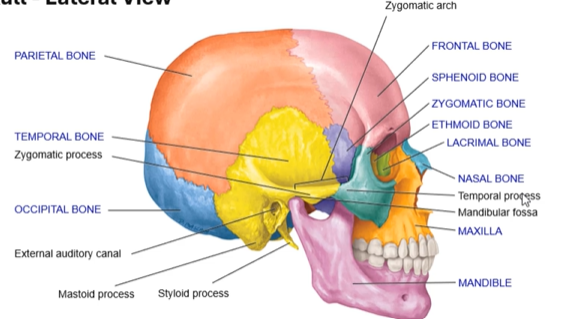
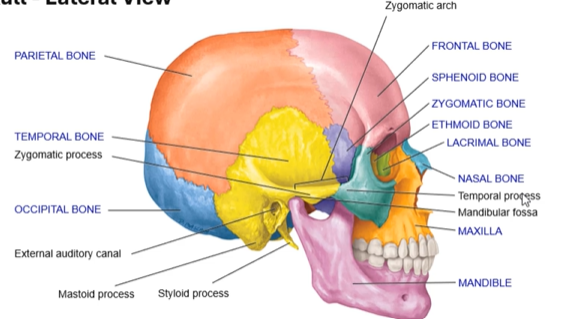
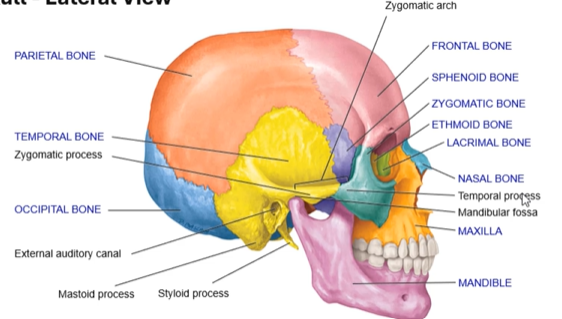
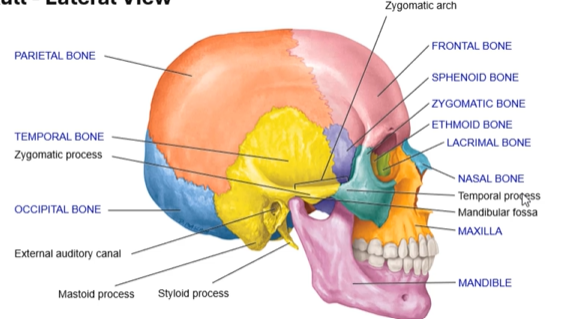
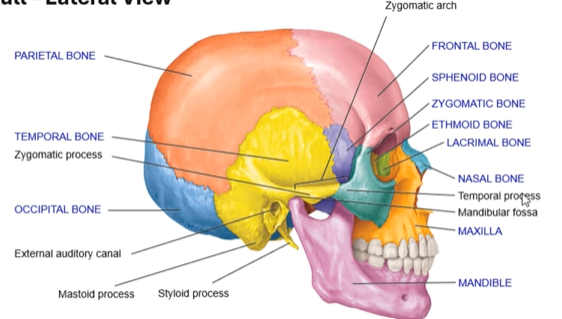
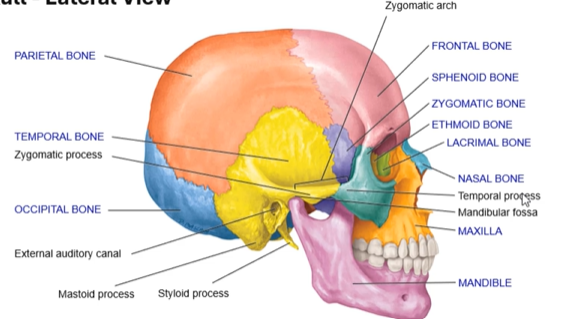
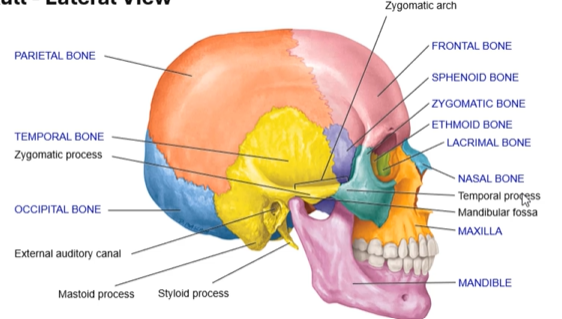
2 parietal, temporal
frontal, occipital, sphenoid, ethmoid
(8 bones)

facial bones
2 maxilla, zygomatic, palatine, lacrimal, nasal, inferior nasal conchae
1 vomer, mandible
(14 bones)

the ______ is the only movable bone of the skull. it forms a joint with the ______ bone
mandible, temporal
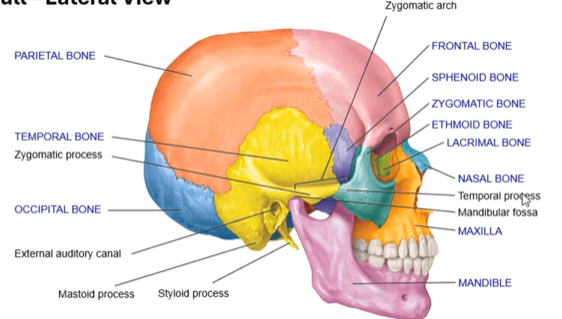
frontal bone
forehead
roof of orbit (roof of eye socket)
anterior part of cranial floor (floor of bone that holds brain)

originally, the frontal bone is _ bones. these fuse anteriorly by about age _
2, 6

parietal bones
sides + roof of cranial cavity

occipital bone
base of cranium

temporal bones
inferior lateral aspects of cranial cavity
part of floor of cranial cavity

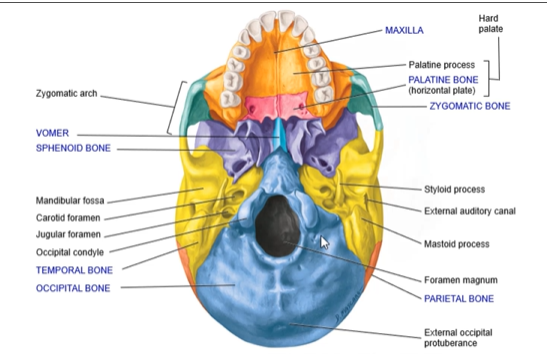
mastoid process
on temporal bone
attachment point for neck muscles
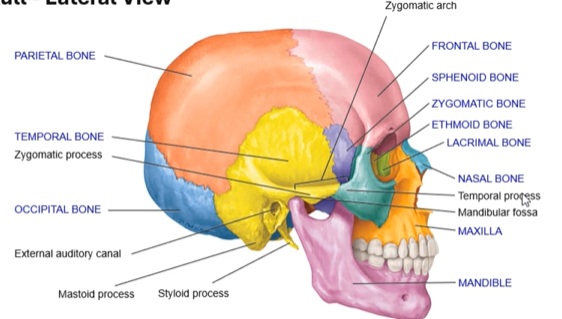
styloid process
on temporal bone
attachment point for tongue + neck muscles
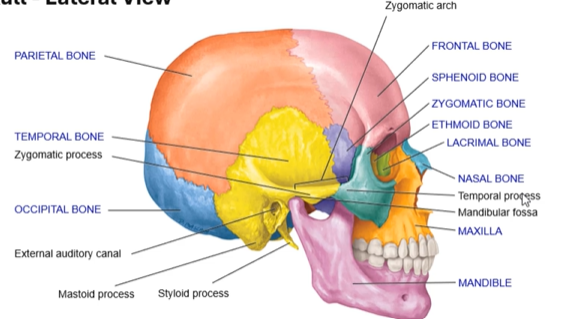
external auditory canal/meatus or external acoustic meatus
hole in temporal bone that leads to middle + inner ear

_____ is another word for canal
meatus

zygomatic process
part of temporal bone
region of cheek bone

sphenoid bone
butterfly shape
has greater + lesser wings
lateral skull + cranial floor + eye socket
articulates w/ all other cranial bones

ethmoid bone
perpendicular plate
part of ethmoid bone
superior + posterior portion of nasal septum

middle nasal conchae
ridge of ethmoid bone

superior nasal conchae
ridge of ethmoid bone
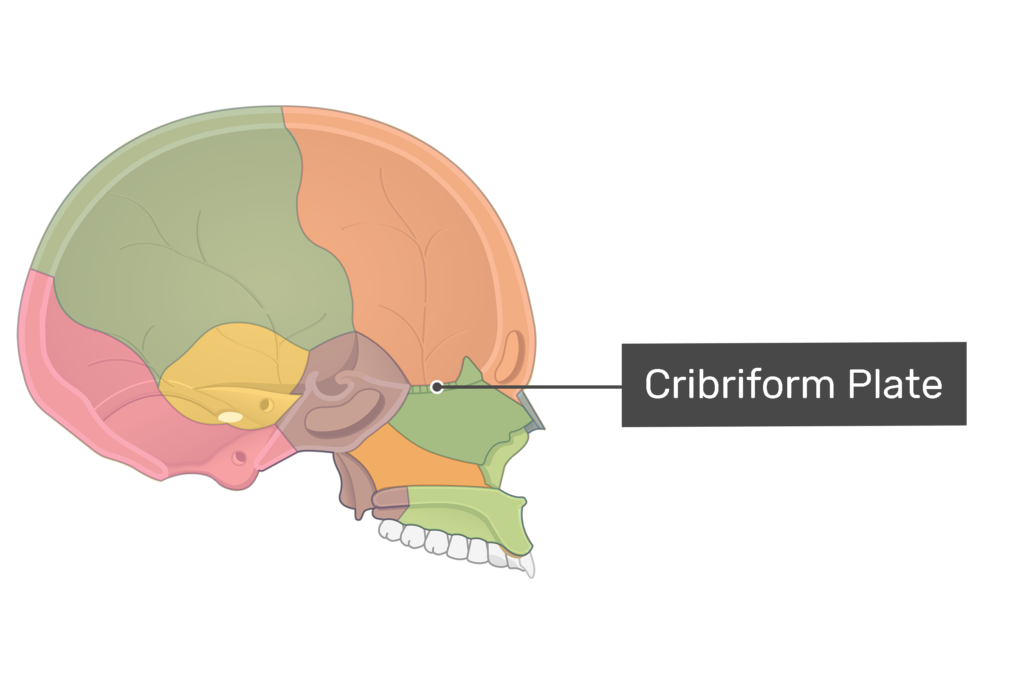
cribriform plate
part of ethmoid bone
separates nasal cavity from cranial cavity
nasal bones
upper bridge of nose + anterior roof of nasal cavity
lacrimal bones
smallest bones in face
contain lacrimal sac
within eye orbit

zygomatic bones
cheek bones + portions of orbit

temporal process
part of zygomatic bone

zygomatic arch
temporal process (of zygomatic bone) + zygomatic process (of temporal bone) together

maxilla bones
upper jaw + floors of orbit + some nasal cavity + most of hard palate (roof of mouth)

mandible
largest + strongest bone of skull
only movable bone of skull (aside from auditory ossicles + hyoid bone which aren’t really part of the skull…js associated with it)
not attached (articulates w/ temporal bone)
mandibular fossa
where mandible articulates with the temporal bone
orbit
eye socket

supraorbital margins
ridges on top of orbit in frontal bone
portion that gets hit when someone is hit in the eye (black eye)

inferior nasal conchae
bone (NOT ASSOCIATED w/ ETHMOID BONE)
ridge that filters air before it enters the respiratory system
help move odorants

vomer
inferior + posterior region of nasal septum

alveolar processes
parts of maxillary bone + mandible
create spaces for teeth

palatine processes
part of maxillary bones
make up roof of mouth
fuse tgth during embryological development

palatine bone
L-shape

horizontal plate
part of palatine bone

palatine process (maxilla) + horizontal plate (palatine bone) make up what
hard palate

cleft lip/palate is caused by an improper fusing of the _______ processes during embryological development
palatine

cleft lip vs cleft palate
cleft lip: failed fusion on soft portion of skin
cleft palate: failed fusion of maxillary bones

jugular foramen
veins draining blood from skull/brain leave the brain

carotid foramen
arteries giving blood to skull/brain enter the brain

external occipital protuberance
part of occipital bone
bump on back of skull
joins to ligaments → hold your head upright

foramen magnum
hole in occipital bone where spinal cord connects to brainstem
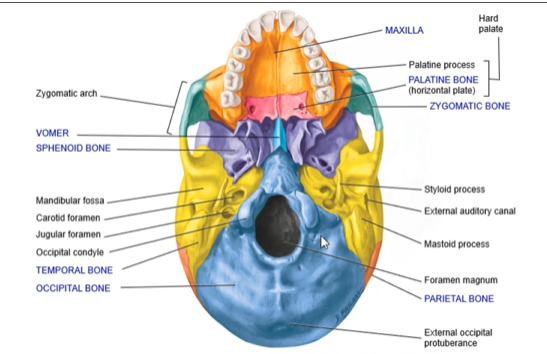
occipital condyles
part of occipital bone
articulate w/ 1st cervical vertebrae
rounded
allow nodding ‘yes’ + tilting ears towards shoulders
there are _ bones that make up the orbit
7
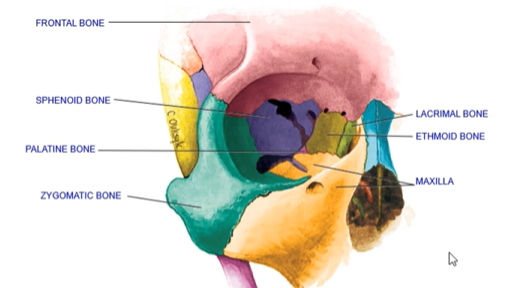
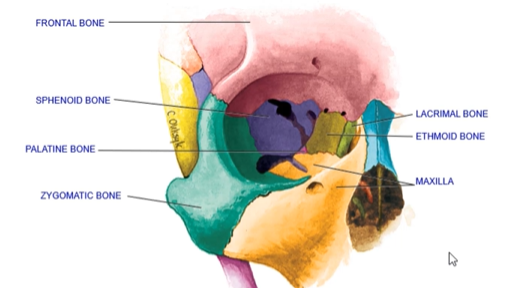
7 bones that make up the orbit
frontal bone
sphenoid bone
zygomatic bone
maxilla
lacrimal bone
ethmoid bone
palatine bone

roof of orbit is comprised of which bones
frontal + sphenoid bones

lateral wall of orbit is comprised of which bones
sphenoid + zygomatic bones

floor of orbit is comprised of which bones
maxilla + zygomatic + palatine bones
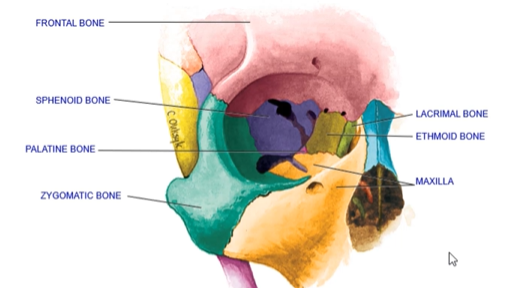
medial wall of orbit is comprised of which bones
maxilla, lacrimal, ethmoid, sphenoid bones

the orbit is a _____ shape that extends backwards
cone
hyoid bone
not really in skull
floating bone
unpaired
does not articulate with any other bone
attachment point for tongue + neck muscles (that elevate larynx during speech + swallowing)
