OSCE 2026
 Call Kai
 Learn
 Practice Test
 Spaced Repetition
 Match
 Flashcards
 Knowt Play
1/43

There's no tags or description
Looks like no tags are added yet.
44 Terms
DRUGS (co and bp caclulations)
CO = hr x sv
BP = CO x svr
drugs that lower hr will lower bp as a side effect
drugs that lower bp will increase hr to compensate
Acepromazine
Premed, a1 phenothiazine tranquiliser, no analgesia, non-reversible
lasts 6-8hrs
Sedative, vasodilation and hypotension
NOT in boxers, stallions
Àlfaxan
Neurosteriod, gaba agonist, no analgesia
Induction, respiratory depression/apnoea
Atipamezole
a2 antagonist, medetomidine reversal
Atropine
anticholinergic, increases hr primarily and increases bp also as a side effect
ONLY IN EMERGENCIES
Butorphanol
partial mu antagonist, kappa agonist, sedation, mild pain relief (blocks receptor so can’t give good pain relief but kappa gives some pain relief)
use for scale and polish, imaging, scopes, bandage changes, ear flush - ANYTHING NON-PAINFUL
Diazepam
benzodiazepine, induction combo, flumazenil reversal
muscle relaxant during seizures
Dopamine
catecholamine, increases map - IF SEVERE HYPOTENSION
Fentanyl
Pure mu agonist, CRI, naloxone reversal
IV duration is 20 mins, fentanyl patch onset in 12hrs, lasts 3 days.
Glycopyrrolate
Anticholinergic, increase hr, lasts longer but takes longer to work
older patients and longer procedures
Lignocaine
local, anti-arrhythmic for vps (ventricular premature contractions) - leading to vtac
Medetomidine
atipamezole is the reversal
alpha-2 adrenergic agonist, sedative and analgesic
Phase 1: vasoconstriction —> hypertension —> reflex bradycardia
Phase 2: Vasodilation —> hypotension —> still bradycardia
Meloxicam
NSAID, after procedure to control pain relief, not in kidney issues or dehydration
Methadone
pure mu, bradycardia
Naloxone
Opioid reversal
Propofol
Induction, respiratory depression and cardiac depression
Rebreathing Anaesthetic Machine Check
Attach hoses (02, and scavenge)
Turn scavenge on and 02 flush
Turn 02 on full then drop of 2L/in and do seal check
Vaporiser on 0 and do seal check
o2 and vaporiser off
Check iso and turn dial all the way
Check soda lime
Attach fresh gas hose to common gas outlet
Attach rebreathing circuit and bag
Check circuit for leaks - inflate to 20cm/H20
Empty bag until wrinkles - squeeze and observe one-way valves
Open spill valve and squeeze bag

Non-rebreathing Anaesthetic Machine Check
Attach hoses (02 and scavenge)
Turn scavenge on and 02 flush
Flowmeter on full then back to 2L/min and seal check
Vaporiser on 0 and seal check
02 and vaporiser off
check iso and rotate vaporiser dial all the way
attach non-rebreathing circuit including bag (to common gas outlet and scavenge hose to spill valve)
perform a leak test filling bag to 20cm H20
open spill valve and squeeze bag

Catheter Placement Explain
Radiography - Lateral Thorax

Radiography - VD Thorax

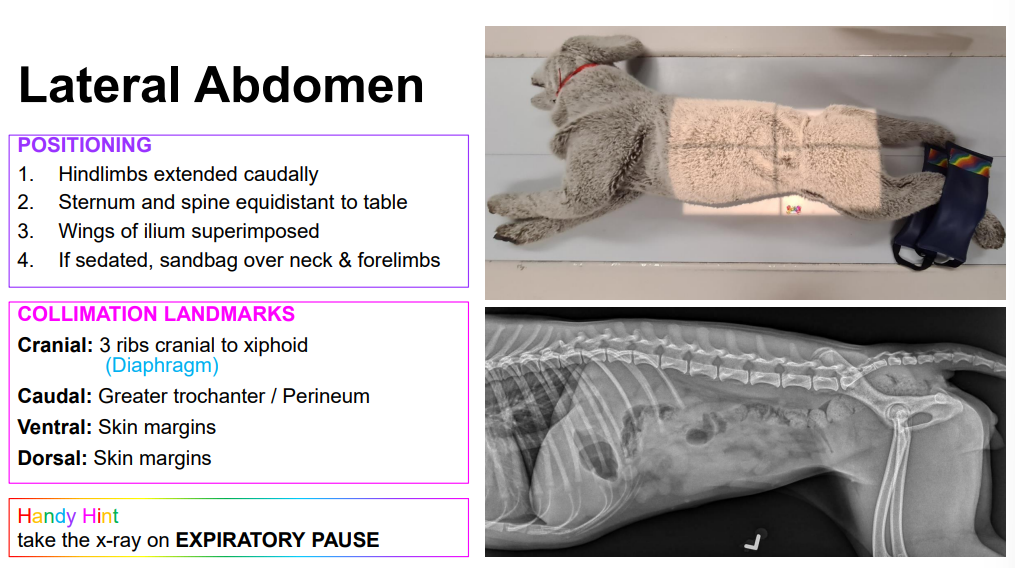
Radiography - Lateral Abdomen
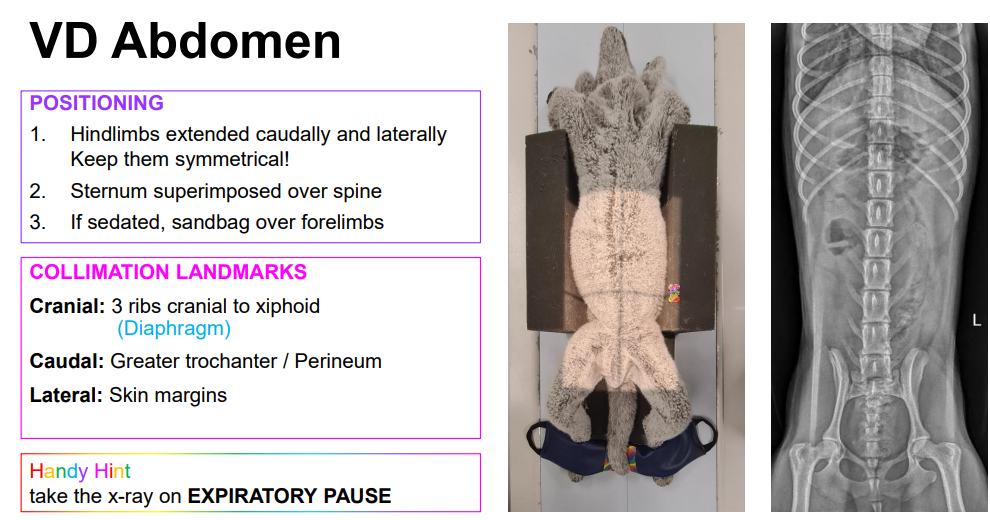
Radiography - VD Abdomen
PALACE
Positioning
anatomy
label
artefacts
collimation
exposure
X-ray principles
3 interactions with matter (penetration - black, absorption - white, scatter - degrades image quality - AVOID USING GRID)
3 exposure factors:
kvp: QUALITY - kilovoltage peak/pentration power - contrast
mA: QUANTITY (want large)
time: mAs (want shortest time) - density
Grids: increase quality and decrease scattered radiation - between patient and image receptor - when body area >10cm (in a bucky - remove grid lines)
Radiography PPE requirements
we are allowed 20mcv/yr, normally only 1msv/yr
ALARA: as low as reasonably achievable
we must have a licence
4 pillars of radiation safety - distance, time, shielding, common sense
lead gowns, thyroid collars, lead gloves, hand/arm shields, lead glasses
reduce exposure: out of room, PPE, restraint, distance, collimate (lower beam size), exposure approp
Surgical Prep
clipping margins and positioning
prep stages and techniques
necessary instruments/equipment
Spey Margin: cranial diaphragm, mid pelvis caudally, 10-20cm laterally depending on dog size --> Rochester Carmalts to crush pedicles
Castrate: cranial prepuce, above/below scrotum (don’t clip), 10cm laterally
40 clipper blade, 10 for tick clip (not close to skin)
Prep: aqueous chlorhex 1:1 5 mins general scrub, concentric circles methylated spirits spin until no longer pink or stars on uneven surgical field (to remove oils from skin), chlorhex and alcohol spray in theatre
Gowning and gloving Explain
ET tube cuff inflation
only inflate cuff while giving breaths
give breaths below 20cm H20
intubate with left hand and hold laryngoscope with right hand
Injection Sites (SQ and IM)
on neck, tent skin and insert needle and draw back
IM: epaxial muscles (cranial margin: last rib, caudal margin: ilium wings, medial margin: spinal ridge, distal lateral: transverse process of lumbar vertebrae - 90 degree angle and rest wrist!!!!
Fluid Rate Calculations
5ml/kg/hr surgical
2-3ml/kg/hr maintenance
Admission Procedures for Surgical Patients
Patient Admit:
Eaten? 9pm night before
Current meds
When last on heat
CPR status
Confirm details and procedure
Patient Discharge:
Visual: Clipping sites, tattoo
May not eat much post-op and lethargic
Cone and reduced activity 14days
Incision site and wound care
Sutures out 10-14days
Cleaning and Maintenance of Surgical Instruments
Preparing and Sterilising Surgical Packs
Clipper Care and Maintenance
Rebreathing 02 Flow Rates
Preox; 200mls/kg/min
Induction: 100mls/kg/min
Maintenance: 50mls/kg/min
Breathing Bag Size
5-6 x bw x 10-20 TIDAL VOLUME

ECG Trace
P: atrium contract / depolarising
QRS: ventricular contract / depolarising
T: refilling/ repolarising
ECG: only tells us heart is working - not that its doing well
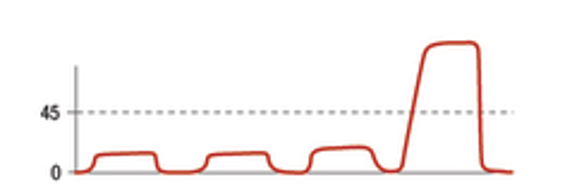
ETC02 Trace
- top = expiratory pause, bottom - inspiratory pause - inspired CO2 = 0
Hypercapnia: breathe for patient = temporary fix
Check patient depth - too deep - central eyes, no jaw tone, no palpebral reflex - not exhaling enough - hypoventilation
Too light: central, palpebral, jaw tone, Hyperventilation = hypercapnic
Good plane: ventromedial, no blink or jaw tone
Patient Parameters
80-140 small dog
60-120 large dog
140-200 cat
10-20 rr
100-120 systolic
60-80 MAP
60-80 diastolic
35-55 asleep ETCO2
96+ SPO2
37.5-39 temp
Anaesthetic Problem Solving: Hypotension (MAP 45) and Bradycardia (37)
Check patient - too deep = lighten up
Atropine - hr too low, if was in 50s use glyco - takes a few mins
ANTICOLINGERIC
Anaesthetic Problem Solving: Bradycardia but MAP 85
DON’T DO ANYTHING, MAP good so still perfusing
Anaesthetic Problem Solving: Hypotensive, hr 88
Check depth: if good depth —>
Fluid bolus: 10ml/kg twice for dog, 5ml/kg twice for cat - over 10-15 mins - won’t work if normovolaemic - only diluting blood volume - increasing volume, ONLY WORK IF LOSING FLUID- replenishing volume
Increase contractility - dopamine
(DEPTH - FLUIDS - DOPAMINE)
Anaesthetic Problem Solving: Hypertensive (MAP: 108), Bradycardic (35)
Okay as this is expected
Phase 1: must reverse first before anticholinergic - otherwise too much pressure on heart (vasoconstricted), can give anticholinergic in phase 2 - vasodilation
Reverse with atipamezole - open up the blood vessels, dropping the MAP and allowing the heart rate to safely rise on its own.
*won't get bradycardia if not vasoconstriction
So if get high hr can assume no vasoconstriction and hypotension is occurring