Immunology 2: Adaptive

0.0(0)
Studied by 0 people
call kaiCall Kai
learnLearn
examPractice Test
spaced repetitionSpaced Repetition
heart puzzleMatch
flashcardsFlashcards
GameKnowt Play
Card Sorting

1/16

encourage image

There's no tags or description

Looks like no tags are added yet.

17 Terms

1
New cards

Immunity

  • long-lasting

  • Specific to a particular pathogen

  • Retains memory, remembers previous infections

  • Takes 1 week to start


<ul><li><p>long-lasting </p></li><li><p>Specific to a particular pathogen </p></li><li><p>Retains memory, remembers previous infections </p></li><li><p>Takes 1 week to start </p></li></ul><p></p>
2
New cards

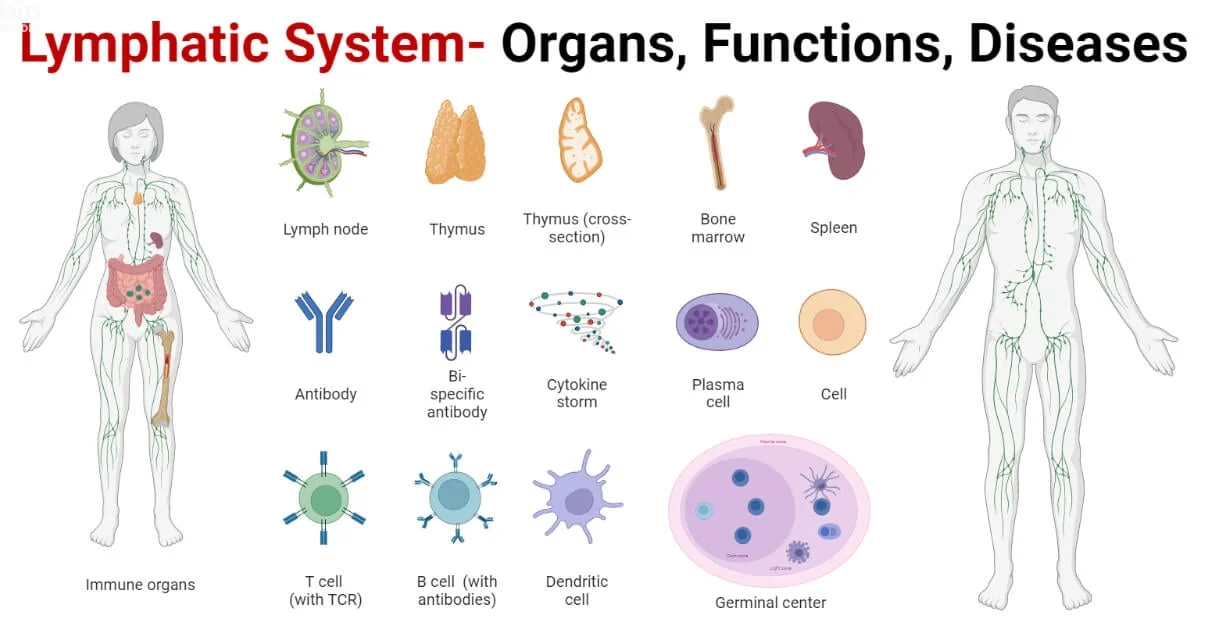
Lymphocytes and lymphoid organs: drains fluid that comes out of blood vessels and in tissue

  • t-cells mature in thymus (organ by heart)

  • All lymphocytes produced in bone marrow

  • B-cells mature in bone marrow


<ul><li><p>t-cells mature in thymus (organ by heart) </p></li><li><p>All lymphocytes produced in bone marrow</p></li><li><p>B-cells mature in bone marrow </p></li></ul><p></p>
3
New cards

Adaptive immunity is divided into two types

Humoral and cell mediated

<p>Humoral and cell mediated </p>
4
New cards

Humoral

  • eliminated invaders in bloodstream and tissue fluids(humor means fluid), things in body fluids: b-cells, helper t-cells, antibodies


<ul><li><p>eliminated invaders in bloodstream and tissue fluids(humor means fluid), things in body fluids: b-cells, helper t-cells, antibodies </p></li></ul><p></p>
5
New cards

Cell-mediated

  • eliminates invaders that reside with in a host cell

  • Cytotoxic T cells and natural killer cells


<ul><li><p>eliminates invaders that reside with in a host cell </p></li><li><p>Cytotoxic T cells and natural killer cells </p></li></ul><p></p>
6
New cards

The story of immunology: 1

  • pathogen invades and carries antigens, so infection begins


<ul><li><p>pathogen invades and carries antigens, so infection begins </p></li></ul><p></p>
7
New cards

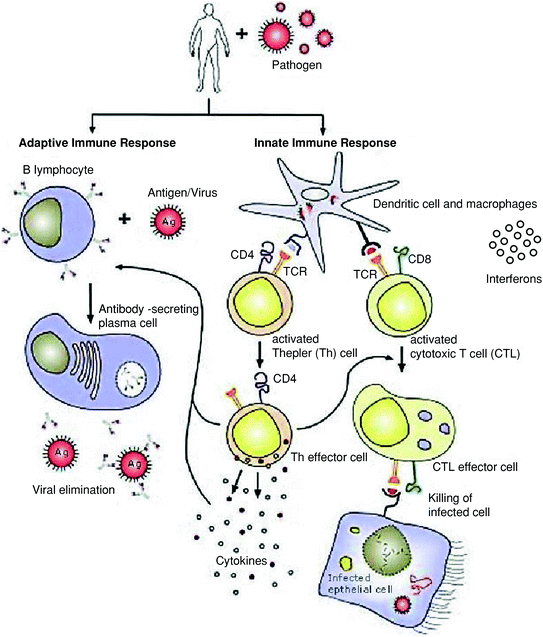
The story of immunology: 2

  • APCs capture antigen and dendritic cells and macrophages engulf bacteria

<ul><li><p>APCs capture antigen and dendritic cells and macrophages engulf bacteria </p></li></ul><p></p>
8
New cards

The story of immunology:3

  • Antigen shown to lymphocytes on MHC, in lymph nodes


<ul><li><p>Antigen shown to lymphocytes on MHC, in lymph nodes </p></li></ul><p></p>
9
New cards

The story of immunology: 4

  • lymphocytes respond with t-cells and b-cells

  • They produce antibodies, plasma cells(B cells)

  • Destroy the pathogen, T cells and macrophages

  • Store memory with b and T cells


<ul><li><p>lymphocytes respond with t-cells and b-cells </p></li><li><p>They produce antibodies, plasma cells(B cells) </p></li><li><p>Destroy the pathogen, T cells and macrophages </p></li><li><p>Store memory with b and T cells </p></li></ul><p></p>
10
New cards

Humoral response

  • each B cell=1 type of antigen(can only recognize)=1 type of antibody(can only produce)

  • B cell activates when…..

    1. The right antigen comes only

    2. Helper T cell says “ok”

      • fail safe before mounting immature response

      • B cell evolves into plasma and memory cells

      • Plasma= antibody factory, they keep producing antibodies

      • If the same threat is encountered again, memory B cells release antibody again very quickly

        • antibodies bind to antigen


<ul><li><p>each B cell=1 type of antigen(can only recognize)=1 type of antibody(can only produce) </p></li><li><p>B cell activates when…..</p><ol><li><p>The right antigen comes only </p></li><li><p>Helper T cell says “ok” </p><ul><li><p>fail safe before mounting immature response </p></li><li><p>B cell evolves into plasma and memory cells </p></li><li><p>Plasma= antibody factory, they keep producing antibodies </p></li><li><p>If the same threat is encountered again, memory B cells release antibody again very quickly </p><ul><li><p>antibodies bind to antigen </p></li></ul></li></ul></li></ol></li></ul><p></p><p></p>
11
New cards

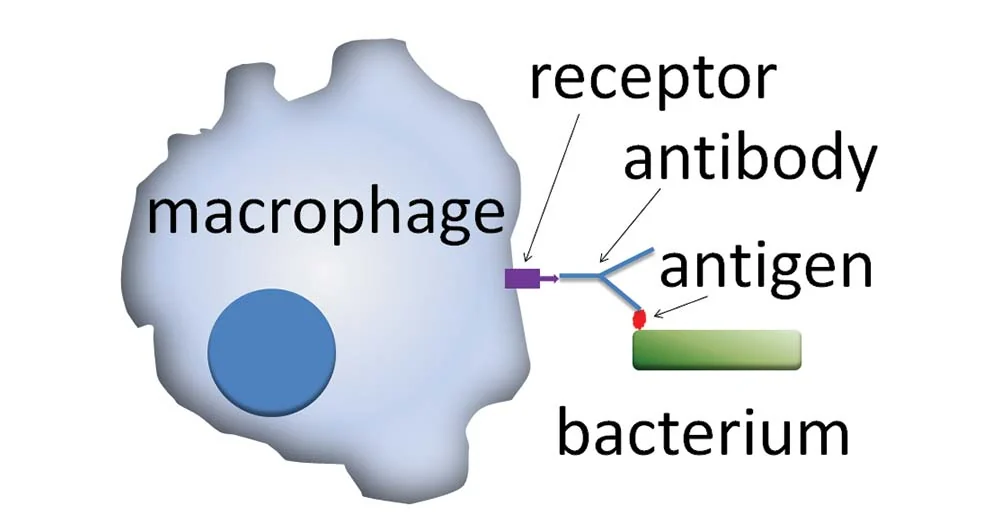
Role of antibodies: opsonization

  • antibodies bound to pathogens can be easily recognized by phagocytes cells

<ul><li><p>antibodies bound to pathogens can be easily recognized by phagocytes cells </p></li></ul><p></p>
12
New cards

Role of antibodies: agglutination

  • Antibodies link pathogens together, creating large clumps that can more easily be recognized by phagocytosis cells


<ul><li><p>Antibodies link pathogens together, creating large clumps that can more easily be recognized by phagocytosis cells </p></li></ul><p></p>
13
New cards

Role of antibodies: activation

  • antibodies can bind up receptors on immune cells, causing the release of cytokines and inducing inflammation


<ul><li><p>antibodies can bind up receptors on immune cells, causing the release of cytokines and inducing inflammation</p></li></ul><p></p>
14
New cards

Role of antibodies: neutralization

  • antibodies bound to adhesions can prevent binding or attachment, preventing infection of toxin action
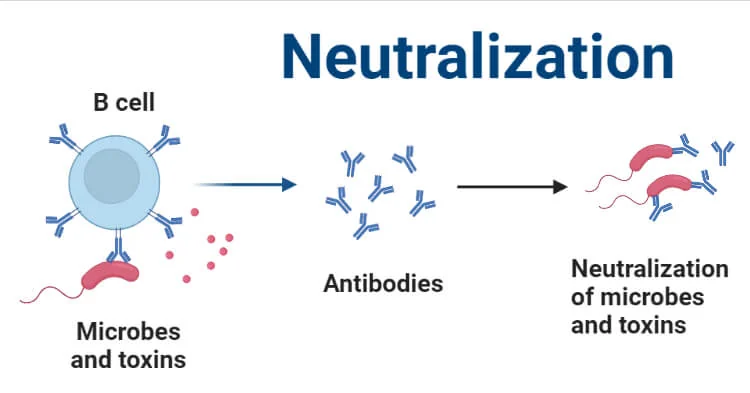

<ul><li><p>antibodies bound to adhesions can prevent binding or attachment, preventing infection of toxin action </p></li></ul><p></p>
15
New cards

Role of antibodies: complement

  • antibodies can bind and activate complement, which can result in cell lysis


<ul><li><p>antibodies can bind and activate complement, which can result in cell lysis </p></li></ul><p></p>
16
New cards

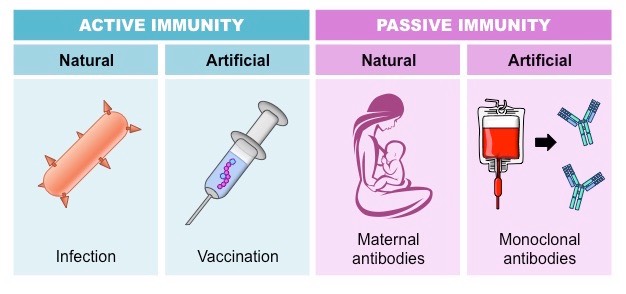
Active immunity

  • natural- infection

  • Artificial- vaccination


<ul><li><p>natural- infection </p></li><li><p>Artificial- vaccination </p></li></ul><p></p>
17
New cards

Passive immunity

  • Natural- maternal antibodies

  • Artificial- monoclonal antibodies


<ul><li><p>Natural- maternal antibodies</p></li><li><p>Artificial- monoclonal antibodies  </p></li></ul><p></p>