Roman Archaeology
 Call Kai
 Learn
Learn Practice Test
 Spaced Repetition
 Match
Match Flashcards
 Knowt Play
1/93

There's no tags or description
Looks like no tags are added yet.
Name | Mastery | Learn | Test | Matching | Spaced | Call with Kai | Chat |
|---|
No analytics yet
Send a link to your students to track their progress
94 Terms
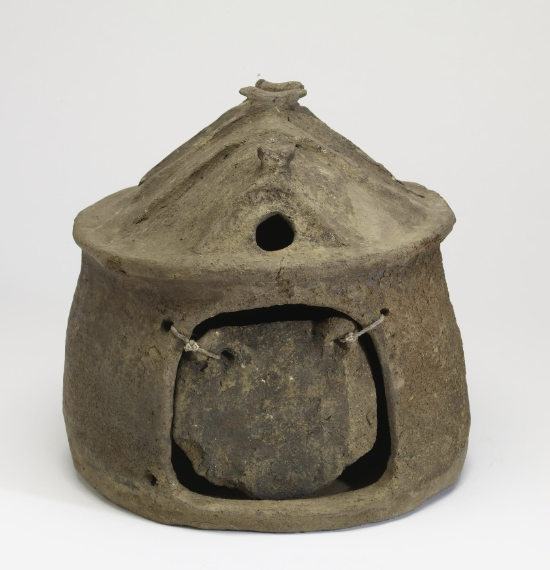
Hut Urn, 8th c. BCE, Italy

Temple of Jupiter Optimus Maximus (and Juno and Minverva), late 6th century BCE?, Rome, Italy (Kingdom)
Kingdom
753-509 BCE
Republic
509-27 BCE
Empire
27 BCE-???
Capitolium
a temple dedicated to the Capitoline Triad (Jupiter, Juno, Minerva)
Capitoline Triad
Jupiter, Juno, Minerva
Forum
a public space used for a variety of economic, political, and religious activities
Senatus Populusque Romanus
Senate and People of Rome; a phrase originating in the later Republic to describe the
(ideal) system of governance in Rome
Punic Wars
Wars with Carthage (3rd-2nd c. BCE), wars associated with increasing expansion of the kingdom
First Triumvirate
(60-53 BCE) Julius Caesar, Crassus, and Pompeius (Magnus)
(triumvirate was a political phenomenon of the Late Republic in which three men shared responsibility for administering state affairs, thereby bypassing the Senate)
Triumvirate
a political phenomenon of the Late Republic in which three men shared responsibility for administering state affairs, thereby bypassing the Senate
Battle of Actium
31 BCE, the decisive battle in the civil war between Octavian and Mark Antony
Second Triumvirate
43-32 BCE, Mark Antony, Octavian, and Lepidus
Battle of the Milvian Bridge
a decisive battle in the civil war between Maxentius and Constantine, which signaled the impending collapse of the Tetrarchy (285-324 CE)

Temple of Minerva or “Portonaccio Temple,” 6th c. BCE, Veii, Italy, Etruscan
Pronaos
front porch/portico area of a temple
Cella
enclosed or inner part of a temple

Apollo (Apulu) of Veii, 6th c. BCE, Temple of Minerva (“Portonaccio Temple”), Veii, Italy
Tumulus (plural tumuli)
an artificial burial mound constructed of earth and/or stone

Tomb of Hunting and Fishing, late 6th c. BCE, Tarquinia, Italy

Tomb of the Leopards, early 5th c. BCE, Tarquinia, Italy

Sarcophagus of the Spouses, late 6th c. BCE, Cerveteri, Italy

Terracotta Head, 1st c. BCE, Manganello, Italy

Terracotta Urns, 6th c. BCE, Chiusi, Italy

“Mars of Todi,” early 4th c. BCE, Todi, Italy

“Capitoline She-Wolf” ca. 5th c. BCE (babies added 15th c. CE), Rome, Italy

Chimera, 400-350 BCE, Arezzo, Italy
Orthogonal grid
straight streets intersecting at right angles to form regular, rectangular “blocks”
Agora
Central feature of Greek cities. A public space used for economic, political, and religious activities
Peripteral
A peripteral temple has columns on all four sides.

Temple of Hera II, 460-450 BCE, Paestum, Italy

(Frieze of) Temple of Hera I, late 6th c. BCE, Foce del Sele, Italy (8km north of Paestum)
Left is the triglyph, right is the metope
Triglyph
three column motif that separates the metope (decoration) on a frieze
Metope
the decorative area on a frieze that is separated by the triglyph

what are the two areas called?
purple = frieze
yellow = pediment

Tomb of the Diver, 5th c BCE, Paestum, Italy

Riace Bronzes or “Riace Warriors” 450 BCE, Riace, Italy

Terme Boxer, 1st c BCE, Rome, Italy

Terme Prince, 100-50 BCE, Rome, Italy

TUSCAN ORDER
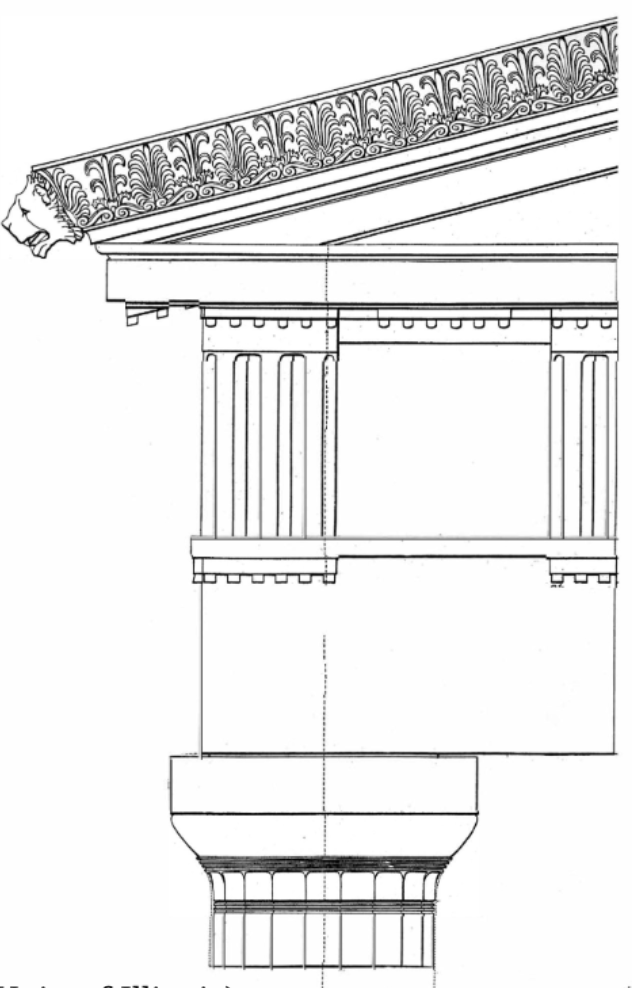
DORIC ORDER

IONIC

CORINTHIAN

COMPOSITE
Servian Wall
4th c. BCE, Rome, Italy
Made of tufa (stone) blocks stacked on to of each other, wall around Rome’s 7 hills, built in the wake of two conflicts

Temple of Portunus, late 4th/early 3rd c. BCE, 1st c. BCE (renovated), Rome (Forum Boarium), Italy; Materials: tufa, travertine (pre-concrete), REPUBLIC

Pyramid of Cestius, 1st c BCE, Rome, Italy; Materials: marble, brick-faced concrete, travertine

not the image on exam but to memorize name and dates
Flavian Amphitheater (“Colosseum”), 72-80 CE, Rome, Italy, EMPIRE: Vespasian, Titus, Domitian
Materials: travertine, tufa, brick-faced concrete

Pantheon, 2nd c CE renovated, Rome, Italy, EMPIRE: Hadrian
Materials: travertine, brick-faced concrete, pumice, marble, granite
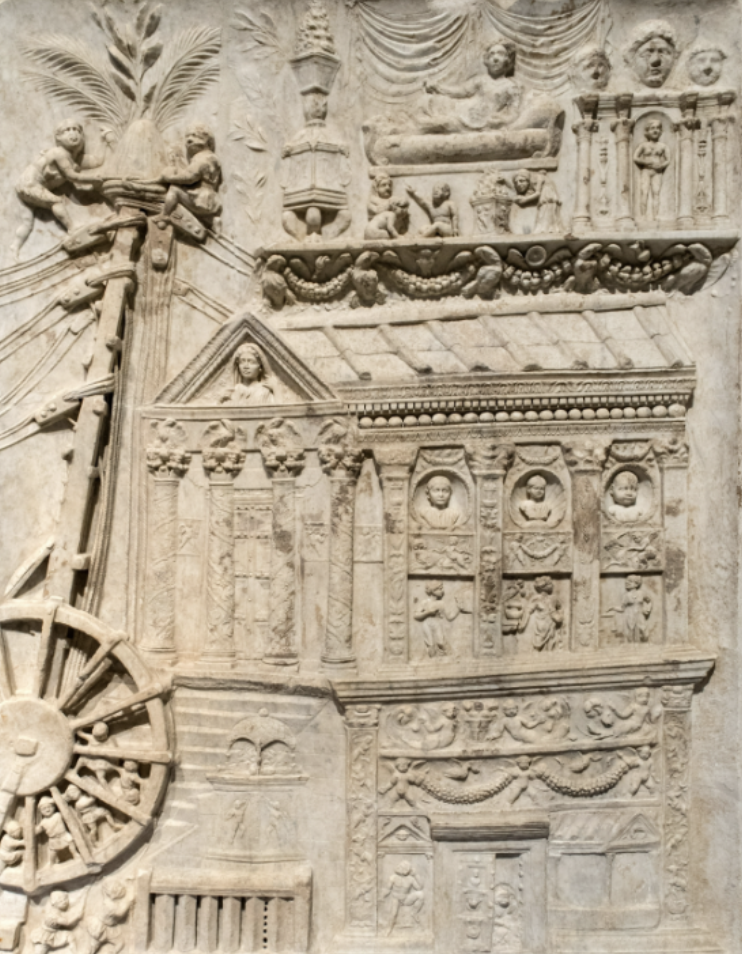
“Crane Relief” in Tomb of the Haterii, early 2nd c. CE, Rome, Italy

“Monument Relief” in Tomb of the Haterii, early 2nd c. CE, Rome, Italy
Pomerium
a religious and legal boundary around that delineated spaces for military and funerary activities
Aurelian Wall
271-275 CE, Servian Wall built first, then this one was added, would’ve been very tall and well guarded
The Forma Urbis
ca. early 2nd c. CE, EMPIRE: Septimius Severus
Marble map of Rome at 1:240 scale
Carved on 150 marble slabs, covered an area of ca. 60 x 43 feet
Copy of existing records in a more permanent format (old record house burnt down recently)
1,186 surviving fragments (10-15% of the map)
Meant to document the expansion of the empire and leave people in awe
Forum Boarium
forum on the bank of the Tiber river, original forum in Rome
Forum Romanum
built a little inland of the Forum Boarium between the Capitoline and Palatine hills, religious, political, and economic public space

Basilica
large, roofed building used as a marketplace, courthouse, and assembly space

Curia
a meeting place of the Roman Senate or other similar political assemblies/groups
Forum of Augustus
inaugurated 2 BCE, EMPIRE: Augustus
Temple of Mars Ultor (Mars the Avenger)
Statue of Augustus on a quadriga (four-horse chariot)
Porticoes decorated with statues of Rome’s legendary founders, Augustus’ family (?), and the summi viri (“highest men”)
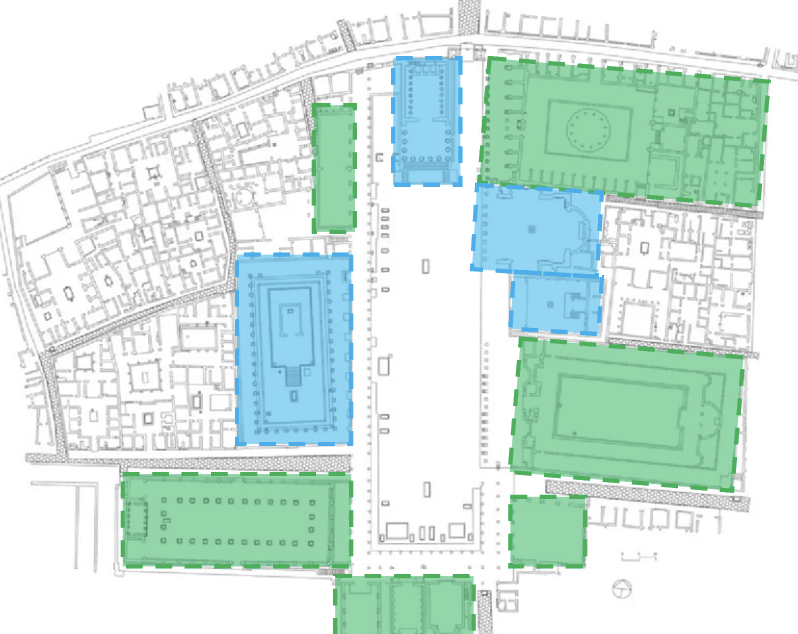
Plan of the forum at Pompeii, 1st c. CE

Temple of Jupiter (Capitolium) ca. 150 BCE (from the forum at Pompeii)

Macellum ca. 2nd c. BCE (from the forum at Pompeii)
Macellum = market building where produce (especially fish and meat) was sold

Building of Eumachia ca. 1st c. CE (from the forum at Pompeii)
Woman built this with her own money

The Municipal Offices (including the Curia) ca. 2nd c. BCE (from the forum at Pompeii)

The Basilica ca. 2nd c. BCE (from the forum at Pompeii)
Port at Puteoli
ca. 2nd c. BCE, Pozzuoli, Italy
concrete core with stone facing used to construct the pier
early port for Rome, landing place for trading etc then would be brought to Rome

Wall Painting with Representation of Port at Puteoli, 1st c. CE, Stabiae, Italy

Souvenir Glass Flask with Representation of Puteoli, 3rd-4th c. CE, North Africa, probably
Port at Portus
ca. 1st-2nd c. CE, Ostia, Italy, EMPIRE: Claudius (phase 1), Trajan (phase 2)
second port built for Rome, closer to city, port walls made of arches and columns
concrete core with stone facing, lighthouse, stone lined inner basin

Coin of Nero Representing the Outer Harbor at Portus, ca. 1st c. CE, Findspot Unknown

Mosaic Representing the Lighthouse at Portus
(not an image ID, photo for reference)
ca. 2nd c. CE, Ostia, Italy
First Style of wall painting
Masonry style. Imitation of stone/stone architecture using molded and painted lime-based stucco or plaster. Borrowed from the Greeks.
ex: House of Sallust and House of Samnites
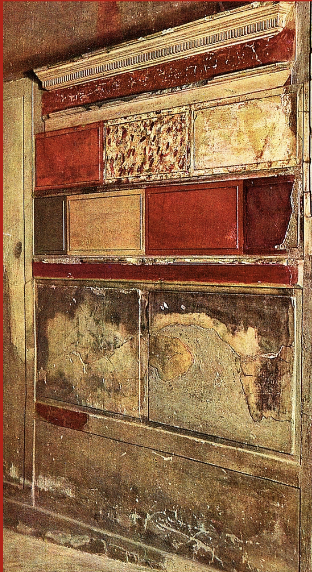
House of the Samnites (Entrance), 2nd c. BCE, Herculaneum, Italy
First style
House of Sallust (Atrium)
2nd c. BCE, Pompeii, Italy, first style
Second Style of wall painting
imagined 3D landscapes. De-emphasis on the wall/structure of the wall (opposite of 1st style). Large-scale figural or landscape paintings.
ex: Villa at Boscoreale

Villa at Boscoreale (Room M, Cubiculum), mid 1st c. BCE, Boscoreale, Italy
second style
Third Style of wall painting
Wall is a wall, no interest in illusion. Predominantly monochromatic backgrounds. Common decorative motifs: fanciful architecture, candelabra (candle-holders), small-scale figural or landscape scenes.
ex: Villa at Boscotrecase

Villa at Boscotrecase (Entrance), 1st c. BCE, Boscotrecase, Italy
third style (monochrome, ornate but unrealistic architectural features)
Fourth Style of wall painting
Combination of the previous three styles!
ex: House of the Vettii

House of the Vettii (Room P, Triclinium), 1st c. CE, Pompeii, Italy
fourth style (masonry, architecture, monochrome panels, Greek stories)
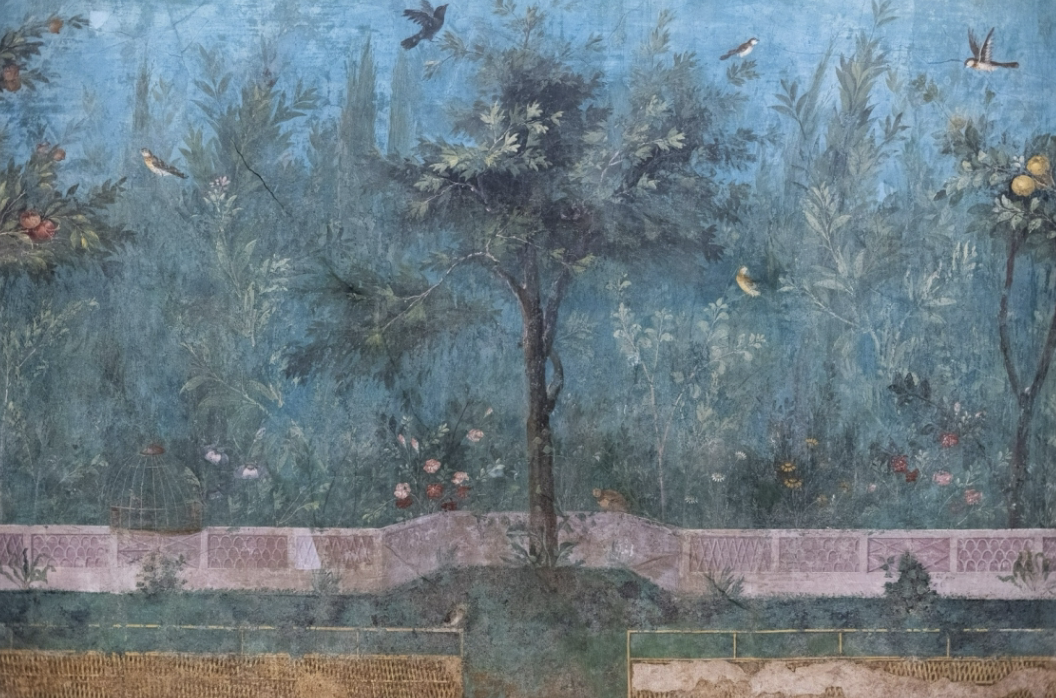
The Garden Room Fresco Villa of Livia, late 1st c. BCE, Prima Porta (near Rome), Italy
second style, Livia was wife of Augustus and mother of Tiberius (second emperor)

Unswept Floor Mosaic, 2nd c. CE, Rome, Italy
This style of decoration – the so-called “unswept floor” – was popularized by a Greek artist of the 2nd c. BCE

Odyssey Landscapes, 1st c. BCE, Rome, Italy
second style, Odysseus meets with the shades in the Underworld

The Alexander Mosaic House of the Faun (Tablinum), 1st c. BCE, Pompeii, Italy
made of nearly 2 million pieces, based on a painting made by a Greek artist in the 4th/3rd c. BCE, battle between Alexander the Great (King of Macedon) and Darius (King of Persia)

Mosaic of She-Wolf with Romulus and Remus, 4th c. CE, Aldborough, England
The Cupid Frieze
In the House of the Vettii (Triclinium?), 1st c. CE, Pompeii, Italy
fourth style, house owned by two formerly enslaved people, cupids making/selling perfumed oil, making flower garlands, and selling wine
Villa of Tiberius
early 1st c. CE, Sperlonga, Italy
large outdoor estate, hoping to show his power and validate his claim of power
Grotto and Dining Room - has Greek legend Odysseus and his men blinding Polyphemus (cyclops and son of Poseidon) in it, lots of statues, very grand and impressive
Golden House (Domus Aurea)
64-68 CE, Rome, Italy, EMPIRE: Nero
After a fire destroyed parts of Rome Nero built this in its place, huge estate
The “Octagonal Hall” - precursor to the Pantheon, dome = concrete, walls = brick-faced concrete (likely covered with marble slabs), way smaller scale than Pantheon
Villa of Hadrian
early 2nd c. CE (started c. 118 CE), Tivoli, Italy, EMPIRE: Hadrian
large sprawling estate

Circular Island Suite (“Maritime Theater”), Villa of Hadrian, early 2nd c. CE, Tivoli, Italy
dining room, bedrooms, bath, likely residence of Hadrian or his wife, more private, interesting layout with the circular nature of it

no an image ID, just for reference here
Canopus and Serapeum, Villa of Hadrian, early 2nd c. CE, Tivoli, Italy
Canopus = canal off the Nile River in Alexandria (Egypt), Copies of Greek sculptures: Amazons (female warriors), Male warrior (Theseus? Ares?), Caryatids (column supports shaped like women) alligator statues and personification of Tiber river
*Expansive reach of the empire and his personal fascination with Egypt and his friend Antinuous
Serapeum = religious site dedicated to the Egyptian god Serapis, space functioned as a dining room

not image ID
Antinoeion, Villa of Hadrian, early 2nd c. CE, Tivoli, Italy
Antinoeion = religious site dedicated to Antinuous, his friend (and lover?) who passed away, diefied him, not common of people who aren’t Emperor