Eicosanoids
 Call Kai
 Learn
Learn Practice Test
 Spaced Repetition
 Match
Match Flashcards
 Knowt Play
1/57

There's no tags or description
Looks like no tags are added yet.
Name | Mastery | Learn | Test | Matching | Spaced | Call with Kai | Chat |
|---|
No analytics yet
Send a link to your students to track their progress
58 Terms
What are Eicosanoids
Eicosanoids are a group of bioactive lipid molecules derived from arachidonic acid
5 Major Classes of Eicosanoids
Prostaglandins
Thromboxanes
Prostacyclins
Leukotrienes
HETES
Diagram for process of Synthesis of Eicosanoids
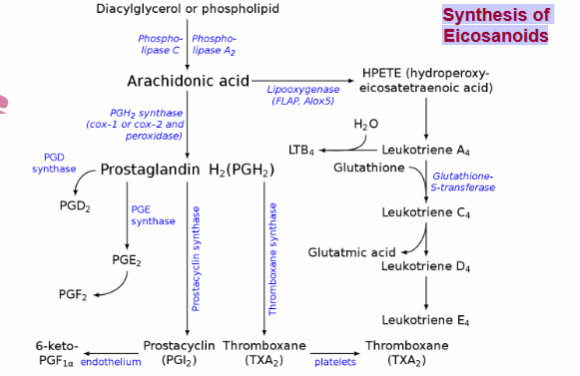
Stopping Cox inhibitors means …..
Preventing pain
Effects of Eicosanoids
• Induction of inflammation
• Mediation of pain signals
• Induction of fever
• Smooth muscle contraction (including uterus)
• Smooth muscle relaxation
• Protection of stomach lining
• Simulation of platelet aggregation
• Inhibition of platelet aggregation
• Sodium and water retention
Use of prostaglandins in medicine
Used to induce labour
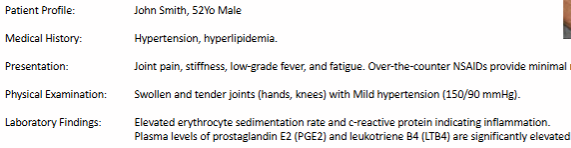
What would the diagnosis be for John
Likely inflammatory arthritis, with elevated eicosanoids contributing to inflammation and pain
What treatment could be given for the elevated eicosanoids
Eicosanoid Modulation: Targeting the eicosanoid pathway
In John’s blood pressure of 150/90, which number is more significant
The 90 is more significant than the 150 because the 150 is highly variable
Why are all hormones measured if fertility is an issue
The autonomic nervous system has a big influence over reproduction
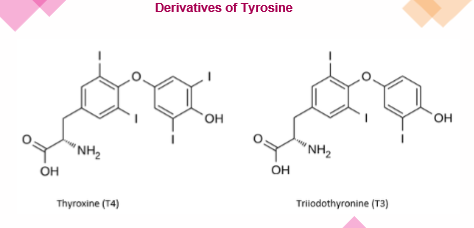
Which is more powerful/potent
T3 is about 10 times more potent (more powerful) than T4
Are T3 or T4 given more to patients
T4 is given more to patients as the side effects of T3 are far greater
99% of iodine that enters the body goes where
straight to the thyroid gland
How are peptide/protein hormones transported
Dissolve easily in plasma
Carried bound to carrier proteins
How are steroid/amine hormones transported
Relatively Insoluble in plasma
Majority (>90%) of Steroids Transported Bound to Protein
What bonds hold steroid/amine hormones and proteins together
Weak Chemical Bonds - Hydrogen/ ionic bonds/van der Waals
(Resulting Affinity can be Strong)
What percentage of hormones are free
Typically Only 1-10%
When measuring steroids do you measure bound/free/both
Both
Why measure most bound and free steroids
Someone with liver failure or issues with the liver may have issues with binding proteins so they might have less % of hormones bound
Are bound and free hormone ever unbalanced
No - always in equilibrium
Specialised Binding proteins have a high/low affinity for hormones
High
Specialised Binding proteins have a high/low capacity for hormones
Low
Non-Specialised Binding proteins have a high/low affinity for hormones
Low
Non-Specialised Binding proteins have a high/low capacity for hormones
High
Are Plasma Albumins & TBPA specialised or non specialised binding proteins
Non specialised
Are CBG-Cortisol Binding Globulin & TBG- Thyroxin Binding Globulin specialised or non specialised binding proteins
Specialised
Do specialised / non specialised binding proteins bind steroids & thyroid hormones
Non specialised
What type of binding protein is more abundant
Non specialised
Effect of binding proteins
Prevents Over Action of Hormone since only “Free” is Biologically Active
Prolongs Effect of Hormone
Prevents Large Fluctuations in Active Hormone Levels
How does binding prolong the effect of hormones
Inactivation in Liver and Excretion in Urine is Delayed
Increases Total Hormone Carrying Capacity of Blood
How does binding Prevent Large Fluctuations in Active Hormone Levels
Increased Reservoir of Hormone
Equilibrium Between Free and Bound Forms
Peptide hormone concentration in blood
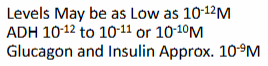
How are peptide hormone levels in blood measured
Peptides are in such low levels that they can be very hard to measure. They are stimulated and then the patient's response to the stimulus is measured
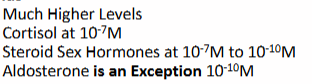
Steroid concentration in blood
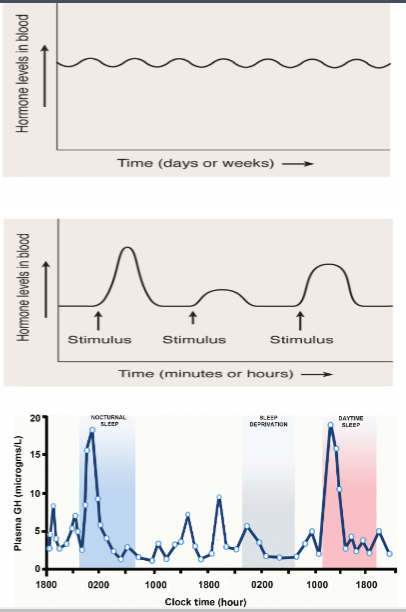
Which of these graphs represent chronic, episodic & acute hormone secretion
Top = Chronic (relatively constant concentration of hormone)
Middle = Acute (hormone secretion in response to a stimulus)
Bottom = Episodic (cyclic)
Which pattern of hormone secretion is most common & most rare
Most common = Episodic
Most rare = Chronic
Example of hormone with episodic pattern of secretion (& it’s pattern)
Growth hormone
Should be high at 2am and low at 2pm
Are hormones specific for the tissues they affect
Yes - Hormones Affect Only Target Tissues with Specific Receptors
What parts of the cell can receptors be present on
Cell Membrane or Cytoplasm
Does the number of receptors on a cell ever change
yes - they get degraded and replaced regularly
What can increase the rate at which receptor molecules are degraded
Prolonged hormone exposure
(Explains the desensitization that can occur to some drugs)
Example of what can increase the rate at which receptor molecules are synthesised
FSH stimulation of the ovary causes an increase of LH receptors
What prevents Protein/Peptide Hormones from passing through plasma membranes
Size and Charge
Where are Protein/Peptide Hormone receptors located
On the plasma membrane (the hormones can’t pass through the membrane so the receptors must be on the membrane itself)
What are the 3 parts of Protein/Peptide Hormone receptors & what are their roles
Extracellular Domain: Interact with & Binds Hormone (Ligand-Binding Domain)
Trans-Membrane Domains (Span Cell membrane): Hydrophobic Stretches of Amino Acids that Anchor the Receptor in Cell Membrane
Cytoplasmic / Intracellular Domains: Effector region - Interact with Other Intracellular Molecules, Generates Second Messengers
Process of cAMP second messenger system
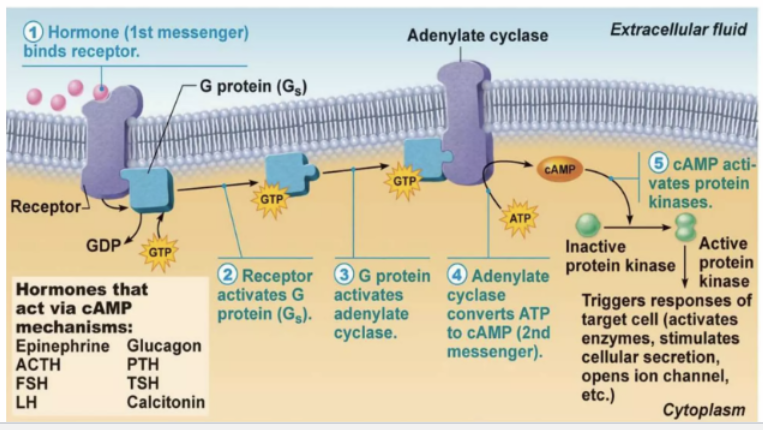
When the hormone binds to the receptor, GDP is converted to what?
GTP
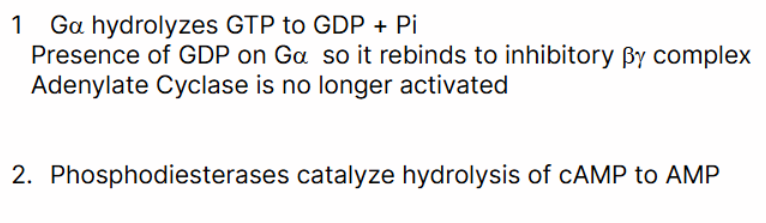
How is the cAMP Second Messenger System signal turned off
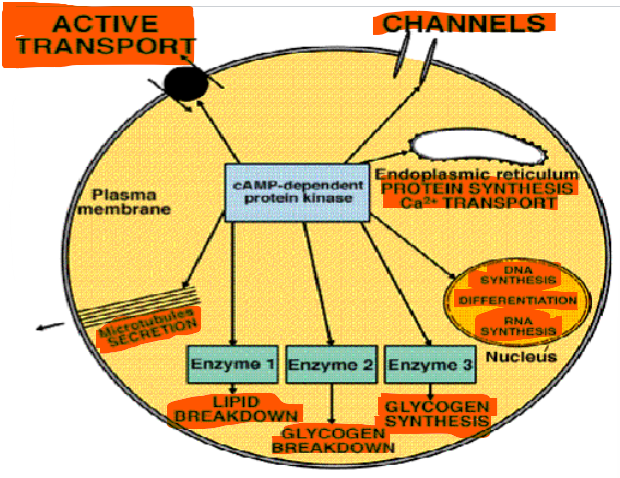
Cellular responses from cAMP
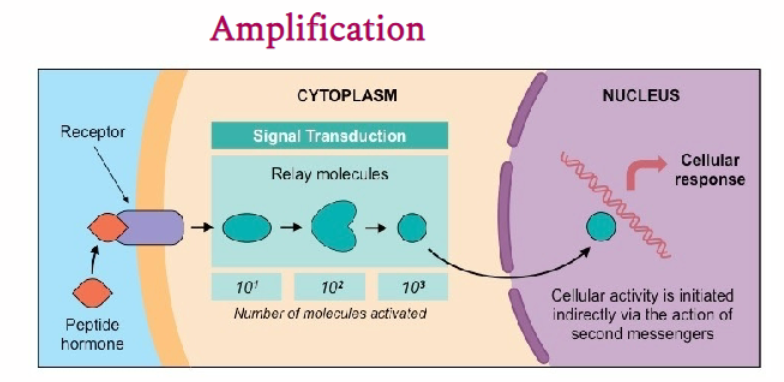
After a peptide hormone binds with a receptor, is the signal amplified or degraded as it relays through molecules
Amplified
Location of receptors for insulin & many growth factors
Trans-membrane receptors
What specifically is a receptor for insulin & many growth factors
tyrosine kinase
What process activates RTK (tyrosine kinase)
Autophosphorylation
Why does steroid action tend to be slower
Steroids can't dissolve in plasma but receptors for steroids are found in the cytoplasm or the nucleus
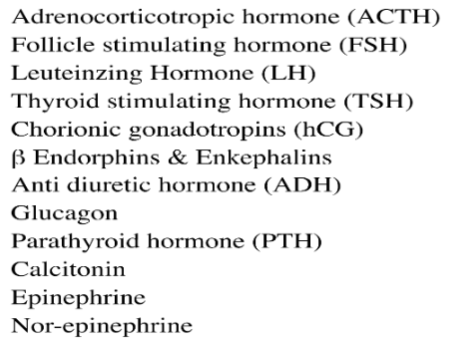
What do these have in common
They activate the cAMP second messenger system

What do these activate:
cGMP
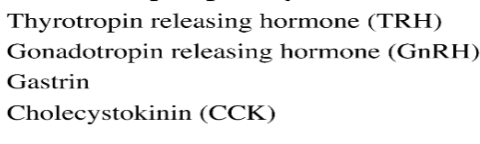
What do these activate:
Phosphatidyl inositol/calcium (or both)
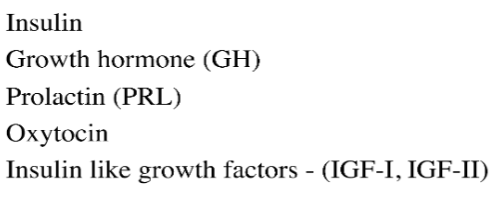
What do these activate:
Tyrosine Kinase / Phosphatase cascade