Characteristics of Life and Cells

0.0(0)
Studied by 0 people
call kaiCall Kai
learnLearn
examPractice Test
spaced repetitionSpaced Repetition
heart puzzleMatch
flashcardsFlashcards
GameKnowt Play
Card Sorting

1/23

encourage image

There's no tags or description

Looks like no tags are added yet.

24 Terms

1
New cards

Organisms

Group of organ systems working together to perform many functions. Ex: Shark, Bear, Plant

<p>Group of organ systems working together to perform many functions. Ex: Shark, Bear, Plant</p>
2
New cards

Organ System

Group of organs that work together to perform a specific function. Example: Skeletal System, Respiratory System, Digestive System

<p>Group of organs that work together to perform a specific function. Example: Skeletal System, Respiratory System, Digestive System</p>
3
New cards

Organ

Group of tissues that work together to perform a specific function. Example: Heart, Liver, Lungs, Pancreas

<p>Group of tissues that work together to perform a specific function. Example: Heart, Liver, Lungs, Pancreas</p>
4
New cards

Tissue

Group of cells of a similar type that work together to perform a specific function. Example: Muscle Fibers

<p>Group of cells of a similar type that work together to perform a specific function. Example: Muscle Fibers</p>
5
New cards

Cell

Smallest unit of life. This can have various organelles, shapes, and sizes to perform a specific task. Example: Nerve, Muscle, Epithelial.

<p>Smallest unit of life. This can have various organelles, shapes, and sizes to perform a specific task. Example: Nerve, Muscle, Epithelial.</p>
6
New cards

Prokaryote

Unicellular organism that does not have a nucleus or membrane bound organelles. Smaller and less complex cell that contains a nucleoid for genetic information. Example: Bacteria

<p>Unicellular organism that does not have a nucleus or membrane bound organelles. Smaller and less complex cell that contains a nucleoid for genetic information. Example: Bacteria</p>
7
New cards

Eukaryote

Unicellular or Multicellular organism that has a nucleus and membrane bound organelles. Larger and more complex cell that has genetic information is stored in the nucleus. Cell can take on specific jobs. Example: Plant and Animal Cells.

<p>Unicellular or Multicellular organism that has a nucleus and membrane bound organelles. Larger and more complex cell that has genetic information is stored in the nucleus. Cell can take on specific jobs. Example: Plant and Animal Cells.</p>
8
New cards

Robert Hooke

First to observe cells by looking at cork. Also the first person to use the term "cell".

<p>First to observe cells by looking at cork. Also the first person to use the term "cell".</p>
9
New cards

Microscope

An optical instrument with many lenses that magnifies and views smaller specimens.

<p>An optical instrument with many lenses that magnifies and views smaller specimens.</p>
10
New cards

Cell Theory

An theory that states that:

-Cells are the basic unit of life

-All living things are made of one or more cells

-All cells come from preexisting cells

<p>An theory that states that:</p><p>-Cells are the basic unit of life</p><p>-All living things are made of one or more cells</p><p>-All cells come from preexisting cells</p>
11
New cards

Homeostasis

Maintaining a stable balance between external and internal conditions in cells or the body

<p>Maintaining a stable balance between external and internal conditions in cells or the body</p>
12
New cards

Sexual Reproduction

A type of reproduction that involves two parents who combine genetic material to create offspring that are unique from both parents

<p>A type of reproduction that involves two parents who combine genetic material to create offspring that are unique from both parents</p>
13
New cards

Asexual Reproduction

A type of reproduction that involves one parent and results in offspring that is genetically identical to the parent

<p>A type of reproduction that involves one parent and results in offspring that is genetically identical to the parent</p>
14
New cards

Multicellular

Organism made of more than one cell, normally larger and more complex with a specific function. Example: Animal or Plant Cells, Muscle Cells

<p>Organism made of more than one cell, normally larger and more complex with a specific function. Example: Animal or Plant Cells, Muscle Cells</p>
15
New cards

Metabolism

The combination of all chemical reactions in an organism, normally breaking down materials into usable energy

<p>The combination of all chemical reactions in an organism, normally breaking down materials into usable energy</p>
16
New cards

Unicellular

Organism is made of only one cell, normally smaller and more simplistic. Example: Bacteria, Amoeba, Paramecium

<p>Organism is made of only one cell, normally smaller and more simplistic. Example: Bacteria, Amoeba, Paramecium</p>
17
New cards

Stimuli

An internal or environmental change that causes a reaction by an organism. Example: Light, Temperature, Water, Salt, Aggression
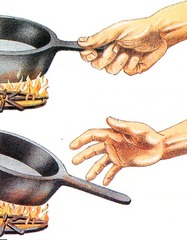
<p>An internal or environmental change that causes a reaction by an organism. Example: Light, Temperature, Water, Salt, Aggression</p>
18
New cards

Characteristics of Life: G

Grow and Develop

<p>Grow and Develop</p>
19
New cards

Characteristics of Life: O

Organized

<p>Organized</p>
20
New cards

Characteristics of Life: R

React to Environment or Reproduce

<p>React to Environment or Reproduce</p>
21
New cards

Characteristics of Life: A

Adapt and Evolve

<p>Adapt and Evolve</p>
22
New cards

Characteristics of Life: C

Cells

<p>Cells</p>
23
New cards

Characteristics of Life: E

Energy

<p>Energy</p>
24
New cards

Characteristics of Life: R

Reproduction or React to Environment

<p>Reproduction or React to Environment</p>



