Chapter 9- Joints (part 2)
 Call Kai
 Learn
Learn Practice Test
 Spaced Repetition
 Match
Match Flashcards
 Knowt Play
1/60

Earn XP
Description and Tags
Anatomy Lecture 1
Name | Mastery | Learn | Test | Matching | Spaced | Call with Kai | Chat |
|---|
No analytics yet
Send a link to your students to track their progress
61 Terms
flexion
movement that decreases joint angle

flexion
this movement is common in hinge joints
extension
movement that straightens a joint and returns a body part to zero position

hyperextension
further extension of a joint beyond zero position

abduction
movement of a body part in frontal plane away from midline of body

hyperabduction
raise arm over back or front of head
adduction
movement in frontal plane back towards midline

hyperadduction
corssing fingers, crossing ankles
elevation
movement that raises a body part vetically in frontal plane

depression
movement that lowers a body part in frontal plane

protraction
the anterior movement of a body part in transverse (horizontal) plane

retraction
posterior movement of a body in transerve (horizontal) plane

circumduction
one end of an appendage remains stationary while the other end makes a circular motion

rotation
movement in which a bone spins on its longitudinal axis
rotation
a trunk, thigh, head, or arm can have this
medial rotation
turns bone inward

lateral rotation
turns bone outward

supination
turns palm to face anteriorly or upward

pronation
turns palm to face either posteriorly or downward

flexion
forward-bending movements at waist

extension
straightens truck or neck
hyperextension
bending over backward
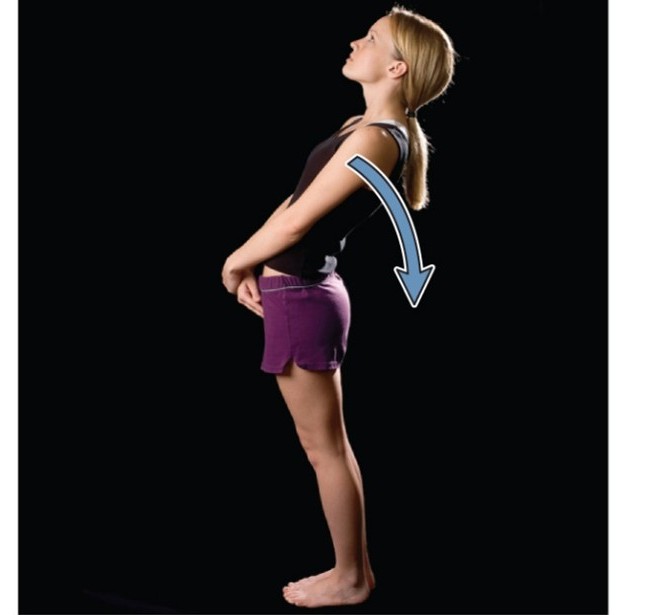
lateral flexion
tilting head or trunk to right or left at midline

lateral excursion
right or left movement from zero position

medial excursion
movement back to median zero position

ulnar flexion
tilts hand toward little finger
radial flexion
tilts hand toward thumb
flexion
curling fingers
extension
straightening fingers
abduction
spreading fingers apart
adduction
bringing fingers together again
palmar abduction
moving thumb away from hand and pointing it anteriorly

radial abduction
moving thumb away from index finger (90 degrees)
flexion of thumb
tip of thumb directed toward palm
extension of thumb
straightening the thumb
opposition
moving thumb to touch tip of a finger
reposition
returning thumb to the zero position
dorsiflexion
elevation of toes as you do while swinging foot forward to take a step (heel strike)
plantar flexion
extension of foot so that toes point downward as in standing on tiptoe (toe-off)
inversion
movement in which soles are turned medially
eversion
movement in which soles are turned laterally
temporomandibular joint
articulation of mandibular condyle with mandibular fossa of temporal bone
glenohumeral joint
head of humerus articulates with glenoid caity of scapula
glenoid labrum
fibrocartilage ring that deepens glenoid cavity
3 glenohumeral ligaments, coracohumeral ligament, and transverse humeral ligament
the 5 principal ligaments that support shoulder
4
how many bursa at shoulder
biceps brachii tendon and rotator cuff tendons
what is the shoulder supported by
shoulder dislocation
downward displacement of humerus
humeroulnar joint
trochlea of humerus joins trochlear notch of ulna
humeroradial joint
capitulum of humerus meets head of radius
hinge joint
what type of joint is the humeroulnar joint
pivot joint
the radioulnar joint is what type of joint
radioulnar joint
head of radius fits into radial notch of ulna
olecranon bursa
eases movement of tendons over joint
olecranon bursa
this is on the posterior side of the elbow
coxal joint
head of femur inserts into acetabulum of hip bone
coxal joint
bears much more weight, have deeper sockets, more stable than shoulder
acetabular labrum
horseshoe-shaped ring of fibrocartilage that deepens socket
iliofemoral and pubofemoral ligaments
ligaments supporting the hip joint anteriorly
ischiofemoral ligament
ligament supporting hip joint posteriorly
transverse acetabular ligament
ligament supporting hip joint that bridges gap on inferior margin of acetabular labrum